
An amateur archaeologist armed only with satellite imagery and a hunch helped uncover evidence that’s reshaping how historians understand the Roman Empire’s advance into present-day Germany in the third century CE.
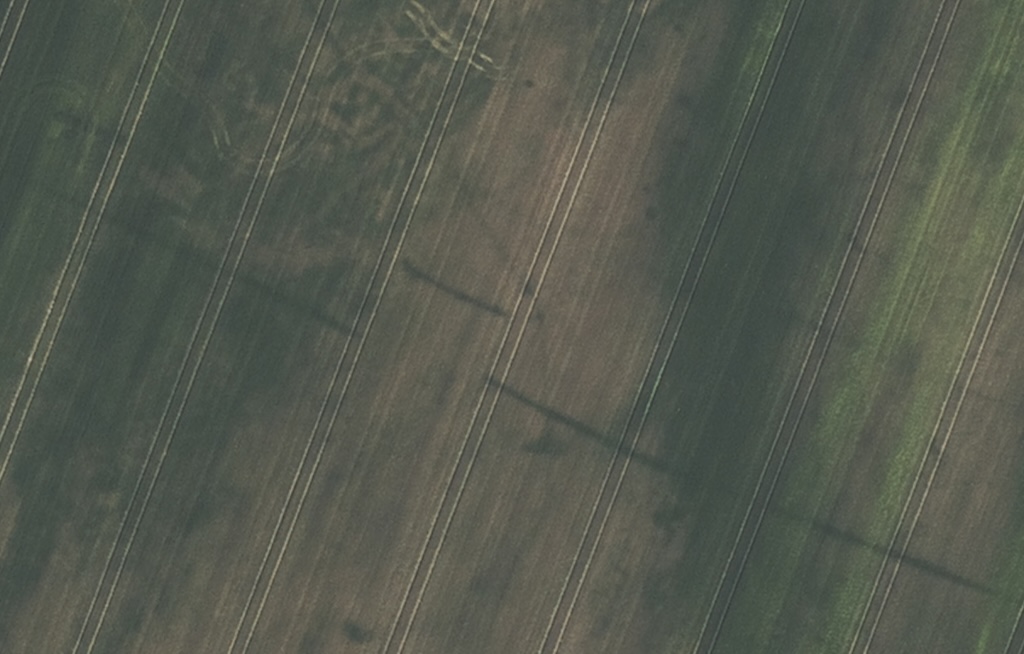
In 2020, hobbyist Michael Barkowski was combing through aerial imagery available online, when he spotted an unusual formation near the town of Aken, in the state of Saxony-Anhalt in northwestern Germany. Barkowski suspected that the large rectangular outlines and apparent ditches he was seeing could be signs of marching camps that were commonly deployed by Roman legions. Although remains of such camps have been identified elsewhere in Germany, historians had not found evidence of any this far north.
After Barkowski reported the sightings, professional archaeologists from Germany’s State Office for Heritage Management and Archaeology Saxony-Anhalt conducted their own aerial surveys. Their findings confirmed Barkowski’s hunch—and then some. Subsequent surveys revealed not just one, but four Roman marching camps spread across towns in the state dating back to the 200s CE, according to Germany’s State Office for Heritage Management and Archaeology Saxony.
The surprise findings, which the State Office calls an “archaeological sensation” carry major implications. Specifically, they suggest the Roman Empire may have advanced significantly further into Germanic territory than previously believed. They are also just the latest in a string of archaeological breakthroughs made possible by increased volunteer efforts and the widespread availability of modern aerial imagery.
Roman soldiers left behind a smattering of camps
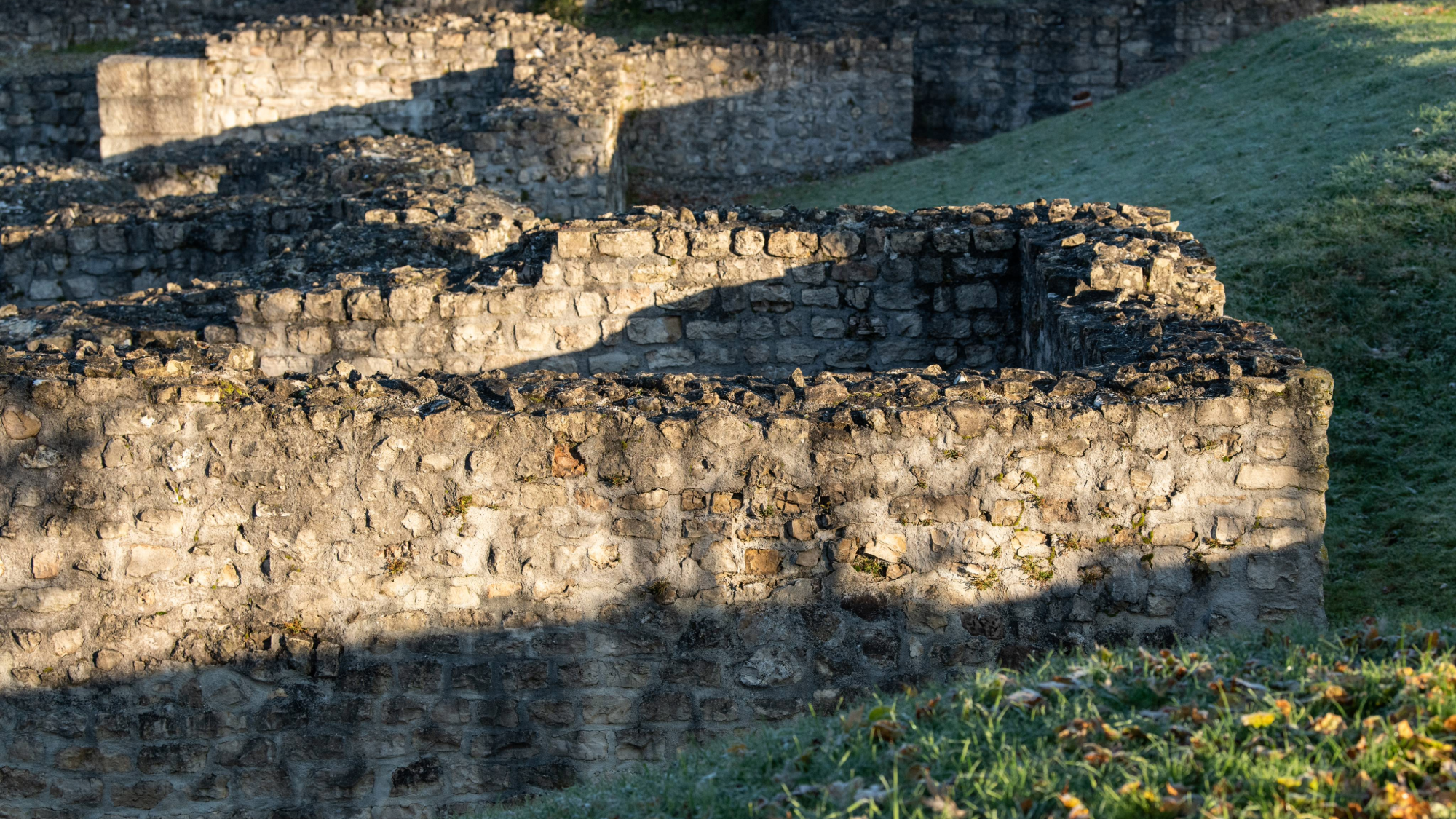
The Roman legion—the empire’s primary elite infantry unit—is often defined by its strict discipline and organization in battle.Their military camps weren’t any different. Soldiers would establish the outposts at the end of a day’s march to serve as defensive positions during long military campaigns. Camps were typically rectangular with rounded corners and a gate adorning each side. Each camp was distinguished by titulum, (basically a low bank and ditch built just outside the main gate) to slow or stop an enemy’s advance. The camps varied in size, but a typical set up could house around 300 soldiers. A traveler walking through one of the camps would find the commanding officer’s tent located in the center.
Historians have documented Roman camps scattered throughout much of the empire’s border regions, where the military conducted the bulk of its campaigns. This included large parts of present-day Germany, which the Romans began conquering around 13 CE under Emperor Augustus. Fighting there continued there for the better part of 30 years, before a major defeat forced a prolonged Roman withdrawal. Fast forward nearly 200 years later to the 3rd century, and Romans returned to the region, launching a new military offensive aimed at disrupting Germanic tribes that had grown larger and more organized.
“The relationship between Romans and Germanic tribes was subsequently characterized by the defense against incursions into the Roman Empire, by punitive expeditions, but also by repeated contractual agreements and the settlement of Germanic tribes on Roman soil, as well as the payment of money in return for maintaining peace,” Germany’s State Office for Heritage Management and Archaeology Saxony writes in a press release.
Related Stories
New camps sighting alter the historical record
Although some historical records suggest that the late Roman advance may have reached as far north as the Elbe River, archaeologists had not found any physical remains to support those claims. That’s what made news of Barkowski’s initial finding so alluring to professional archaeologists. Once they confirmed the presence of the first camp in Aken, they expanded their search area and found a similar structure near Trabitz, roughly 170 miles to the south. A year later, follow-up aerial surveys identified another structure near Aken and one in Deersheim.
Those findings paved the way for a series of large, on-the-ground surveys conducted between 2024 and 2025. A team of archaeologists walked over the camps, metal detectors in hand, in search of artifacts. It was a scientific gold mine—or more accurately, an iron mine. The team documented over 1,500 individual objects, most made of iron.
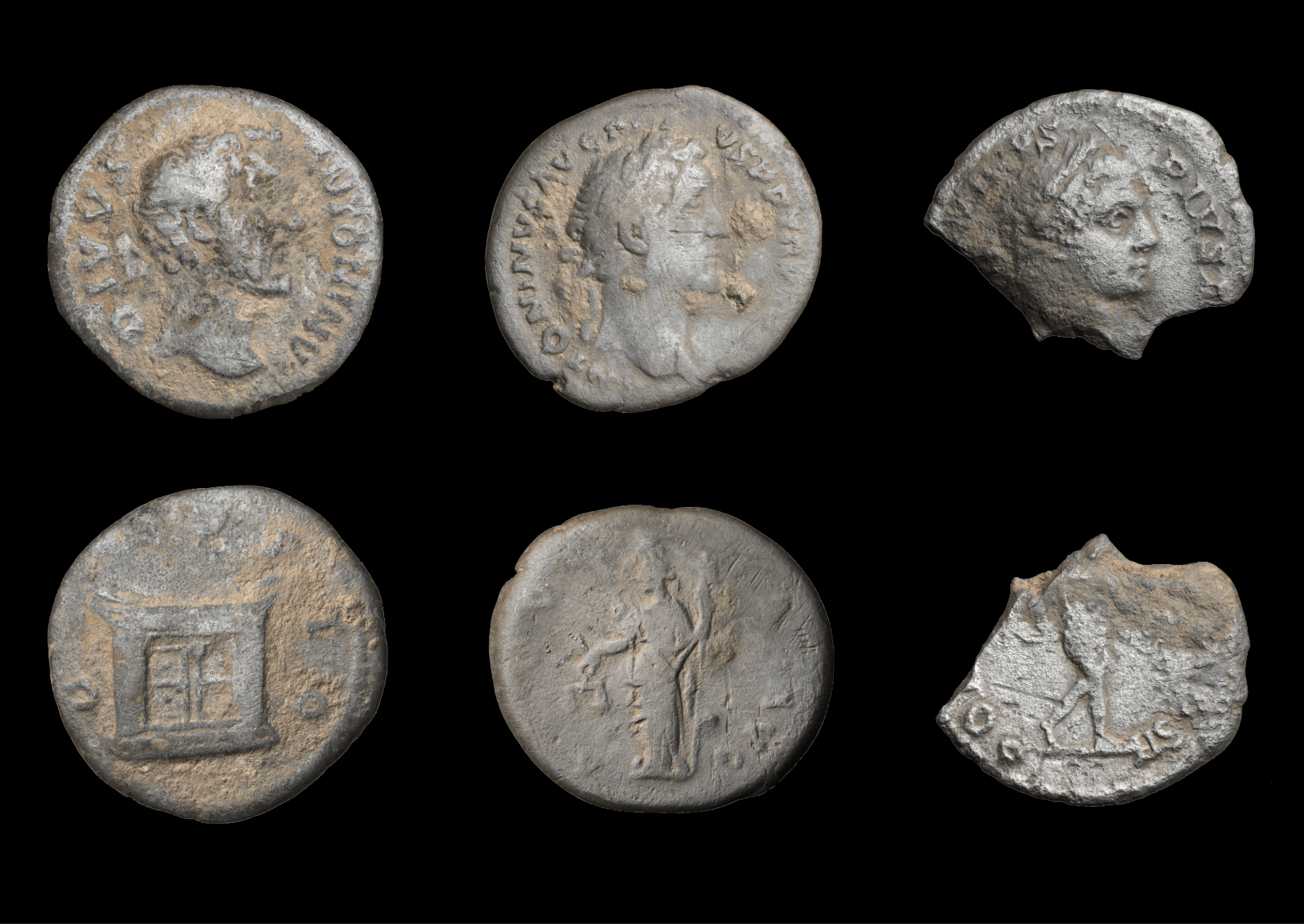
The artifacts include a variety of Roman coins and an unusually large number of nails and bolts. Researchers believe that the nails and bolts were likely attached to the soles of soldiers’ sandals to increase traction. Radiocarbon dating of the objects places them in the early third century, which just so happens to coincide with a military campaign in Germany launched by Emperor Caracalla.
The newly discovered camps bring concrete physical evidence to theories that were previously only suggested by letters and indirect artifacts. And none of that would have happened if it weren’t for a curious hobbyist looking through images.
