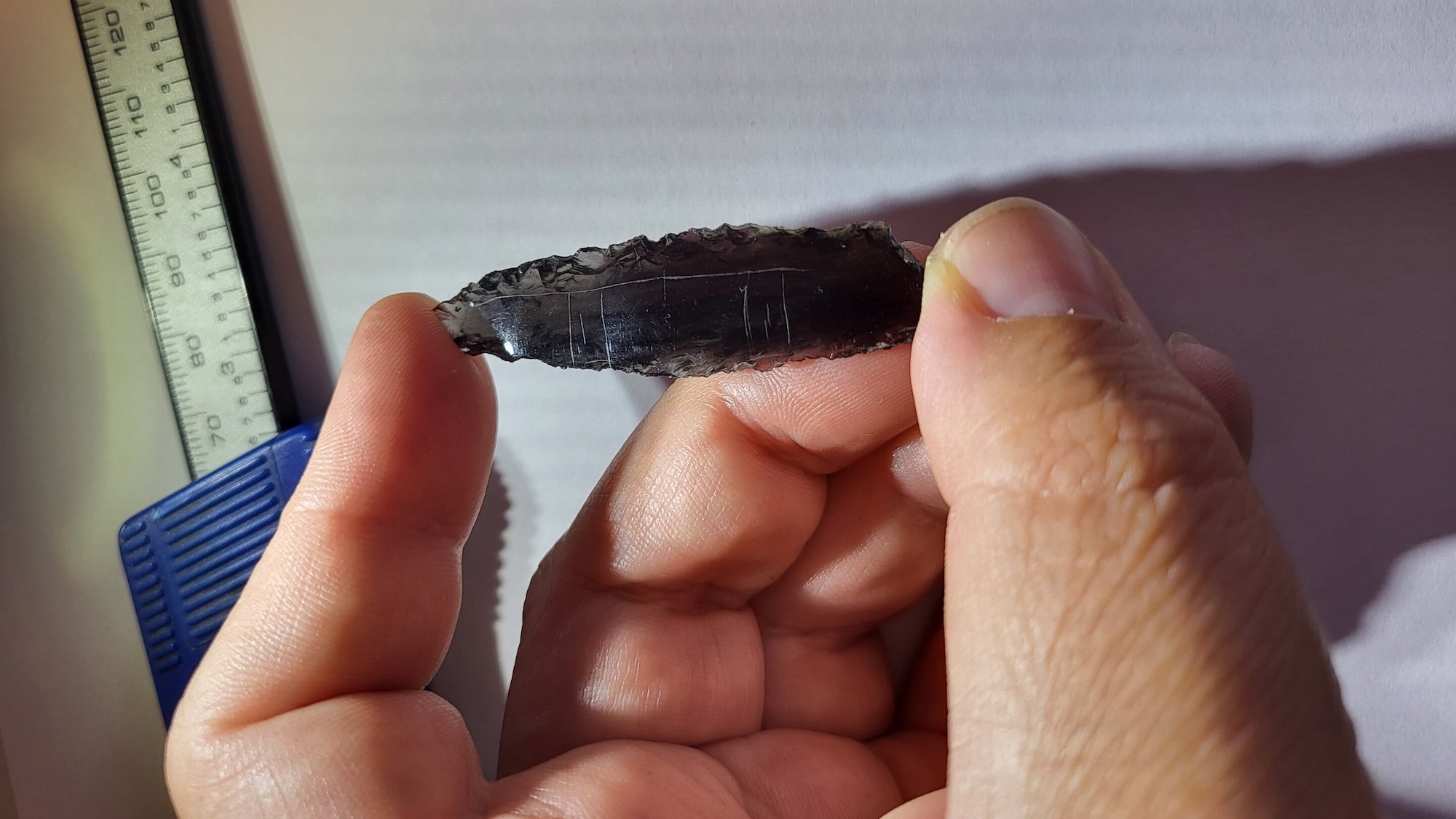
A set of carefully etched obsidian arrowheads stick out among other similar artifacts, but archaeologists in central Turkey have still amassed dozens of them over the last 40 years. Following excavation work at a site in Anatolia known as Tepecik-Çiftlik, researchers from France’s Aix Marseille Université have catalogued and described another 11 examples of the weapon tips in a recently published study in the journal PLOS One. But while 54 similar arrowheads—some crafted nearly 9,000 years ago—are now documented, a decisive explanation of their features still eludes their discoverers.
“It was very exciting to see similarities emerging across the different sites,” explained archaeologist and study co-author Alice Vinet. “At the same time, every arrowhead is unique: none of the incisions are exactly alike.”
Researchers have collected hundreds of arrowheads from central Anatolia that date back to the Late Neolithic era. Many of the tools were found in the remains of the village Tepecik-Çiftlik on Turkey’s Melendiz plain. Humans resided in the region between roughly 7,100 and 5,800 BCE, where they farmed, herded, and sometimes hunted. The plain is also located between two vast sources of obsidian, which was an indispensable resource at the time. Many ancient communities around the world often valued the volcanic glass for its glossiness and extremely sharp edges.
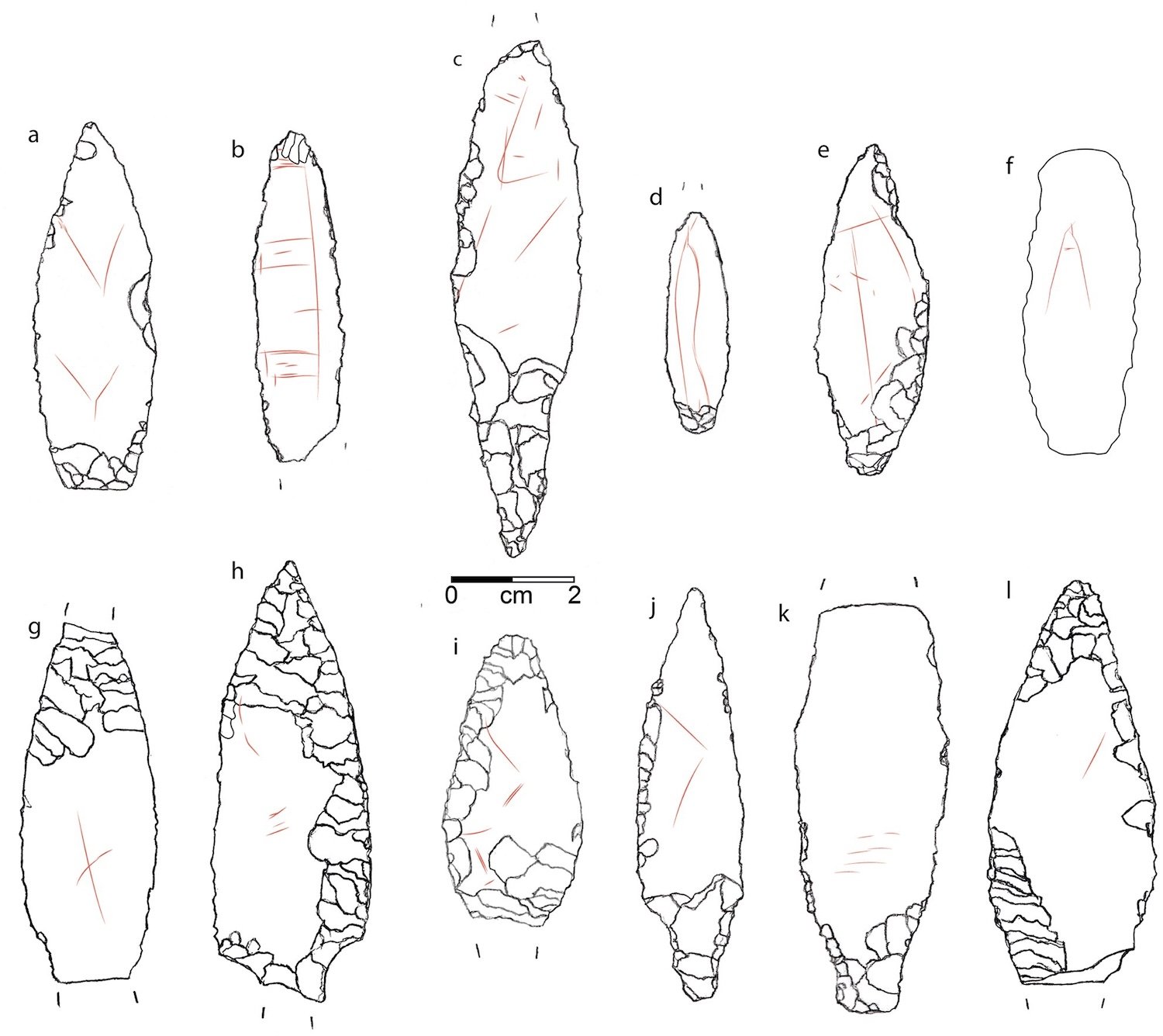
The strangely marked arrowheads were first described by archaeologist Kathryn Ataman in 1988, who examined 31 of them from a nearby location. At the time, Ataman theorized that each arrowhead’s incision represented a type of signature for each hunter that allowed them to claim their kills. Given that only a handful of similar examples have been found over the course of three decades, Vinet’s team and others now argue there simply aren’t enough incised arrowheads among the other unmarked variants to support the hypothesis.
In 2019, one of Vinet’s colleagues discovered yet another of the arrowheads. Reviewing it led Vinet’s team to finally understand which incision hints to examine when reviewing similar finds.
“Once we knew exactly what to look for, we were able to recognize the others,” she said.
Vinet’s 11 additional arrowheads bring the total number to 54, all of which were used within an estimated 1,000-year timeframe. Given their rarity, the archaeologists briefly wondered if the weapon tip incisions were actually simple accidents made during their crafting. They then analyzed each under a microscope, then attempted to recreate the etchings on their own.
They soon realized obsidian can’t scratch obsidian, meaning Neolithic artisans would have needed something much harder—such as the bits of flint also found at places like Tepecik-Çiftlik. Although they could finally make their obsidian arrowhead replicas using flint, the rock only accounts for about one percent of all the flakes found at these archaeological locations. While it was relatively easy to make the markings, some still required over 20 repetitions to complete them. This implies whoever made the incisions must have really wanted to do it.
There is currently no apparent clear pattern to the designs. Some exist in the center of an arrowhead, while others are on the sides. And despite regional obsidian trade during the Neolithic expanding as far as the southern Levant, no similar arrowheads have been found outside central Anatolia. That said, some of the tools potentially suggest at least some broad motifs may be identifiable in the future. Until then, the curious discoveries remain striking—and completely confounding.
“It was very exciting to see similarities emerging across the different sites,” said Vinet. “At the same time, every arrowhead is unique: none of the incisions are exactly alike.”