
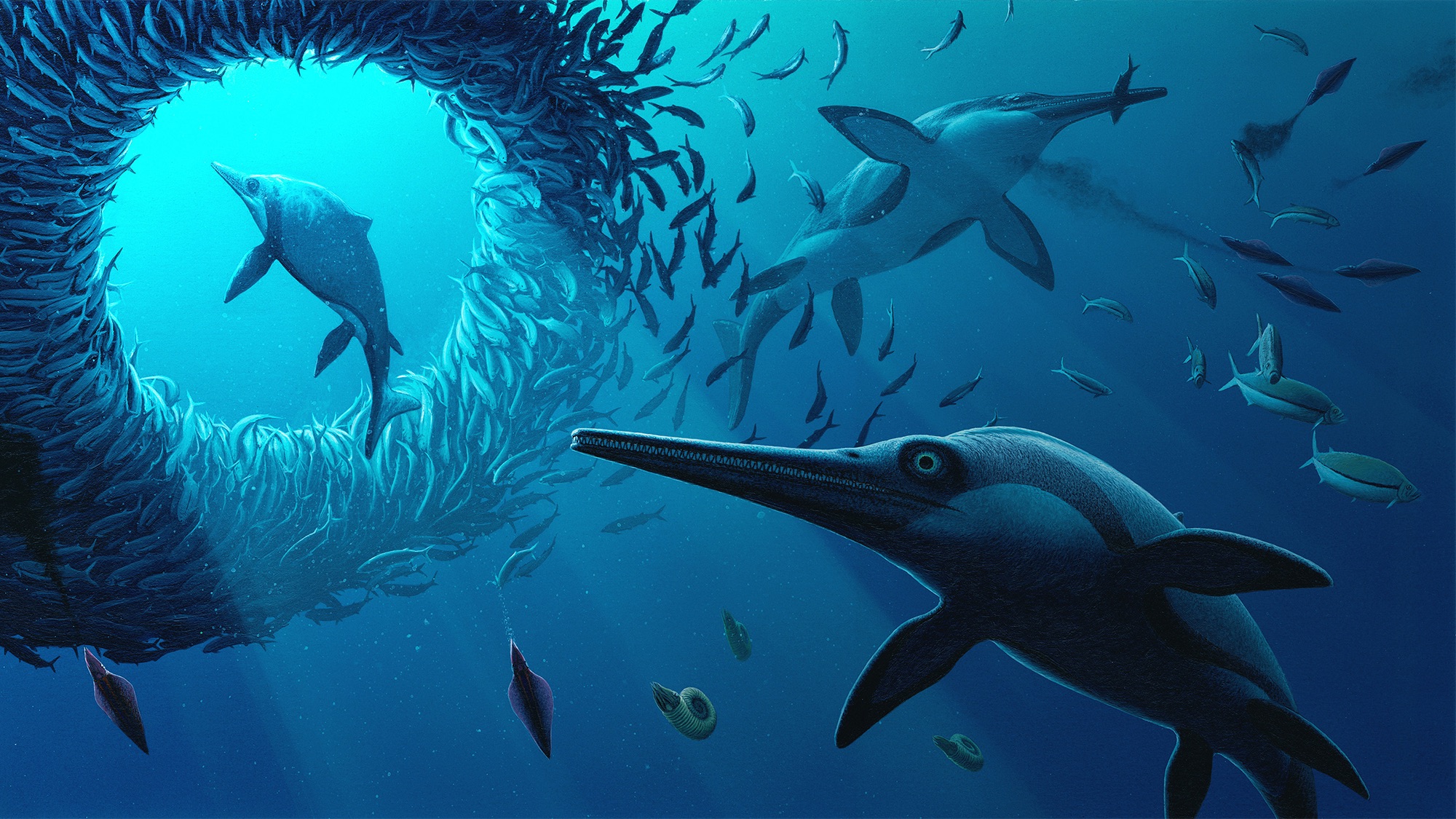
The 95-mile-long Jurassic Coast off of England’s southeastern shore near Dorset continues to live up to its name. The UNESCO World Heritage Site has been the backdrop of dinosaur documentaries featuring beloved historian and naturalist Sir David Attenborough for its numerous discoveries including the mighty ichthyosaur. These prehistoric marine reptiles once stalked ancient oceans and thousands of their fossils have been found in this one spot of English soil since the days of pioneering palaeontologist Mary Anning.
Now, a nearly complete ichthyosaur skeleton recently found along the Jurassic Coast represents a new and rare species called Xiphodracon goldencapensis or “Sword Dragon of Dorset.” The reptile–about the size of a dolphin–is the only known example of its kind and helps fill in major gaps in the fossil record. It is described in a study published this week in the journal Papers in Palaeontology.
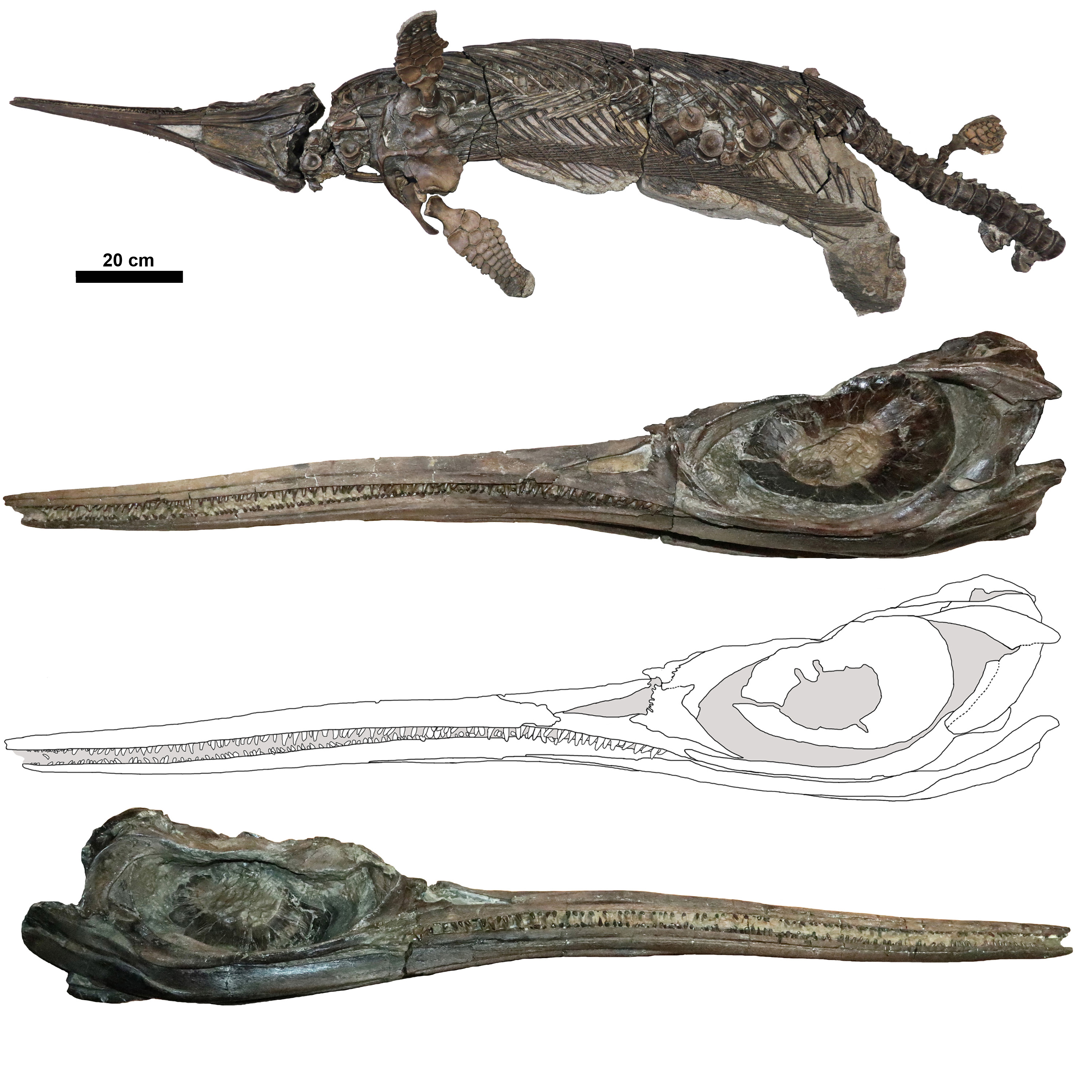
Dorset fossil collector Chris Moore discovered the skeleton.by. Remarkably, it is almost perfectly preserved in three dimensions. It includes a skull with an enormous eye socket and a long sword-like snout and would have stood almost 10 feet long. It likely survived on squid and fish–with traces of its last meal preserved inside the fossils.
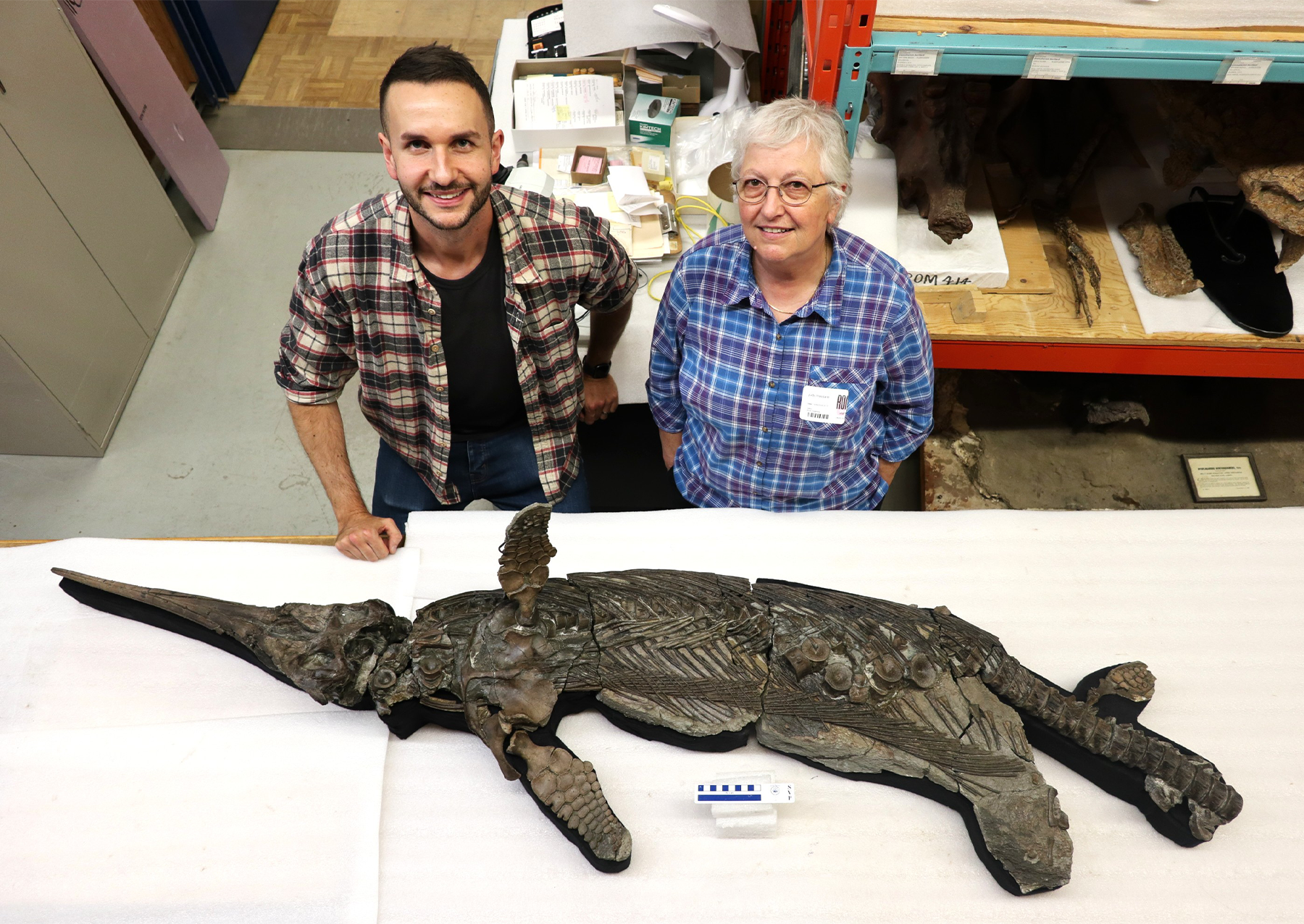
“I remember seeing the skeleton for the first time in 2016,” study co-author and paleontologist Dr. Dean Lomax said in a statement. “Back then, I knew it was unusual, but I did not expect it to play such a pivotal role in helping to fill a gap in our understanding of a complex faunal turnover during the Pliensbachian. This time is pretty crucial for ichthyosaurs as several families went extinct and new families emerged, yet Xiphodracon is something you might call a ‘missing piece of the ichthyosaur puzzle.’”
Ichthyosaurs from the Pliensbachian (about 193–184 million years ago) are incredibly rare, and Xiphodracon is a vital piece of evidence for scientists studying the critical but poorly understood time in ichthyosaurian evolution. One of Xiphodracon’s most peculiar features is an odd bone around the nostril–called a lacrimal–with prong-like bony structures.
“One of the coolest things about identifying a new species is that you get to name it!” said Loma, an expert on ichthyosaurs. “We opted for Xiphodracon because of the long, sword-like snout (xipho from Greek xiphos for sword) and dracon (Greek and Latin for dragon) in reference to ichthyosaurs being referred to as ‘sea dragons’ for over 200 years.”
The Royal Ontario Museum in Toronto, Canada plans to display the skeleton.
