
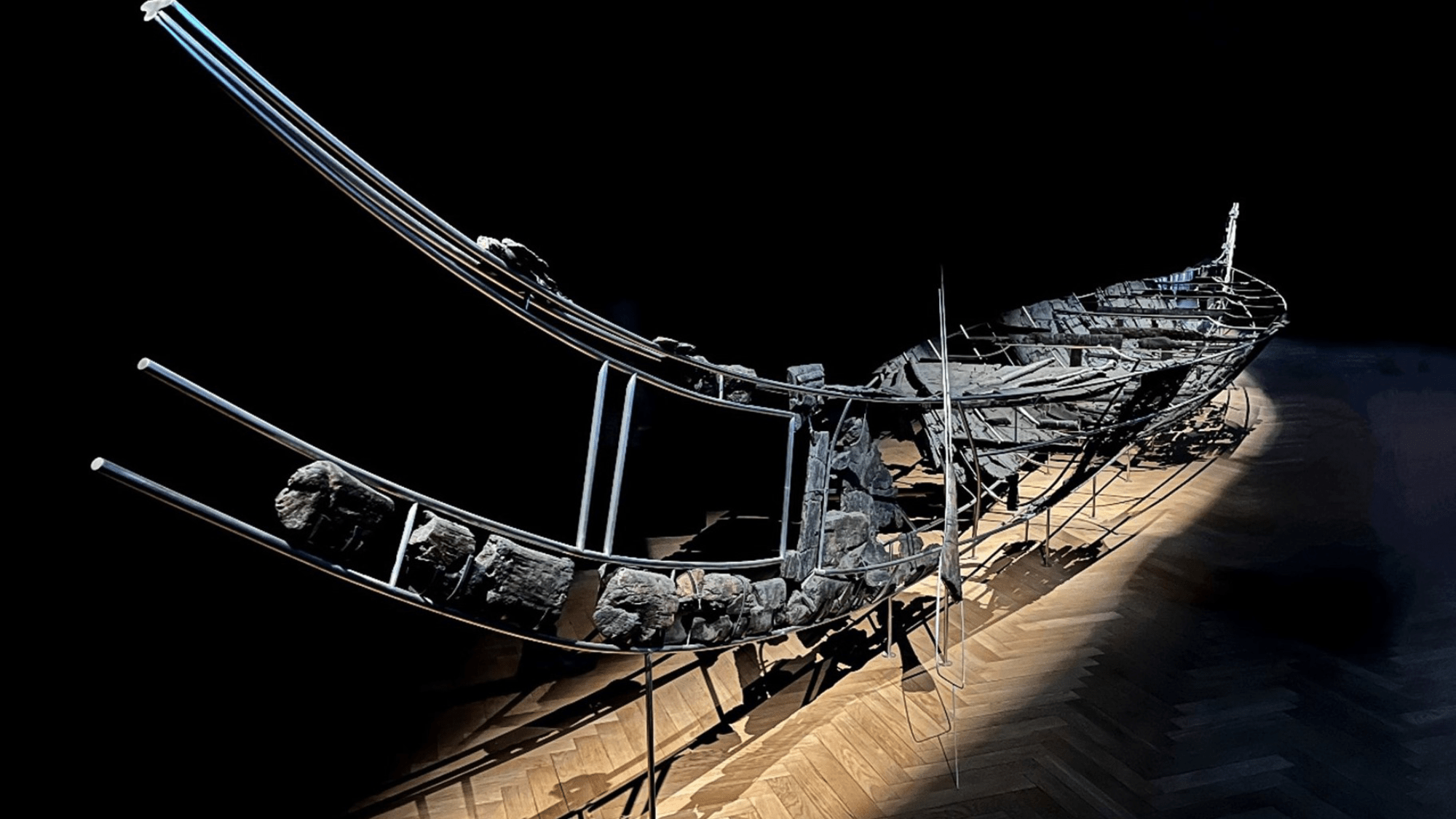
Archaeologists examining an ancient boat discovered in Denmark over a century ago are getting some help from a clue usually associated with crime scenes. A human fingerprint left on the Hjortspring Boat brings archeologists closer to figuring out which ancient European group sailed on this 2,400-year-old boat. The findings are detailed in a study published today in the journal PLOS One, and are helping scientists understand where shipbuilders of the oldest plank-built vessel in northern Europe may have come from.
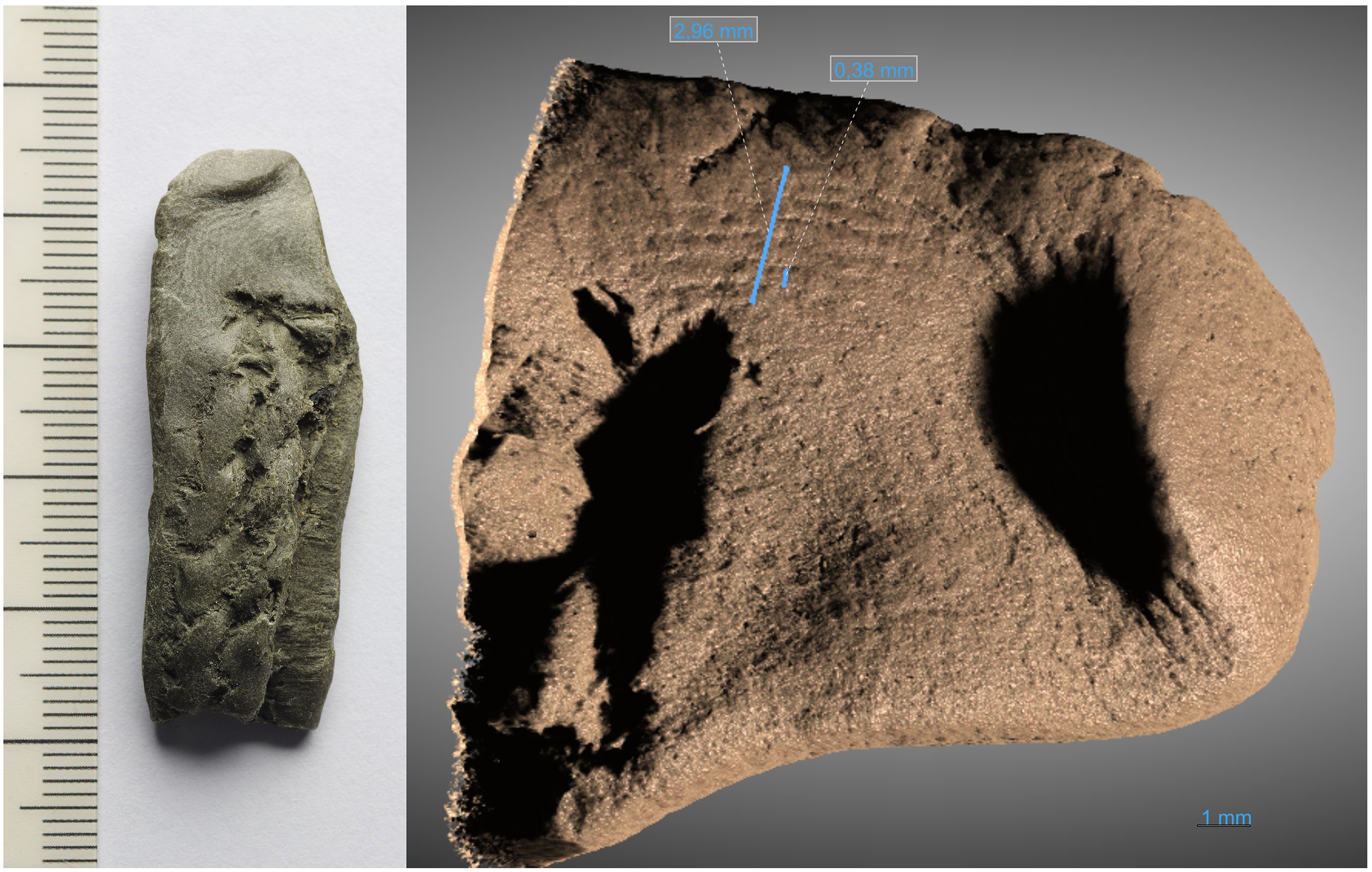
“Finding a fingerprint on the tar fragments from the boat was a big surprise for us. Fingerprints like this one are extremely unusual for this time period,” the study’s authors wrote in a statement.
Fauvelle et al., 2025, PLOS One.
What is the Hjortspring Boat?
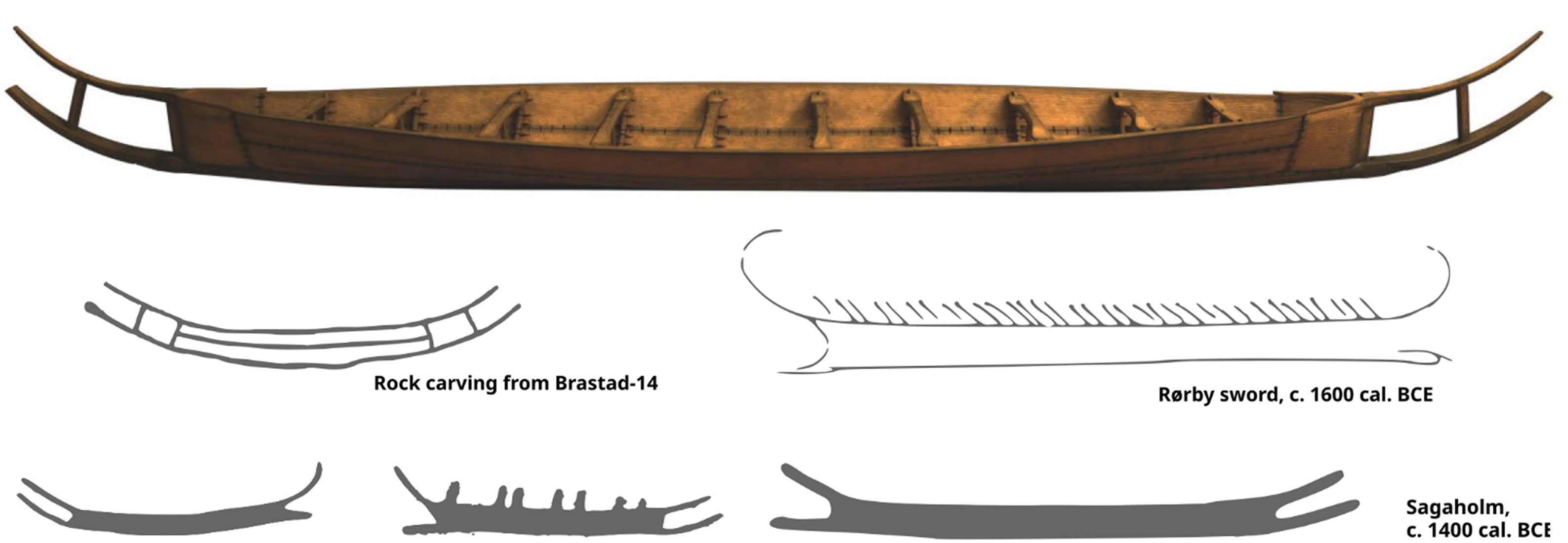
The Hjortspring Boat is considered northern Europe’s oldest known plank-built vessel. At about 65-feet-long and over 1,000 pounds, it could carry 24 people along with their weapons and other gear. Builders used lime wood to add flexibility to the boat and made the paddles from maple trees. According to the National Museum of Denmark, the Hjortspring Boat is evidence of shipbuilding with roots dating back to at least the Bronze Age (roughly 3300 BCE to 1200 BCE).
“The boat was used by a small army of invaders who attacked the island of Als in southern Denmark over 2,000 years ago,” the team wrote. “The invaders were defeated and the local defenders sunk the boat into a bog as an offering to give thanks for their victory.”
The boat was first excavated in a bog on the Danish island Als in the early 1920s and has remained a mystery ever since. Archaeologists have not previously determined where these warriors came from and when.
“The boat was excavated before modern dating methods were available and most of the material from the boat was immediately conserved using chemicals that make radiocarbon dating impossible,” said the team. “Going through the archives, however, we were able to find some original cordage that had not been conserved. We obtained a radiocarbon date from the cordage that returned a date range of between.”

Fingerprint of ancient seafarer found on Scandinavia’s oldest plank boat
Pine pitch and prints
In this new study, a team from Lund University in Sweden, searched for more clues about the boat’s origins. Over the past 100 years, several boat origin theories have been proposed, namely that the invaders came from northern Germany or a different part of present-day Denmark.
“The weapons they used, which were found in the boat, were quite common for the time and were used throughout Northern Europe, giving us few instructions as to their origins,” the authors said.
The team carbon-dated and analyzed some previously unstudied caulking and cord materials found with the boat. The caulk used to seal the boat was likely made up of a mixture of pine pitch and animal fat.
According to the team, that pine pitch is the first major new clue in over a century. When the boat was built, Denmark itself had few pine forests. While it is possible that the pine pitch made its way to Denmark via trade, other coastal areas east of Denmark along the Baltic Sea did have pine forests.
The team believes that it is possible that the boat may have been built here and its warriors came to Als from the east. If true, the boat sailed over the open ocean to reach southern Denmark. Traveling such a long distance potentially indicates that the attack was well organized and premeditated.
Based on carbon dating the cords and caulk, the boat was likely built somewhere 381 and 161 BCE, confirming that the boat was built in the pre-Roman Iron Age. This timeline also lines up with earlier estimates of the wood from the Hjortspring site.
However, there was one other clue of note: the partial human fingerprint in the caulking material used to waterproof the boat. While they could not determine exactly who left it the way that modern fingerprint analysis can, it likely was left by one of the crew members of the vessel, “providing a direct link to the seafarers of the ancient vessel.”
With pine pitch clues and now some fingerprints, we are inching closer to solving this Iron Age boat mystery.
