
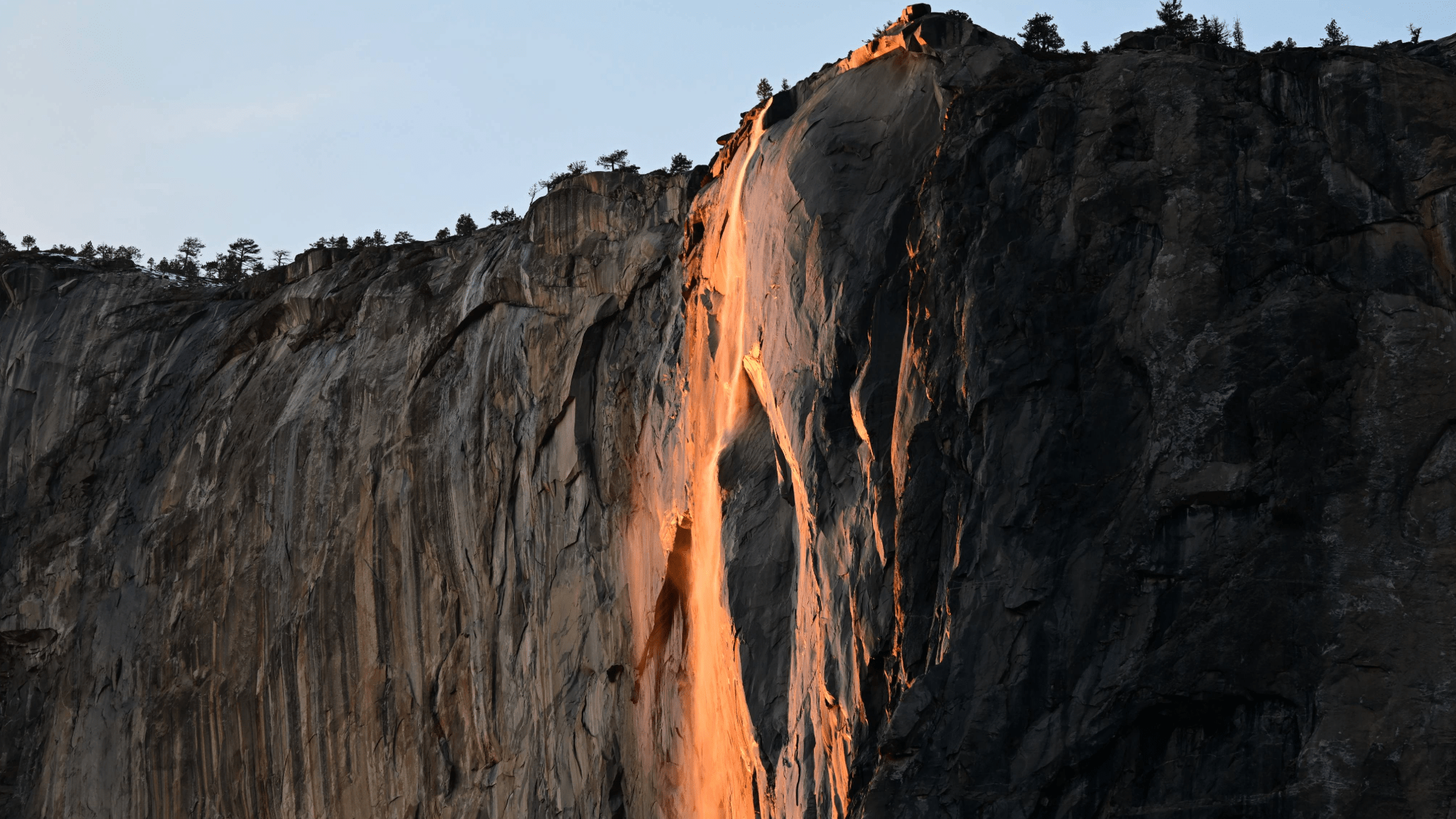
As if California’s Yosemite National Park wasn’t magical enough, its famous El Capitan rock formation is graced with an exhilarating phenomenon every February. The Horsetail Fall—a waterfall that falls across the formation’s eastern side—can take on an otherworldly gleam during the latter part of the month.
During those gorgeous moments, the water flow looks like a stream of gold hurtling down the rock face, and it’s hard to believe that it’s just nature doing its thing. If that sounds like a wonderful sight, you’re in luck. It’s that time of year again.
“Yosemite National Park is preparing to welcome visitors for the 2026 Horsetail Fall viewing period, projected for February 10–26, when the setting sun can illuminate the waterfall on El Capitan with a fiery glow,” the park recently announced on social media.
The effect is rare and depends on a lucky intersection of events. It is limited to clear evenings, for example, and the waterfall needs to be active, which tends to be just a winter affair.

Image: Firefall photo courtesy of the Yosemite Archives. Horsetail Fall photo by Christine Fey.
“Because the effect depends on natural conditions, including water flow, clear skies, and the angle of the sun, travelers may wish to plan for multiple evenings,” the post continued.
Visitors hoping to witness the spectacular event should plan for winter conditions and arrive with plenty of time. As for the park staff, their aims are on two fronts: making sure people have a positive and safe visit, and also safeguarding the park.
“Historically, the sunset backlight on Horsetail Fall was little known. However, in recent years, visitation around this event has increased dramatically,” reports the National Park Service. As we know all too well, however, more people usually means more problems, and the park service highlights how visitors have stressed and polluted the environment in the past.
So if you’re headed to Horsetail Fall, be respectful of the environment and follow the park’s guidance for your own safety. For everyone else, here’s to hoping some jaw-dropping photos make it to social media soon!
Related National Parks Stories
