
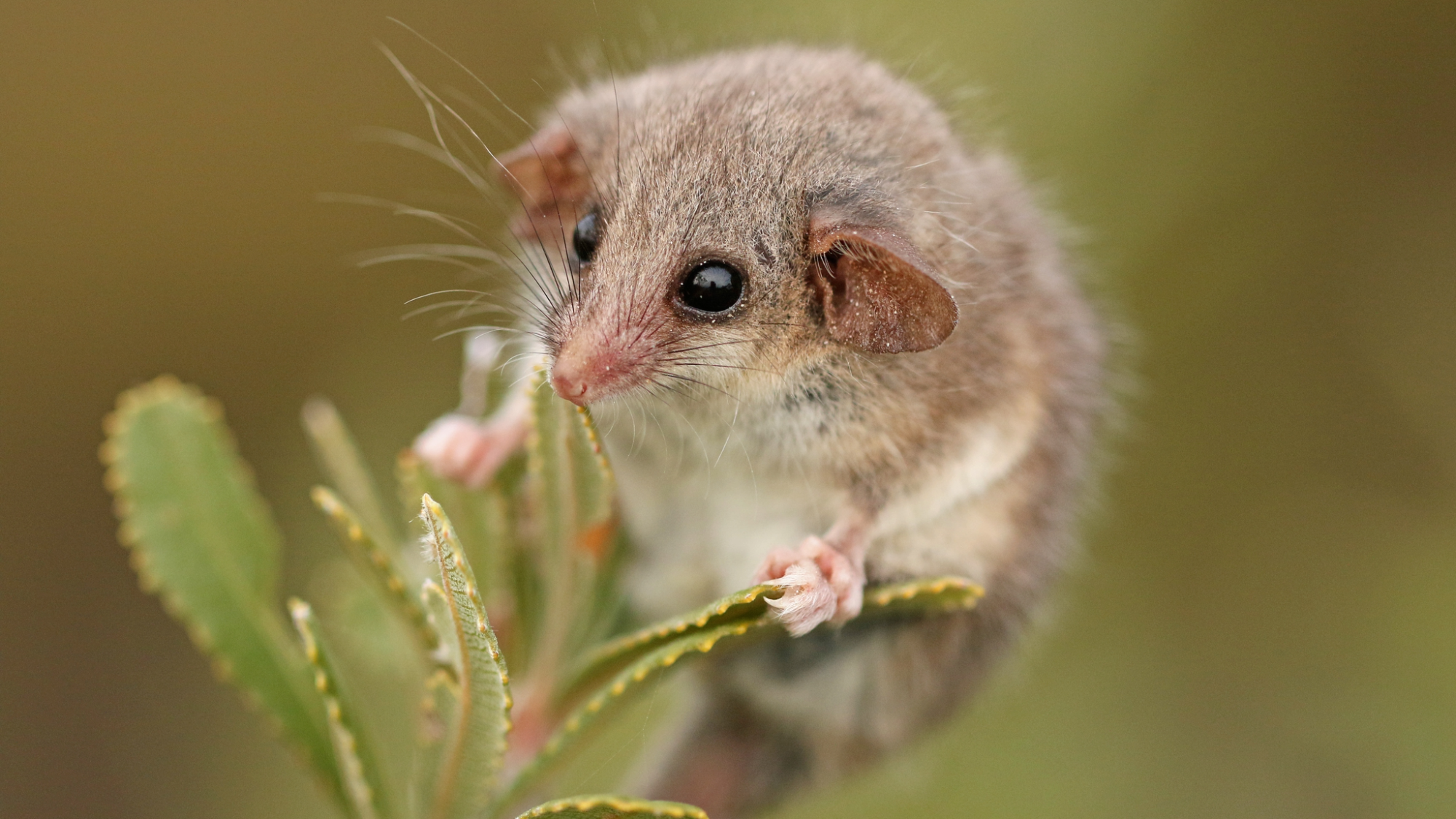
Weighing less than one pound, the little pygmy possum (Cercartetus lepidus) is one of the smallest mammals in Australia. These miniscule mammals feed on nectar, pollen, and insects, and differ from opossums. Opossums live in the United States and parts of Canada and have a bare tail instead of a furry tail. Possums live in Australia, New Zealand, and China and have rounder bodies and softer features.
The little pygmy possum is only currently known to exist in Tasmania, parts of the states of Victoria and South Australia, and on Kangaroo Island. However, that may be changing.
A population of little pygmy-possums may also be living in South Australia’s Dhilba Guuranda–Innes National Park on the Yorke Peninsula. This spot is over 120 miles—and across the St. Vincent Gulf—away from the nearest known population on Kangaroo Island. The findings detailed in a study recently published in the journal Australian Zoologist are based on a re-examination of several photographs taken during the protected area between 2004 and 2011. The cameras spotted the closely-related western pygmy possum (Cercartetus concinnus), but two animals photographed in December 2006 stood out. Instead of having white fur on their bellies—called ventral fur—like western pygmy possums, these creatures sported the grey ventral that little pygmy possums have.
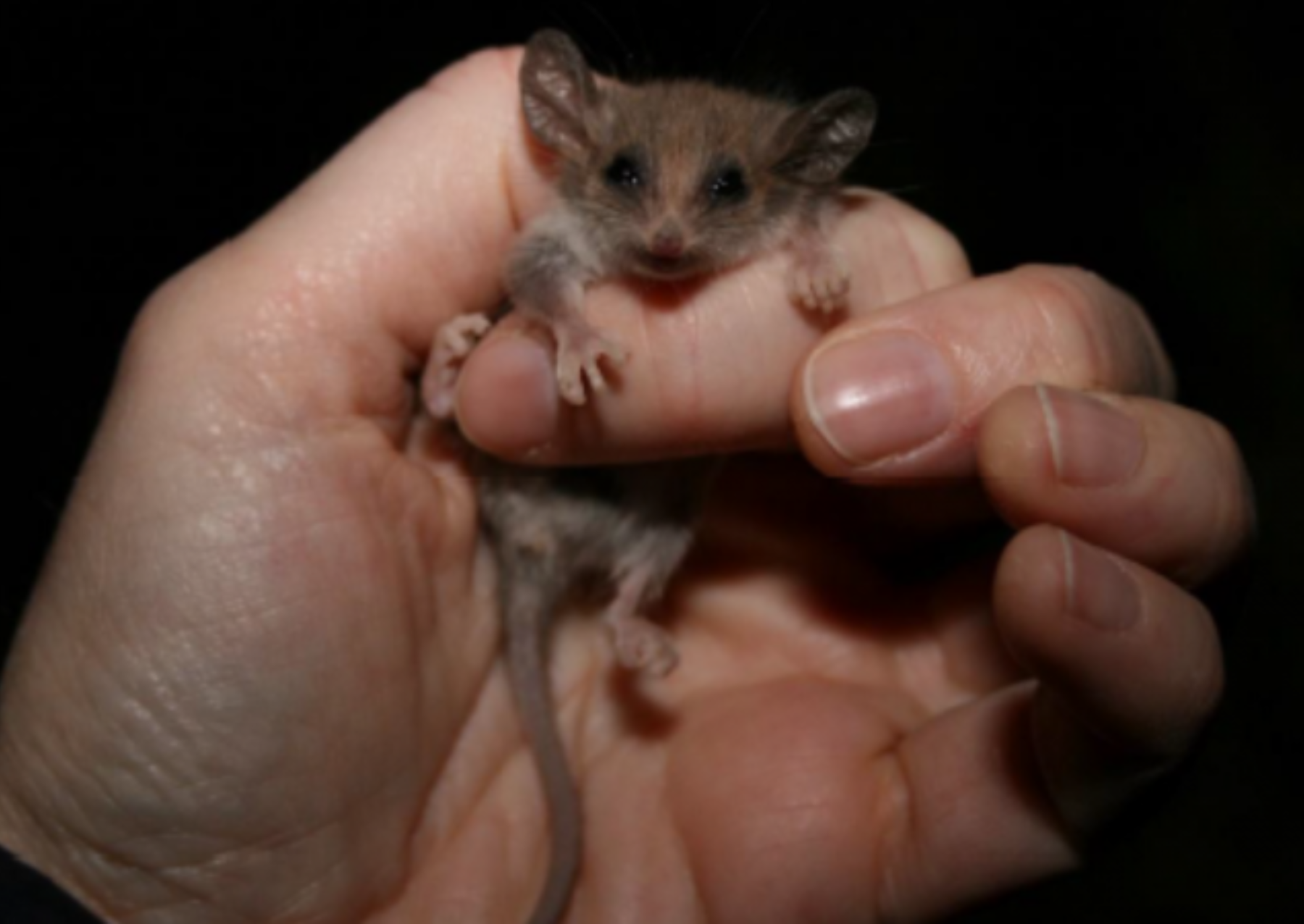
“There is no museum or other record of little pygmy possums for the Yorke Peninsula,” Dr. Sophie (Topa) Petit, a study co-author and ecologist at Adelaide University, said in a statement. “Although the animals looked slightly different from western pygmy possums, they were labelled as juveniles, because no one in the team expected to discover a new mammal species for the Yorke Peninsula.”
The mammal has never been confirmed on the Yorke Peninsula in southern Australia, and neither have any fossilized remains. If verified through new surveys of the area, the Yorke Peninsula population would represent a previously undiscovered population that has been potentially isolated for thousands of years since rising sea levels separated Kangaroo Island from the mainland.
Importantly, the discovery is significant given the extensive loss of native vegetation on the Yorke Peninsula. Only about 13 percent of the peninsula’s original habitat remains, with over half concentrated in the southern tip within Dhilba Guuranda–Innes National Park.

“This area is an important refuge for what’s left of the region’s native fauna,” Dr. Petit said. “If the little pygmy possum is still there, it needs urgent attention.”
The possibility that the peninsula is home to this mammal also raises concerns about the impacts of habitat fragmentation and repeated prescribed burning. The burning is aimed to prevent wildfires and restore Indigenous cultural practices and has occurred frequently in the area since the possums were photographed.
“It’s possible that this population has become extinct in the last 20 years, considering its rarity,” Dr. Petit said. “But it would be wonderful to discover it has survived. Adopting a precautionary approach to land management until the species’ status is verified would be the best course of action.”
