

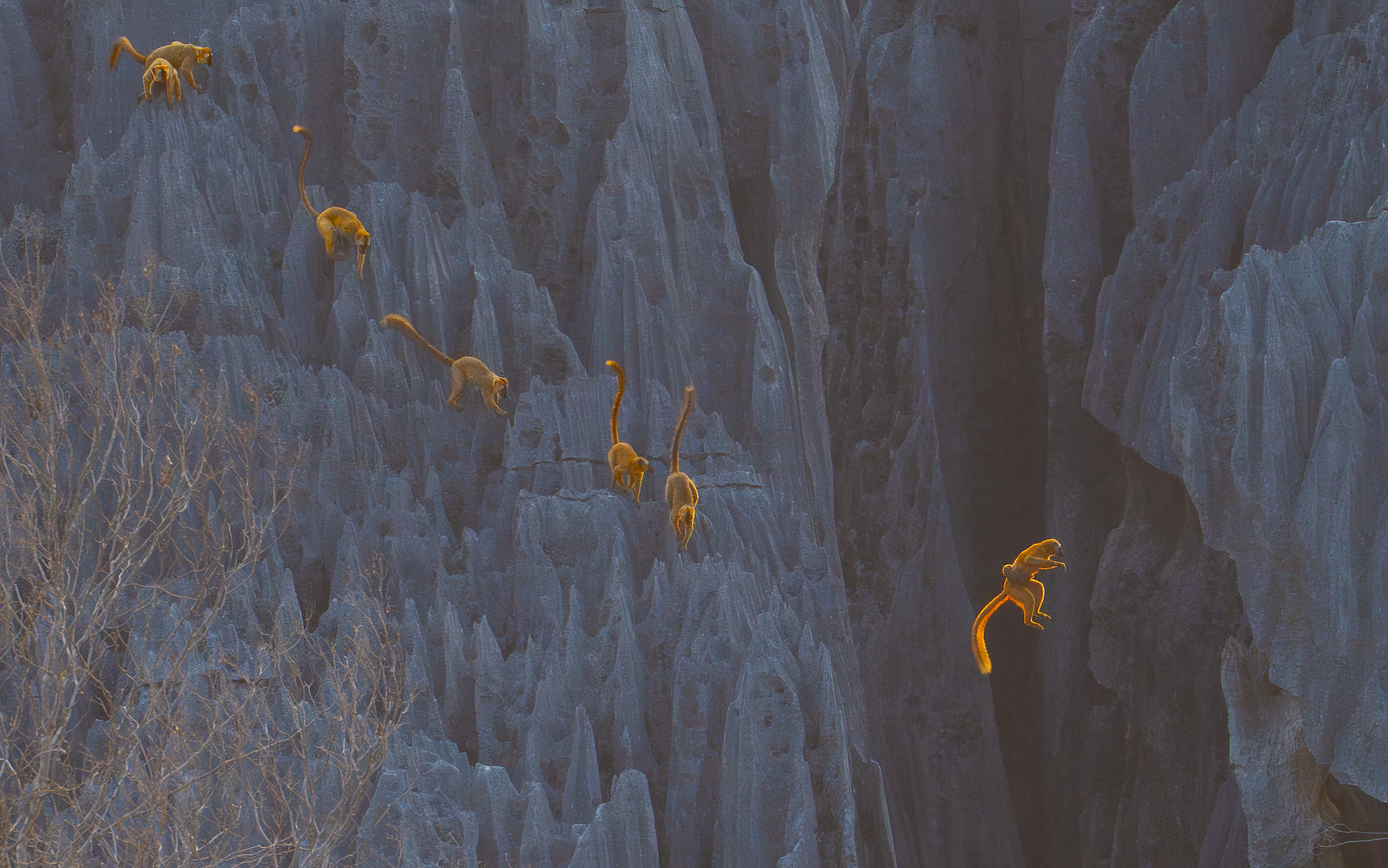
A mother lemur leaps across the rugged limestone cliffs near Tsingy de Bemaraha National Park in western Madagascar. Her daring jump would be impressive on its own, but she’s carrying a passenger: her only weeks-old baby. Photographer Zhou Donglin captured the moment (seen below) and took home the top prize at the BigPicture 2025 awards.
Grand Prize Winner
Lemurs are remarkably lithe creatures. With long tails providing balance and powerful, slender limbs outfitted with opposable thumbs and toes, they move with ease through the craggy limestone spires of western Madagascar’s Tsingy de Bemaraha National Park. Still, leaping over a 30-meter (100-foot) ravine with a baby clinging to your back seems like a daring choice.
To capture this scene, photographer Zhou Donglin had to do some mountaineering of her own. Setting out before sunrise, Donglin spent an hour scrambling to the top of a rocky peak, praying that the elusive brown lemurs ( Eulemur fulvus ) would show. After a day of disappointingly distant sightings, Donglin finally found some luck as a small troop descended through a forest of stone, glowing gold in the late evening light.
In November, when this photo was taken, animals and plants in Tsingy de Bemaraha are nearing the end of a long dry season. After months of minimal rainfall, brown lemurs shift their diets from various fruits to the watery leaves of low-growing plants. This change comes at a vulnerable time for female lemurs, mere weeks after they’ve given birth. With their babies still nursing and unable to travel on their own, the mothers must strike out in search of sufficient water and nutrients — even if that quest requires a bold leap or two along the way.
Credit: Zhou Donglin / BigPicture 2025
BigPicture began in 2014 and has received more than 64,000 images from photographers around the world since launching. The competition honors photographers across multiple categories, including Aquatic Life, Terrestrial Wildlife, Winged, and Human/Nature.
Scroll to see our favorite wildlife images from this year’s contest and visit BigPicture for the full list. (Click images to enlarge to full screen.)
Finalist, Aquatic Life
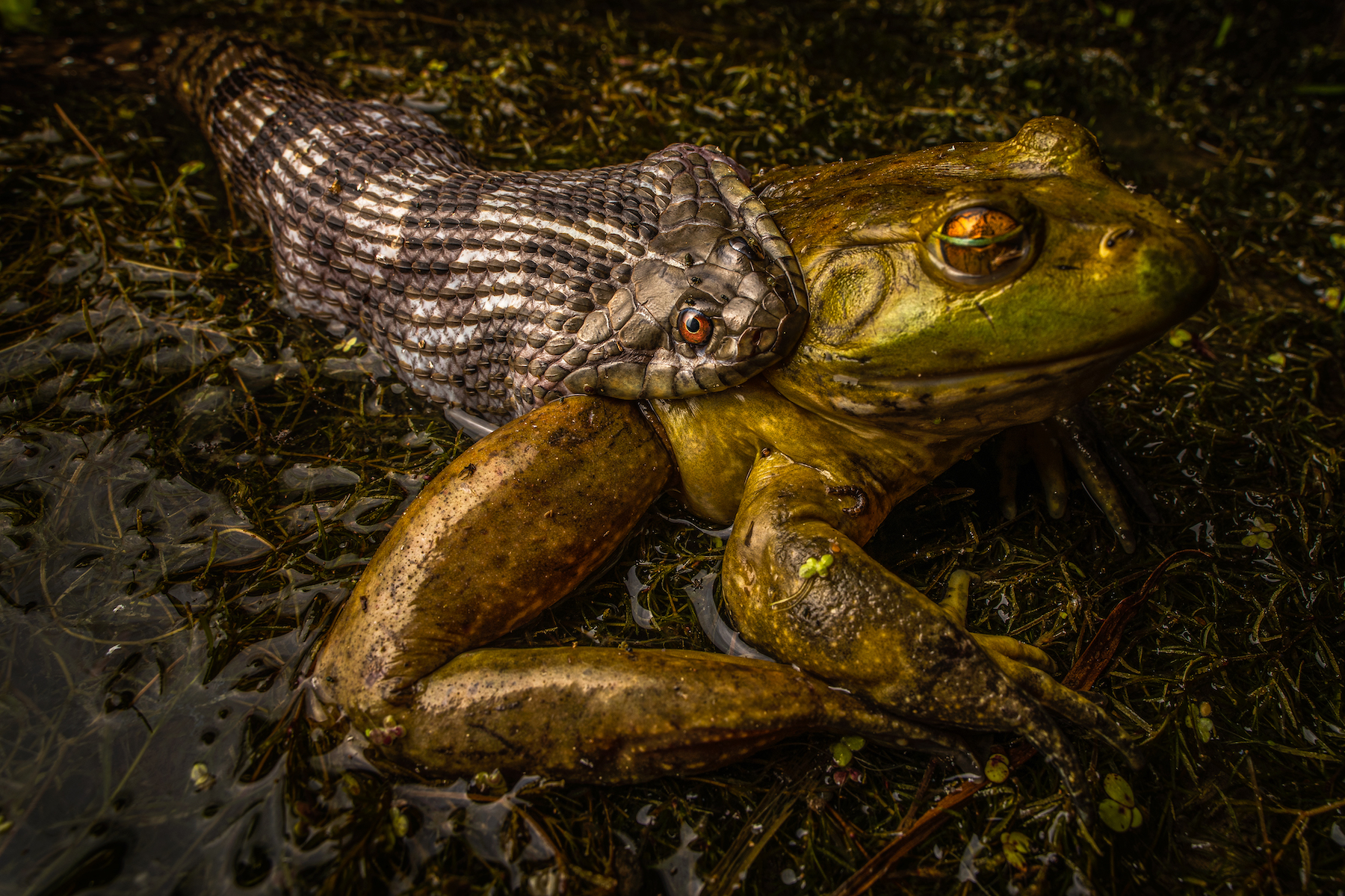
During a night hike in Texas wetland, this photographer came across two common members of the area’s herpetofauna entangled in a predation event: a Diamondback watersnake (Nerodia rhombifer) and American bullfrog (Lithobates catesbeianus). Though these species are often easily observable on their own, this particular scenario is incredibly unusual given its entirely unobstructed scene—making for one unforgettable photo.
Credit: Nick Kanakis / BigPicture 2025

Finalist, Terrestrial Wildlife
Witness the final stage of a parasitic relationship as a beetle larva (family Scarabaeidae) sits frozen against the drifting sand while a fungus (genus Ophiocordyceps) erupts from its head. By the time this image was taken, the insides of this beetle would have been fully consumed by mycelium, with the fungi producing fruiting bodies that almost look like horns to release spores. These spores will go on to infect other insect species, continuing the morbid cycle.
Credit: Sadie Hine / BigPicture 2025
Finalist, Winged
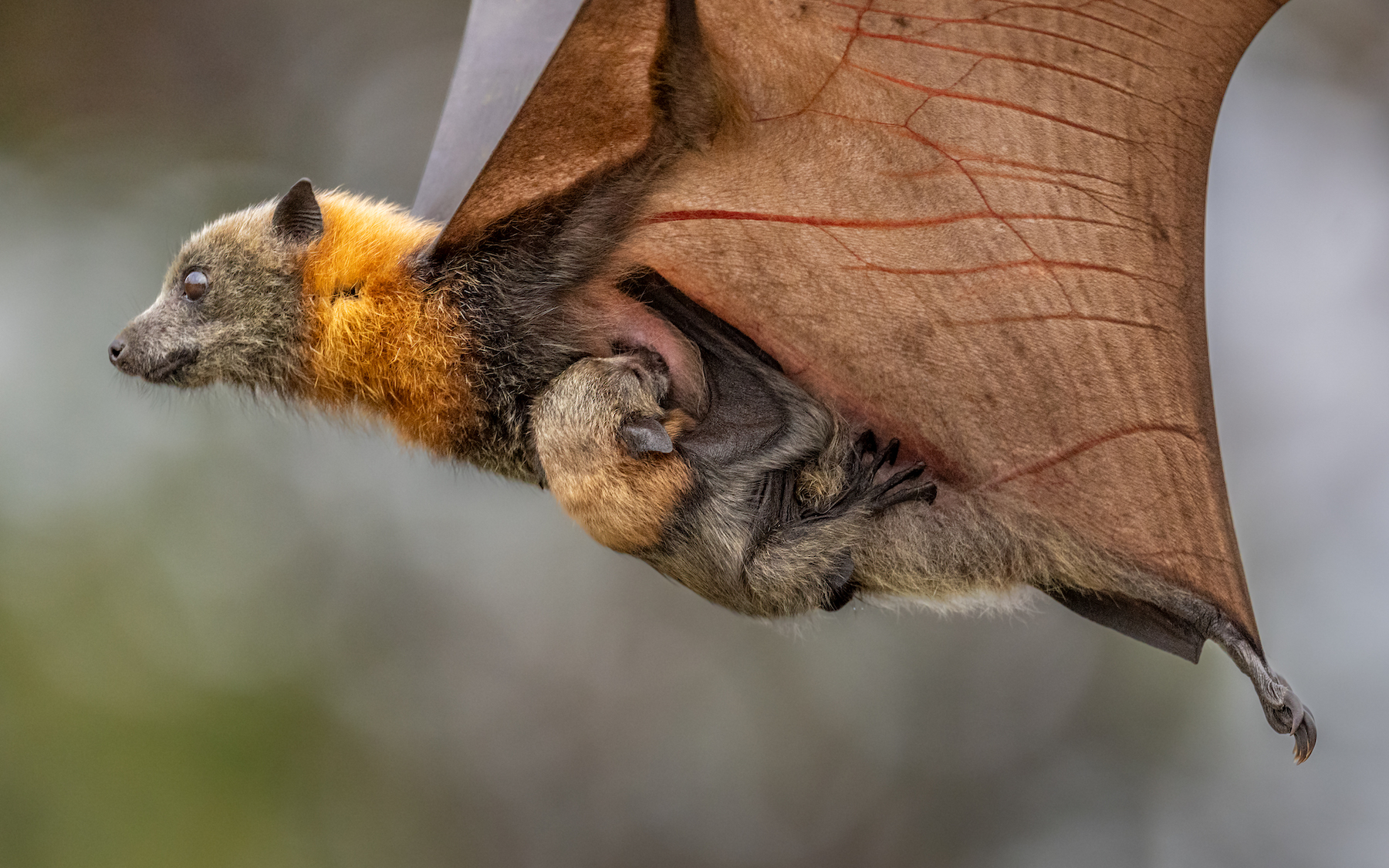
A delightful showcasing of the maternal instincts of a Grey-headed flying-fox (Pteropus poliocephalus) as she glidies through a canopy with her baby in tow. The largest bat in Australia, Grey-headed flying-fox mothers keep their pups attached until they are about three weeks old. At that point the pups are typically too heavy to carry and are left in a roost to await for food until they are strong enough to forage for themselves, often at a risk of exposure to the elements like rain and cold. Those initial weeks of attachment are brief and rarely documented in flight.
Credit: Doug Gimesy / BigPicture 2025
Finalist, Human/Nature
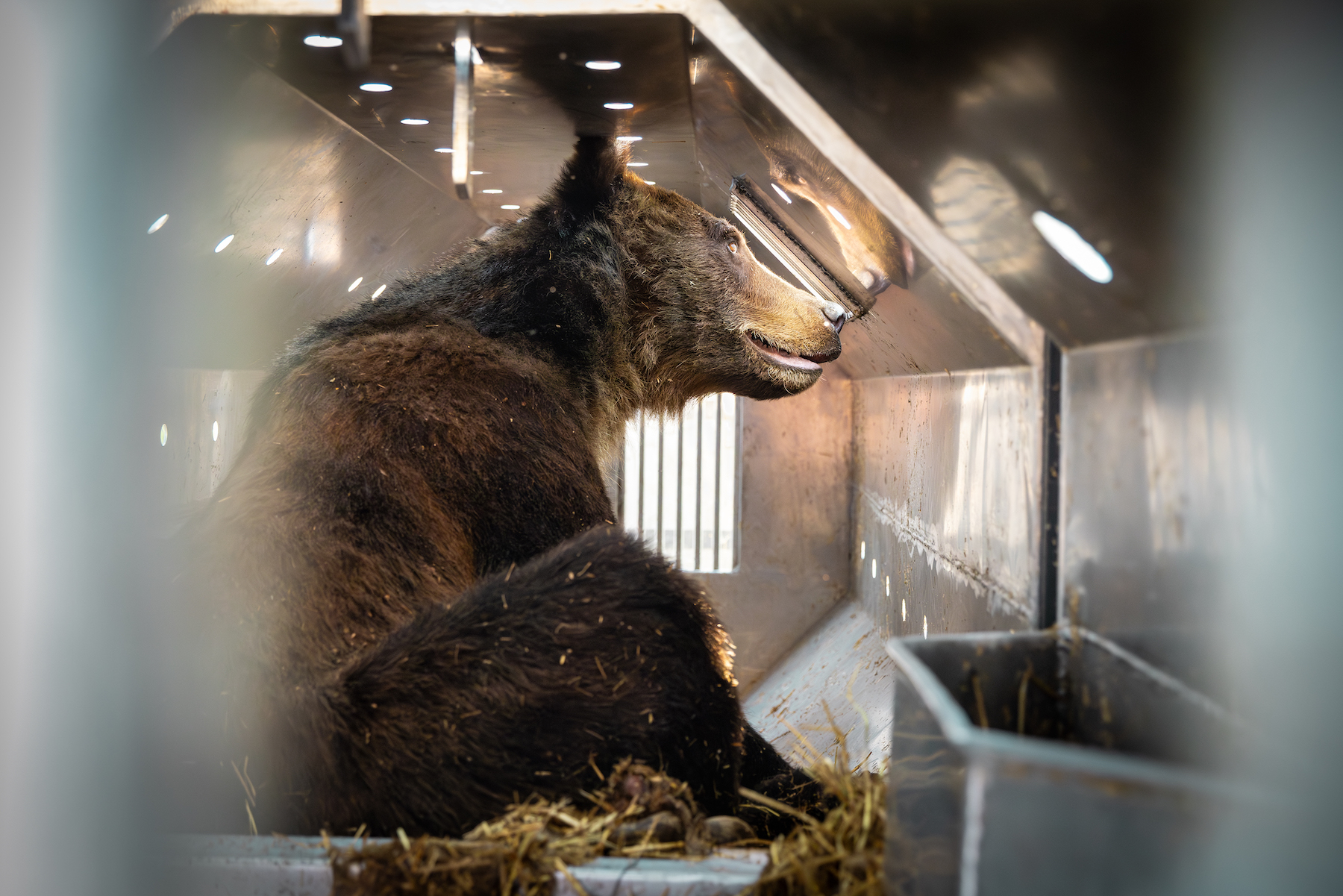
A young Grizzly bear (Ursus arctos horribilis) is captured by wildlife biologists on suspicion of killing two sheep on a community farm. As the human population grows, grizzly bears are left with fewer places to turn for natural diets and are often tempted to go after human food sources— often at great cost to the bear. After capture, this bear looked more confused than anything, and this culvert trap isn’t the most serious one his kind will face. The traps humans put on landscapes––roadways, unsecured attractants, our sprawling human footprint––pose far greater threats over time. Luckily, wildlife specialists were able to perform a health screening, attach a GPS collar to obtain movement data, and relocate this bear. But as the trap door opened and he launched back into familiar habitat, the photographer felt a twinge of conflict: As humans expect this bear to change his habits to survive in the ever-crowded American West, are they willing to do the same?
Credit: Rob Green / BigPicture 2025
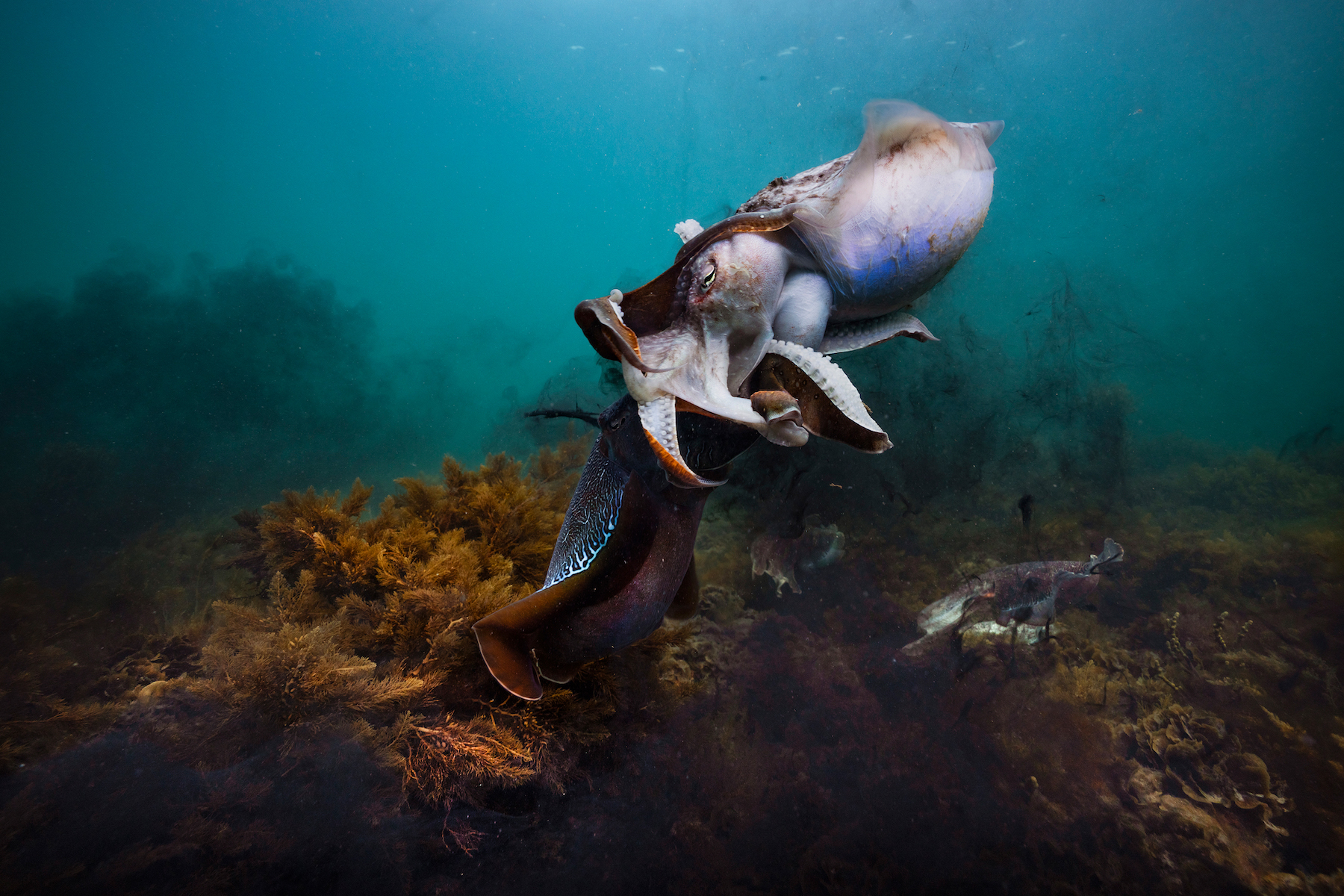
Finalist, Aquatic Life
In this painting-like scene, two male Giant Cuttlefish (Ascarosepion apama) fight over a nearby female. Every winter, these gliding giants gather in Whyalla to mate, lay eggs, and flaunt their camouflaging abilities. Below them, two separate clouds of ink are visible; like most cephalopods, cuttlefish eject ink in order to escape attackers or confuse predators. In this case, that defense mechanism may not have assisted in the struggle!
Credit: Talia Nicole Greis / BigPicture 2025
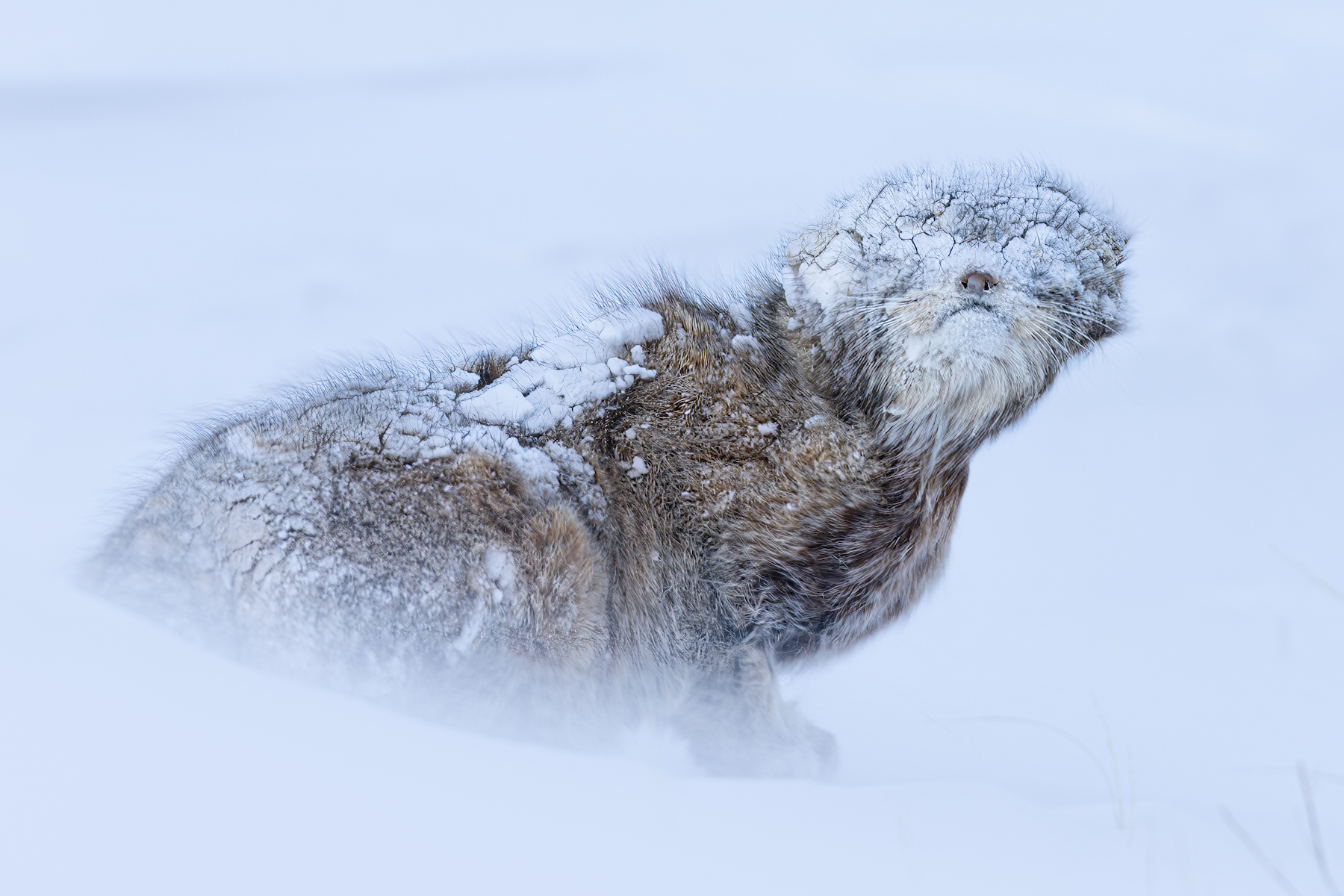
Finalist, Terrestrial Wildlife
A Pallas’ cat’s (Otocolobus manul) eyes are completely covered after a heavy snowstorm. Though this image presents a humorous portrait of a somewhat underseen species, the photographer notes that he wants to bring attention to the challenges faced by some Pallas’ cat populations, particularly in Mongolia. Major threats to the cats include being hunted for their pelts, poisoning of their prey species, and habitat fragmentation.
Credit: Mohammad Murad / BigPicture 2025
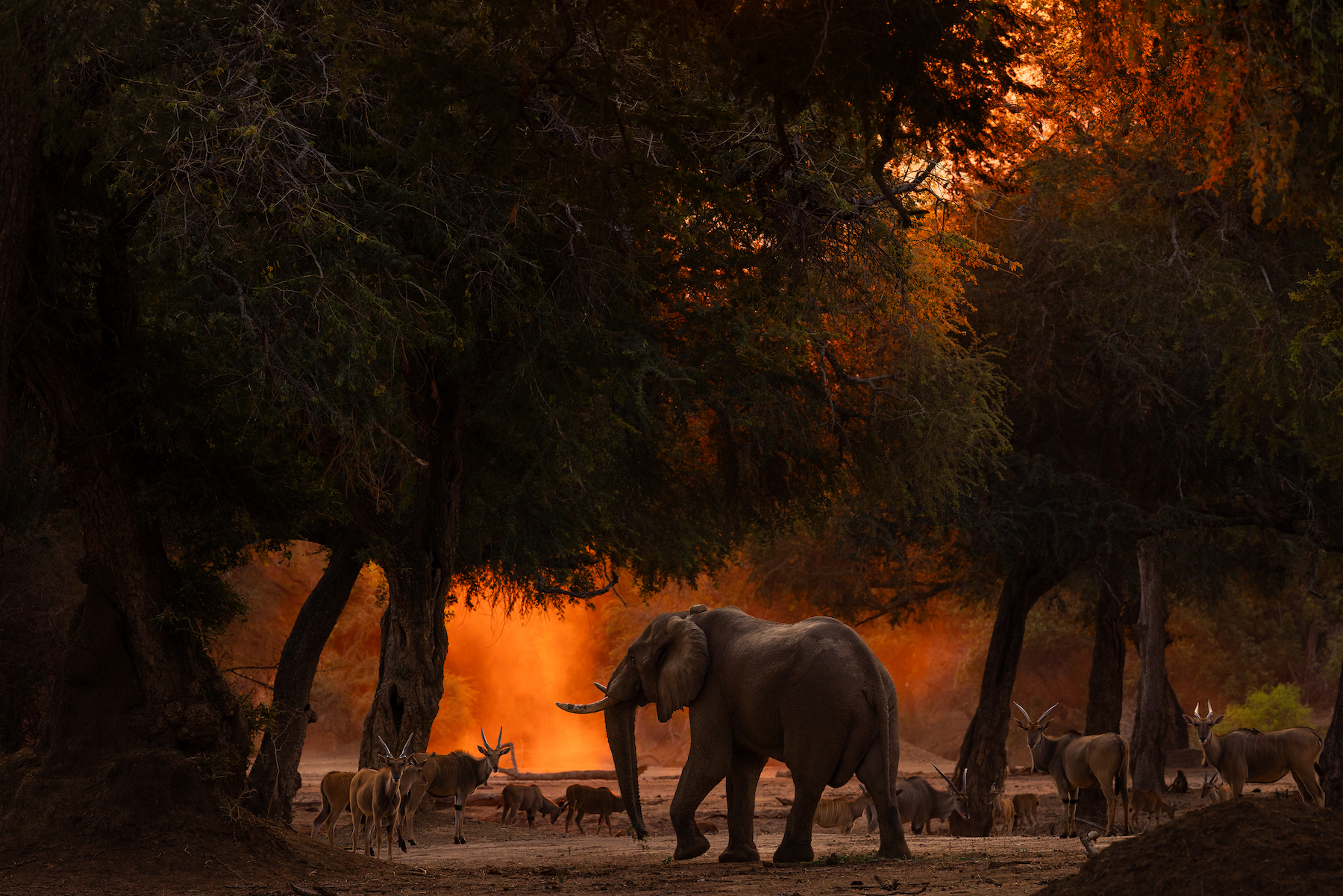
Finalist, Terrestrial Wildlife
Flanked by the magical light of the late dry season, an enchanted forest scene boasts not only an elegant African bush elephant (Loxodonta africana) under an iconic Ana tree, but a herd of Common elands (Taurotragus oryx). While elephants are considered the most emblematic species in the Mana Pools National Park, the eland herd in the photo is also very notable due to their behavior. They are normally very shy and quick to run away from humans and vehicles, but remained peacefully alongside the elephant in this image.
Credit: Charlie Wemyss-Dunn / BigPicture 2025
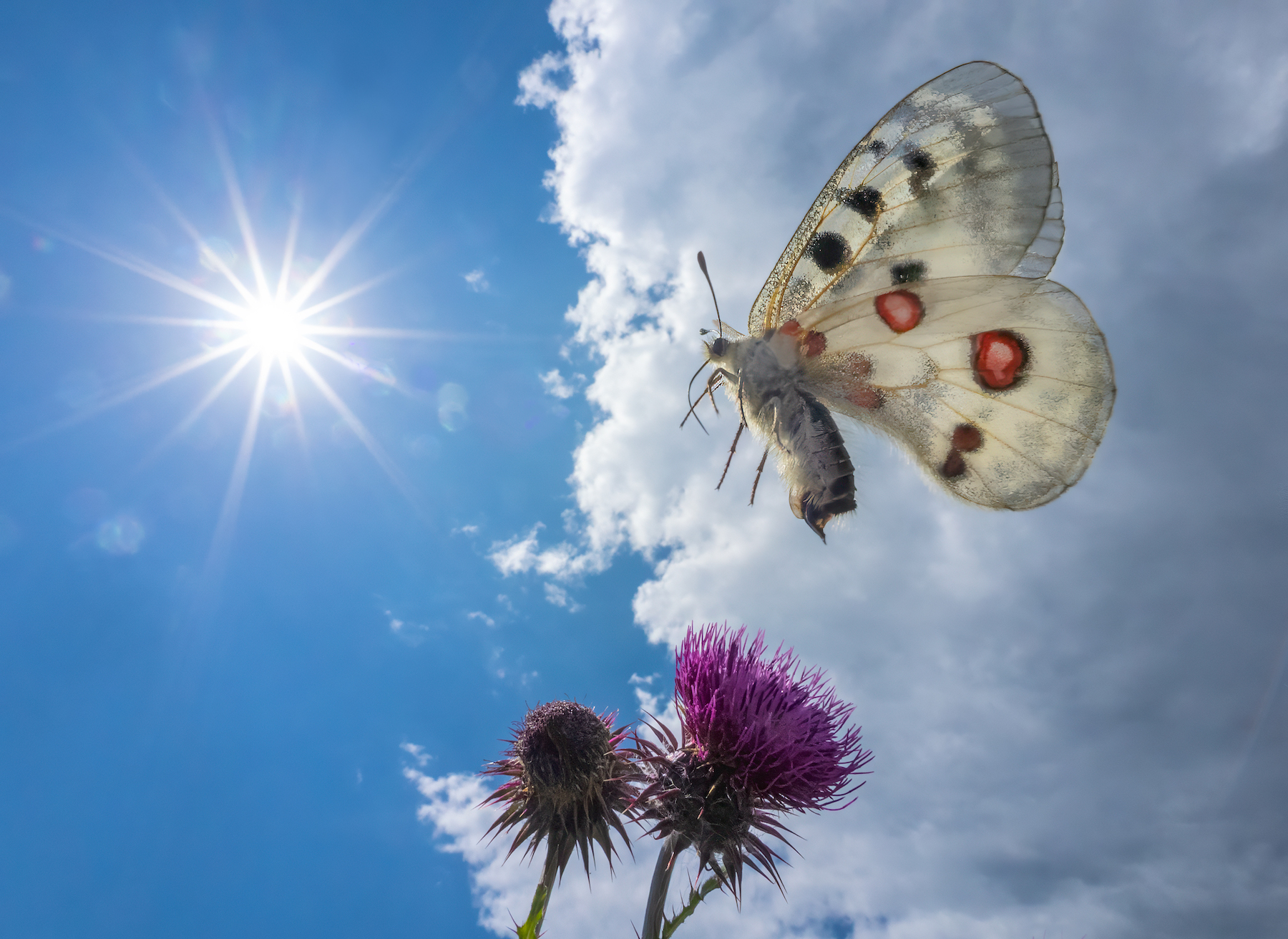
Finalist, Winged
An Apollo butterfly (Parnassius apollo) flies off after taking a long drink of nectar from a thistle (family Asteraceae). Though many may be put off by their prickly nature, thistles are an undersung hero in the biodiversity realm, serving as a favored nectar source among countless species. Ironically enough, the Apollo butterfly produces a repulsive, bitter taste on its skin to detract predators—making the two species more alike than one might think!
Credit: Pål Hermansen / BigPicture 2025
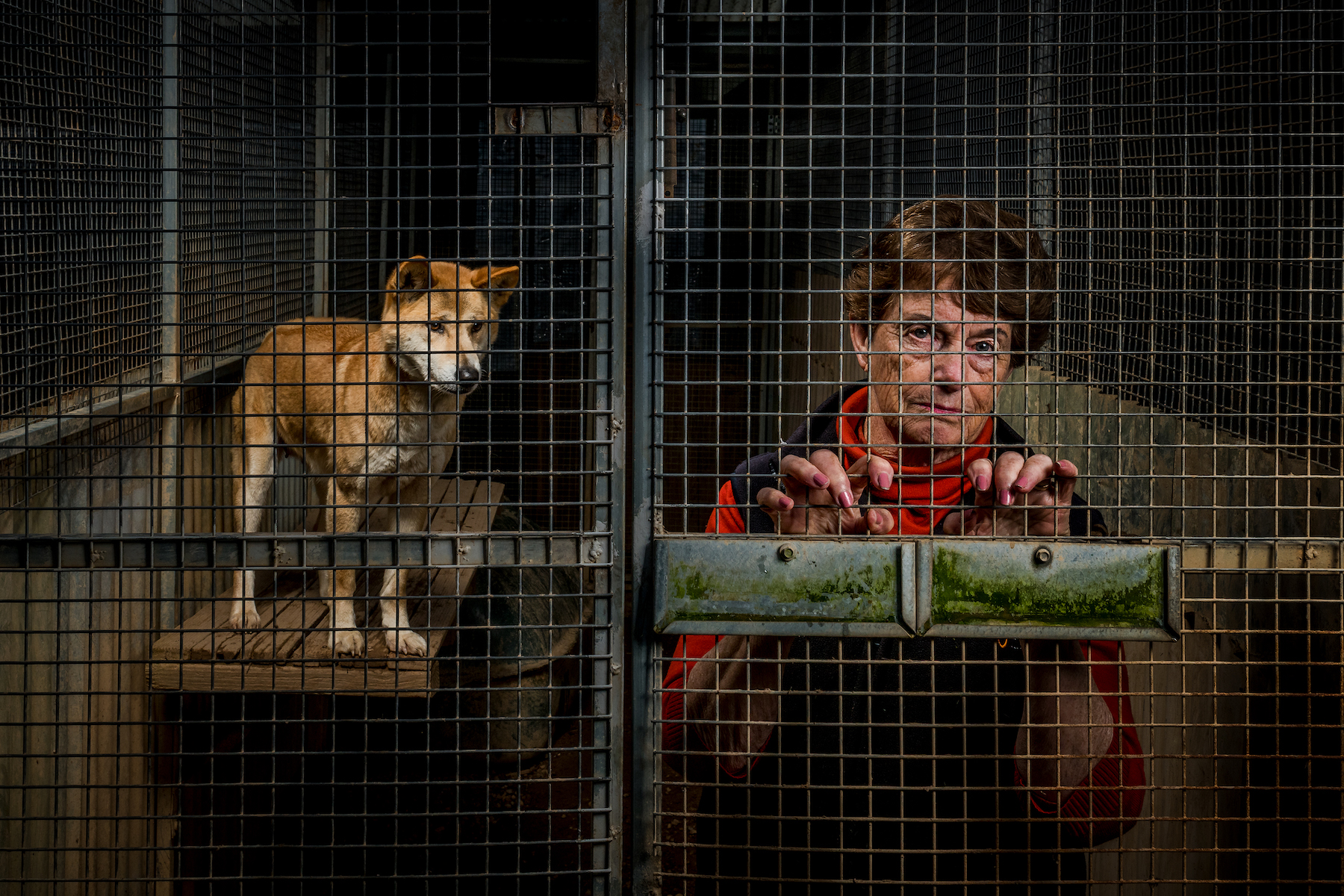
Finalist, Human/Nature
In many parts of Australia, the Dingo (Canis familiaris dingo) is the largest apex predator, playing a vital role in maintaining ecosystem health. It is a significant cultural species for many First Peoples and is often described as a totemic species: kin and family. Despite this, as well as being listed as vulnerable to extinction by the Australian Government, the Dingo is misunderstood, underappreciated, and often legally persecuted, with broad-scale baiting, trapping and shooting. In this image, Lyn Watson from the Australian Dingo Foundation stands inside the enclosure of one of her pure-bred, ambassador dingoes, Aussie. Lyn has worked tirelessly on the side of dingoes for many years, to help ensure they are recognised as unique and important to the ecology of the Australian landscape, and they continue to survive and thrive. Part of her work involves preserving and breeding a genetically pure dingo population at her research centre on the outskirts of Melbourne, as well as communication education and advocacy. Her hope is that one day, dingoes may be reintroduced into the wider Australian landscape, and help restore balance to the ecosystem.
Credit: Doug Gimesy / BigPicture 2025 Douglas Gimesy
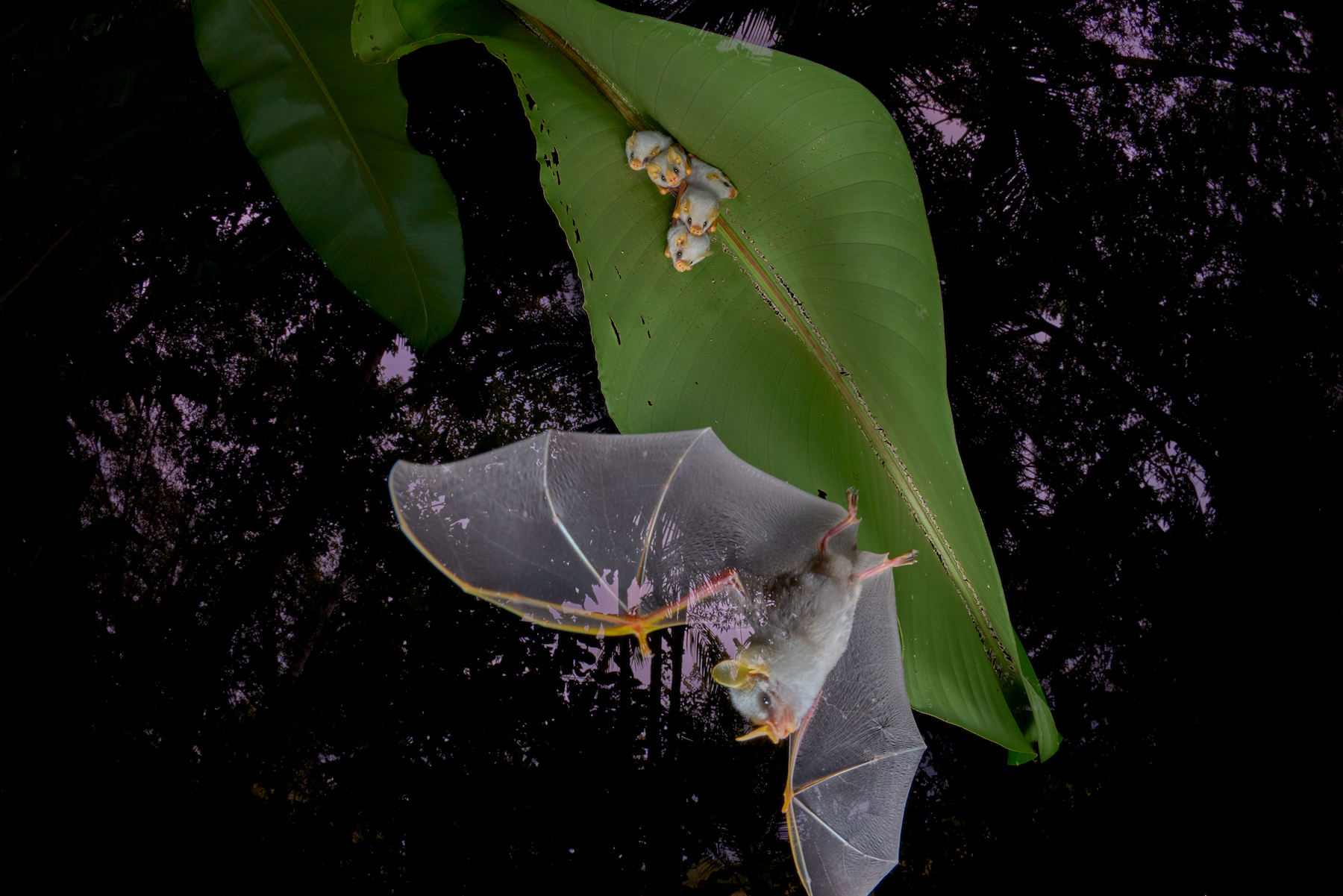
Winner, Winged
At dusk, a family of six Honduran white bats (Ectophylla alba) roost on the underside of a leaf, preparing to take off in search of their dinner. As the first one departs, we’re given a look at its nearly translucent wingspan, a feature often overlooked due to its unique facial features and iconic white fur. As one of the more enigmatic species found near the La Selva Biological Research Station in Costa Rica, this species constructs “tents” out of plant leaves in the forest’s understory by strategically cutting the leaf ribs with its teeth. This image captures one of the members leaving at dusk, with the rest of the family following soon after to find figs, a fruit it eats exclusively. After the feast, the family will return, or make a new tent to take shelter in if needed.
Credit: Dvir Barkay / BigPicture 2025 Dvir Barkay
