
If you’ve ever looked at an animal and wondered, what’s going on in their head, You’re far from being the only one (though it’s pretty clear what this little raccoon was thinking when he shoved his head into a peanut butter jar).
While answering this question might seem like an impossible task—it’s hard enough to decode what humans think about, after all—one way to understand animal minds is by studying their communication. According to Christine Dahlin, a biology professor at the University of Pittsburgh Johnstown, their communication involves the direct expression of feelings or thoughts.
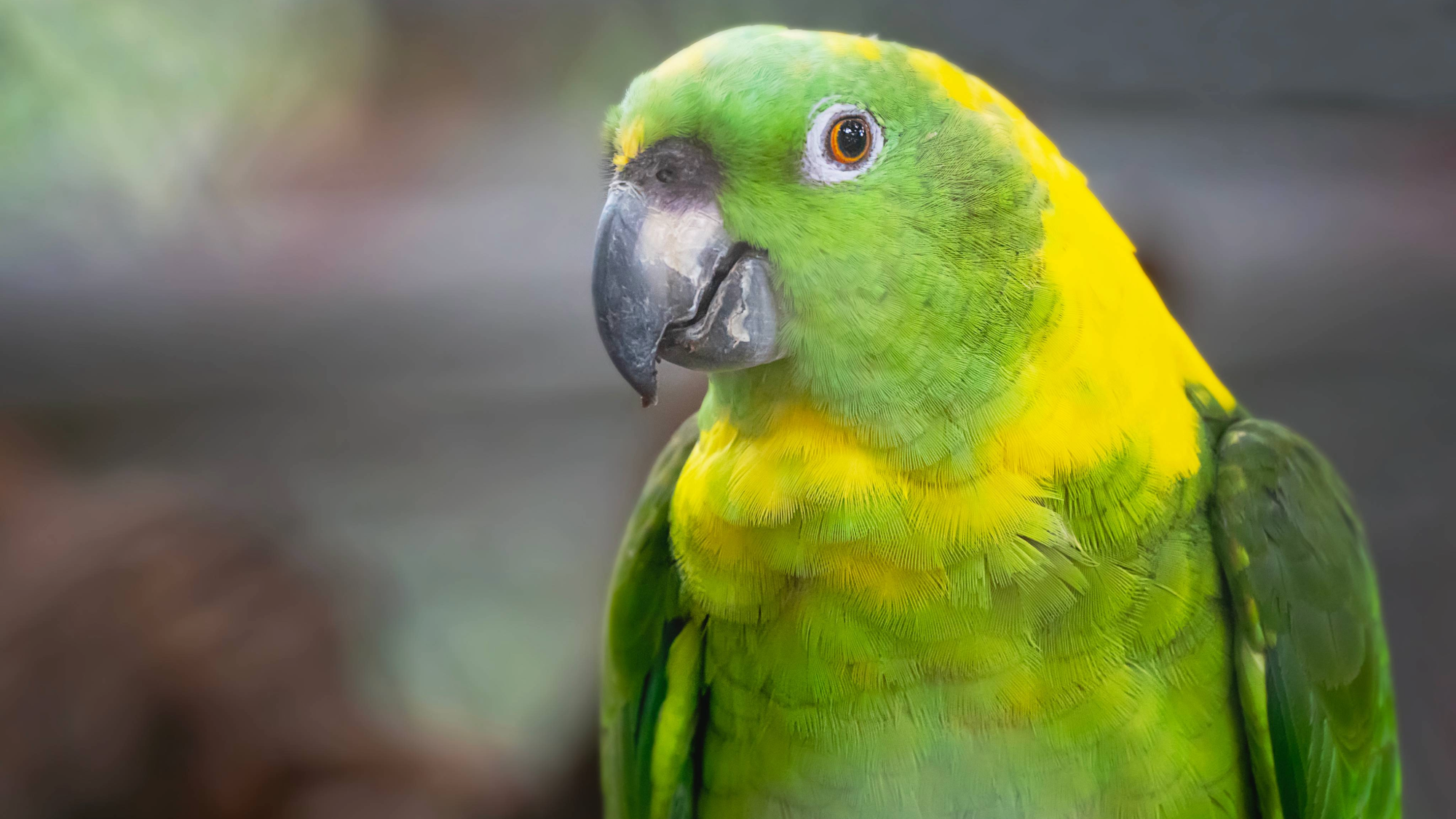
Within this context, Dahlin is particularly interested in parrots. While these iconic birds can copy human speech shockingly well, enabling them to be impressive communicators, the role this plays in their independent lives remains a mystery.
“Thus, I have been using yellow-naped amazons as a model to study complex parrot vocal signals in the wild. The warble duets, which I researched for this study, are their most complex signal,” Dahlin tells Popular Science.
She’s co-author of a study recently published in the Journal of Avian Biology. Yellow-naped amazons (Amazona auropalliata) are highly social yellow-green parrots found in Central America. Previous research has revealed them to seemingly have regional dialects that climate change and habitat loss might be impacting. They are critically endangered, especially due to illegal capture for pets, Dahlin says.

Parrot duets explained
While an untrained listener might perceive their warble duets as a jumble, Dahlin and her colleagues discovered that they have a significant amount of language-like characteristics, like syntactic rules. The team studied the duets with a text-analysis software called Voyant and found that the yellow-naped amazons’ duets have 36 call types, making up a large lexicon, or vocabulary.
“Many call types assort together, much like words are commonly given together within bodies of human text, such as grass and green or sport and ball,” Dahlin explains. “Despite following these organizational rules, the duets were also very flexible and we observed lots of variation.”
Their work demonstrates that parrots’ formidable vocal skills exist beyond captivity.
“We hope that this research serves to highlight how incredibly special and further deserving of protection this species is,” she adds. “It is vital that yellow-naped amazons are allowed to breed in peace, that people appreciate them in their natural environment, and not try to capture them for pets.”
