
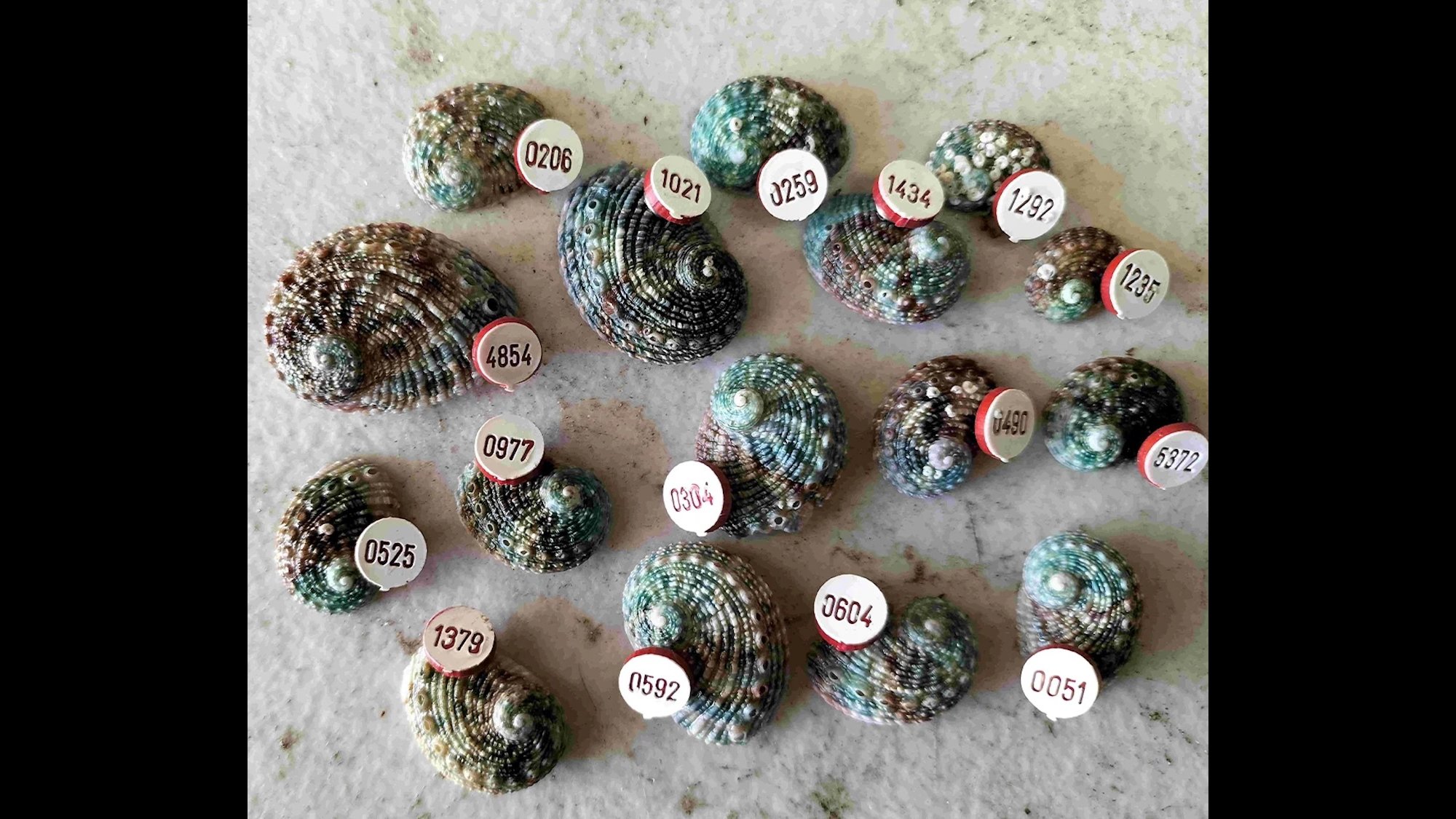
The black abalone mollusk (Haliotis cracherodii) is a delicacy in many regions of the world, with fancy restaurant diners doling out as much as $40 per 6 to 8 ounce serving. Although the sea snails are often grown in oyster farms, they are now considered critically endangered due to overdemand and black market harvesting. But while a woman’s recent abalone discovery along a beach in Australia is attracting worldwide attention, it’s not due to any illegal activity or a lucrative payout. Instead, researchers say the diminutive shell is part of a government tagging project that could help ongoing conservation efforts.
The random find occurred along the waterfront of Mettams Pool near the western Australian city of Perth. Local resident Elisha Blott noticed a broken shell fragment in the sand with an abalone’s telltale rough front and pearlescent back. The mollusk also included a strange accessory, however. Fused to the strong, calcium carbonate shell was a small, plastic tag with the number 5247 etched in red ink.
“I immediately saw the bright ID tag and was really intrigued. I’d never seen a shell with a tag before,” Blott told Yahoo News on January 24.
To help solve the mollusk mystery, Yahoo News contacted Western Australia’s Department of Primary Industries and Regional Development (DPIRD). There, DPIRD research scientist Jamin Brown quickly knew exactly what they were looking at—and what it meant for a multiyear scientific study.
“The tag numbers are linked to records in our database that contain key information about each individual abalone,” Brown explained.
The abalone known as 5427 is only one of 7,000 originally raised as roe, then tagged and deposited across three locations near Perth beginning in 2023. Each four-digit tag corresponds to a sea snail’s record featuring its date of birth, length and age when it was tagged, as well the date and location of its release. To attach each tag, researchers mounted the plastic label to a stainless steel spring they then placed on the growing edge of an abalone shell. Over multiple months in hatchery tanks, the shell slowly grew to encase the spring and keep the tag in place.
After around three years growing in the warm Australian waters, many of the molluscs are now large enough for recreational fishers to catch. Or, in Blott’s case, to wash ashore for beachgoers to discover.
“The tagging and release of tagged abalone has ceased, but the monitoring of the abalone will continue into the future,” Brown added.
The DPIRD is now encouraging anyone in the area to report their own tagged abalone finds through an easy-to-use online portal.
“If people find a tagged abalone, we urge them to take a clear photo of the abalone shell next to a ruler, ensuring the numbered tag is visible, and send it to DPIRD, along with details of date capture/location found,” said Brown.
As DPIRD starts to amass its abalone updates, scientists will gain a better understanding of how the endangered species is growing and surviving in the wild.
