
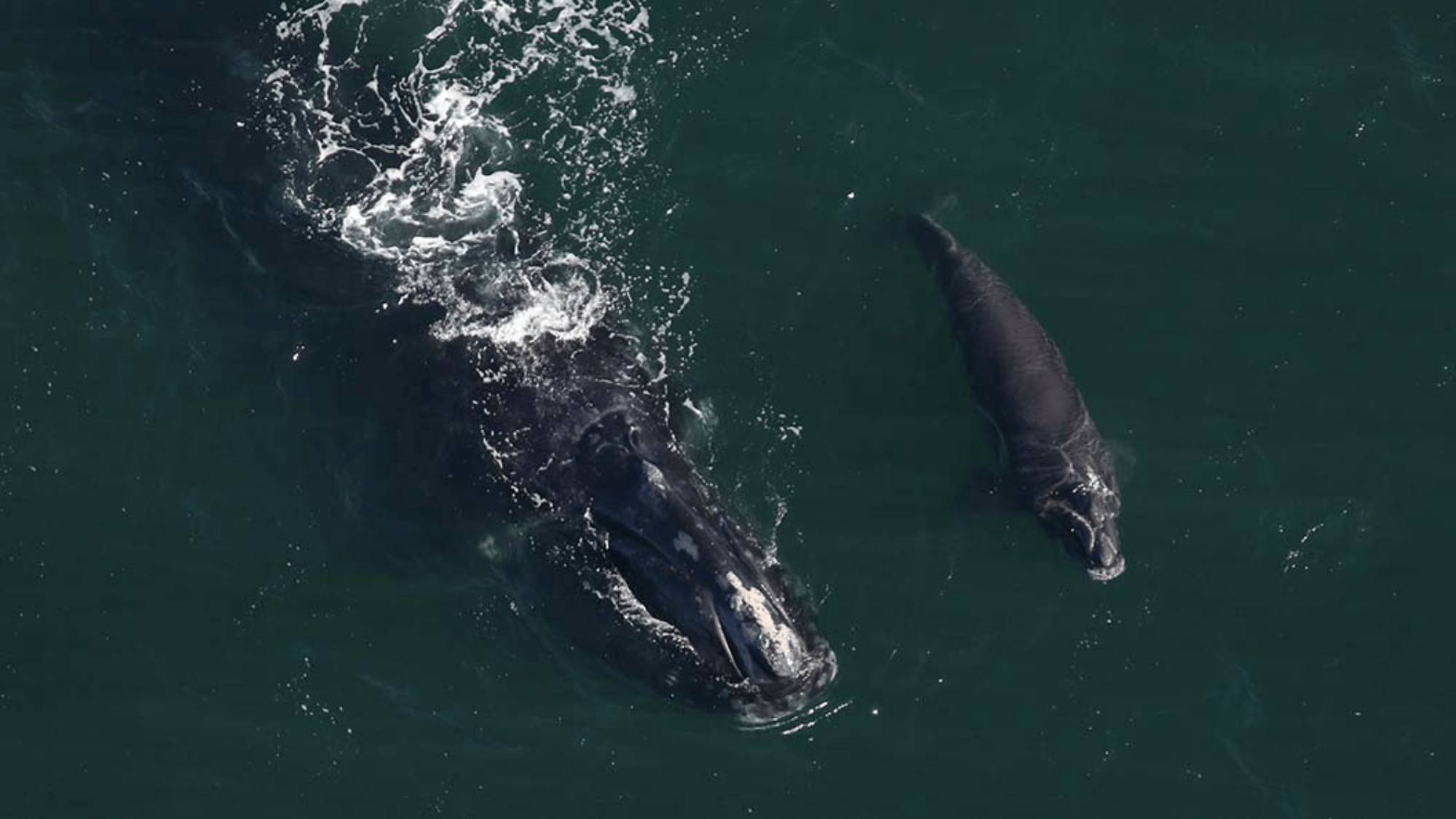
While most of us were feasting on holiday foods over the past few weeks, the New England Aquarium was busy counting North Atlantic right whale (Eubalaena glacialis) mom-calf pairs off the coast of Florida, South Carolina, and Georgia.
“Congrats to all of these North Atlantic right whale moms!” reads a social media post by the aquarium highlighting six recent sightings, including Juno—an over 40-year-old mother with her ninth documented calf spotted on December 27.
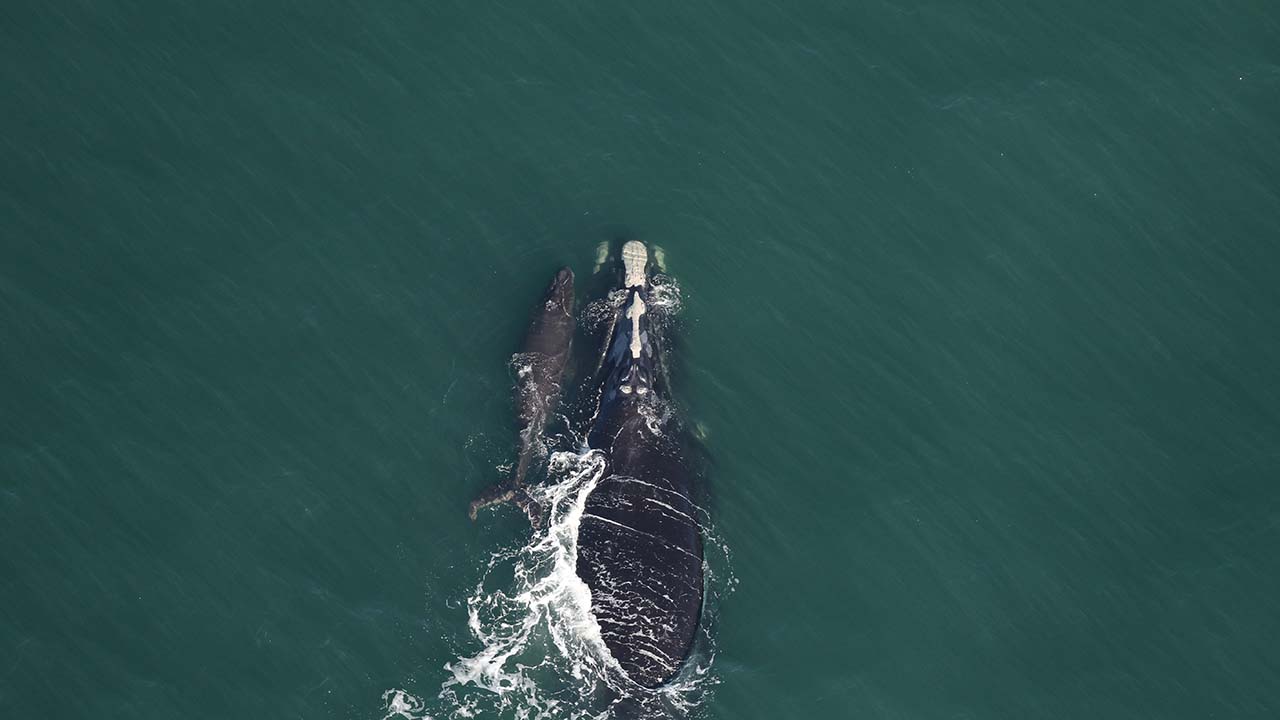
On January 8, the count jumped up to 18 calves, according to the Clearwater Marine Aquarium. Right whale Catalog #4610 and her first known calf spotted east of West Onslow Beach, North Carolina. While Catalog #4610 has not received an official name yet, she was born in 2016 to mother Swerven.
North Atlantic Right Whales can reach 140,000 pounds, grow as long as 52 feet, and make it to 70 years-old. They also contribute significantly to the marine ecosystem—their poop brings nutrients up to the ocean’s surface, and their dead bodies ultimately feed other creatures.
In the fall, some right whales migrate from their northern feeding grounds down to the warmer waters off the United States’ southeast coast for calving season, which lasts from mid-November through mid-April. As of now, the 2025-2026 season has seen 16 new mother and calf pairs.
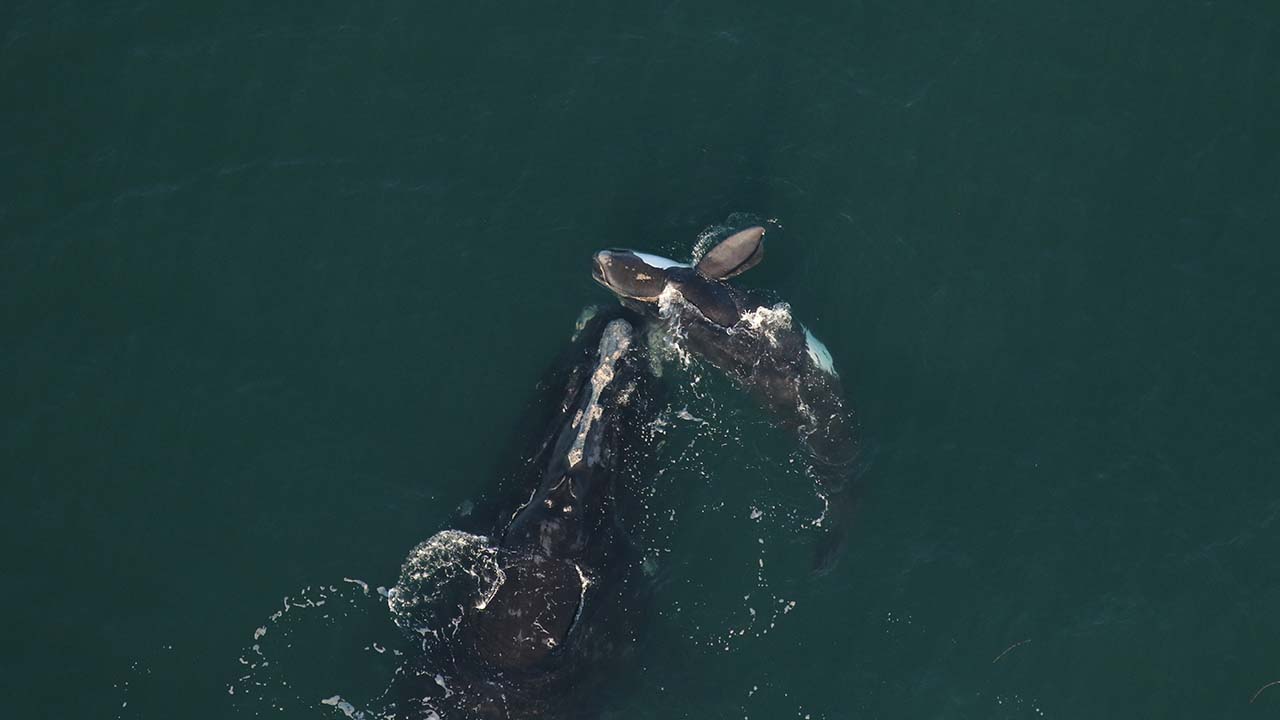
While animal mothers with their babies are always an endearing sight to see, it’s particularly uplifting for North Atlantic right whales, as the species is critically endangered. After noticing increased deaths in the small population of whales, researchers in Canada and the U.S. declared an Unusual Mortality Event (UME) in 2017 that continues to this day. Thankfully, the population has been slowly increasing—2024 saw a 2.1 percent increase from 2023’s estimates. As of October2025, last year was also looking good.
“Yes, we’re seeing increases. They’re small, and we still are seeing injuries to animals from human activities. And so, you know, I say that we’re cautiously optimistic,” Heather Pettis, senior scientist at the New England Aquarium, told Popular Science last year.
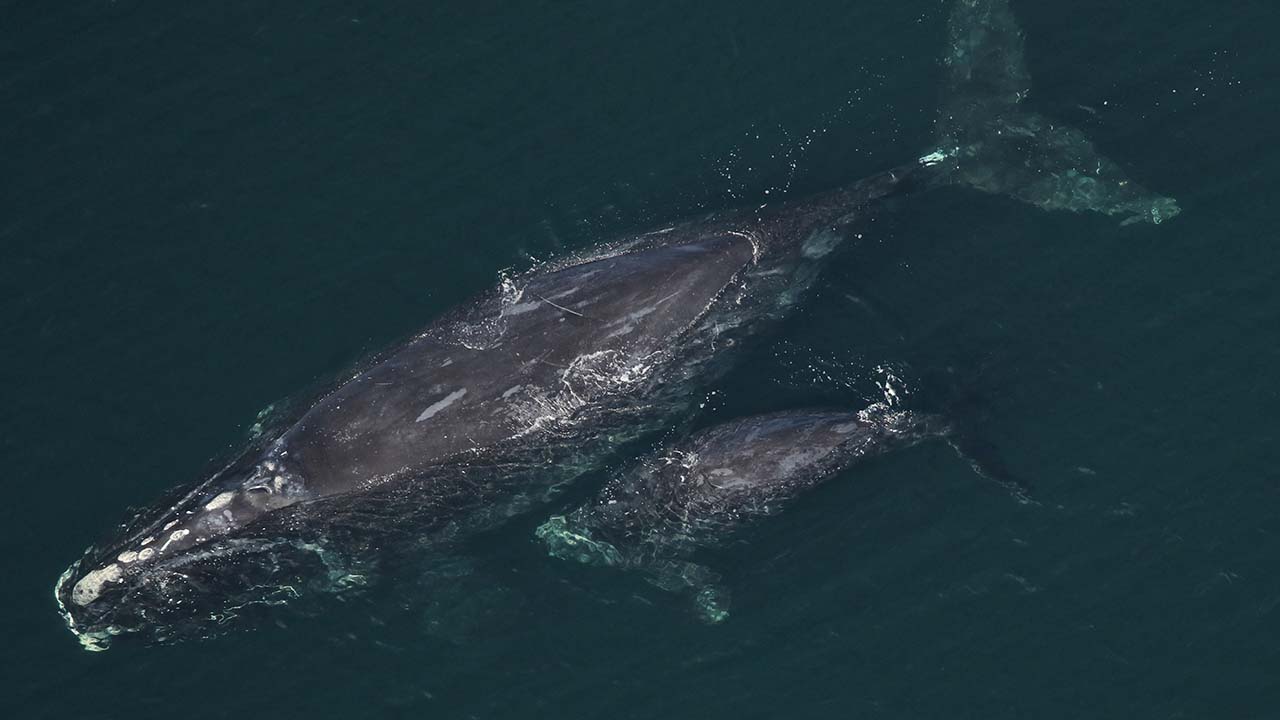
There are currently an estimated 384 North Atlantic right whales left, less than 80 of which are females that are actively reproducing. While they have increased since 2020’s recent low, researchers stress that we have to continue protecting the population to save these whales from extinction.
