Marine biologists discover 28 new deep sea species—and an old VHS tape

The marine biologists of the Schmidt Ocean Institute are a busy bunch. Over the last few years, scientists aboard the research vessel Falkor (too) have spotted rare Antarctic squid, discovered multiple octopus near Costa Rica, and even cataloged over 100 potential new species off the coast of Chile.

To kick off 2026, the Institute released a trove of new images and videos highlighting some of their latest observations from the south Atlantic Ocean. Researchers initially set out to investigate cold seeps, deep-sea areas where methane and other chemical emissions from the ocean floor sustain microbial life. These microscopic organisms then feed a range of animals like tube worms, clams, and mussels. Although they only located one active seep zone, the team was particularly struck by just how many species are living across the entire region.

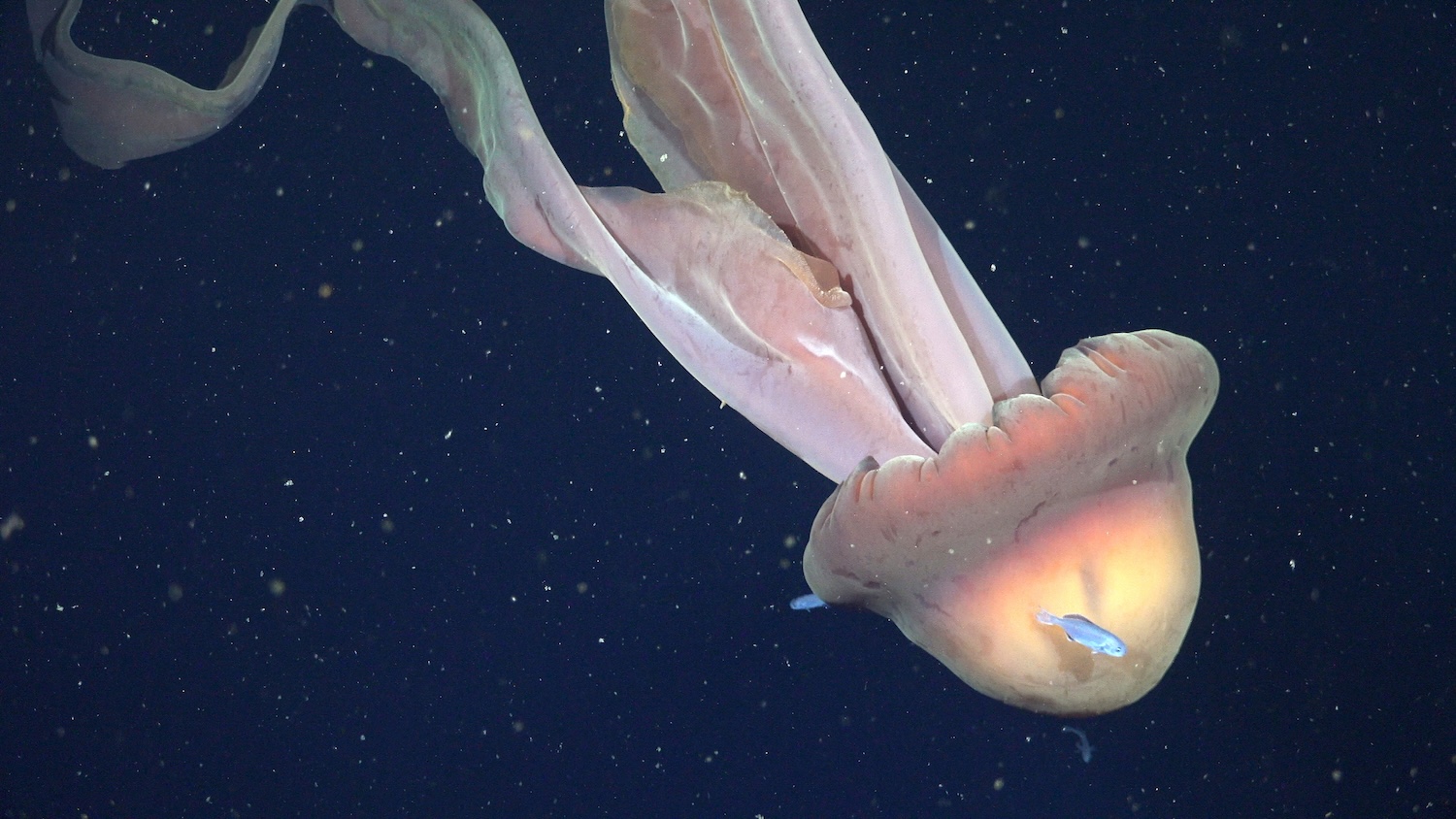
Rare Phantom Jellyfish Spotted In South Atlantic Ocean

“We were not expecting to see this level of biodiversity in the Argentine deep sea, and are so excited to see it teeming with life,” expedition chief scientist María Emilia Bravo said in a statement. “Seeing all the biodiversity, ecosystem functions, and connectivity unfolding together was incredible. We opened a window into our country’s biodiversity only to find there are so many more windows left to be opened.”

Bravo and colleagues estimate that they identified 28 possible new species that include sea snails, urchins, anemones, and worms. Many of these reside within the largest known Bathelia candida coral reef in the world—a colony nearly the size of Vatican City. The team also documented an extremely rare phantom jellyfish (Stygiomedusa gigantea), which is known to grow as long as a school bus. Other firsts included locating Argentina’s first deep-sea whale fall. At roughly 2.4 miles below the ocean surface, the cetacean’s bones are currently a temporary habitat for nearby sharks, crabs, and other marine life.

“With every expedition to the deep sea, we find the ocean is full of life—as much as we see on land, and perhaps more because the ocean contains 98 percent of the living space on this planet,” added Schmidt Ocean Institute executive director Jyotika Virmani.
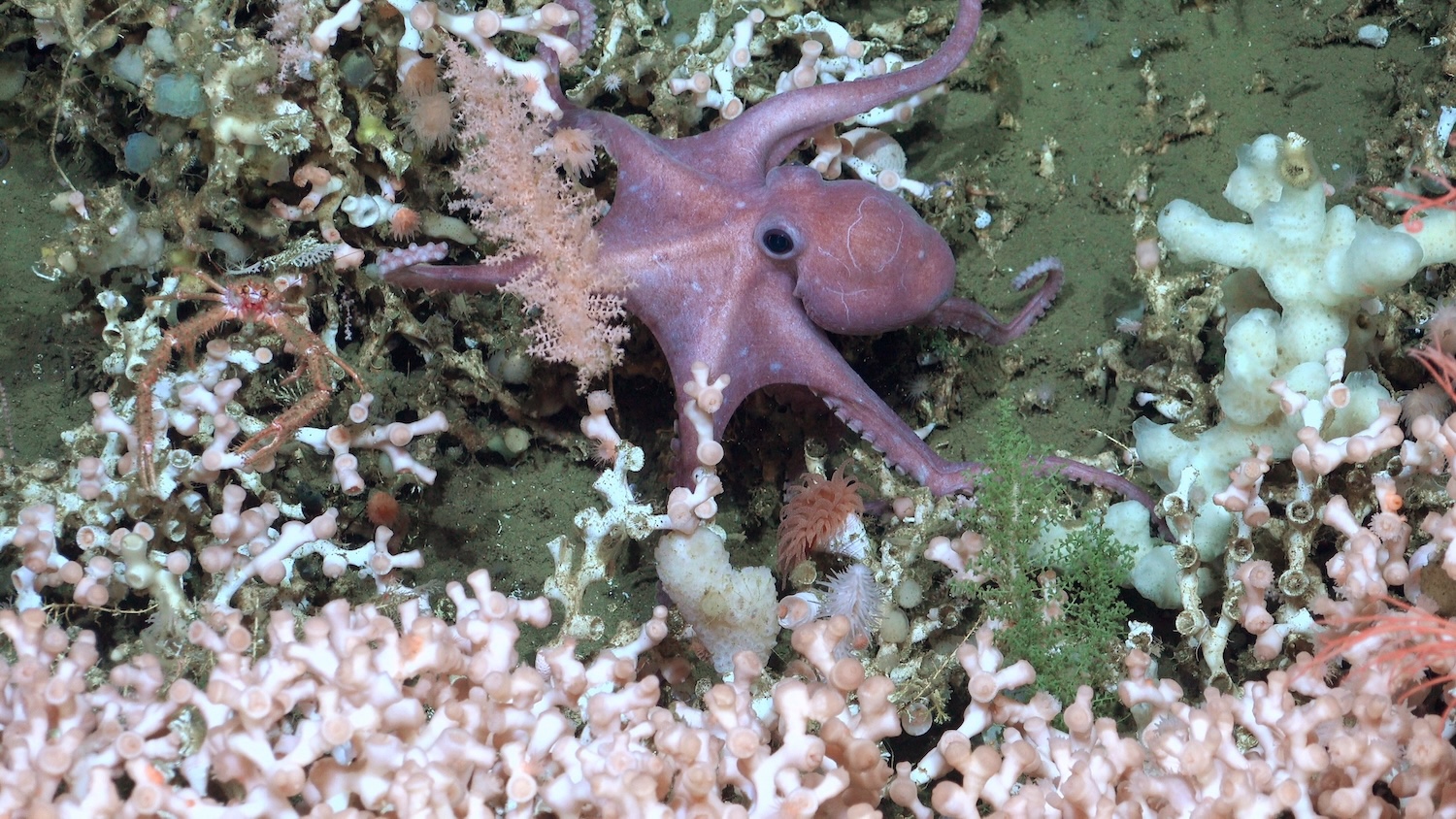
With their three-dimensional structure, deep-sea corals provide shelter, nursery grounds, spawning areas, and feeding habitats for many other species, such as this charismatic octopus. ROV pilots collected this footage at 1,010 meters along the Argentine Continental Slope. CREDIT: ROV SuBastian / Schmidt Ocean Institute Due to our legal status as a 501(c)(3) private operating foundation, no media produced by Schmidt Ocean Institute may be used in attempting to influence legislation or lobbying. Additionally, all visual assets (Images, videos, etc) can only be used as stated by creative commons Attribution-NonCommercial-ShareAlike CC BY-NC-SA Attribution — You must give appropriate credit, provide a link to the license, and indicate if changes were made. You may do so in any reasonable manner, but not in any way that suggests the licensor endorses you or your use. NonCommercial — You may not use the material for commercial purposes. ShareAlike — If you remix, transform, or build upon the material, you must distribute your contributions under the same license as the original. https://creativecommons.org/licenses/by-nc-sa/4.0/
With their three-dimensional structure, deep-sea corals provide shelter, nursery grounds, spawning areas, and feeding habitats for many other species, such as this charismatic octopus. ROV pilots collected this footage at 1,010 meters along the Argentine Continental Slope. Credit: ROV SuBastian / Schmidt Ocean Institute ROV SuBastian / Schmidt Ocean Institute
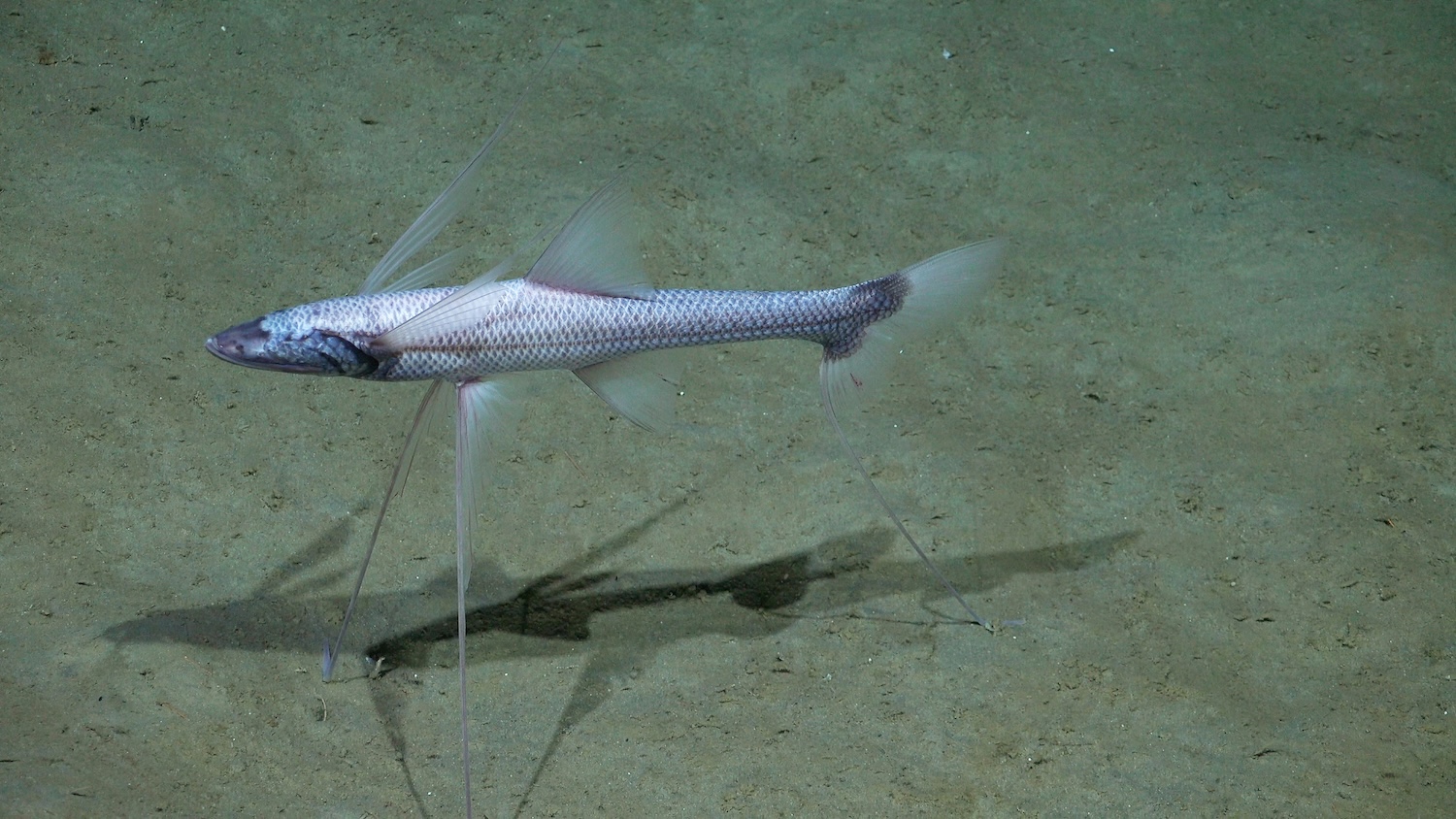
ROV pilots filmed this tripod fish (belonging to the Family Ipnopidae) at 2,700 meters on an escarpment in the Argentine Basin. CREDIT: ROV SuBastian / Schmidt Ocean Institute Due to our legal status as a 501(c)(3) private operating foundation, no media produced by Schmidt Ocean Institute may be used in attempting to influence legislation or lobbying. Additionally, all visual assets (Images, videos, etc) can only be used as stated by creative commons Attribution-NonCommercial-ShareAlike CC BY-NC-SA Attribution — You must give appropriate credit, provide a link to the license, and indicate if changes were made. You may do so in any reasonable manner, but not in any way that suggests the licensor endorses you or your use. NonCommercial — You may not use the material for commercial purposes. ShareAlike — If you remix, transform, or build upon the material, you must distribute your contributions under the same license as the original. https://creativecommons.org/licenses/by-nc-sa/4.0/
ROV pilots filmed this tripod fish (belonging to the Family Ipnopidae) at 2,700 meters on an escarpment in the Argentine Basin. Credit: ROV SuBastian / Schmidt Ocean Institute ROV SuBastian / Schmidt Ocean Institute

As unfortunate as it is predictable, the expedition also noted just how far human pollution has traveled around the world. Surveys recorded items like garbage bags, fishing nets, and even a “near-pristine” VHS tape thanks to the longevity of plastic.

“We collected an unprecedented number of chemical, physical, and biological samples that will be used to understand connections in our waters for years to come,” said Institute Argentino de Oceanografía marine biologist Melisa Fernández Severini. “These samples represent a unique opportunity to understand not only how extraordinary these extreme ecosystems are, but also how vulnerable they can be.”

Check out more of these exciting discoveries below. (Click to expand images to full screen.)
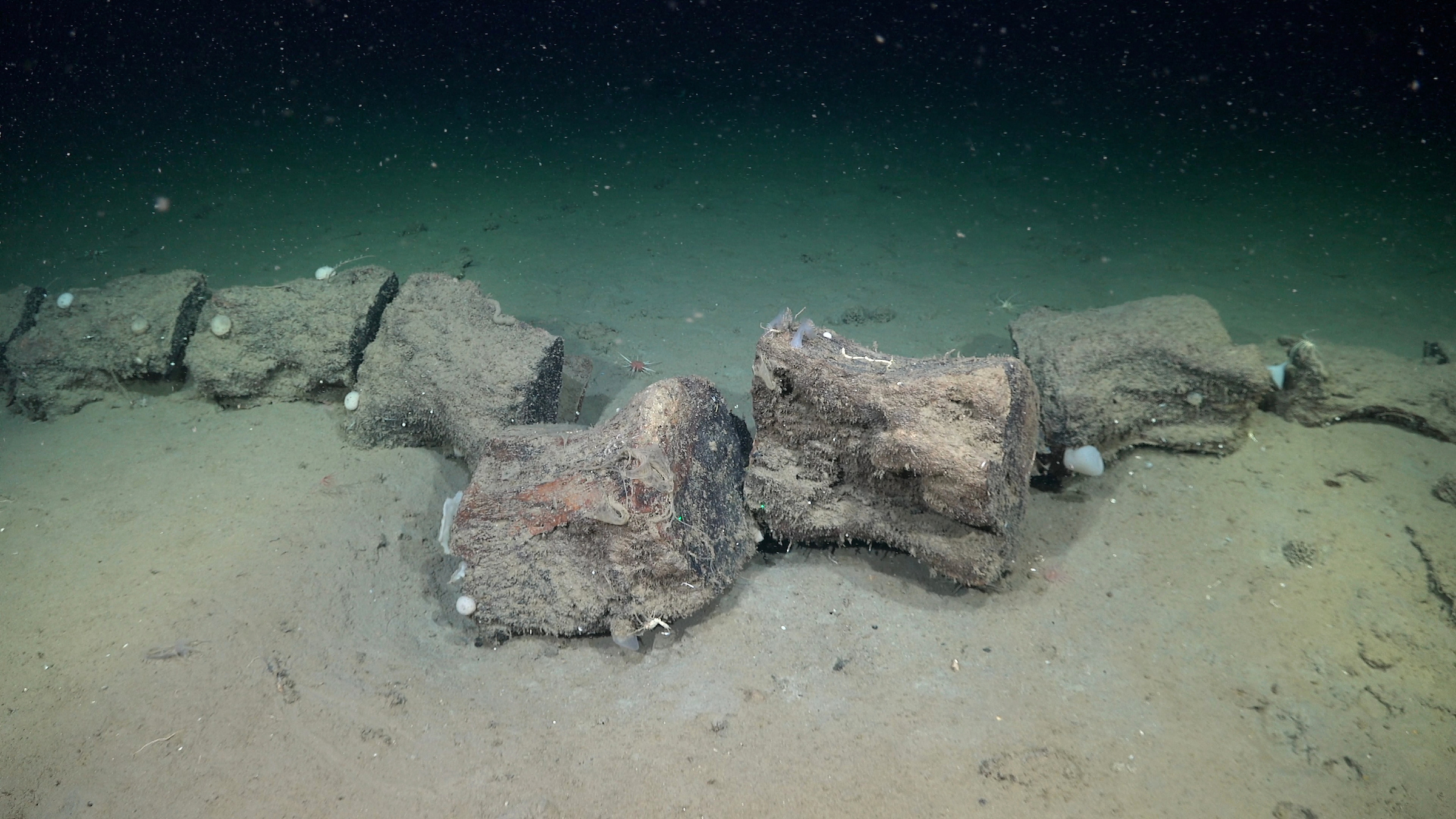
ROV pilots filmed the remains of a deceased whale that had dropped to the seafloor, called a whalefall, at about 3,890 meters deep during a dive on the Salado-Colorado Kilometer scarp in the Argentine Basin. Whale falls offer up thousands of years of nourishment to a place accustomed to scarcity. From large scavengers to invisible microbes and bone-eating Osedax worms, there is something for all creatures that happen upon a whale fall. Once organic matter has been consumed, the succession stage is named ‘reef phase’ and it is mostly used by the animals as a hard-substrate, as in the case of this whale carcass which presumably has spent decades in the seafloor. Credit: ROV SuBastian / Schmidt
ROV pilots filmed the remains of a deceased whale that had dropped to the seafloor, called a whalefall, at about 3,890 meters deep during a dive on the Salado-Colorado Kilometer scarp in the Argentine Basin. Whale falls offer up thousands of years of nourishment to a place accustomed to scarcity. From large scavengers to invisible microbes and bone-eating Osedax worms, there is something for all creatures that happen upon a whale fall. Once organic matter has been consumed, the succession stage is named ‘reef phase’ and it is mostly used by the animals as a hard-substrate, as in the case of this whale carcass which presumably has spent decades in the seafloor. Credit: ROV SuBastian / Schmidt Ocean Institute ROV SuBastian / Schmidt Ocean Institute
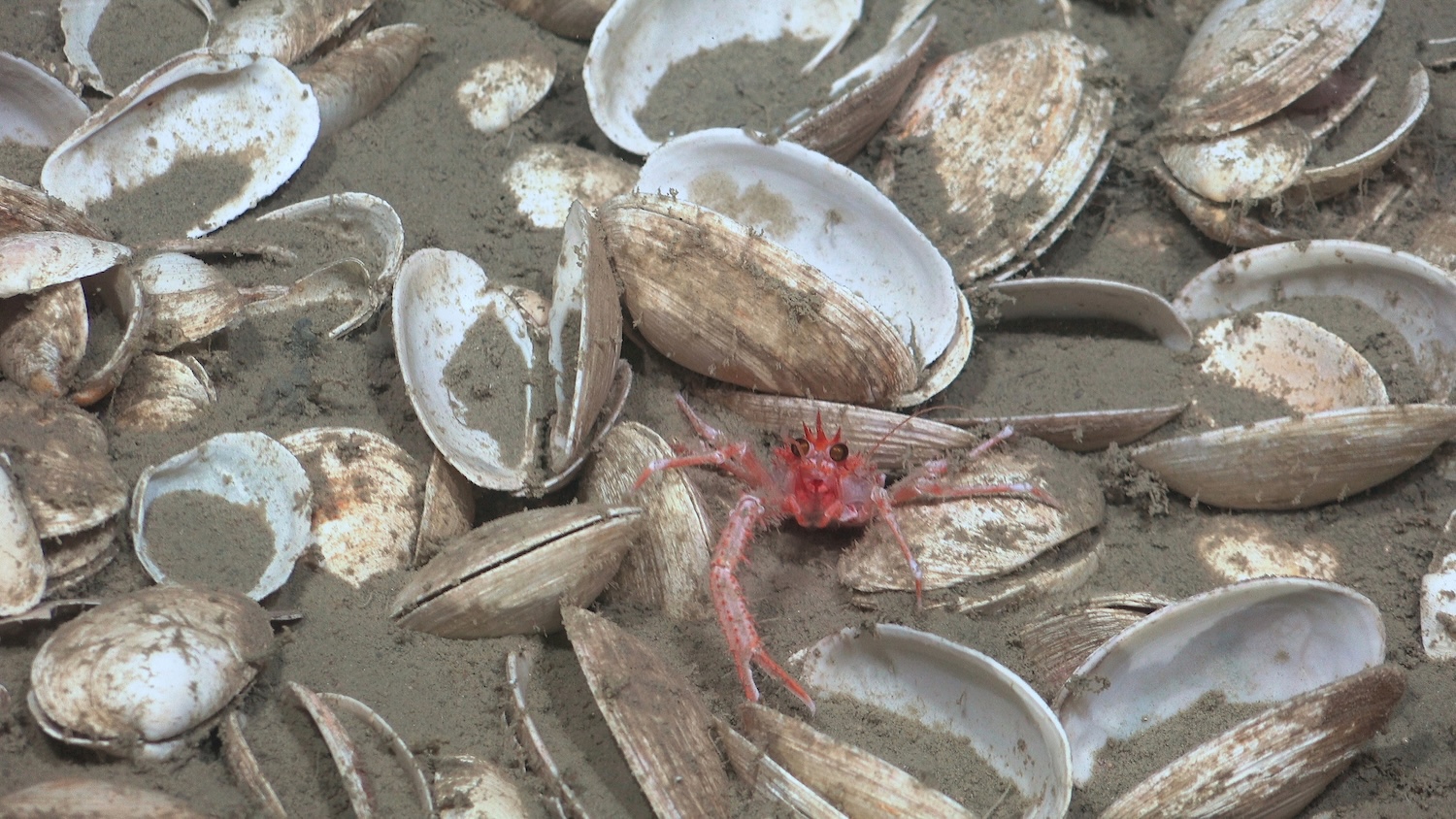
Scientists observed this squat lobster in a bed of chemosynthetic clam shells of the genus Archivesica sp. and Calyptogena sp. at 619 meters while exploring chemosynthetic habitat patches associated with a methane-derived carbonate mound. In Argentine waters, the biodiversity and environmental context of these chemosynthetic ecosystems remain poorly understood. CREDIT: ROV SuBastian / Schmidt Ocean Institute Due to our legal status as a 501(c)(3) private operating foundation, no media produced by Schmidt Ocean Institute may be used in attempting to influence legislation or lobbying. Additionally, all visual assets (Images, videos, etc) can only be used as stated by creative commons Attribution-NonCommercial-ShareAlike CC BY-NC-SA Attribution — You must give appropriate credit, provide a link to the license, and indicate if changes were made. You may do so in any reasonable manner, but not in any way that suggests the licensor endorses you or your use. NonCommercial — You may not use the material for commercial purposes. ShareAlike — If you remix, transform, or build upon the material, you must distribute your contributions under the same license as the original. https://creativecommons.org/licenses/by-nc-sa/4.0/
Scientists observed this squat lobster in a bed of chemosynthetic clam shells of the genus Archivesica sp. and Calyptogena sp. at 619 meters while exploring chemosynthetic habitat patches associated with a methane-derived carbonate mound. In Argentine waters, the biodiversity and environmental context of these chemosynthetic ecosystems remain poorly understood. Credit: ROV SuBastian / Schmidt Ocean Institute ROV SuBastian / Schmidt Ocean Institute
Juvenile fish (Centrolophus sp.) swim around the bell of a Stygiomedusa gigantea, commonly known as the giant phantom jelly, which ROV pilots filmed at 250 meters. Their bell can grow up to 1 m (3.3 ft) in diameter, and their four arms can reach up to 10 m (33 ft) long. They do not have any stinging tentacles, but use their arms to catch prey, including plankton and small fish. CREDIT: ROV SuBastian / Schmidt Ocean Institute Due to our legal status as a 501(c)(3) private operating foundation, no media produced by Schmidt Ocean Institute may be used in attempting to influence legislation or lobbying. Additionally, all visual assets (Images, videos, etc) can only be used as stated by creative commons Attribution-NonCommercial-ShareAlike CC BY-NC-SA Attribution — You must give appropriate credit, provide a link to the license, and indicate if changes were made. You may do so in any reasonable manner, but not in any way that suggests the licensor endorses you or your use. NonCommercial — You may not use the material for commercial purposes. ShareAlike — If you remix, transform, or build upon the material, you must distribute your contributions under the same license as the original. https://creativecommons.org/licenses/by-nc-sa/4.0/
Juvenile fish (Centrolophus sp.) swim around the bell of a Stygiomedusa gigantea, commonly known as the giant phantom jelly, which ROV pilots filmed at 250 meters. Their bell can grow up to 1 m (3.3 ft) in diameter, and their four arms can reach up to 10 m (33 ft) long. They do not have any stinging tentacles, but use their arms to catch prey, including plankton and small fish. Credit: ROV SuBastian / Schmidt Ocean Institute ROV SuBastian / Schmidt Ocean Institute
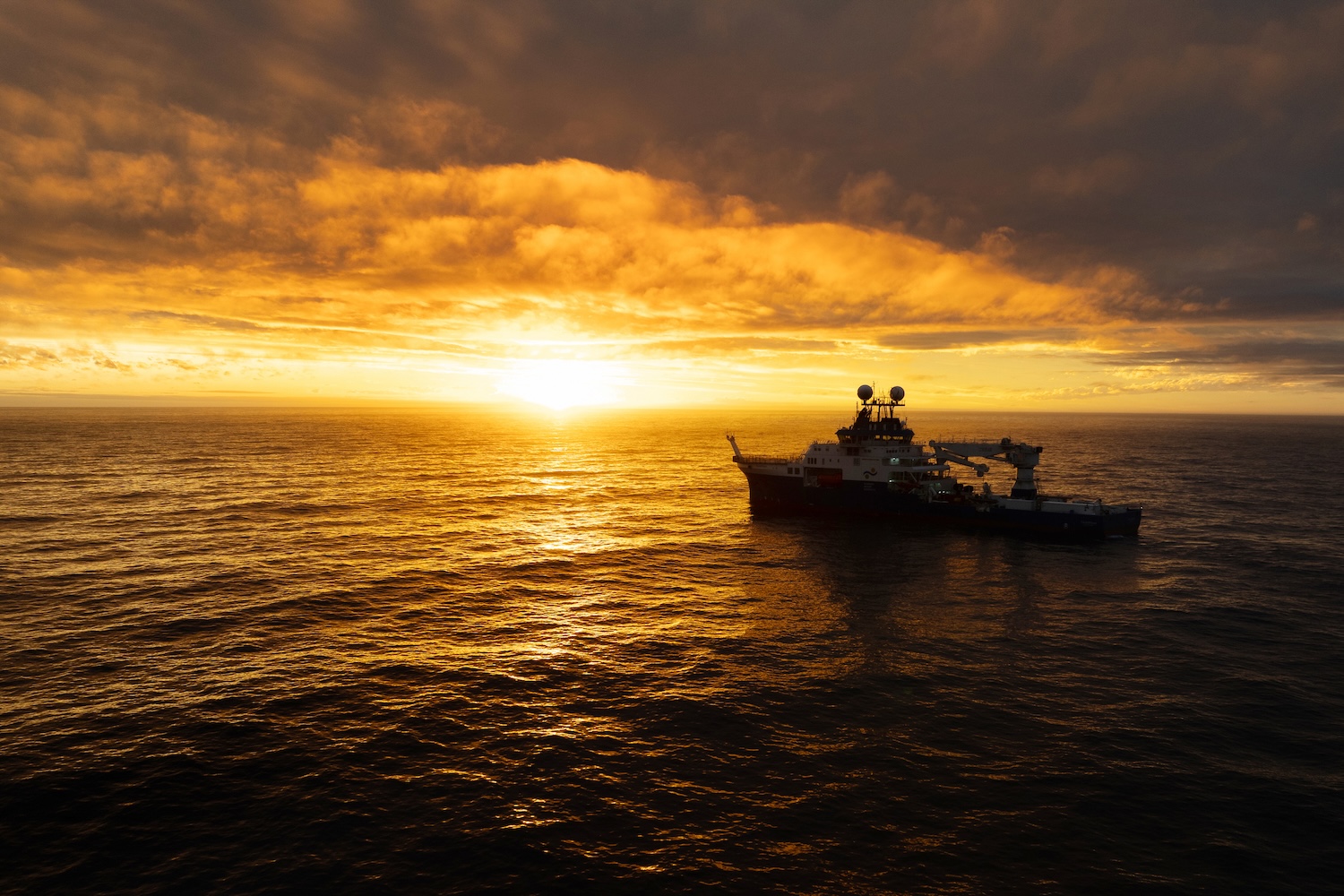
Research Vessel Falkor (too) with its ROV SuBastian deployed in the South Atlantic Ocean during the "Life In Extremes - Cold Seeps Of Argentina" expedition. CREDIT: Misha Vallejo Prut / Schmidt Ocean Institute Due to our legal status as a 501(c)(3) private operating foundation, no media produced by Schmidt Ocean Institute may be used in attempting to influence legislation or lobbying. Additionally, all visual assets (Images, videos, etc) can only be used as stated by creative commons Attribution-NonCommercial-ShareAlike CC BY-NC-SA Attribution — You must give appropriate credit, provide a link to the license, and indicate if changes were made. You may do so in any reasonable manner, but not in any way that suggests the licensor endorses you or your use. NonCommercial — You may not use the material for commercial purposes. ShareAlike — If you remix, transform, or build upon the material, you must distribute your contributions under the same license as the original. https://creativecommons.org/licenses/by-nc-sa/4.0/
Research Vessel Falkor (too) with its ROV SuBastian deployed in the South Atlantic Ocean during the “Life In Extremes – Cold Seeps Of Argentina” expedition. CREDIT: Misha Vallejo Prut / Schmidt Ocean Institute Misha Vallejo Prut
 
products on a page that says best of what's new 2025

2025 PopSci Best of What’s New