
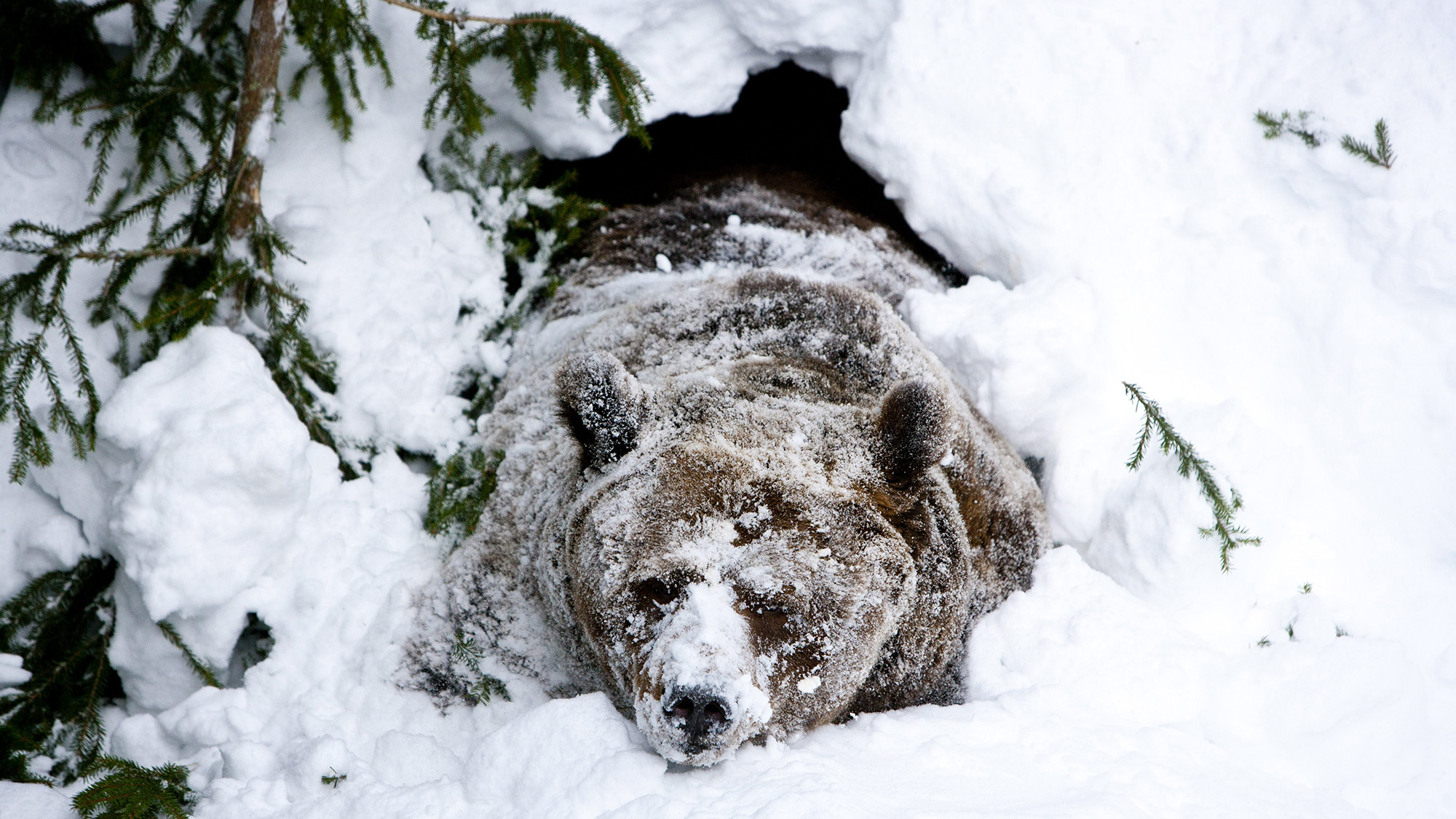
For many animals that live in cold climates, winter means low-power mode. But no creature is more tied to the image of a long, cozy winter than hibernating bears all snuggled up in their dens. This is surprising, given that bears don’t really hibernate; at least, not like “deep hibernators,” such as squirrels, bats, and skunks.
During a winter hibernation, an animal’s body temperature can become as low as the outside air temperature. Its heart rate and breathing drop as well, down to around one percent of what’s normal. It’s a radical adaptation for conserving energy at a time when many creatures struggle to keep warm and well-fed.
Hibernation is common among small mammals species. Reptiles and amphibians in colder climates do something similar (although it’s technically called brumation). Bears, on the other hand, have an altogether different strategy for surviving the winter.
What is hibernation?
Hibernation is a voluntary state that animals enter based on environmental factors like shorter days. The most extreme example might be the Arctic ground squirrel, which hibernates up to eight months per year and lowers its body temperature to 27 degrees Fahrenheit, the lowest of any mammal. Hibernating animals are immobile for long periods, but many wake for a short time every one to three weeks, depending on the species.
A study of hibernating ground squirrels found that these occasional waking periods “may activate a dormant immune system, which can then combat pathogens” introduced during hibernation. They may also be necessary to keep the animal’s body from shutting down completely. Some animals snack on stored food or use the bathroom during their hibernation breaks, which are called “arousals.”
Bears don’t technically hibernate
A bear hunkered down in its winter den is in a different state of energy conservation than hibernation. Instead, bears enter a state called torpor (the adjective for which is torpid).
Unlike hibernation, torpor is involuntary, and primarily triggered by lack of food. This state is also found in other groups of mammals like marsupials, and even in some birds that depend on summer insects.
Another difference between torpor and hibernation is that torpor is a continuous low-energy state, without arousal periods when the animal’s activity spikes.
Torpor is primarily found in black and brown bears. That’s largely because these bears are omnivores with a preference for plants.
“In many inland areas, vegetation makes up as much as 80 to 90 percent of their intake,” according to the National Wildlife Federation. So the absence of plants in the deepest part of winter sets off torpor for these bears.
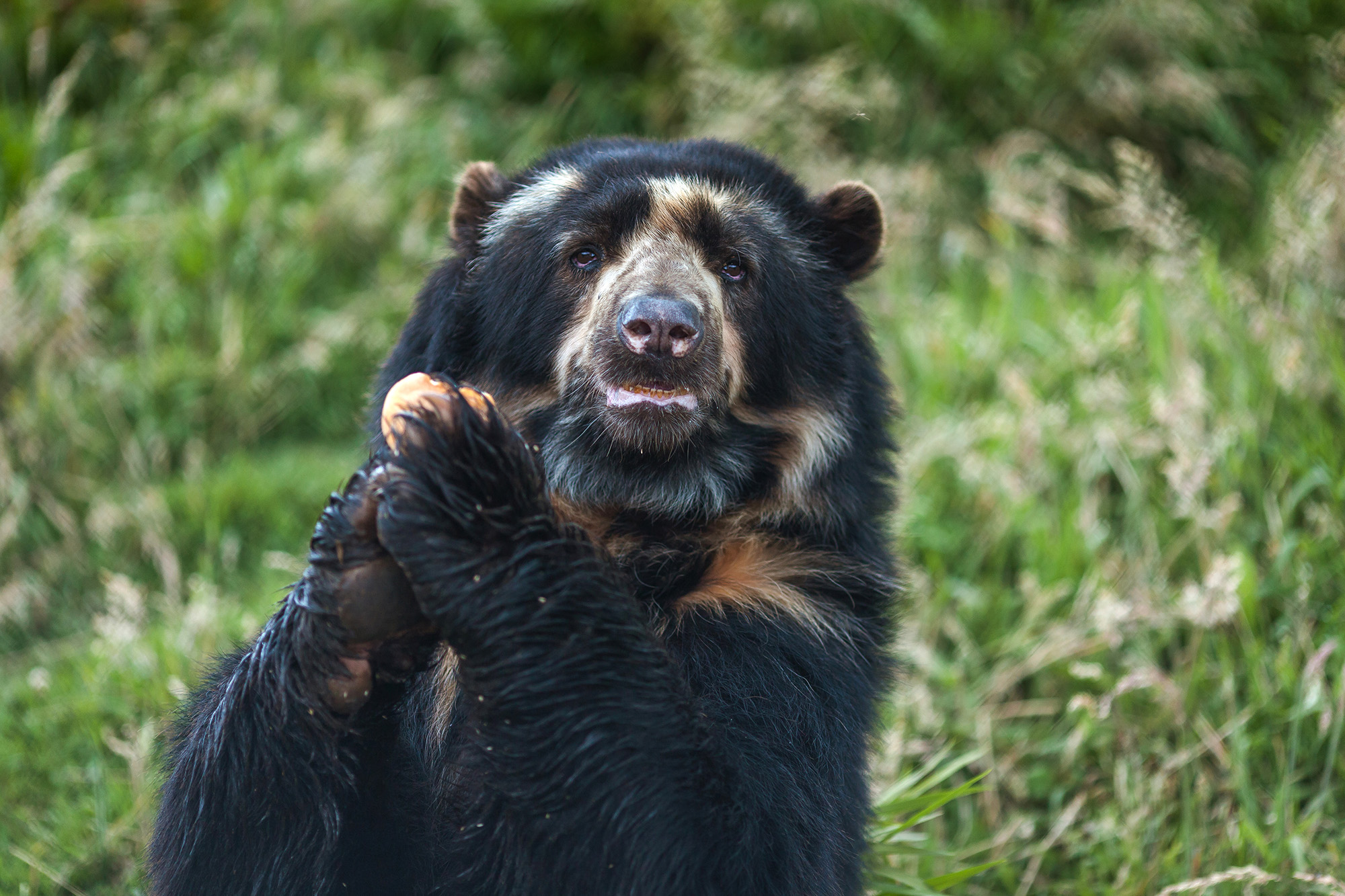
Bears in hotter climates where food is available year-round, like the Southeast Asian sun bear or the South American spectacled bear, do not go into torpor.
How a bear’s body changes during torpor
While some deep hibernators such as rodents store food for the winter, bears rely on stored fat reserves for energy during torpor. This fat can comprise up to 30 percent of the bear’s body weight. A torpid bear’s eating, drinking, and bathroom functions cease as its body metabolizes these stores.
“Chipmunks reduce their heart rate from the usual 350 beats per minute to an almost undetectable four beats per minute during hibernation,” writes Chris Bachman for the National Forest Foundation. That’s a decrease of almost 99 percent!
In contrast, a torpid grizzly bear’s heart rate drops by about 77 percent, from around 84 beats per minute to around 19.
A torpid bear’s body temperature also lowers significantly less than a hibernating animal’s, by only eight to twelve degrees Fahrenheit. Compare that with a chipmunk’s body temperature, which can drop as much as 54 degrees Fahrenheit during hibernation.
What bears do during torpor
While bears become less active during torpor, they still move around more consistently than hibernating animals. Writing for the Alaska Department of Fish and Game, research biologist Sean Farley explains that torpid bears “go through a lot of posture changes where they wake periodically to shift around. It is thought this helps prevent pressure sores from developing. Bears also shift positions to better conserve heat.”
Despite lower activity, torpid bears retain their strength and muscle mass. The same is true for deep hibernators, due to metabolic changes that happen to animals’ bodies in both states of energy conservation.
While deep hibernators breed after hibernation in the spring, female bears wake to give birth and care for their new cubs during torpor. In spring, they emerge from their winter dens with cubs in tow.
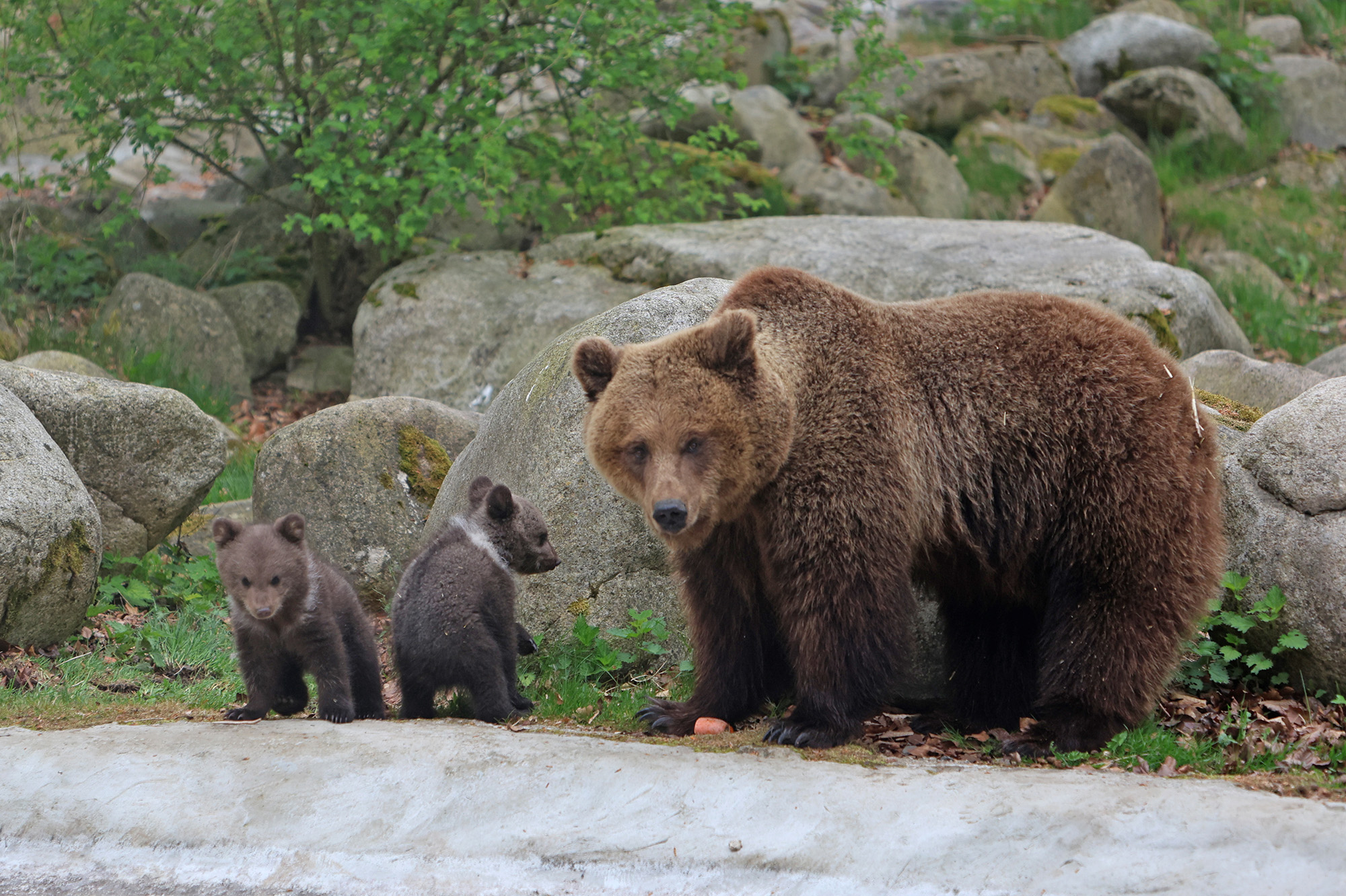
Remarkably, bears mate in spring or summer, but don’t technically become pregnant until winter, due to a strategy called delayed implantation. Once a female bear’s egg is fertilized, it remains dormant in her body for months. Pregnancy only develops if the female gains enough weight for a long, comfortable torpor.
Not all bears become torpid
Even brown and black bears only go into torpor when food is unavailable for long periods. In Alaska, these bears are torpid for two months per year in the warmer south, but for seven months in the north of the state, where winter is harsher.
Captive brown and black bears often don’t become torpid at all due to consistent feeding (which can lead to obesity, since the bears are not using their fat reserves).
Giant pandas rely on plants for food even more than brown and black bears, but surprisingly, they don’t enter torpor at all. Bamboo is so low in calories that pandas have to eat constantly just to maintain their energy, and can’t put on fat for the winter. So instead of becoming torpid, when their mountain slopes grow cold, pandas simply migrate down to lower elevation.
You might think that polar bears, living in harsh Arctic conditions, would enter torpor for longer than other bears, but most remain active all winter. Once again, it all comes down to diet.
Unlike many other bears, polar bears are strict carnivores. Their primary food source—meat—does not disappear in winter, so they hunt year-round. However, pregnant female polar bears do become torpid to give birth in winter just like brown and black bears, digging “maternity dens” into the ice and snow.
Related 'Ask Us Anything' Stories
Bear torpor has implications for our health
Scientists are still working to understand the biological processes behind the torpor state, and see how we might apply this knowledge to human medicine. “Knowing how bears can gain a massive amount of weight and then spend months with no food and little movement without ill-effects health-wise could open the door to human therapies,” according to a team that researched the effects of bear torpor in 2023.
A 2011 study found that during torpor, a bear’s heart undergoes “a complex series of changes” that “guard against complications that could arise from greatly reduced activity.” Other studies have shown that torpor shifts a bear’s circadian rhythms (their internal biological clock), and naturally suppresses a protein that causes blood clots.
If we could unlock these secrets, we might be able to improve the lives of long-term hospital patients, who have an increased risk of muscle loss and blood clotting due to inactivity, as well as people with lower-than-average heart rates.
Knowing more about how torpor works could also help people who work irregular hours like night shifts adjust their circadian rhythms, lessening the adverse health effects. One researcher even called research into bear blood proteins “a potential Swiss army knife” because of its many applications.
A cold, dreary winter can make you wish you could hibernate. But it turns out even though bears are not true hibernators, we have a great deal to learn from their incredible survival adaptations.
In Ask Us Anything, Popular Science answers your most outlandish, mind-burning questions, from the everyday things you’ve always wondered to the bizarre things you never thought to ask. Have something you’ve always wanted to know? Ask us.
