
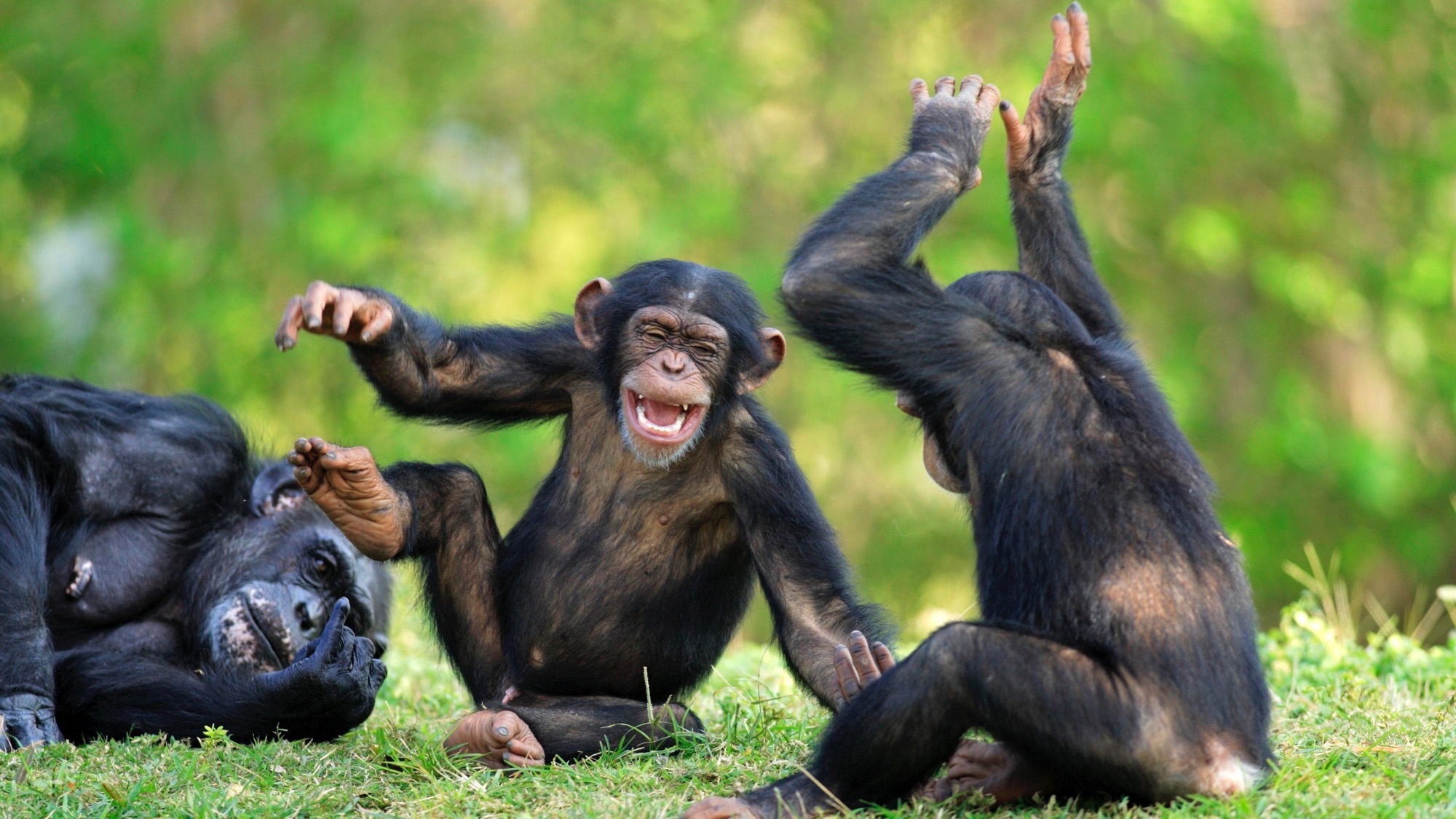
Scientists know that humans might not be as exceptional in comparison to the rest of the animal kingdom as we long thought. For example, whale songs and bonobo calls have features similar to language, and bonobos might even know when someone is ignorant about something. In fact, new research suggests that studying animals can provide insight into the evolution of our own species.
In this spirit, researchers investigated alcohol consumption in chimpanzees and explained their results in a recent Science Advances paper. They measured the concentration of ethanol—a slightly digested form of sugar and a type of alcohol–in 21 different fruits that chimpanzees commonly eat at two sites, one in Uganda and one in Ivory Coast. This approach revealed an overall concentration of around 0.3-0.4 percent alcohol within the fruits. While this might not seem like much, chimps eat so much fruit (around 10 percent of their body mass every day!), it ends up being significant.
With this information, the researchers calculated that chimps at both sites eat around 14 grams of pure ethanol per day of foraging. After accounting for the fact that the average chimp weighs significantly less than the average human, “we could say the chimpanzees are consuming the equivalent of, to us, two glasses of wine per day,” Aleksey Maro, co-author of the study and a doctoral student at the University of California, Berkeley, tells Popular Science.
The chimps consume these gargantuan amounts of fruit throughout the full day and don’t seem to get intoxicated, Maro explained in a statement. Nonetheless, their alcohol intake might provide insight into a theory called the drunken monkey hypothesis.
“The drunken monkey hypothesis basically says that human attraction to alcohol is due to our ancestral frugivorous [fruit-eating] diet, which is thought to have contained alcohol from fermentation,” Maro tells Popular Science. It suggests that our early ancestors evolved an evolutionary preference for ethanol because it could have “helped us locate sugar calories from a long distance, and possibly because during periodic bottlenecks in food availability, fermentation could have unlocked nutrients that would otherwise would have remained chemically inaccessible.”
The hypothesis depends on two things—that fruit around the world naturally and regularly ferments (which, Maro says, is true) and that our ancestors mostly ate fruit that was sufficiently fermented. Since we obviously can’t phone up our ancestors like you might call grandma, the best scientists can do is investigate ethanol in the wild tropical fruits eaten by our nearest evolutionary relatives—chimpanzees and bonobos.
“These cousins of ours are thought to still live a similar lifestyle to our remote ancestors,” Maro explains. Chimps even weigh about the same as our ancestors. “So there is good reason to think this ecological dynamic involving fruit alcohol among chimpanzees today also applied to our early ancestors.”
Studying fruit preference in wild chimpanzees, however, is exceedingly difficult. For now, Maro is testing out another approach to reveal if chimpanzees have digested alcohol in their liver—by testing their pee.
