
They say all roads lead to Rome. But in the Eternal City, all of the major roads were thought to lead somewhere very specific—a single column called the Milliarium Auereum, or the golden milestone. It doesn’t feel like a coincidence that Emperor Vespasian (9–79 CE) started building the Colosseum so close to the Milliarium Auereum. After all, it is where Roman emperors brought the world to their people, Alexander Mariotti, a gladiatorial historian at the British Institute of Roman History, tells Popular Science.
“Romans wouldn’t go to North Africa or India or even the forest of Germany,” Mariotti explains, “but you didn’t need to, in the same way that one can sit on a couch and watch YouTube, but not necessarily need to travel because the world is brought to you. Well, the Roman emperors brought the world to Rome for them to see.”
Vespasian did not live to see the completed Flavian Amphitheater, as the Colosseum was originally called. It was his son Titus who continued the Flavian dynasty and inaugurated the massive amphitheater in 80 CE with 100 days of games. Titus would depart this world soon after his father, but not before witnessing one of the Colosseum’s most iconic, albeit short-lived, performances—naval battles. With ships navigating into a flooded arena and music played by a full orchestra, the battle would have been “just utterly incredible” and a “visual feast,” says Mariotti, who was also a historical consultant for the 2024 film Gladiator II.
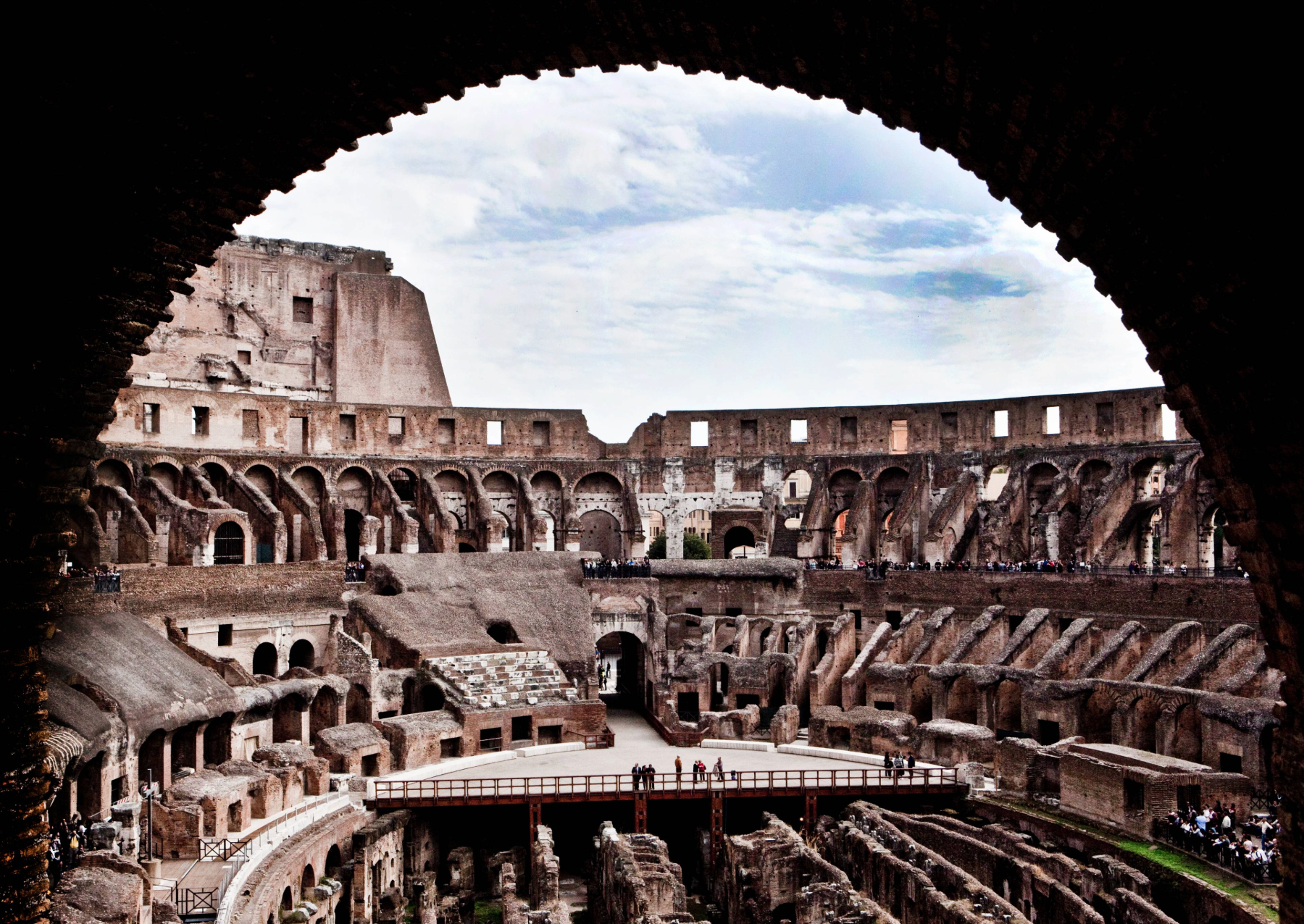
The heart of the Colosseum was ultimately converted into a potentially even more dramatic stage. Humans, props, and/or animals could appear like magic thanks to an underground system of machinery that hoisted them up through trap doors, like the tiger battle in the 2000 film Gladiator. Sometimes, however, the audience was graced with an even more surprising appearance: an emperor. But he would not be in the pulvinar, or imperial box. The emperor would appear in the arena itself.
“He would have stunt doubles,” says Mariotti, adding “the costume was magic. I mean, you’ve got trees popping in and out, tigers popping in and out. Now you’ve got an emperor popping in and out.”
Any Roman history enthusiast won’t be surprised to hear that the “he” in question is the infamous Commodus, an emperor with a proclivity for participating in the gladiatorial games directly himself—and the primary antagonist in Gladiator.
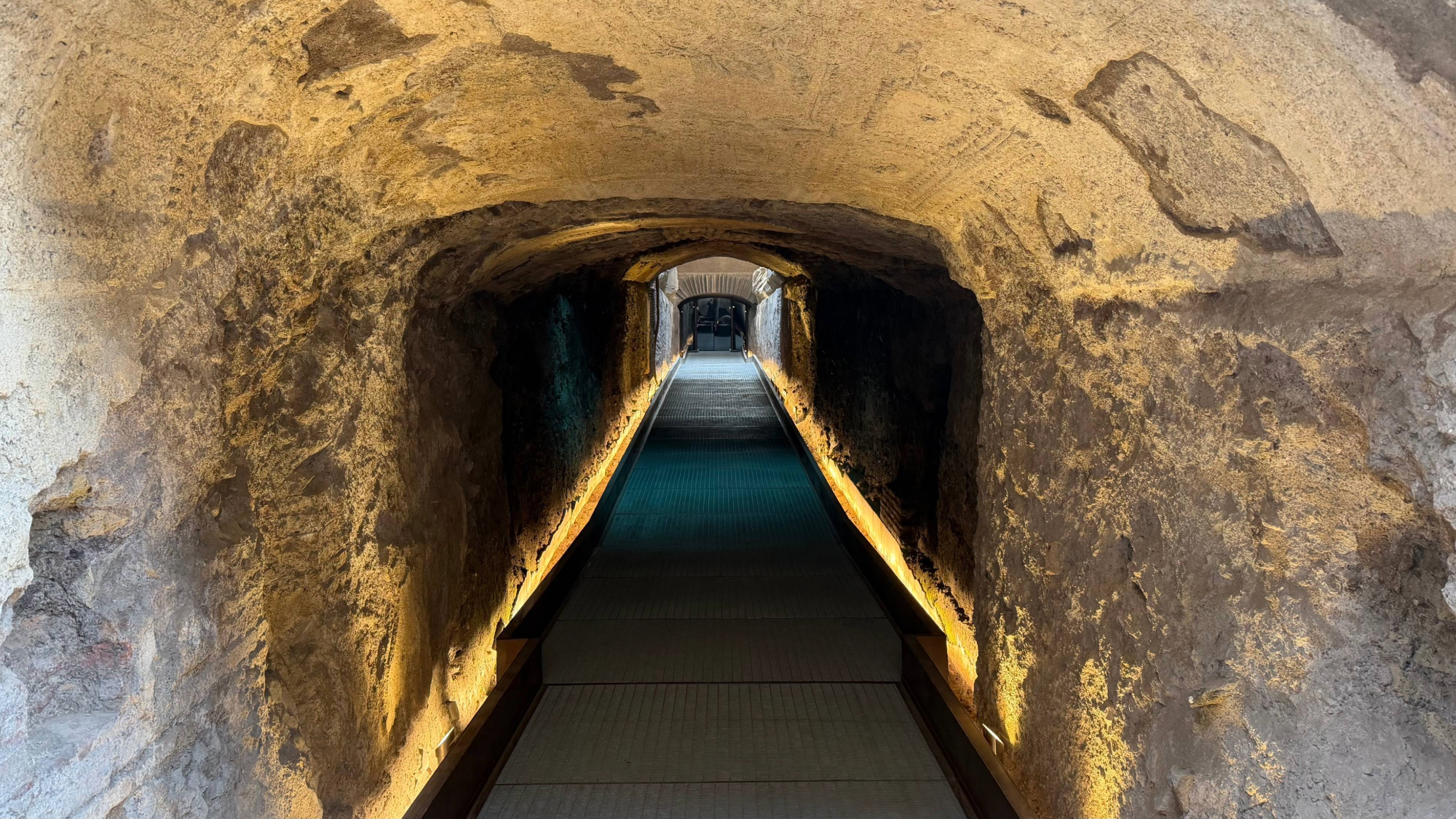
Now, visitors can walk through Roman history via the Passage of Commodus. The restored area recently opened to the public for the first time, and it’s ironic that a tunnel Roman emperors used to access the pulvinar is named after a ruler who seemingly enjoyed being seen in the arena.
The Passage of Commodus
The name for this passage begins to make sense again when its origin story emerges. According to ancient historian Cassius Dio, Commodus survived an assassination attempt in a dark area of the Colosseum in the latter half of the second century CE. While this passageway might be the very place where someone made an attempt on the unorthodox emperor’s life, there is currently no definitive evidence to support the theory.
The tunnel was not part of the Colosseum’s original construction plan, and was built after the inauguration, around 100 CE. It was first discovered in the early 1800s and excavated in 1874. While we know that the tunnel led to the imperial box, we don’t know where the passageway began. Some believe it connected to gladiatorial barracks, allowing the emperor to interact with the fighters ahead of combat. It could also lead to Caelian Hill, one of the city’s seven hills and home to a number of imperial buildings. Today, the tunnel is cut by Rome’s modern sewer system.
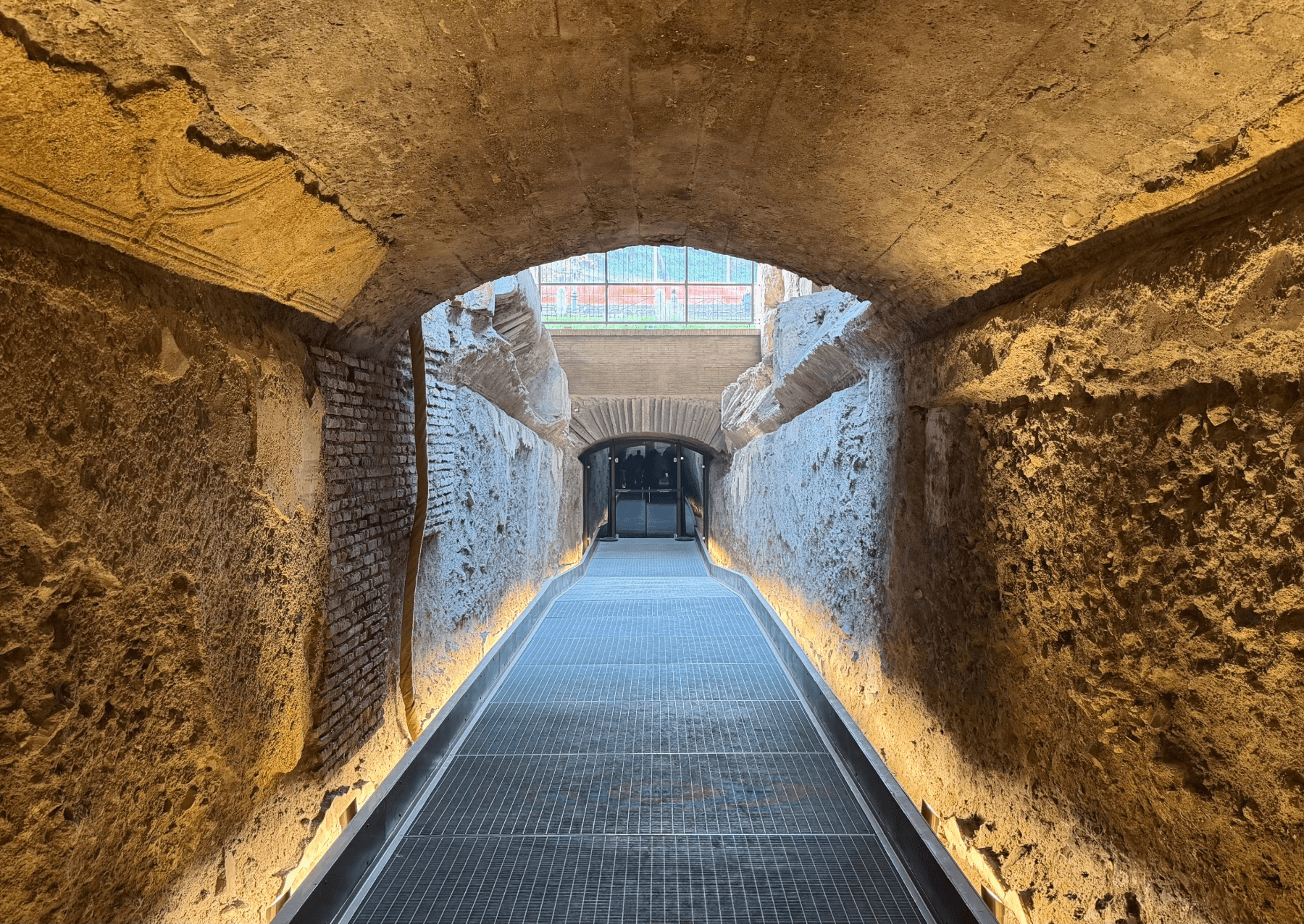
While the external part of the tunnel was underground, the section within the Colosseum was dug into the monument’s incredibly hard concrete foundations, “like a sort of hidden secret passage,” Angelica Pujia, chief restorer of the Colosseum Archaeological Park, tells Popular Science while standing within the archaeological feature in question. Pujia explains that given the difficulty of this task, as well as the fact that builders would have had to cut part of the amphitheater’s sewer system, someone important really wanted this tunnel to be built.
Water damage has consistently created significant problems for the tunnel’s conservation and restoration efforts, as the Colosseum’s 46-foot-deep (14 meters) foundations sit both above and within a network of underground rivers and lakes. Interestingly, the passageway was restored a number of times in antiquity as well, perhaps for related reasons. Pujia says that it’s likely the water problem was also present during the amphitheater’s time.
“In antiquity, several times they had to work on the walls and they changed the wall veneering that was made with marble into a plaster decoration,” she explains. “And they put a sort of double wall meant to, exactly like we do today, keep humidity away from the outer part of the walls.”
The tunnel—like the rest of the Colosseum—would have featured lavish decorations. At first, it would have likely had marble veneering on the walls, Pujia explains, while pointing out one of the metal clamps that would have secured the marble to the wall, still here after hundreds of years. In a later decorative phase, the marble was swapped with frescos.
At first glance, the part of the Passage of Commodus open to the public admittedly doesn’t look like much today, especially in comparison to the rest of Rome’s glorious architectural landscape. The overwhelming color is grey, and barely any of its decorations are left. Despite the lack of decoration, however, once you remember that you’re literally walking in the footsteps of emperors, all it takes is a little imagination for the sense of awe to return.
The Colosseum’s ‘skin’
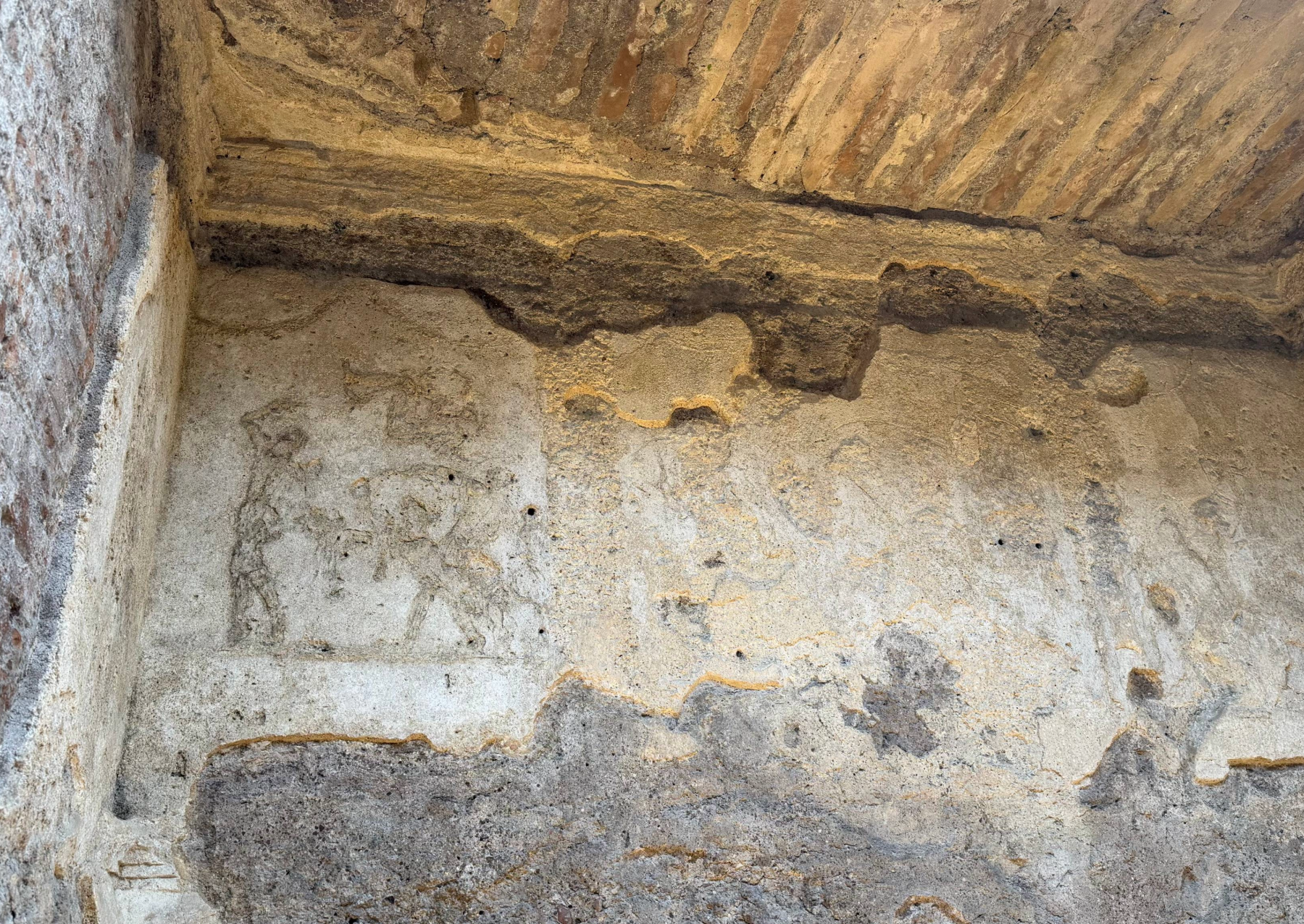
While visiting, we got as close as possible (without alarming the staff) to the enduring remains of a fresco, admiring the horizontal stripes and faint traces of green leaves. Visually, it’s not much, but the certainty that emperors strode past these exact leaves—perhaps even looked at them—is incredibly moving. And then there’s the fact that it’s one of the Colosseum’s only surviving frescos. Along with other decorations, they’re what Pujia describes as the monument’s “skin,” of which very little remains.
“We’re missing the skin. We’re not missing, today, the imposing beauty of this building. But we’re missing […] its details, its decorations,” she explains, which is why it’s so important to preserve the few traces that remain. In the tunnel, these remnants include stucco decorations of shows in the amphitheater with humans and animals, as well as parts of the tunnel’s ceiling. One section of the ceiling features remains with little holes that once held metal or glass decorations, parts of flowers made of plaster.
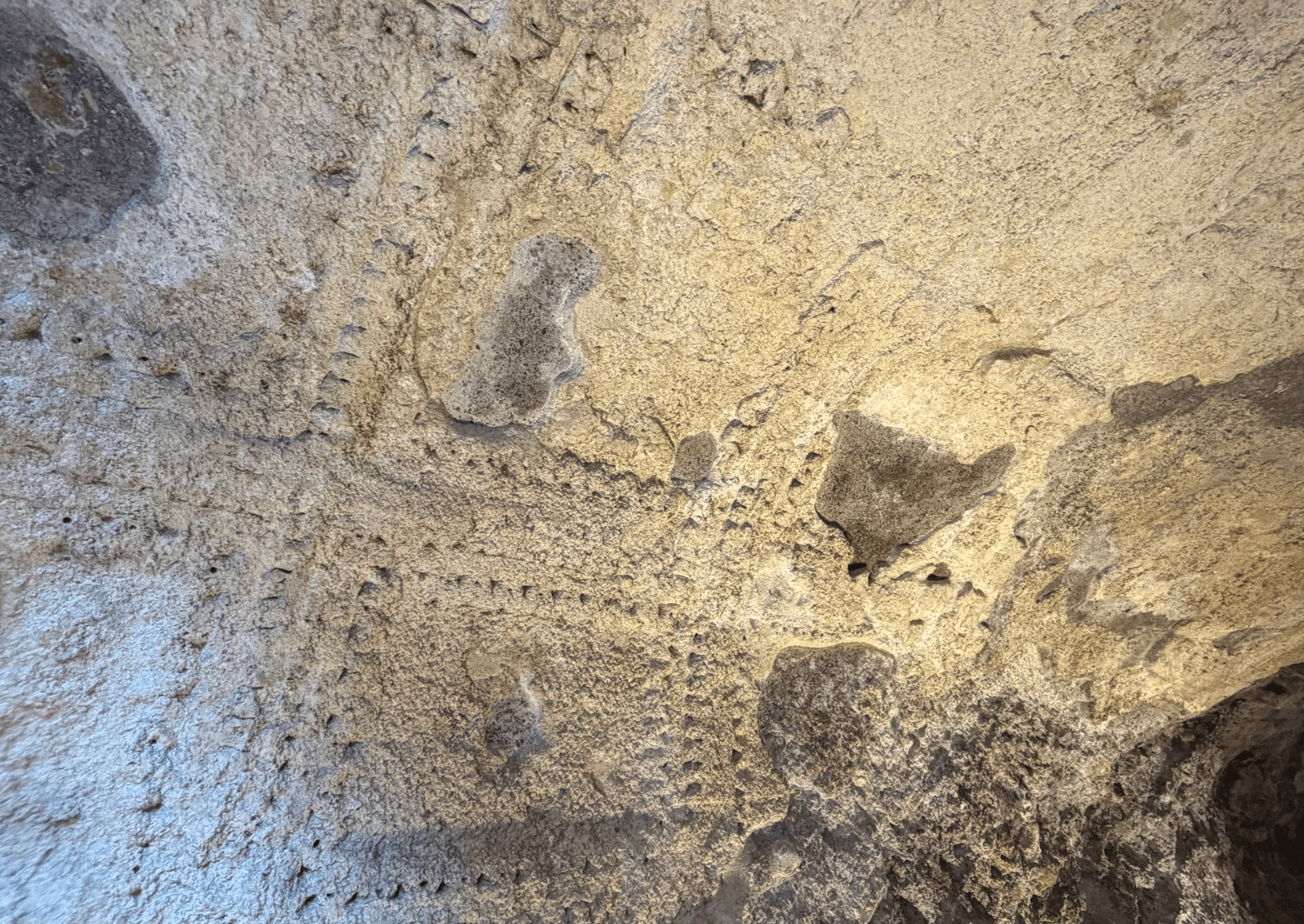
From October 2024 to September 2025, Pujia and a team of experts restored the part of the tunnel that’s now open to visitors for the first time ever. The restoration must have presented a formidable challenge. The plaster was so damaged by water and pollution that the only way to clean it was without touching it—with lasers. They also reinforced the plaster and installed a light system that recreates the cold day light that would have shone through openings in the ceiling as well as the warm glow from torches or oil lamps that may have lined the tunnel.
The underground section of the passage is still closed behind a glass door. The team will begin restoring it in the next few months, with a promise of even more of the Colosseum’s skin soon to be accessible.
A weapon of propaganda
So what would an emperor have seen when he emerged from the tunnel and into the pulvinar? In addition to whatever was going on in the arena, Harvard University classics professor Kathleen Coleman, also highlights what he could have observed in the auditorium.
“It was a spectacle where the Roman people were present in all their categories,” she explains. “So the emperor would have had the satisfaction, if you can put it that way, of seeing the entire empire represented in a certain way.”
Significant individuals, such as ambassadors, emissaries, and the Vestal Virgins—priestesses of the cult of Vesta—would have occupied special seating. For instance, Coleman cites an inscription testifying that envoys from Cadiz, Spain, had dedicated seating.
Decades before the Colosseum’s inauguration, Emperor Augustus (63 BCE–14 CE) established seating regulations for theaters. If these regulations were maintained by subsequent rulers, and if they also applied to the Colosseum, soldiers and civilians would have sat apart, women and men would have sat apart, and children and adults would have sat apart. Enslaved people had to stand in a particular space, highlighting what Coleman describes as the society’s “biggest divide.”
But, at least once in history, neither the arena nor its spectators were capable of holding the emperor’s full attention.
“Julius Caesar made the mistake of taking the equivalent of his laptop to the games and doing something like paperwork,” Coleman says. “And that was frowned upon. So Augustus never made that mistake.”
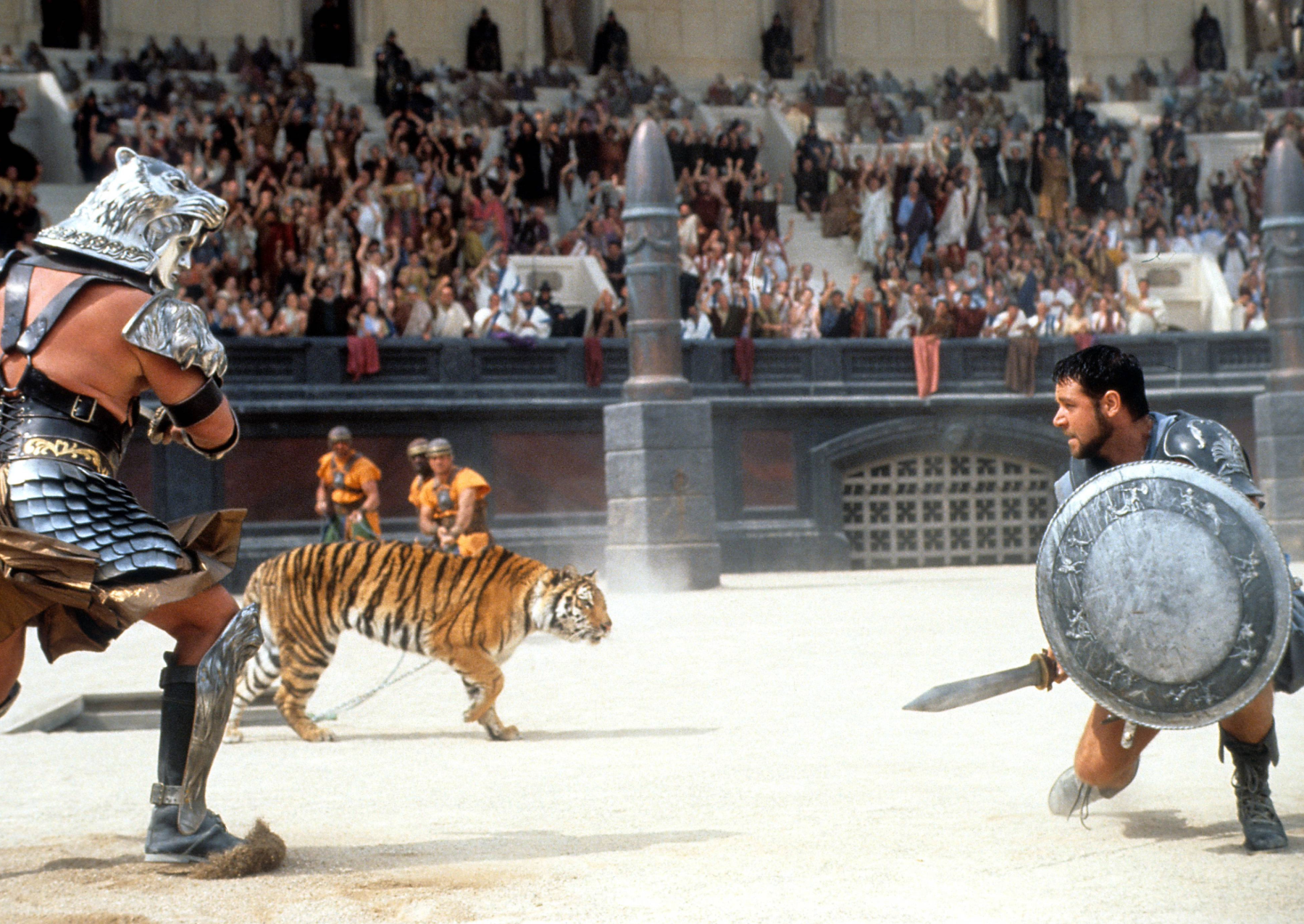
Simply put, emperors were expected to be engaged in the games (no, Commodus, that doesn’t mean becoming a gladiator). As for the spectators, a now-iconic form of engagement during gladiatorial games was the life-or-death thumb gesture, which supposedly indicated whether a gladiator’s life should be taken or spared. While researchers aren’t certain about the exact gesture, the command to preserve life may have been indicated with a closed fist, whereas a thumb pointing in some direction would have signaled death.
Ultimately, the Colosseum was the site of not just gladiatorial games. It was home to a broader game between the emperor and his people, Pujia explains. Spectators would occasionally wield decisional power over the outcome of a match (with the aforementioned thumb gesture), while the emperor put himself on display in the pulvinar to remind spectators who had paid for their bread and circuses. For the emperor, it was an impressive weapon of propaganda.
It all comes back to storytelling
Aside from propaganda and public distraction, Mariotti says that the gladiatorial games also served a purpose that might be much more familiar to modern audiences—storytelling.
Most people might be surprised to hear that only a small percentage of gladiatorial fights actually ended in death. The point of the games wasn’t just about violence, Mariotti says. If violence was the main goal, gladiators wouldn’t have worn armor, and there wouldn’t have been an orchestra playing music, he says. Violence was just a vehicle for storytelling.
“Why was Gladiator so successful?” he asks. “It isn’t about the violence. It’s about a guy who loses everything […] but he fights and fights.”
In other words, most people will never have the opportunity to show the dramatic, jaw-dropping resilience of Gladiator’s main character Maximus Decimus Meridius. But thanks to films like it, thanks to the power of story, we can experience it.
“And when you went to the Colosseum, it was the same thing. Most people didn’t fight against tigers, but you saw it, and you knew it was possible. We love stories. And that is how the Romans told them.”
Related Ancient Rome Stories
