
After months of unprecedented observations, astronomers are bidding goodbye to the beloved comet 3I/ATLAS. First spotted in July 2025, the frigid, dusty space rock is only the third known interstellar object to pass through the solar system, offering researchers the rare opportunity to examine a visitor from deep space. Among other discoveries, scientists have since confirmed that the interstellar comet is the fastest ever recorded as well as covered in ice volcanoes—and definitely not extraterrestrial tourists.
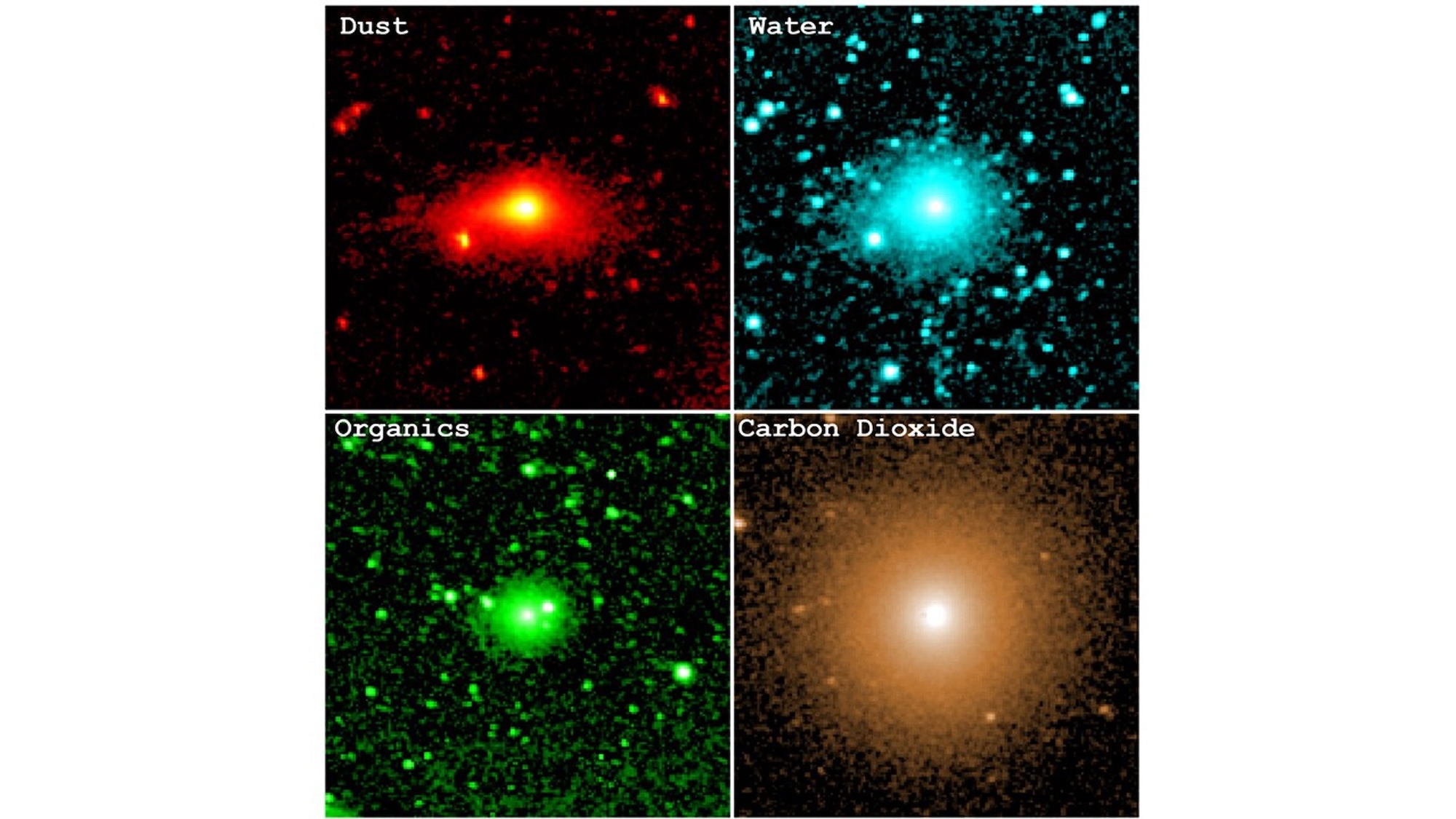
But even as it continues speeding away from Earth at a rate of around 130,000 miles per hour, astronomers are still learning new information from 3I/ATLAS. In a newly published research note, NASA describes a recent, striking turn of events on the comet’s surface. In December 2025, the agency’s SPHEREx space observatory recorded a massive spike in brightness from 3I/ATLAS. The display took place about two months after the comer reached its closest distance to the sun, and allowed researchers to better catalog more of the comet’s various organic molecules, including cyanide, methane, and methanol.
“Comet 3I/ATLAS was full-on erupting into space in December 2025, after its close flyby of the sun, causing it to significantly brighten. Even water ice was quickly sublimating into gas in interplanetary space,” explained astrophysicist and study lead author Carey Lisse. “And since comets consist of about one-third bulk water ice, it was releasing an abundance of new, carbon-rich material that had remained locked in ice deep below the surface.”
Earlier SPHEREx observations taken in August 2025 recorded a comet coma with large amounts of carbon dioxide, along with smaller levels of carbon monoxide and water. 3I/ATLAS traveled nearest to the sun that October. By December, SPHEREx detected a diversified amalgamation that included organics and rocky debris along with the earlier materials.
At first glance, this delay in sublimation (the transition from a solid to gas) might not make sense. After all, why wouldn’t the process start when 3I/ATLAS is nearest to the sun? While that’s certainly when it reaches peak exposure to solar radiation, it still takes time for all that energy to reach the comet’s deepest layers. In this case, materials did not begin sublimating until two months later. Part of this delay is likely also due to the comet’s ancient origins.
“The comet has spent ages traversing interstellar space, being bombarded by highly energetic cosmic rays, and has likely formed a crust that’s been processed by that radiation,” said Caltech mission instrument scientist Phil Korngut. “But now that the Sun’s energy has had time to penetrate deep into the comet, the pristine ices below the surface are warming up and erupting, releasing a cocktail of chemicals that haven’t been exposed to space for billions of years.”
It remains to be seen when—or even if—another interstellar object will visit the solar system in our lifetimes. But tools like SPHEREx are already giving astronomers mountains of data to scour long after the light from 3I/ATLAS fades from view.
