
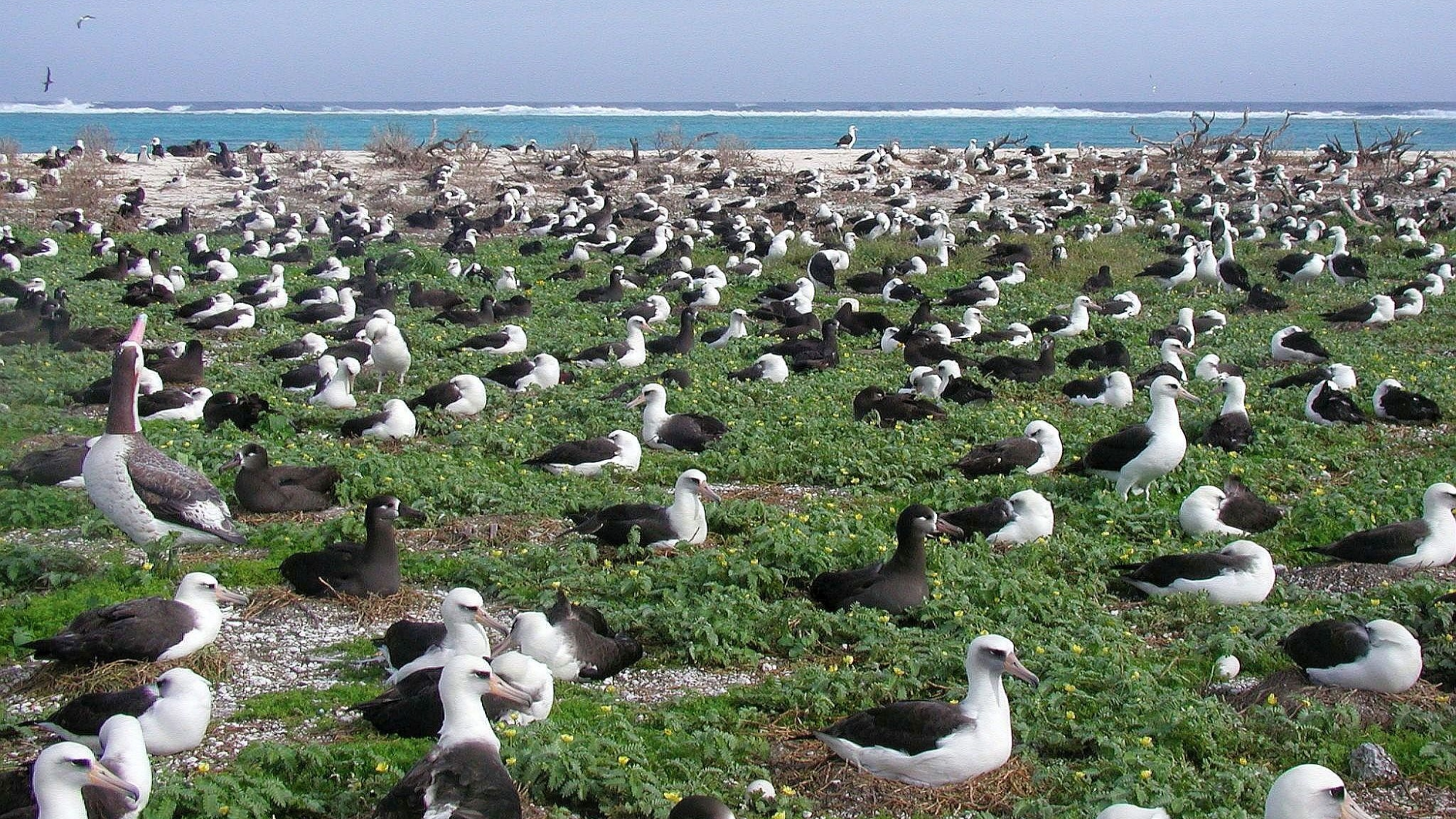
While winter is raging in an unusually large swath of the United States, the weather is balmy for the birds nesting on the Pacific Ocean’s Midway Atoll. As many as 75,000 pairs of Laysan albatrosses (or mōlī in Hawaiian) are nesting in the wildlife refuge on the northwestern edge of the Hawaiian Archipelago.
Now you can watch these brilliant snow-white birds while avoiding the actual snow with a 24/7 live cam. This live cam is run by Friends of Midway Atoll via memberships and donors.

Midway Atoll NWR Wildlife Live Camera
Laysan albatrosses (or mōlī in Hawaiian) return to this same nesting site every year and will reunite with their mates. If all goes well, the pairs will lay a single egg and stay on the atoll to nest.
As nesting progresses, you may see a single egg dotting some of the nests. In the distance, you may also catch a glimpse of ka‘upu (black-footed albatross), the endangered koloa pōhaka (Laysan duck), manu-o-Kū (white terns), kolea (Pacific golden plovers), and ʻakekeke (ruddy turnstones). Koaʻeʻula (red-tailed tropic birds) may also be seen doing their “magnificent aerial mating dance.”
In the evening hours on Midway Atoll—around 11 p.m. or midnight on the East Coast—nunulu (Bonin petrels) arrive by the thousands to take care of their nest sites in underground burrows.
The nesting birds also include a record-breaker named Wisdom. The 75-year-old albatross is known as the world’s oldest breeding bird and was spotted on the atoll in November 2025. She was first identified and banded in 1956 by wildlife biologist Chandler Robbins after she laid one egg. Wisdom has since produced 50 to 60 eggs and as many as 30 chicks have fledged in her lifetime. In 2024, Wisdom became the world’s oldest known wild bird to successfully lay an egg at the estimated age of 74.
