
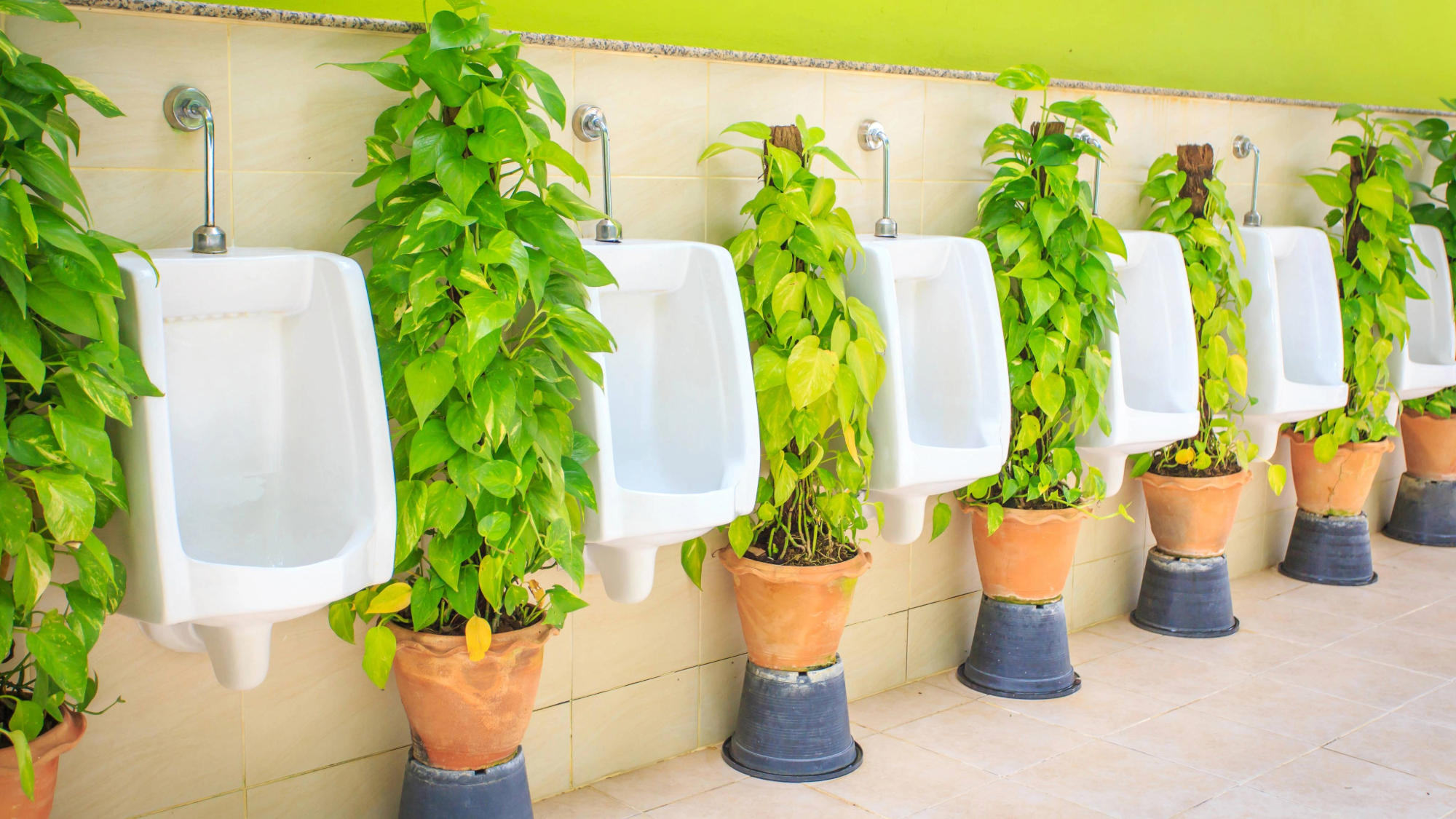
When most people need to go number one, they find the nearest bathroom and don’t give half a thought to what happens to their pee once it disappears down the toilet or urinal. It turns out that the nitrogen in human urine can be used in fertilizer. However, humanity’s use of nitrogen is everything but efficient, according to a pair of siblings who founded the Swiss start-up company, VunaNexus.
“In current agriculture, there is a need for nitrogen in fertiliser, and currently we extract nitrogen using a lot of fossil fuels, but nitrogen is also a mineral that is contained in our urine,” Nadège de Chambrier, co-founder of VunaNexus, explained in a recent video. “Currently, we consider this as a waste, so what we’re trying to do is recycle it, closing the nutrients loop.”

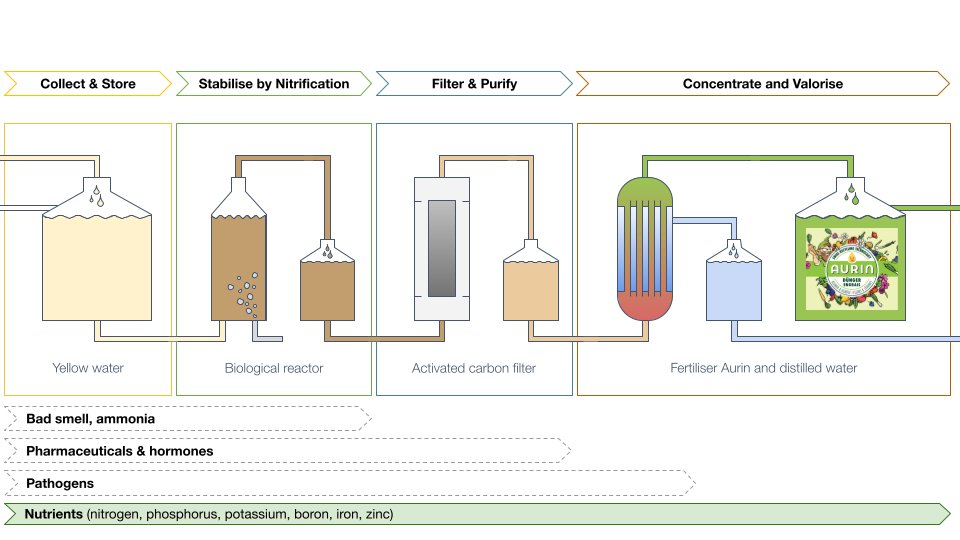
At VunaNexus, Nadège and her brother, co-founder David de Chambrier, have developed a wastewater processing system that turns urine into plant fertilizer by recycling its nutrients. The process sees dry urinals or urine-diverting toilets direct pee into a biological reactor. Inside the reactor, it is stabilized by nitrification, when two types of bacteria turn ammonium into nitrate, eliminating urine’s smell in just five to 10 days.
After nitrification, the resulting substance is filtered from micropollutants, pasteurized, and concentrated by a distiller. The result is reusable distilled water and Europe’s first certified urine-based fertilizer called Aurin. The entire system is automated, operated remotely, and needs little maintenance, according to the VunaNexus website.
“We install small wastewater treatment plants in the basement of large buildings or large urban infrastructure. We extract wastewater from the toilets. The fertilisers can be sold in bulk to farmers. People use it in their homes for the house plants or their gardens,” David explained in the video. “Currently, we have our treatment plants installed in six projects, commercial, residential, and we even have an installation in one of the largest private banks in Switzerland.”
While the de Chambrier’s team is small, VunaNexus has captured big attention—they work with support from the European Space Agency (ESA). In fact, the space technology that also reuses nutrients from human wastewater inspired the idea, which originated from a collaboration with the ESA’s MELiSSA project. The European initiative investigated regenerative systems with the goal of using them to support astronauts’ life in deep space and long-term space missions.
However, back here on Earth, “nitrogen pollution from human urine is a significant, mostly overlooked environmental problem. It impacts water, air and natural habitats,” Nadège pointed out. According to a recent study published in the journal Scientific Reports, most human urine (which contains significant amounts of nitrogen and phosphorus) is released untreated into the environment, causing pollution and nutrient loss. “We treat approximately 8,000 litres [roughly 2,113 U.S. liquid gallons] of urine per day, which is not ending up polluting our rivers and lakes,” Nadège added. 8,000 liters is.
According to a social media post by the ESA, VunaNexus’ technology is lowering carbon dioxide emissions, water waste, and nitrogen ground pollution, in addition to closing humanity’s nutrient “loop”—making it a system where resources are reused rather than discarded.
“Our vision is that in the future, most large constructions in dense city centres will have technologies to recycle nutrients from urine,” David said.
