Scottish Coral This photo was taken on August 24, 2011 in South Queensferry, Scotland. Lauren Liston via Flickr

Swarms of caretaker robots will soon buzz around the damaged coral reefs of Scotland, re-cementing broken sections with utmost precision. Researchers at Scotland’s Heriot-Watt University are programming autonomous underwater vehicles to follow a set of simple rules, like bees in a swarm, to keep corals healthy.

Though they may not host tropical fish, the waters off the west coast of Scotland are full of reef-forming corals, which are crucial for providing habitat for fish and sharks as well as seeding coral offspring all the way to the Arctic. Like tropical corals, Scottish corals are threatened by fishing activities, which can damage or kill large sections of the reefs. Corals can take years or even decades to recover from damage.

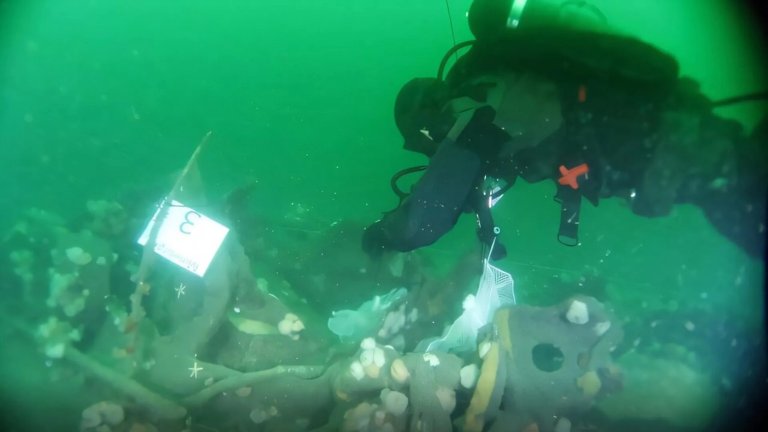
Volunteer scuba divers try to help matters by reassembling coral communities on a reef’s existing framework. But flippered humans can only dive so deep and do so much.

Heriot-Watt life sciences professor Lea-Anne Henry is programming robots to do the work instead. First visual recognition algorithms must be trained to recognize pieces of reef and differentiate coral from something else, like sponges or sea garbage, to ensure the right thing is being reattached. Then the autonomous underwater vehicles would work together to rebuild damaged areas. The AUVs will need some level of independence, so that if one fails, the others can still function -- but they’ll also have to work together, following the same set of rules.

Heriot-Watt professors are currently developing the control algorithms and sets of rules that will drive the robots, and the university provided funding to kickstart the project. Someday, coralbots could deploy anywhere the world’s reefs are threatened, Henry said in a statement.

“Swarms of robots could be instantaneously deployed after a hurricane or in a deep area known to be impacted by trawling, and rebuild the reef in days to weeks, instead of years to centuries,” Henry said.

[via PhysOrg]

4 Comments

Ah, lovely Scottish schools of robots swimming about. From the air, land and waters, the robots will rule! This is just beautiful and oh so fateful.

Great. Now I'm imagining an army of robots looking and sounding like Groundskeeper Willie from the Simpsons...

Patrikd,
ROFL,.... snort... thanks.;)

I can just see it, in their kilts and with their sporrans, playing the bagpipes marching among then corals every now and then a tam o' shanter floating past. Refueling with the occasional sip from a hip flask....


140 years of Popular Science at your fingertips.


Popular Science+ For iPad

Each issue has been completely reimagined for your iPad. See our amazing new vision for magazines that goes far beyond the printed page


Download Our App

Stay up to date on the latest news of the future of science and technology from your iPhone or Android phone with full articles, images and offline viewing


Follow Us On Twitter

Featuring every article from the magazine and website, plus links from around the Web. Also see our PopSci DIY feed


April 2013: How It Works

For our annual How It Works issue, we break down everything from the massive Falcon Heavy rocket to a tiny DNA sequencer that connects to a USB port. We also take a look at an ambitious plan for faster-than-light travel and dive into the billion-dollar science of dog food.

Plus the latest Legos, Cadillac's plug-in hybrid, a tractor built for the apocalypse, and more.


Online Content Director: Suzanne LaBarre | Email
Senior Editor: Paul Adams | Email
Associate Editor: Dan Nosowitz | Email
Assistant Editor: Colin Lecher | Email
Assistant Editor:Rose Pastore | Email

Contributing Writers:
Rebecca Boyle | Email
Kelsey D. Atherton | Email
Francie Diep | Email
Shaunacy Ferro | Email

circ-top-header.gif
circ-cover.gif
bmxmag-ps