Using Drones to Search for Downed Power Lines Courtesy EPRI

Today in ways the impending domestic drone explosion is going to change your life: a number of utilities are testing new technologies that will allow them to quickly diagnose grid problems and rapidly restore electricity to areas stricken by blackouts--technologies that include augmented reality apps and aerial drones. These prototype systems could go a long way toward streamlining the grid repair process, quickly returning households and local economies to normal after sever weather events or other power-related calamities.

One such solution, developed by the nonprofit research group EPRI (for Electric Power Research Institute), is a prototype app for the iPad that uses augmented reality to allow utility workers to quickly dial up orders for replacement equipment. A worker driving a stretch of damaged utility poles can point his or her tablet at a any given pole and use an AR overlay to quickly make note of what kind of pole, transformer, wire, and other equipment are present, record what kind of system is wired up there, and designate what equipment needs replacing.

That information is then geotagged and beamed to the utility’s motor pool where trucks are being loaded with replacement equipment. Each individual utility pole can thus have its own detailed service order, allowing trucks to be loaded only with the equipment they need to repair a given stretch of downed or damaged power lines.

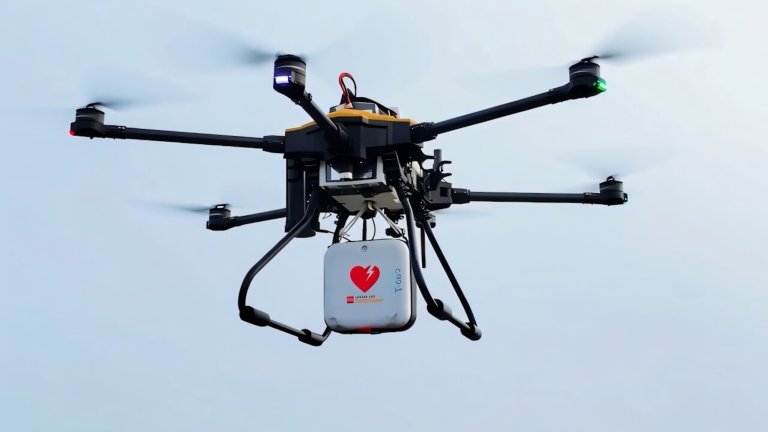
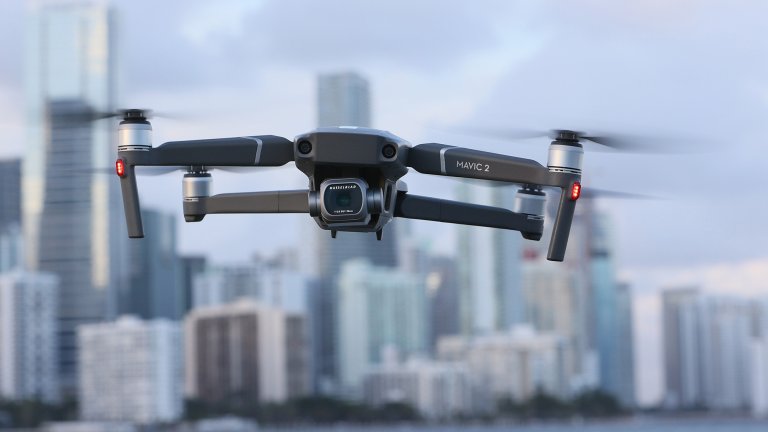
In the same vein, some in the utility industry are experimenting with camera-equipped drones that could be quickly launched to count downed utility poles, locate any downed power lines, and perhaps even allow field workers like the one described above to make determinations about what needs to be replaced in a certain area. These small, inexpensive drones, likely with a flight range of a few hours and packing nothing more sophisticated than a simple optical camera, could also alert road crews to obstructed roadways or notify emergency crews of individuals in distress almost immediately after a storm passes.

[NYT]

4 Comments

I suppose for the remote locations, which there are a lot of them in regards to the manner of where high power lines are run, this technology could really be helpful!

Then intime, many government agencies will make use of drones for disaster responses and appraisals too, local police and fire departments.

Of course, in the future we might have a several cameras mounted on every rooftops, all network wirelessly communicating together and activated when needed. Its just a matter of time, when were all tag and stalked, with data bases being developed on our living styles and actual movements too, all for our better security and safety. ;)

Moooo, Baaaaa.... Moooo Baaaa, get along little sheeep and cows.... The NSA is already monitoring all communications of ours anyways!

To PopSci,

Would you PLEASE do some research about the differences between 'drones' and unmanned aerial vehicles (UAV). It is so disappointing to see this magazine fall in step with all the other simpleton entertainment rags being published. How about applying some science. And just because Wikipedia says something does not make it right. You need to dig a little deeper in your research.

In 100% of the articles I've read in popsci talking about 'drones' , you really mean 'unmanned aerial vehicle'. A 'drone' simply flies along until it runs out of fuel or is shot down. A UAV has a flight control system that is either autonomous, controlled by a remote pilot, or both.

Got it?


140 years of Popular Science at your fingertips.

Innovation Challenges


Popular Science+ For iPad

Each issue has been completely reimagined for your iPad. See our amazing new vision for magazines that goes far beyond the printed page


Download Our App

Stay up to date on the latest news of the future of science and technology from your iPhone or Android phone with full articles, images and offline viewing


Follow Us On Twitter

Featuring every article from the magazine and website, plus links from around the Web. Also see our PopSci DIY feed


February 2013: How To Build A Hero

Engineers are racing to build robots that can take the place of rescuers. That story, plus a city that storms can't break and how having fun could lead to breakthrough science.

Also! A leech detective, the solution to America's train-crash problems, the world's fastest baby carriage, and more.


Online Content Director: Suzanne LaBarre | Email
Senior Editor: Paul Adams | Email
Associate Editor: Dan Nosowitz | Email

Contributing Writers:
Clay Dillow | Email
Rebecca Boyle | Email
Colin Lecher | Email
Emily Elert | Email

Intern:
Shaunacy Ferro | Email

circ-top-header.gif
circ-cover.gif