A too-brief encounter with the grand old man of science-fiction visionaries.

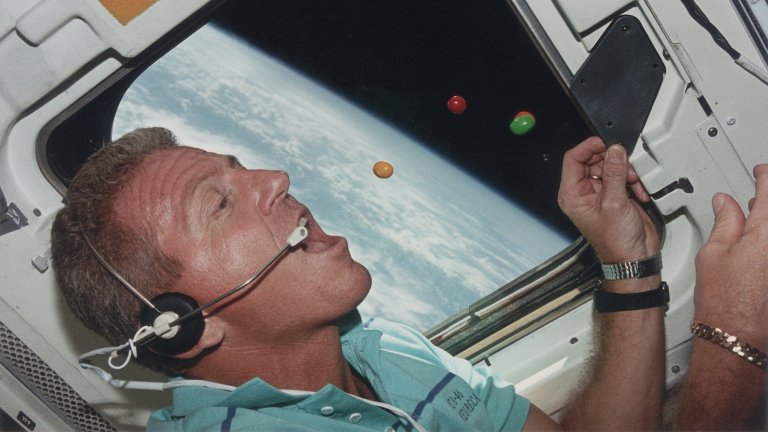
As a young man, Clarke was pals with some of Britain's fastest-rising literary stars, including C.S. Lewis and J.R.R. Tolkien. That was before he made a name for himself in 1953 with Childhood's End and before he fell in love with the Indian Ocean's coral reefs. "I came for the sea diving," he told me of his move to Sri Lanka in 1956. "Underwater was the closest I could come to the weightlessness of space."

While we talked, something reminded him of his London days, and although he could hardly recall his latest book, conversations from decades ago still rang clear in his mind. "C.S. Lewis! I just remembered our parting words," he said. "We were at a pub. The Eastgate. Fleet Street." He leaned back in his chair, chasing the memory down the street and finally cornering it. "Ah," he continued. "As we staggered out into the street, Lewis turned to us. He said, "I think you are very wicked people, but wouldn't the world be a dull place if everyone was good?' "

Clarke laughs uproariously at this gentle rebuke, slapping his desk and shaking his head. Lewis is the most widely read Christian apologist since the apostle Paul, and Clarke is surely among the most widely read opponents of faith. "Religion is the most malevolent of all mind viruses," Clarke declared, warming to the topic.

"Wow," I said. "That's not a very. . .generous. . .view of religion."

"Most malevolent and persistent of all mind viruses. We should get rid of it as quick as we can."

"So," I said, extrapolating, "do you think that ultimately religion will be banished like a virus? A vaccination against religion, maybe. Could be an interesting book." There was a silence as Clarke appeared to mull over the concept, and then: "I'm working on the novel now," he said. "I don't know how many of these ideas I've actually used already. I think of them in the night, such ideas, and think, Did I write this? Sometimes I find I have."

Clarke's turn to dazzle the world came in 1968, when he shared an Academy Award with Stanley Kubrick for the film version of 2001: A Space Odyssey, which was inspired by a 1951 Clarke story. In it he laid out, with wizardlike foresight, several notions that time would validate: Videophones. Lunar landings. The Internet. Before long, Clarke was co-broadcasting Apollo missions with Walter Cronkite.

Now I asked whether he expects computer intelligence to one day intercept human intelligence, as he predicted in 2001. He laughed. "Assuming it hasn't already?"

Gently, I eased into an attempt to get Clarke to issue a few more predictions for posterity. "You were way ahead in your understanding of satellite orbits," I said, "so where do you think communications will go next?"

"Well, brain to brain, obviously." He described something he calls a "brain cap," by which people could swap thoughts in the air. Instead of blowing a kiss to your spouse at the airport, you could blow him or her an entire farewell letter, with photos and audio clips. Brain caps, he explained, would also eliminate menial tasks. "I think it's imminent," he said, "for some simple things like switching lights on, or the air conditioner, or starting your car."

When might the brain cap emerge as a viable tool? "Well, it depends what bandwidth you're talking about!" he replied, laughing. He got the faraway look that signaled the arrival of another Big Idea. "Ultimately it's sort of a total merging of two minds. So you don't even know who you are. . . Maybe 10 years."

As his predictions kept coming, Clarke developed a running joke about all the exciting developments that would happen roughly 20 years from now: Cryogenic freezing? Who needs it? We'll bypass the body and upload our essences to computers—if we so choose—about 20 years hence.

We'll also ride elevators into space soon, he said. It's one of his favorite predictions, one he has trotted out for years. "When?" I ask. Oh, in 20 years.

Also at about that time, nanotechnology will allow us to retool the atoms in common lead and turn it into gold. But lead will become more expensive than gold because it is more useful. This radical reconfiguration of value will lead to the abolishment of money as we know it, and instead people will trade megawatts as currency.

What about interplanetary tourism? Sure! Twenty years. "What a year that'll be," he said, grinning. Ah, but we may not make it that far, he added. Because the end of the world just might arrive at about the same time.

It's a sobering prediction. And so, sitting with this unsettling man in this exotic land, a final question occurred to me: If humanity does find itself in extremis, what will be Arthur C. Clarke's message when we turn to him for guidance?

Clarke dwelled on the thought a moment, smiling. He seemed to relish the idea that he would still be around in 20 years—and even better, that the human race would come to him for one last word of instruction.

Well, take heart, people, because in these twilight hours he decided to keep it simple:

"Don't panic."

Page 2 of 2 « first‹ previous12
Want to learn more about breakthroughs in electronics, medicine, nanotech, and more?
Subscribe to Popular Science and enter to win $5,000!

4 Comments

We have lost one the great intellects of the century. His mark is indelible and not only in literature but in hard science as well. I can't believe that no one else has yet commented on the reposted article.

Clarke was definitely a giant intellect, as well as a fabulous writer. It's sad when we discover a brilliant person's blind spots, however.

Clarke's blind spot was his own faith, though he claimed to be an opponent of faith. EVERYONE has faith in SOMETHING. If Clarke was an atheist, or at the very least an agnostic who practically lived as if atheism were true, then that was his faith. He placed faith in something he could not prove: the nonexistence of God.

And he talked about religion as being a very negative force in this world, totally heedless of the fact that some of the worst atrocities in history have been committed relatively recently by NONreligionists: Stalin, Hitler, and Mao Tse-tung. EVERYONE believes in something that drives their day-to-day actions, including power-grabs and the persecution of others.

And there is no conflict between science and religion, because science is ultimately founded on the nonscientific: a faith in the order and rationality of the universe, and our corresponding ability to interpret it. And our interpretations of nature's raw data are based on our precommitment to a certain worldview: if we have faith in naturalism - that nature is all there is and provides all the answers - then we will automatically interpret the data naturalistically. In such cases we haven't "proved" that a given phenomenon is strictly natural; we've just assumed that it is. A supernatural explanation may in some cases be equally logically possible.

(Note: I am NOT suggesting we opt for a supernatural explanation whenever a scientific investigation is stuck. I am simply pointing out the underlying assumptions that exist in our reasoning.)

Finally, while Clarke was good at predicting future technology, he was being quite ridiculous to hope for the eradication of religion. Man is an inherently and incurably religious creature. What's more, and this is very ironic, Clarke was an evolutionist, which means that by his own faith in naturalism he was forced to explain all human behaviours and character as the outcomes of the evolutionary process - which means, in turn, that religion in Clarke's view of the world must in fact be an outcome of evolution. If it is an outcome of evolution, then this must mean that it has been necessary for our survival, and apparently still is, since there are hardly any atheists on the planet.

If atheists believe that, by virtue of their atheism, they have "evolved" beyond any possible need for religion, what that means is that they view themselves as higher up the evolutionary chain than religionists - which, when you think about it, is a lot more arrogant than they consider religionists! Another irony is that such arrogance about one's supposed position on the evolutionary ladder is what undergirded one of the great evils of recent history, Nazism.

I like to think that Clarke ultimately found God before the end, but I have my doubts, sadly. In any case, he sure knows the truth now.

Dear previous poster:
Believe to be true what you want to be true! Other people will base their actions and perception of reality on EVIDENCE that can be reliably observed by anyone and on PROBABILITY rather than wishful thinking.

The ability of some people to twist everything until it fits into their (or any) religion is amazing. And while it is true that there are not as many atheist as there should be considering the evidence for a personal god or the miraculous workings of religion, by the same token you can say the same thing about people trusting in science. Considering how well the scientific method works, it is simply MIND BOGGLING how many people do not think that way.

Ultimately, the inability to seek, question until there are no more likely answers, and accept what really is going on (until further evidence surfaces) while happily accepting what is more convenient to accept without skepticism may be what brings us to an end. Maybe people are ultimately religious (aka believe what suits them best) but this is not reason for celebration. At least not if you want 6.5 billion people to continue to live on this planet.

The "faith" in religion is by no means the same than "trusting" in science! One is based on accepting without evidence the other is based on accepting as most likely after critical review of evidence by many. Science has proven to work far better to explain and even to predict phenomena. It does not mean it needs no scrutiny, or that scientists are infallible, or that there are no powerful interests that influence scientific data and scientists. It means that you will get more reliable results if you use it the way it should be used. Carl Sagan once wrote that you can inoculate against disease or you can pray. There are many many examples like this. It is a matter of reasoning. Some do it - too many don't.

You may not want to accept that evolution is more likely than any other idea currently on the market, however rejecting science and scientific thinking and retreating to religion (which one by the way?) may not send us back into the trees, but it will send us back into the dark ages. I don't know about you, but I from what I have heard about it, I don't want to be there. We have made progress, we need to continue. There is so much possible still, we have not discovered all by far. Still much work to be done. Stopping to search (or searching without restraint) is not going to help. If you want to criticize science you could question those who search without accepting responsibility for what they might find. Just because something can be done does not mean it should be done. Call feeling and being responsible for my actions my "religion" or "spiritualism" if you want.

BTW, whether you believe that there will be something after your death or not - you won't be disappointed! Probably not even surprised. :)

Karsten
--
http://www.polluteless.com
Practical Advice to Pollute Less

ad101867

Bad people are bad people, whether they are modern tyrants like Stalin, Hitler or Pol Pot.... Or the Medieval inquisition. Or the Spanish inquisition. Or the Portuguese inquisition. Or the Roman inquisition, which is the one that had Galileo recant his theories about Heliocentrism, now there's a blind spot for you... This is what religion is good at; stifling free speech and free inquiry.

As far as faith goes... It all depends on your definition of faith, doesn't it?

HOW dare you claim to know or perceive what another mans 'faith' is or even assume that you have an inkling as to his thoughts, regardless how you might be interpreting it? More accurately it seems, what you would consider it to be... Arrogant.

Man might be a religious creature, then again he may not, but we don't need to have religious types trying to tell the rest of us what to think about faith. In the religious sense, faith simply seems to be a divider, you know 'which of these these things is not like the other, which of these things doesn't belong'.

By the way, Hitler was raised Roman Catholic but preferred 'Positive Christianity'

Science is founded on the non-scientific??? If you wish to abdicate your reason to faith, be my guest, but please keep it to yourself.


Download Our iPhone App

Stay up to date on the latest news of the future of science and technology from your iPhone with full articles, images and offline viewing


Follow Us On Twitter

Featuring every article from the magazine and website, plus links from around the Web. Also see our PopSci DIY feed


Become a Fan On Facebook

Share links with friends, comment on stories and more


December 2009: Best of What's New

In our December issue, Popular Science names the 100 best innovations of the year: bombproof wallpaper, self-parking cars, the fastest helicopter, and 97 more. Plus inventor profiles and videos.

Check out the best of what's new here.

Popular Science Photo Pool


Share your photos in the Pop Sci pool at www.flickr.com!
tags_sprite.png
POP_embeddedForm_cover_May09.jpg