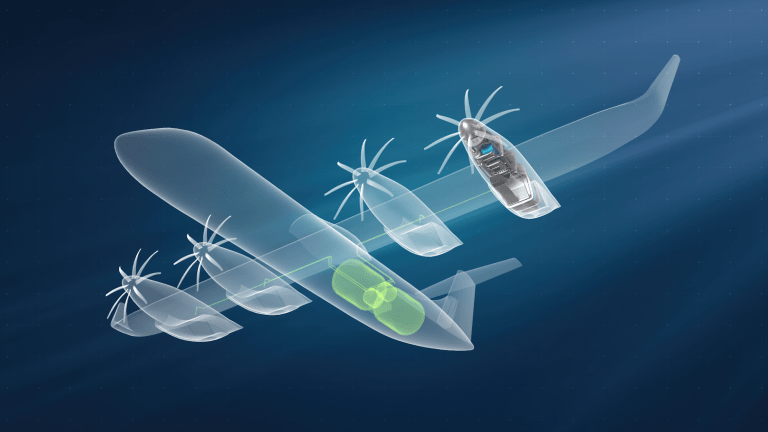
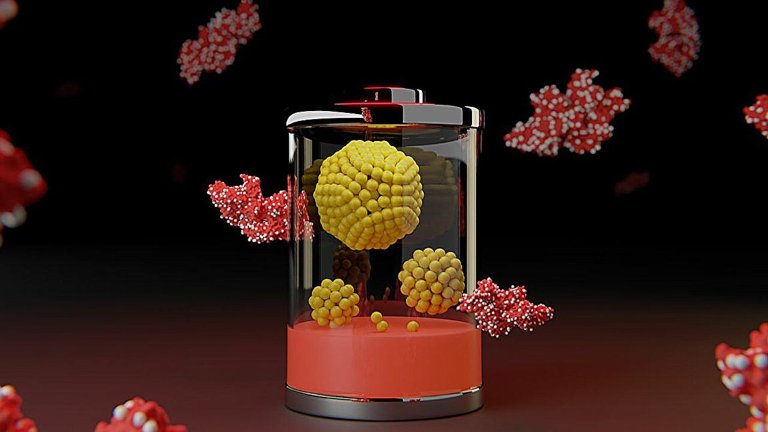
Heart Power A turbine installed in the bloodstream could serve as a microwatt-producing "hydroelectric plant" for implanted medical devices. Alois Pfenniger, ARTORG Cardiovascular Engineering, University of Bern, Switzerland via IEEE Spectrum

Enterprising engineers are constantly figuring out ways to generate electricity from just about anything that has a little extra energy to give, from ocean waves and river currents to much smaller micro-generators that harvest ambient vibrations from automobiles crossing a bridge. Now Swiss researchers want to tap an even tinier source of energy: the human bloodstream. Using a tiny turbine installed in a blood vessel, researchers could generate the microwatts needed to keep implanted medical devices ticking.

Implanted medical devices like pacemakers, blood pressure sensors, drug-deliver pumps, glucose meters, or neurostimulators, all need just a tiny amount of juice to continue operating, but because they require either an external power source or a replaceable battery, they must be installed in easy-to-reach places in the body. Giving them their own power supply means they could be installed in more favorable positions to carry out their functions--and in some cases would eliminate the need for periodic surgeries to install new batteries.

A Swiss team from the Bern University of Applied Sciences has put three different turbines in a tube that simulates the thoracic artery, millimeters-wide blood vessel. The most efficient among them generated some 800 microwatts--plenty to power today’s pacemakers and then some.

But there is some concern that such turbines in the bloodstream could cause blood clots. Blood that gets caught in eddies tends to coagulate, and if the turbulence cause by a turbine in a blood vessel cause such clots to occur they could prove deadly as they move through the bloodstream. Which would kind of render the pacemaker useless.

The turbine idea, the researchers agree, needs some work and research. But its part of a trend in medical device design that is taking the future toward self-powering devices. Patents filed as far back as 2005 seek to use the pizoelectric effect to generate energy from moving organs, and other groups have experimented with generating power from differing temperature gradients within the body.

[IEEE Spectrum]

17 Comments

it could cause more problems then just clots.

Austin - Scary scary thought, this is going to give me nightmares...

It's amazing,but i just can't image it...

hell, i'd get one just to power my ipod! what's an aneurysm between family eh?

Idea is fascinating but dreadfully risky.In the age of energy hunger, its not surprising to have crazy ideas. But why shouldn't we think of the energy we receive from consuming foods. Can't we find ways to get energy directly from our daily consuming food as we get from them in our metabolism process? It's huge amount of energy, we just take 3 meals a day and we are energy sufficient...just think of it.

First thought: bad idea! Bad idea!
Second thought: yes, bad idea.
Sugar, food, muscle motion or wireless power seem like less dangerous options.

Aren't they afraid of causing earthquakes, rising tides and wind chill wash in the blood? They accuse turbines of doing that on land; why wouldn't it do it in your blood too?

I would also think that high blood pressure would become an issue. Each turbine would act to add resistance to the stream of blood which would put strain on the heart, which in turn would put an extra load on the vessels neighboring the turbine - an aneurysm wouldn't be too much fun to have. I see a whole system becoming disrupted by putting these things in place.

i would like this to be tested on a large scale. and improved of course. i want one to power my house and my car and then im set.

On a side topic, the illustration does not look to me the least bit a turbine. It does look more like a flywheel type gear. It also looks greasy and dirty. I can't really say, I like to have that contraption in my body. I understand the verbiage of this article, but did somebody pull a different gear illustration off the shelf?

heck no. I can't see this working at all. Anybody who is weak enough to need pacemakers/etc. certainly shouldn't have obstructions implanted in their arteries. Also, I'm picturing the Matrix right now. Humans have these implanted and are paid to produce energy, but it winds up killing them. Something like that.

I think somebody found a illustration of a small gear and then wrote a fantasy science article. This gear look nothing like any turbine I have ever seen.

Keep it simple silly :) too complex a solution for a simple problem...stick to induction...

They're just gettin ready to put you into the Matrix:-)

It is old idea, but in the past the problem was that it could damage the blood cells during the rotation.

Perhaps they could reroute a smaller arterie outside the body and place turbine there, so that the body could heal quickly if something goes wrong.
Microturbines seems to me an interesting project, but induction sounds more logical and safe.
Maybe piezo crystals could be used inside the body.

A better system would be a material that transfers body heat to energy, such as that metal that transfers heat to magnetic current which can then be translated into electric potential. Much better idea.


June 2013: American Energy Independence

Five amazing, clean technologies that will set us free, in this month's energy-focused issue. Also: how to build a better bomb detector, the robotic toys that are raising your children, a human catapult, the world's smallest arcade, and much more.


Online Content Director: Suzanne LaBarre | Email
Senior Editor: Paul Adams | Email
Associate Editor: Dan Nosowitz | Email
Assistant Editor: Colin Lecher | Email
Assistant Editor: Rose Pastore | Email

Contributing Writers:

Kelsey D. Atherton | Email
Francie Diep | Email
Shaunacy Ferro | Email

circ-top-header.gif
circ-cover.gif
bmxmag-ps