Unlike antibiotics, which kill many different types of bacteria, antiviral drugs for the most part need to target individual, specific viruses. A drug that attacks a multitude of viruses -- an antibiotic for viruses, effectively -- would be a significant boon for medicine. And a group of researchers led by UCLA scientists just may have discovered exactly that.

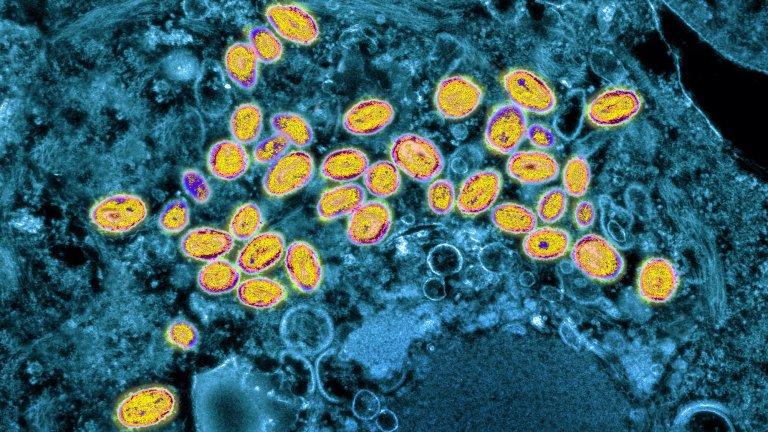
For all the complexity of the diseases they cause, viruses are very simple; just a bunch of DNA in a lipid sack. LJ001 attacks that lipid sack, as well as the lipid membrane of healthy cells. But whereas the healthy cells can easily repair the damage, the inert viruses simply fall apart.
Previous attempts at creating wide-spectrum anti-viral drugs have largely failed. Some are in use, but they are very expensive, and because they work by attacking RNA and DNA replication, they often carry significant side effects. By attacking the structure of the viruses, not the replication, LJ001 may end up as the first drug in a new age of medicine.
138 years of Popular Science at your fingertips.
Each issue has been completely reimagined for your iPad. See our amazing new vision for magazines that goes far beyond the printed page
Stay up to date on the latest news of the future of science and technology from your iPhone or Android phone with full articles, images and offline viewing
Featuring every article from the magazine and website, plus links from around the Web. Also see our PopSci DIY feed
Science is reinventing play, from extreme sports to gamification to ridiculous roller coasters to the playgrounds of tomorrow, and this issue is chock full of fun. Also, on a less fun note: Did global warming destroy my hometown?
Good job everyone who was a part of this.
Well this might just be the biggest break through of the century
--GTO--
I had once read that BHT has anti-viral properties. Though I haven't heard anything too recent about it.
here comes the zombie uprising...
That is what I heard kids say about the H1N1 shot!
@ GTO
I fully agree - this would be the breakthrough of the century! So many lives would be saved and if curing aids, eboloa, etc is as easy as getting a shot, taking a pill, etc what an awesome world this could become.
Woah, reminds me of The Immunity Syndrome episode of Star Trek... Maybe we should build mini versions of the Enterprise and put that in our system instead.
HUGE!!!!!!!!!!!!! Who makes the money if this drug goes through? UCLA????
If you think this is going to be allowed you're naive. You realize this would bankrupt a lot of very wealthy corporations right? Think of how much money they'd lose if the common cold and flu virus went away. ..This will never happen. It will most likely be illegal in fact because thats what happens to anything that threatens a powerful and wealthy business model.
Same goes for aids. .the drugs that prolong your life are absurdly expensive. When you introduce money into care for life its a failure immediately. Ultimately no one gives a fluck about curing anything. .just the profits.
Anyone else concerned that this article states that a virus is "just a bunch of DNA in a lipid sack"? I can overlook the description ignoring retroviruses (which use RNA rather than DNA), however, viruses have a PROTEIN coat, not lipid!
@bagpipes- I wrote a paper about BHT back in undergrad. But then... you knew that already...
Mr. Fox... check your basic facts, please.
@ wcbpolish:
On the viruses "are just a bunch of DNA in a lipid sack", I couldn't agree more. For me, that's when the huge red question article credibility flag went up. Now I understand that not every reader is a savvy immunologist, and that pop-sci must "dumb down" topics like these, but even I (a mere biology undergrad) cracked up at the degree of simplification. Its a stretch to say that this treatment could encompass some of the most highly variable viruses around. But hey, what do you expect from an article posted via CHINA DAILY?! I mean come on!
I just looked up "viral envelopes" on wikipedia. It turns out that there is a class of proteins that have a lipid envelope (derived from the cell membrane of the infected cell that produced them.
From the Wikipedia page about viruses:
"viruses consist of two or three parts: all viruses have genes made from either DNA or RNA, long molecules that carry genetic information; all have a protein coat that protects these genes; and some have an envelope of fat that surrounds them when they are outside a cell."
Soooooo... I guess that the info is not ENTIRELY wrong... but misleading. To say that they are just DNA in a lipid sack is, at the very least, very misleading.
Considering the compelling evidence that viruses alter epigenetic signaling and help us evolve on the DNA level...combined with the fact that embryonic development slows or haults as viral activity diminishes in the placenta...I think extreme caution is warranted with this amazing new advance in antiviral drugs.
Embryonic development slows with reduced viral activity? Got a source on that? I'm curious and skeptical.
this report is pretty concise to the original story I read, what I understand is LJ001 disrupts the virus from attaching itself to healthy cells, so what the sacks contents are does not necessarily pertain to the drugs effectiveness if the virus can not attach to a cell
I say only give it to Aids infected individuals and monkeys.
If you would be able to cure Aids, does that mean that condom companies would take a hit also?
I feel really bad for those infected with hiv, and this would save millions of lives, especially in Africa, where millions were born with a death sentence.