The Destroyer (DDG 1000)
Photo by Kris Holland
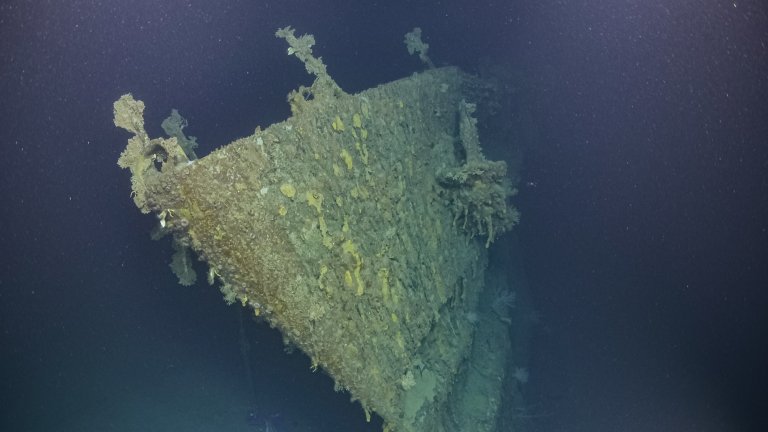
Purpose: This 14,500-ton destroyer’s mission is to pound enemy positions in support of troops onshore. The DDG 1000 features a “tumblehome” hull, which hasn’t been used by the world’s navies since two major sinkings in the early 1900s. Boosters say the design, which resembles an inverted V, will give the ship a stealthy, low-radar profile by deflecting radar signals skyward. Some critics argue that the broad base of the tumblehome hull makes the ship more likely to capsize in rough seas. But that’s up for debate.
“There’s a slight advantage to having an angled superstructure, in that your wind moment is actually a little bit less,” says David McMillan, president of Aker Yards Marine, a commercial-ship design company based in Vancouver. Translation: The same sloping design that helps keep the ship off radar screens should also make it less likely to capsize, because it will present less surface to be pushed over by winds. An electric drive system will create a single source of power for the DDG 1000. Gas turbine engines will create electricity that can be diverted for any task. Under full throttle, the ship’s power could be used mainly for propulsion; in battle, that power could be used to fire energy-intensive future weapons such rail guns, which launch projectiles using magnetic force.
Replaces: The Navy says the DDG 1000 is a new class of ship and thus won’t replace anything older. But some analysts believe it will fill the gap left by the retirement of Iowa-class battleships in the 1990s.
Status: The Navy has contracted Northrop Grumman and General Dynamics to each build a DDG 1000. The first, to be launched in 2011, will be the USS Zumwalt, and all future DDGs will be called Zumwalt-class.
Prognosis: The Navy plans to build seven DDG 1000s, and Congress has approved more than $6 billion for the two ships already commissioned.