PROPULSION
Once DepthX decides where to go, it gets there using a system of six thrusters (F) that allow it to maneuver, hover, and wall-track with great precision. The system is redundant—there are two vertical thrusters and four horizontal thrusters. If one goes out, the other can take over.
A buoyancy computer (G) controls a set of valves, pumps and pressurized gas to precisely drive water into or out of the system. The goal: to achieve neutral buoyancy at any depth and avoid wasting thruster power to maintain a desired position. Two battery towers (H) (again, for redundancy in case of failure) are each created from lithium-ion batteries with power equivalent to what would be needed to run about 30 electric cars.
SAMPLING EQUIPMENT
The robot’s probe (I) can take one-by-three-centimeter cores from a cave wall for later analysis in the lab. Water can be pumped into one of five collapsible plastic bags onboard, and the AUV carries a microscope to analyze water samples while the robot is still submerged.
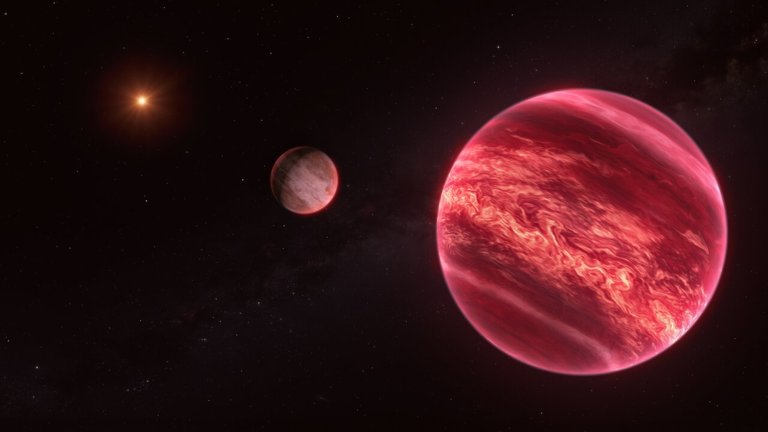
NASA hopes to someday use a robot like Bill Stone's DepthX to explore Europa, a frozen moon of Jupiter and one of the most probably places in our solar system to support life. For a look at how such a mission might be carried out, launch the photo gallery.
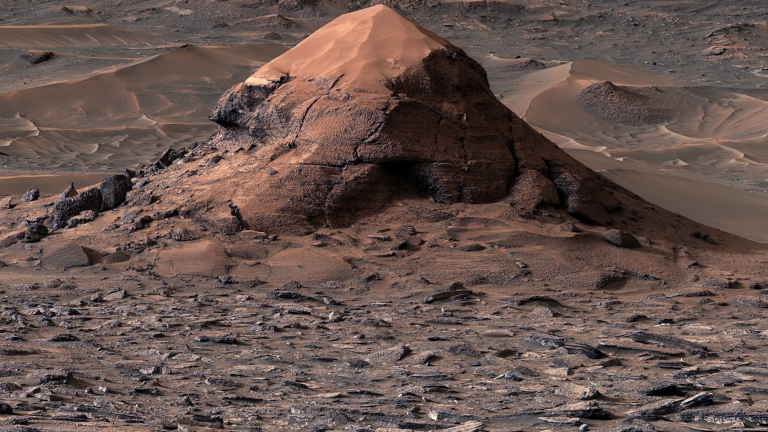
When it is dark, cold and wet, when he is in a cave 4,000 feet below the surface of the Earth, when rock envelops him in a world devoid of life or color, Bill Stone dreams of space. He sees the icy expanses of Jupiter´s moon Europa, furrowed with ridges. He pictures the broad red dome of Olympus Mons, the highest mountain in the solar system, rising above a rocky Martian plain. And he sees himself: Driving a rover up from the tar-black depths of a lunar crater, cresting a rocky rim bathed in light.
Bill Stone is not an astronaut-he is the world´s most famous expeditionary caver. Leading large international teams and backed by sponsors like the National Geographic Society, he has mounted more than 50 major expeditions to plumb the most hostile reaches of inner space. Spending weeks underground, his crews have traveled deep inside the planet to the remotest locations touched by humans. Nobody is better at what he does, but this gives him limited satisfaction. For Stone, caves are a proving ground. He is consumed by ideas for how humanity could explore and colonize space and wants to personally establish a privately funded base on the moon. It is, he thinks, nothing less than destiny.
A reasonable observer might choose another word: obsession. Delusion. Fantasy. Stone possesses neither great wealth nor extensive political connections. He is an engineer and runs Stone Aerospace, a company so small that when FedEx rings, he usually signs for the package himself. So to hear Stone talk-â€It´s not a quantum leap for me to go to the moon; it´s just a lateral transgressionâ€-the conclusion seems sadly obvious. He´s nuts.
But now, after spending nearly three decades on the margins of the space industry, Stone is closer than he´s ever been to proving that caves are the best earthly training ground for exploring space. Backed by a $5-million grant from NASA, he is developing a robot called DepthX that may turn out to be the most advanced autonomous underwater vehicle (AUV) ever. Like its inventor, DepthX is a caver, capable of navigating constrained, obstacle-filled environments. Its theoretical mission, though, is bold even by Stone´s standards: a hunt for extraterrestrial life on the Jovian moon of Europa.
DepthX´s first major field trial will take place this month in Mexico´s Zacatn Cenote, the world´s deepest sinkhole. For Stone´s future space ambitions to have any chance, he needs to impress the new generation of wealthy space-crazed investors. To do that, he needs to ace this high-profile audition and, at 54 years old, he needs to do it fast. As one of his oldest friends puts it, â€Time is running out for Bill.â€

Thanks,
العاب
مسجات
العاب سيارات
العاب طبخ
Thanks,
العاب
مسجات
العاب سيارات
العاب طبخ