
We may earn revenue from the products available on this page and participate in affiliate programs. Learn more ›
The Consumer Electronics Show (typically shortened to CES) is an annual trade show where the biggest names in tech show off the cutting-edge gear they plan to release over the next year (or sometimes even further in the future). One of the hallmarks of technology announced at CES is that some of it showcases concepts for release at an undetermined time—or not at all—but that’s not always the case. Some of the best tech we (un)covered at CES 2023 is available for preorder and may be available as early as this month. If you want a taste of the future without waiting a lifetime, here are the best gadgets announced at CES 2023 that you can order right now. (Or, if you’re not necessarily in the market to buy now but want to see the coolest new gadgets in total, check out our Day One, Day Two, and Day Three posts.)
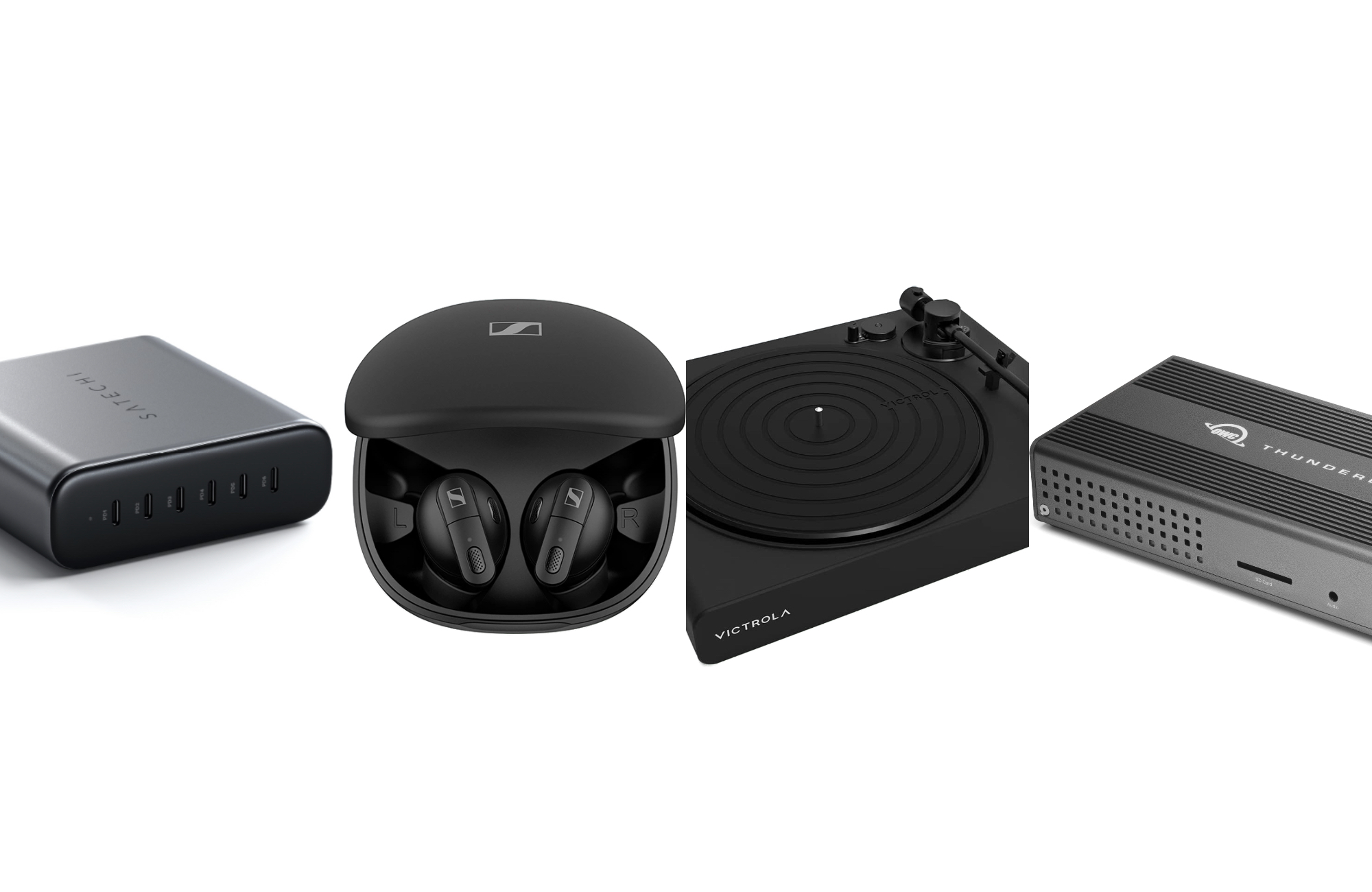
Victrola Stream Onyx Sonos-enabled turntable

Victrola Stream Onyx Works with Sonos Turntable
Here’s where to buy it: Amazon
Last year, Victrola announced its Stream Carbon turntable. It simplified the process of playing records through Sonos-connected wireless speakers. Its $799 price tag, however, was a little steep. At CES 2023, Victrola announced the new Stream Onyx turntable, which still works with Sonos, but drops the price to $599.
The differences between the two seem to lie mostly in the materials. The more expensive Carbon model has a carbon fiber (hence the name) tonearm compared to the Onyx’s aluminum, for instance. Still, they’re both slick-looking equipment with sparse controls and relatively low profiles. The Onyx’s price point makes it considerably more tempting to me than the $799 model, and it’s available to preorder now to ship mid-February.
Satechi 200W USB-C 6-Port GAN Charger
Satechi 200W USB-C 6-Port GAN Charger
See It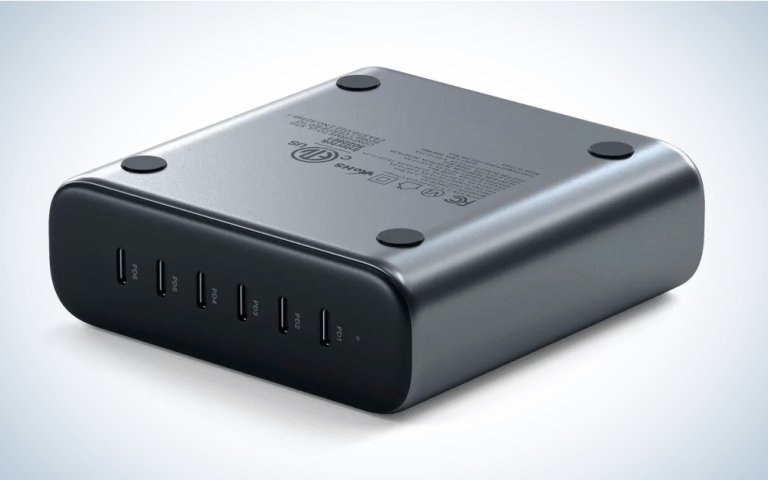
Here’s where to buy it: Satechi
Gadgets with rechargeable batteries have grown ever-more power hungry over the years, and Satechi’s newly announced 200W USB-C Gan Charger is designed to keep them well “fed.” The six-port charging station includes four USB-C PD 3.1 and four USB-C PD 3.0 ports, and can charge a single device at up to 140 watts—that’s more than enough to fast-charge a laptop at its maximum speed. If devices are plugged into all six ports, the charger will distribute between 20 and 65 watts of power to each. Multi-port chargers aren’t new, but we haven’t seen one this powerful. Surprisingly, you can already preorder this tech accessory on Satechi’s site for $149.99 before its release this spring.
CAKE Åik e-bike

CAKE – Åik :work – Launch 2023
Here’s where to buy it: CAKE
It can be easy to forget about e-bikes with so much attention being paid to advancements in electric vehicles, but Cake’s Åik immediately caught our attention. The capabilities of Cake’s e-bike make it more like a paired-down electric car than a souped-up bicycle. Its design is utilitarian, with storage sections above the front and rear wheel and a maximum weight capacity of 441 pounds. The Åik’s standout feature is its impressive range, with Cake saying it can run for up to 224 miles if you choose the optional three-battery configuration. This means the Åik can actually get you farther than many electric cars, although factors like speed and total weight will play a part in that. Cake says the Åik will be available in May this year, starting at $6,470.
Razer Leviathan V2 Pro Beamforming Soundbar

Razer Leviathan V2 Pro | The World’s First Beamforming Soundbar With Head-Tracking AI
Here’s where to buy it: Razer
Razer’s made a name by continuously releasing gaming computers and accessories on the cutting edge, and the Razer Leviathan V2 Pro is no different. The latest version of its computer soundbar brings compact surround sound to your desktop gaming setup and uses a built-in IR camera to track the movement of your head. It then adjusts the directional cues of its sound to ensure it always hits your ears at the right angle. This updated beamforming soundbar is also upgraded with support for THX Spatial Audio, which uses its five drivers plus additional hardware and software to create either a virtual headset or virtual surround sound speakers. You can hook the Leviathan V2 to a computer using a USB port, but it also supports Bluetooth and use with headsets featuring a 3.5mm headphone jack. Razer has opened up preorders of the Leviathan V2 Pro on its website. The soundbar will begin shipping at the end of January and costs $399.99.
Sennheiser Conversation Clear Plus Hearing Solution
Sennheiser Clear Plus
See It
Here’s where to buy it: Sennheiser
It’s never too soon to have a conversation about hearing protection. But, for some folks, it might be a little too late to avoid some hearing loss. Whether because of lifestyle or age, you might have hit a point where it’s harder to follow what someone else is saying in a noisy environment. That’s why Sennheiser—a company known for capturing and conveying the richly expressive clarity of audio—has introduced OTC listening-assistant true wireless earbuds. Packed with intuitive features like Automatic Scene Detection, the Conversation Clear Plus can analyze the noise level and match the speech enhancement level to the surroundings. You can also toggle between active noise cancellation and ambient modes, depending on whether you want more or less of the background present. And, yes, you can use them as standard Bluetooth 4.2 earbuds—complete with a 9-hour battery life (27 more from the charging case)—if you want to listen to streaming content from a smartphone, laptop, TV, etc. The Conversation Clear Plus hearing solution is available to preorder now for $849 and will ship Jan. 20.
A similar product showing at CES 2023 but released earlier in 2022, the $799 Jabra Enhance Plus earbuds are a discreet OTC option offering hearing enhancement for clearer conversations in person and on calls thanks to Bluetooth pairing with a smartphone for setup, music, etc.
OWC Thunderbolt Go Dock

Introducing the OWC Go Dock
Here’s where to buy it: OWC/MacSales.com
OWC has been making multi-port hubs for several years, but the $399 Thunderbolt Go Dock will be the first one with a built-in power supply when it launches this April. This level of portability (hence the name Go) is impressive, given this dock’s specs. The OWC Thunderbolt Go Doc features two Thunderbolt 4 ports, one HDMI port, a Gigabit Ethernet jack, three USB-A ports, one USB-C port, a headphone jack, and a MicroSD Card Reader. Anyone who splits their time between two workstations will find immediate value in the dock, as will anyone who travels with many necessary tech accessories. The Go Dock is one of those practical CES announcements that make us go “finally,” especially since OWC’s announcement comes with a price and release date.
Ring Car Cam
Ring Car Cam
See It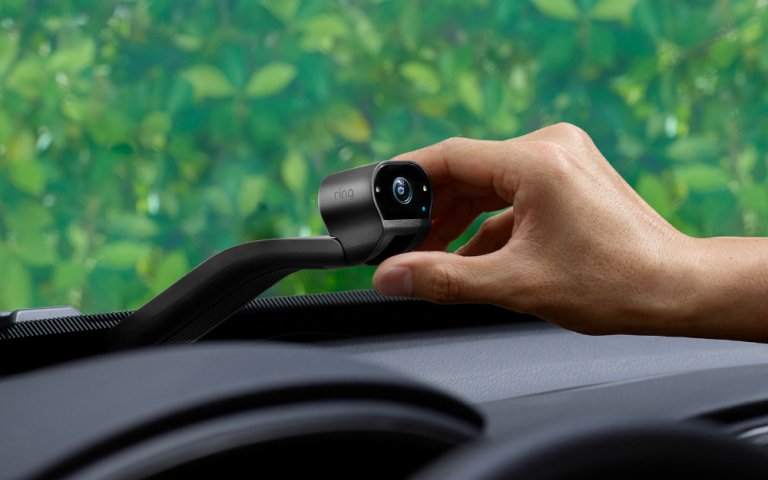
Here’s where to buy it: Amazon
Ring has already conquered the at-home security world, so its move to the world of dashcams is welcome but not surprising. The Car Cam is available for preorder for $199.99 if you order before Jan. 31, and it ships Feb. 15. Car Cams ordered after Jan. 31 will cost $249.99. The camera can record video in 1080p, begins recording when its motion sensor is triggered, and comes with both front- and rear-facing lenses. If you pay for an optional Ring Protect Pro subscription ($6 per month or $60 per year), you can activate the Car Cam’s 5G antenna and monitor your vehicle from anywhere. One of the most clever aspects of Ring’s Car Cam is that it’s powered by your car’s OBD-II port rather than its cigarette lighter. Ring recommends using the Car Cam only with vehicles whose OBD-II ports are on the left side of its steering wheel for safety, and lets you check the make and model of your car to ensure compatibility. If you’re already a part of Ring’s home security ecosystem, the Car Cam seems well worth considering, though you’ll have to act fast to get its early bird price.
Unistellar eQuinox 2 smart telescope
eQuinox 2
See It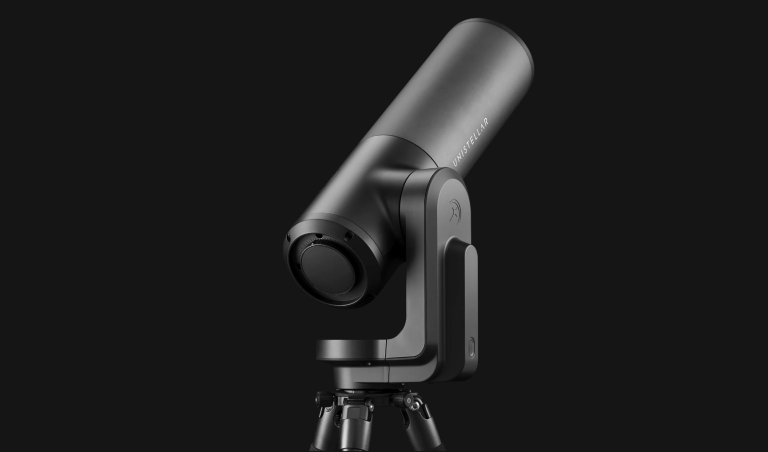
Here’s where to buy it: Unistellar
Light pollution plays havoc with stargazing. Even powerful traditional telescopes have difficulty piercing through the view-ruining glow from populated areas and their artificial illumination. This smart telescope, however, relies on a digital sensor and computational photography (like you’ll find in your smartphone) to provide a clear, detailed image of more than 5,000 different space objects without the light pollution spoiling things. It’s also super simple to set up: Once you’ve put the telescope together and connected to the app, the scope can typically locate its own position in under two minutes. You can then simply use the app to select the part of the sky at which you want to gawk. It comes with a high price tag ($2,499), but it’s a great option for city dwellers or people who want the easiest possible astronomy experience and will be available in March.
Audeze Maxwell Wireless Gaming Headset
Maxwell Wireless Gaming Headset
See It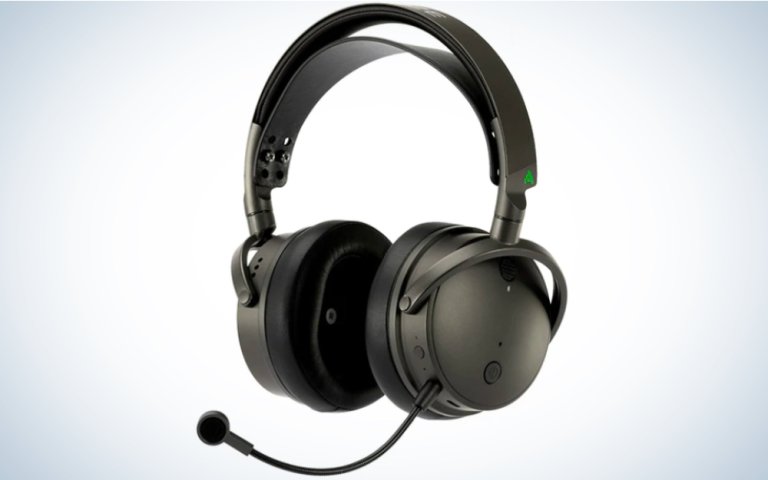
Here’s where to buy it: Adorama
Situational awareness and communicating with teammates are crucial while playing online games, which is why Maxwell’s Wireless Gaming Headset stood out to us at CES. The closed-back aluminum-and-steel headset—which has separate versions for both the PlayStation and Xbox—has a Shure-designed hypercardioid boom mic with proprietary FILTER noise reduction and supports cutting-edge audio standards like Dolby Atmos (embedded license for Xbox only). This is a wireless headset, so you won’t have to be tethered to your console thanks to an ultra-low-latency 2.4 GHz connection and 80-hour battery life. The Maxwell Wireless Gaming Headset was developed by Audeze, a company heralded for its summit-tier planar-magnetic audiophile headphones, so it’s no surprise that the audio hardware inside it is top-notch. Everything from the large 90mm drivers to a customizable multi-band EQ system to support for the latest Bluetooth 5.3 audio codecs like LE Audio LC3plus and high-resolution LDAC lets you hear all the spatial cues in your game and music in your life with excellent clarity. We’ve been impressed with this company’s other gaming headsets (the Penrose and Mobius), so we’re confident this one is worth preordering for $299, with the Xbox version shipping by March at the latest and the PlayStation edition coming sooner.
HTC Vive XR Elite mixed reality headset
HTC Vive XR Elite
See It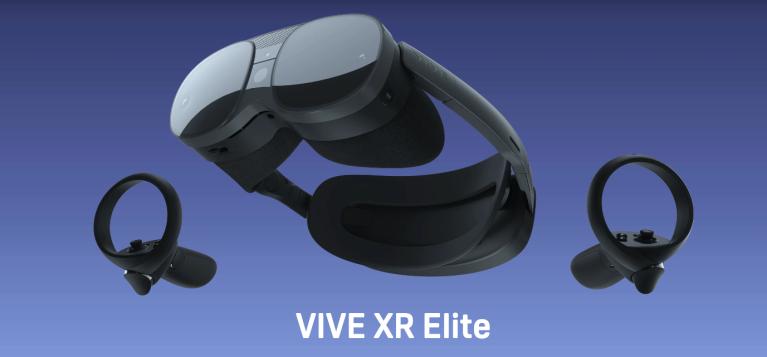
Here’s where to buy it: Vive
Last year, Meta introduced its $1,500 Quest Pro headset, which relies on integrated cameras to mix images from the real world with digital objects on the displays in front of your eyeballs. It’s a cool device, but it’s also $1,500. At CES, however, HTC announced its upcoming Vive XR Elite mixed reality headset, which offers a similar suite of features for roughly $400 less. The $1,099 Vive XR Elite has a pair of full-color cameras on the front that bring in real-world objects but also track a user’s hands for a more immersive MR experience. Despite the fancy features and powerful computing gear onboard, the headset is relatively compact and looks considerably less dorky than most of its competition. It’s still kinda dorky, but the bar is relatively low here. You can preorder one now (do it before Feb. 15 to get five free titles as part of the deal), and it will ship in early March—giving you plenty of time to decide how to record your family flailing around in it.
NuraTrue Pro True Wireless Earbuds with aptX Lossless
NuraTrue Pro

Here’s where to buy it: Nura
Announced in 2022 but showcased at CES 2023, the NuraTrue Pro true wireless earbuds are purpose-built for years of audio exhilaration … they’re just waiting for the rest of the world to catch up. Featuring Qualcomm’s Snapdragon Sound with support for bleeding-edge Bluetooth 5.3 protocol aptX Lossless folded in (as well as a robust pipeline for traditional aptX/Adaptive, AAC, and SBC), these high-definition discs contain triple-layer titanium diaphragm 10mm dynamic drivers capable of conveying all 1.2 Mbps of CD-quality bandwidth if you pair them with one of the few compatible Android handsets (sorry, iPhone users). We’ve spent time with Nura’s flagship and one of those smartphones—the ASUS Zenfone 9—and can say aptX Lossless mitigates the muddy congestion and tizzy, tinny fringes of compression, resulting in maximum engagement. This is aided by Nura’s renowned Personalized Sound feature that analyzes how your ear reacts to varying tones to synthesize a response that invigorates the details and their destination (plus a five-band EQ if you want to tinker). A spatial audio feature (powered by Dirac Virtuo) broadens the soundstage without diluting the impact. The +/-3 “Immersion Mode” acts as a bass boost/cut. There’s also active noise cancellation and a social (transparency) mode, as would be expected of $329 TWS earbuds. We’ll have more to say about these in the future, and if the future is where you look when it comes to gear, you can pick up a pair now to enjoy even if you haven’t upgraded your phone … yet.
