

We may earn revenue from the products available on this page and participate in affiliate programs. Learn more ›
While electric bikes have existed in some form or another for more than a century, the modern version was properly introduced in the 1990s—to little fanfare. At the time, they were considered something of a novelty and failed to generate much interest. That changed in the 2000s, when ebikes took off in China. In the last 10 years, the rest of us have come around: There are countless ebikes now, which come in configurations to suit every rider’s needs. But with so many to choose from, how do you pick the one that will put you out in front of the pack? The best electric bikes deliver power (duh), comfort, style, and smart features, whether you’re riding for sport, for work, or simply as a way to get around.
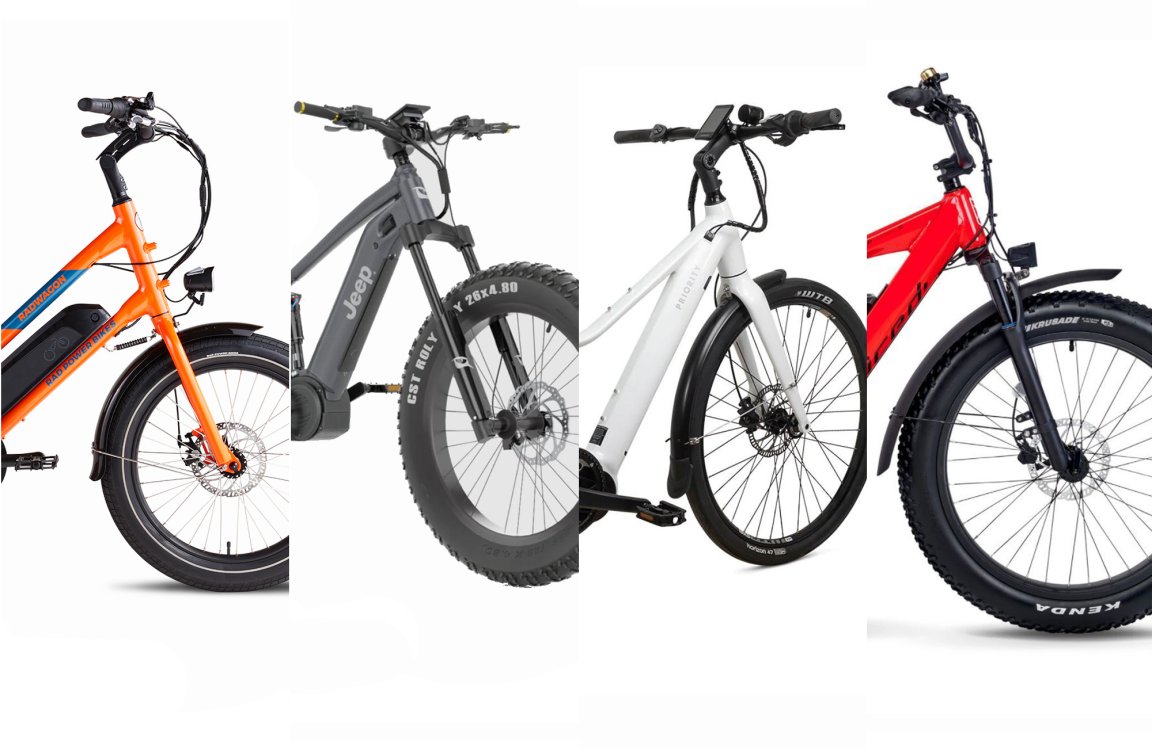
- Best overall: Ride1Up Rift
- Best moped-style: Ride1Up Revv 1
- Best fat tire: Juiced RipCurrent S
- Best cargo: RadPower RadWagon 4
- Best off-road: QuietKat Jeep
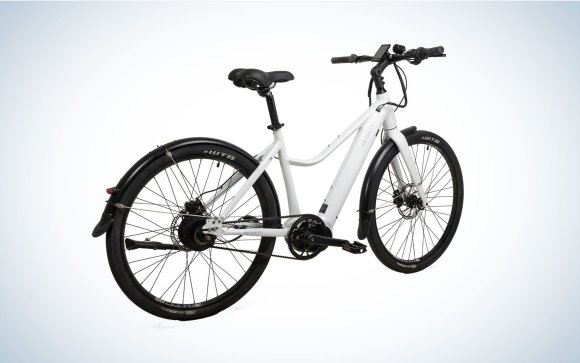
- Best for speed: Priority Current
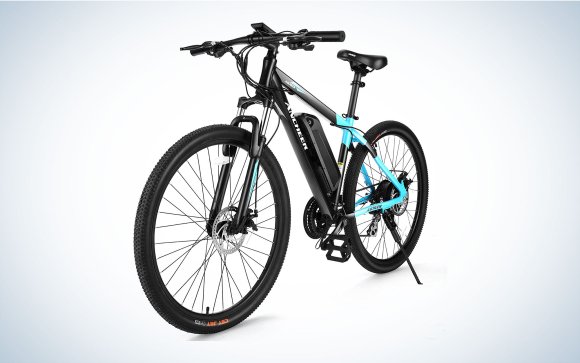
- Best budget: Ancheer Blue Spark
How we chose the best electric bikes
As a lifelong outdoor and fitness enthusiast, bicycling has always been a part of my recreational repertoire. From daily commuting to work via road bike to mountain biking through the rurals of my native state of Washington, I’ve spent more than my fair share of time perched upon the pedals. When it came to electric bikes in particular, I took the testing very seriously—by which I mean I had a lot of fun riding around! At this point, I’ve ridden ebikes from an expansive range of brands—both renowned and up-and-coming—have discussed the pros and cons of different options with industry experts, and have even built several of them piece by piece straight out of the box.
I’ve written about outdoor and fitness gear, including electric bikes, for publications like Popular Mechanics, Runner’s World, the Manual, Thrillist, the Daily Beast, and the Los Angeles Times. All that testing has made me an expert at recognizing genuine quality over hype. In categories where my judgment was a tie, I looked to impressions from real-world owners to verify which ebikes deliver a truly electrifying experience.
The best electric bikes: Reviews & Recommendations
Our selections for the best electric bikes span a spectrum of budgets, from several hundred dollars to several thousand. We’ve included ebikes from a variety of categories that include a fairly wide range of features, so while which is right for you is determined largely by your specific needs, we think the options below cover the bases for most new and veteran riders. Take your pick, grab some of the best electric bike accessories, and off you go.
Best overall: Ride1Up Rift
Ride1UP Rift
See It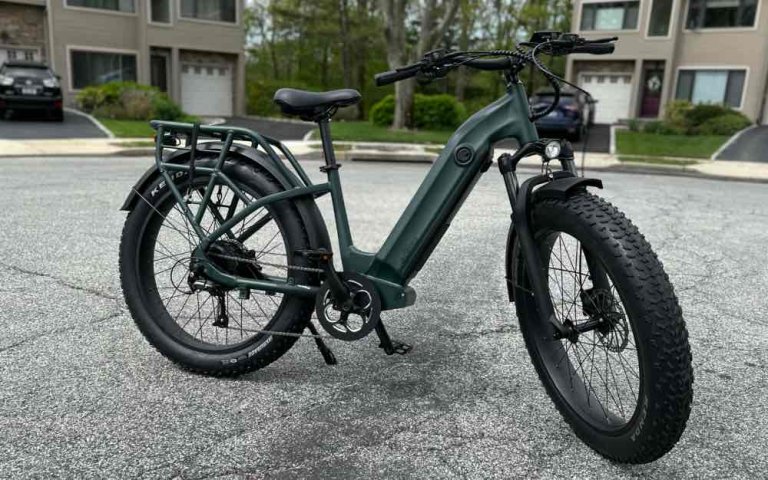
Pros
- Easy to assemble
- Solid frame and overall construction
- Comfortable to ride
- Cost
Cons
- Weight
Specs
- Battery capacity: 52V 20 Ah
- Range: 45-60 miles
- Motor: Hub
- Class: 2-3
Why it made the cut: Ride1Up’s Rift is easy to assemble and feels smooth to ride.
After a few rides, I began to see Ride1Up’s Rift as wish fulfillment for anyone curious about electric bicycles. The Rift was almost fully assembled when it arrived, which is very helpful if you’ve never put together an electric bicycle. We recommend following Ride1Up’s video instructions for a step-by-step guide on putting it together. It’s possible to assemble this bicycle by yourself, but it’s far easier for two people since one can keep the Rift steady, or lift up its frame while the other attaches its front wheel. The one accessory you’ll need when assembling any eBike—beyond the correct tools—is an air compressor to fill its tires.
Once the bicycle was set up and a helmet was firmly strapped to my head, it was time to take the Rift for a ride on the suburban streets of Long Island. The area I rode in was paved but hilly, giving me the chance to test this electric bicycle’s motor. I started by riding around without any “pedal assistance” to get a feel for how the Rift handled. It’s a heavy electric bicycle, but after a couple of minutes, I had a good handle on how to take wide and sharper turns or how its fat tires would handle bumps in the road, hoses, or smaller potholes.
None of these smaller obstacles posed a problem, thanks to the Rift’s fat tires, though we wouldn’t recommend going over huge bumps just for fun. Ride1UP recommends checking the bicycle’s brakes several times before taking it for a ride to make sure they’re fully operational, and these small test rides gave me the opportunity to do so—though I also checked them before getting on the Rift for the first time.
All of the Rift’s pedal assistance features are accessible via a 2.2-inch color screen mounted on the left handlebar. It’s easy to check your trip time, power consumption, and pedal assistance level (between one and five) at a glance. You shouldn’t be spending a lot of time looking at the screen while riding, so we appreciate how cleanly this information is arranged. As its name suggests, pedal assistance will only kick in when you’re pedaling. The electric bicycle’s motor will kick on after a few seconds, which gives you time to adjust to the increase in speed. Settings one and two feel like a nice little push while you’re going up hills—enough of a boost to make them easier to climb while still requiring effort.
Cranking the Rift’s pedal assistance up to four or five will turn pedaling into a performative act. We could get up steep hills easily, but always felt completely in control of the bicycle. Yes, the Rift can up to 28 miles per hour with pedal assistance cranked up to five, but we never felt like we were going too quickly. If you’ve never used an electric bicycle before, we recommend sticking to the lower power levels to start and working your way up.
Overall, the Ride1UP Rift is a stupendously smooth ride whether you’re upgrading from a different electric bicycle or have always ridden an analog bike. It strikes the right balance between easy assembly, ease of use, comfort, and overall design.
Best moped-style: Ride1Up Revv 1
Ride1Up Revv 1
Pros
- Available in full suspension or hardtail configurations
- Multi-class speed system for use on and off roads
- Very comfortable suspension and seat deliver a smooth ride
Cons
- Relatively heavy
- Non-adjustable seat
Specs
- Battery capacity: 52V 15 Ah
- Range: 30-60 miles
- Motor: Hub
- Class: 2-3, off-road mode
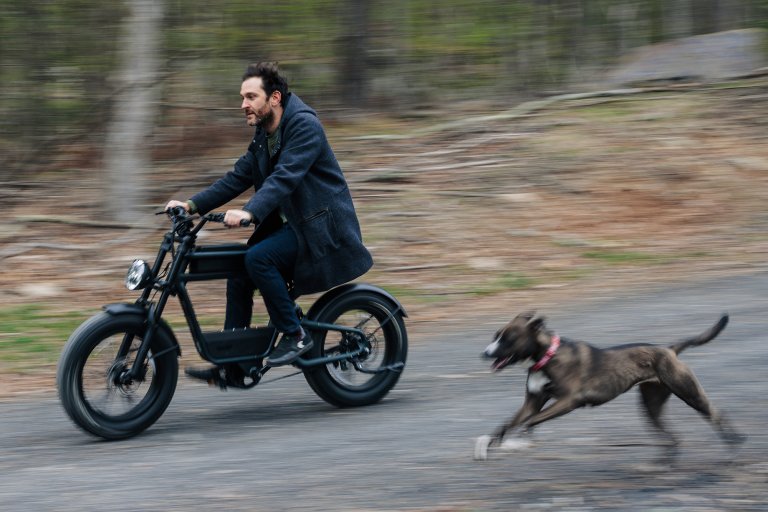
The Ride1Up Revv 1 is one of the most durable moped-style electric bikes we’ve tested. It offers switchable speed classes and multiple suspension options for a customizable and streamlined riding experience. The bike comes equipped with 20″ x 4″ all-terrain tires, a 750-watt motor, and a 52-volt (15 Ah) battery that offers a range of up to 60 miles on a single charge. While the Revv 1 ships ready-to-go in Class 2 mode, users can unlock a top speed of 28 miles per hour by switching into Class 3 mode using the bike’s control buttons and LCD display. For legal use on private roads, an additional off-road mode is also available to bring the bike’s top speed above 28 miles per hour. The Revv 1 sports a vaguely motorcycle-like design from its frame to its accessories. Weighing in at 93 pounds when fully assembled, it also feels like a real motorized vehicle more than a traditional bike. While it’s possible to assemble this bike on your own, we’d recommend enlisting another set of hands or even a bike shop to be safe.
The Revv 1 offers one of the most comfortable rides in the electric bike market thanks to its pillowy suspension, rugged tires, and extra large seat. We easily cruised along both pavement and fire roads without issue. Riders who normally stick to slower speeds and off-road riding may prefer the more responsive feel of the hardtail configuration. Still, the full-suspension configuration is ideal for maximum flexibility whether you’re commuting or hitting the trails. We do wish the Revv 1 offered some measure of seat height adjustment for users with longer legs; however, overall, the bike’s 32.5-inch seat height should feel comfortable enough for the majority of riders.
Best fat tire: Juiced RipCurrent S
An Ebike For Everything
Pros
- Better than average range
- Super comfortable seating and handlebars
- Awesome throttle
- Rack, fenders, and powerful headlight included
Cons
- Very heavy
Specs
- Battery capacity: 52V 19.2 Ah
- Range: 40-120 miles
- Motor: Hub
- Class: 3
Why it made the cut: TheJuiced RipCurrent S is powerful, comfortable, and stylish.
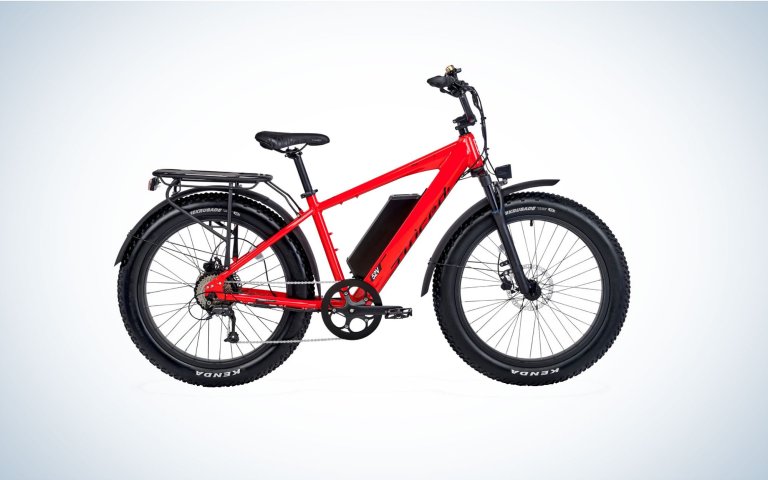
Before you even start riding, the Juiced RipCurrent S delivers a favorable impression. It looks amazing, boasting an aesthetic that fuses classic road-bike elements with a modern tech edge. The seat is highly comfortable, the handlebars ergonomic, and the overall build quality is immediately evident.
Once you’ve started down the road, you’ll quickly realize why the RipCurrent S excels at the head of the pack. Its thumb-controlled throttle is smooth and powerful, capable of propelling you up to 28 MPH with minimal pedaling exertion. The 9-speed cassette gears shift crisply, and as you’re charging ahead, you’ll enjoy a supremely smooth ride.
All of that is great, but perhaps most important is the RipCurrent S’s outstanding electrical performance. With a range that spans 40 to 120 miles depending on how hard you push it, I tested the RipCurrent while riding alongside several other ebikes and this one accelerated faster than most and outlasted them all.
What’s more, with its sturdy, integrated carrying rack, an uber-bright headlight, and fenders, bell, and tail light included, the RipCurrent S has pretty much all the features any typical rider would need.
All in all, the Juiced RipCurrent S is a truly superior ebike. It’s ideal for daily commutes, and thanks to its front air suspension and fat tires, it’s even fairly off-road capable.
Best cargo: RadPower RadWagon 4
Big Rig Bike
Pros
- Massive cargo carrier
- Twist-grip, motorcycle-style throttle
- Surprisingly good acceleration
- Highly adjustable seating and handlebars
Cons
- All that cargo capacity does reduce the range
Specs
- Battery capacity: 48V 14Ah
- Range: 25-50
- Motor: Hub
- Class: 2
Why it made the cut: RadPower’s ebikes are all solid, but their RadWagon 4 is an unparalleled cargo hauler.
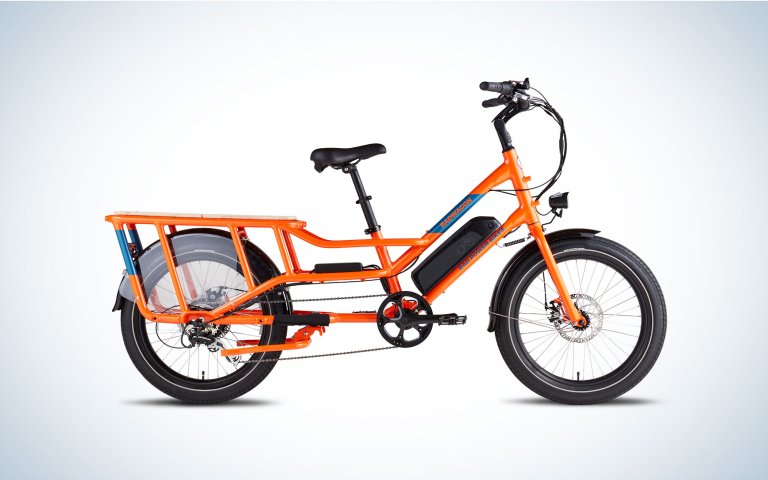
Generally speaking, RadPower’s electric bikes all offer the utmost in durability, comfort, adjustability, and customization options. Our favorite design, the RadWagon 4, takes things a step further by tacking on a massive cargo carrier and powerful motor. I’ve seen people carry everything from a week’s worth of groceries to musical gear to multiple child safety seats on this thing.
At the same time, the RadWagon delivers an all-around comfortable, downright fun riding experience. Its seating and handlebars are comfortable and highly adjustable to suit your preferences, and it’s got a slew of slick customization options. I’m particularly enamored by their front-end basket and the twist-grip throttle, which provides ample acceleration.
As with other cargo bikes, the extra power needed to carry its cargo translates to a shorter range than other models, but its battery life is still very solid.
Best off-road: QuietKat Jeep
Keep On Truckin'
Pros
- Superior off-road ability
- Outstanding suspension
- Removable thumb throttle
- Ultra-durable
Cons
- Somewhat limited range
Specs
- Battery capacity: 48V 14.5Ah
- Range: Up to 58 miles
- Motor: Mid-drive
- Class: Configurable as both 1 and 2
Why it made the cut: The QuietKat Jeep delivers true go-anywhere capability.
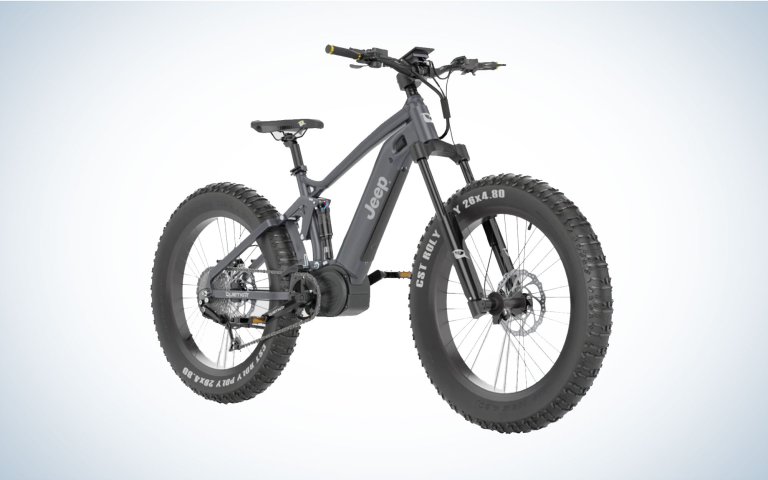
It should come as no surprise that one of the most capable (if not the most capable) off-roading ebike was inspired and cosigned by the Jeep brand, inspired by their 4×4 vehicle. With its high-grip fat tires, advanced torque sensor motor system, powerful brakes, outstanding suspension, and peak power output of 1,500 watts, the QuietKat Jeep is genuinely capable of going just about anywhere. That includes everything from hardpacked trails to soft sand and even snow.
The QuietKat Jeep is all about performance and capability. The company’s four-bar link, Fire-Link suspension system optimizes ground contact, the motor is designed to provide bursts of power and torque when pushed to overcome obstacles, and the whole thing is designed to carry plenty of weight—both human and cargo.
Speaking of cargo, one of the coolest and most unique things offered by the Jeep is its various cargo kits. The Angler’s Kit includes a gear trailer, premium suspension seat post, and Gore cargo cooler. The Overland Kit boasts a Tannus Armour Tire Liner, portable ebike solar charging system, and a bike rack tailored to fat-tire bikes. And the Ultimate Hunter Kit fuses the town, offering the tire liner, premium suspension seat post, fat tire bike rack, and a cargo trailer.
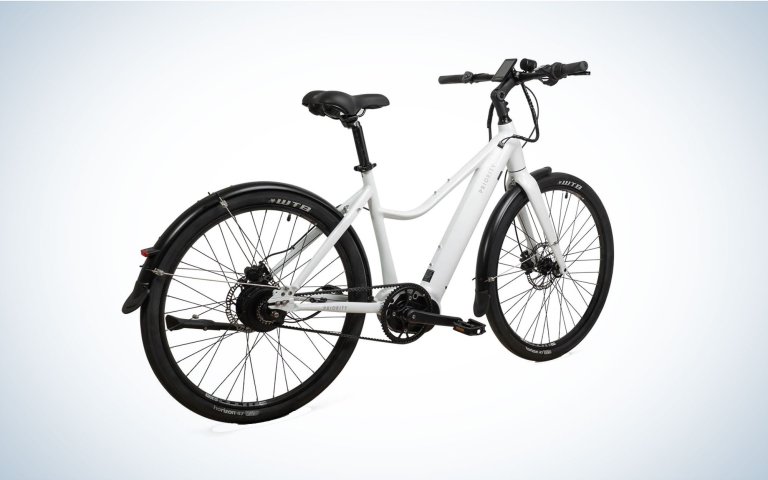
Best for speed: Priority Current
Fast and Smooth
Pros
- Great looks
- Class 3 capability
- Integrated USB charger for devices
- Enviolo CVT shifter option
Cons
- Limited range
- LCD screen looks big but does little
- No throttle
Specs
- Battery Capacity: 48V 10.4 Ah
- Range: 20-50 miles (in Class 1 setting)
- Motor: Mid-drive
- Class: 1 or 3
Why it made the cut: The Priority Current seems sparse at a glance, but the more you put in, the more it puts out.
I’ll start out by saying that the use of the word “fastest” can be a little misleading with electric bikes, as the fastest any of them can go under motor power—legally—is 28 MPH. The Priority Current earns the distinction for getting up to max speed very quickly and maintaining that speed once it gets there. While the Current has no throttle, its pedal assistance is undeniably powerful. The more you put into pedaling it, the more it will put out.
The Current comes in Class 1 out of the box, but you can easily change the settings and upgrade to Class 3 via an onboard digital display. When choosing your Current, you can go with either a classic Shimano 5-gear shifter or pay a bit more for the Enviolo CVT—a super-smooth transmission system that is in gear no matter how you shift it and can be easily adjusted to suit your terrain via a little gauge indicating flatness vs. hilliness. It also has a super-durable belt drive and an integrated USB outlet for charging devices on the go.
The Current doesn’t have a top-tier range, which may be an issue for long-distance riders. Without Priority’s battery extender, it realistically tops out at around 30 miles. But the Current shines in regards to the overall design, offering an attractive, classically minimalist vibe, and a durable build quality that can go a long way with little to no maintenance.
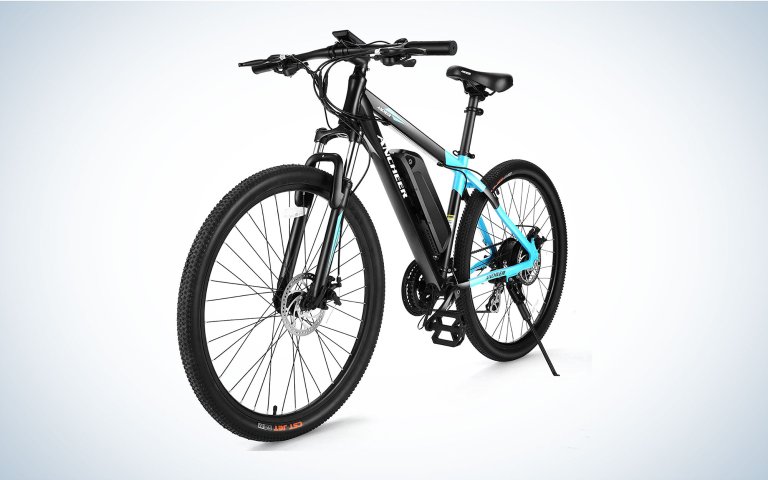
Best budget: Ancheer Blue Spark
Lower Price, Not Lower Gear
Pros
- Solid motor power
- Throttle-capable
- Smooth transmission
Cons
- Limited range
- Slower charging time
Specs
- Battery capacity: 48V 10Ah
- Range: Up to 38 miles (in pedal-assist mode)
- Motor: Hub
- Class: 2
Why it made the cut: Offering all the basic ebike elements at a lower cost, the Ancheer Blue Spark is a great budget ebike.
If you’re looking for a solid electric bike that delivers all the standard features without paying thousands of dollars, the Ancheer Blue Spark is a great pick. While there are technically ebikes out there for half its just-shy-of-$1,000 price tag, they simply don’t offer enough features to make you feel like you’re getting a quality battery-assisted ride. The Blue Spark gives you the true electric bike experience, and it does so for $1,000 or $2,000 less than similarly equipped models.
Generally speaking, the Blue Spark offers the performance you need for daily commuting or casual off-roading. Whether in pedal-assist or throttling mode, it will provide plenty of speed and adequate hill-climbing ability, and its riding experience is smooth.
The lower price comes with caveats, as it always does: The Blue Spark suffers from a rather limited range, but its 20-38 miles capability is pretty typical for its price. And while it certainly is a fine bike for taking over light off-road trails, just be aware that it isn’t meant for anything too extreme.
Blue Spark owners who have ridden it over the long run report that it’s very durable, though, requiring less maintenance than you would expect considering its lower cost. When all is said and done, this is a great bike if you’re looking for a quality ebike but can’t fork over several grand.
Things to consider before choosing from the best electric bikes
With electric bikes available in a seemingly endless variety and wide range of price points, it can be difficult to know where to begin. Many people assume that spending more money guarantees that you get a better product: While there is an element of truth there, I’ve found that the best ebikes can excel in a few key ways without rocketing into the upper stratosphere of bike prices. Here are a few things to consider if you’re looking to ride one of the best electric bikes:
What is its riding range?
Few things make an electric bike less fun and functional than finding yourself out of juice with a long ride still ahead of you. Ebikes boast a lot of tech, which makes them heavy … and makes them a genuine pain in the keister to pedal sans power. Suddenly peddling your slick, cool tech-infused bike feels more akin to pushing an aircraft carrier through the mud.
To avoid this, get an ebike with a large battery. Look for electric bikes that boast the highest watt-hour (Wh) capacity. Ebikes are rated in volts and amp-hours, so to determine battery life in watt-hours you should be multiplying its volts and amps specs. Our best overall pick, for example, has a 52-volt 19.2 amp-hour battery which results in nearly 1,000 Wh. Generally speaking, I’ve found that most bikes offer between 500-800 watt-hours, so anything near the high end of that range is great.
To determine the range from here, you would theoretically just divide the total watt-hours by the average miles per hour. So let’s say you’re averaging 20 MPH on that 1000 Wh bike; then you’d have a range of 50 miles. If you’re looking to go on a really long ride, some companies support external battery packs that can recharge their bikes on the go.
The truth, however, is a bit more complicated. The harder your bike’s motor works—due to bike weight, load weight, speed, hilly terrain, etc.—the more power it uses. The reverse is also true. Lighter weight, flatter terrain, more laidback speed equals less power usage. So essentially, the real-world range is determined by the rider, what they’re doing, and where they’re going.
What class of electric bike do you need?
In the United States, electric bikes are divided into three classes depending on the degree of motor assistance they provide to augment your pedaling.
Class 1 electric bikes are solely pedal assist: They provide oomph to your pedaling up to 20 miles per hour. These are the most basic ebikes and they can be used everywhere traditional bikes can go.
Class 2 electric bikes feature a throttle that, at the flick of a switch, can propel you up to 20 miles per hour on their own and maintain that speed even if you aren’t pedaling. Depending on where you live, Class 2 ebikes may not be allowed on certain bike lanes and trails. The European Union, for example, has a total ban on throttled bikes.
Class 3 electric bikes usually drop the throttle in favor of pedal assist and have stronger motors capable of reaching 28 miles per hour. Regulations for Class 3 bikes vary from place to place, but they tend to be allowed on roads and bike lanes but may be restricted from mountain bike trails and multi-use paths.
Speaking broadly, commuters and professionals tend to gravitate toward Class 2 bikes, which require the least effort, or Class 3 bikes, which are faster and tend to be better equipped for carrying heavy loads.
Type of motor
Electric bikes almost always feature one of two motor types: mid-drive or hub-drive.
Mid-drive motors are positioned on the bottom bracket and their primary benefit involves the fact that they have a greater gear range, making them easier and more efficient to pedal uphill. The downside, however, is that they’re harder on the bike and can exact a heavy maintenance toll.
Hub-drive motors, on the other hand, are usually attached to the rear hub and require little-to-no maintenance. That said, hub-drive motors do usually make it a bit more challenging to change a flat tire.
To make a broad generalization, hub-drive motors make for better commuter bikes, while mid-drive motors are geared more toward performance riding on trails or up hills. The latter tends to be somewhat more energy-efficient, but you won’t necessarily feel the difference unless you’re riding up a lot of hills.
Durability and build quality
It can be hard to determine unless you buy a bike and spend many years with it, but you want to make sure you aren’t buying a bike that’s going to need repairs all the time. When trying out different bikes, pay attention to whether the parts all feel firmly in place, or if some of them seem brittle or poorly fitted in any way. Check that the motor and chain system doesn’t rattle to any undue degree. Lastly, get on the bike and make sure that the design feels comfortable.
Lights, carriers, and other extras
One final thing to look for in an electric bike involves safety, convenience, and other add-on features. Many ebikes include high-quality lighting systems, integrated locks, and other safety/protective elements. Some, like the VanMoof S3, even have tracking and remote locking systems, alarms, and other tech-enabled security.
Several brands also boast the option to trick out your ride with super-sleek integrated rear cargo carriers, front-end baskets, water bottle holders, bells, and other fun/functional accessories. Just as with a traditional bike, you can always tack on third-party products, but the best companies offer some really cool options to build out your bike from the get-go.
FAQs
You might be wondering if traditional bikes have advantages over electric bikes, and the answer is yes.
Electric bikes are more expensive, heavier, and costly to maintain. Riding range can be limited, and all that extra weight can be a real pain if you run out of juice. While most of those on this list can be completely charged within 3-5 hours, some models can take a lot longer.
Now that we’ve looked at a few disadvantages, you might wonder whether ebikes are worth the money. That really depends on how you expect to use them.
For commuting to work every day, an electric bike means considerably less exertion than a traditional bike, and they require zero gas versus a vehicle. If you plan on using an ebike off-road, they can transform your experience, allowing you to enjoy the ride rather than suffer under the effort.
And they’re a lot of fun, so even if you are a more casual cyclist, they can add a lot of enjoyment to the experience. Whether or not that is worth the price is up to you.
An electric bike’s lifespan depends entirely on factors like a particular brand’s build quality, how often and hard you expect to use it, and how well you maintain it. That being said, many experts say that an electric bike should last around 10 years, with individual elements lasting:
Battery: 3-5 years before charge capacity begins to decline.
Motor: Approximately 10,000 miles, depending on brand and maintenance.
Brakes: 3,000-6,000 miles, depending on riding style and road conditions.
Chain: 2,000-3,000 miles, depending on brand.
Tires: 1,000-3,000 miles, depending on road conditions.
Simply put, if you take care of your bike and replace components as necessary, you can expect to get a lot of life out of it.
This depends on their range, size, battery capacity, and additional features. Most electric bicycles will cost between $1,500 and $3,000, although you can get one that costs a lot less or a lot more.
Final thoughts on the best electric bikes
- Best overall: Ride1Up Rift
- Best moped-style: Ride1Up Revv 1
- Best fat tire: Juiced RipCurrent S
- Best cargo: RadPower RadWagon 4
- Best off-road: QuietKat Jeep
- Best for speed: Priority Current
- Best budget: Ancheer Blue Spark
Picking the right electric bike comes down to how you expect to use it. I spent an entire day testing out different ebikes with my brother and nephew, and while we all agreed on which was the best, we preferred different models based on our individual riding styles.
Knowing that, my final advice is to test out a variety of ebikes before you buy one. Reading descriptions online can be useful, but digital hype versus on-road reality can make a big difference. I had somewhat low expectations for the Juiced RipCurrent S, for example, because it was a lesser-known brand getting comparatively less attention online. Then, when we actually tried it out, my testing trio unanimously agreed that it was the best.
