
Deepest-Dwelling Life Forms Found

Scientists have found the most extreme single-celled Archaea yet, subsisting on methane nearly three miles below the surface

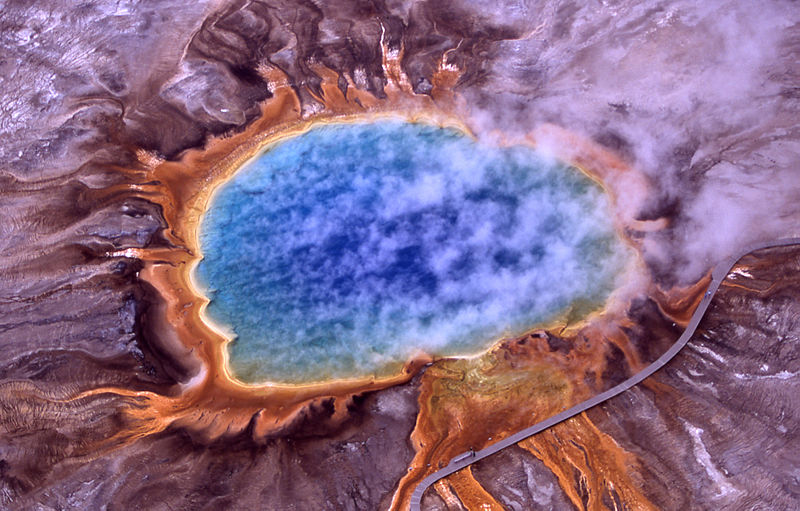
Hot Springs: Archaea were first discovered in extremely hostile environments, such as this hot spring in Yellowstone National Park Photo by the U.S. National Park Service

The Archaea group of organisms has just gotten a little bigger—and quite a bit deeper. Known to scientists as extremophiles—organisms which live in places inhospitable to other forms of life—the Archaea group is home to many single-celled creatures capable of thriving in environments of exceptional temperature, pressure, and acidity. The latest member has been discovered off the coast of Newfoundland, Canada, under 2.8 miles of water and a mile of rock. Previously, the deepest these organisms had been found underground was half as far.

These new Archaea were discovered in a sediment core extracted by a research ship. The scientists analyzing the sample have surmised that the organisms are able to survive off of methane released from hydrocarbons in the stone. The tremendous heat and pressure at that depth cooks the fossil fuel, breaking it down into compounds potentially useful to the Archaea. How they arrived in the bedrock is also something of a mystery; the two leading theories are that they were brought down by water currents or that they have been living in the rock since the days it was formed millions of years ago.

[Via the Guardian]

3 Comments

Comments

Article Rating:
1
2
3
4
5

how did they get there indeed....if they were brought down by water currents how did they survive their initial time there? i think that probably they sank there gradually

0 out of 1 people found this comment helpful
I found this comment
Article Rating:
1
2
3
4
5

This discovery is relevant in proving that some organisms are capable of thriving in extreem enviroments, which can support the theory relating to the origin of life, and that such organisms might have existed during the active chemistry period of early earth later evolving into higher organisms.

0 out of 0 people found this comment helpful
I found this comment
Article Rating:
1
2
3
4
5

I agree with Chukwuweike and there is infact another form of life that is also a extremophile and has been found growing on radioactive rods in nuclear power plants. The berry shaped bacteria named Kineococcus shows the ability to break down herbicides, industrial solvents,chlorinated compounds and other toxins, all while growing in a radioactive environment that shrivels anything else living and turns glass brown. The bacteria has adapted to 15 times the dose of radiation it would take to kill a human and makes it a goliath among extremophiles. That makes them a potentially valuable tool in the Energy Department's effort to clean up vast ammounts of nuclear waste.

So as you can see the foundation of science has been shaking quite consistantly and personally i dont see how people are still sceptical of such astounding possibilities. None the less sweet Archaea sounds like an amazing find.
~Taio~

0 out of 0 people found this comment helpful
I found this comment


Share your photos in the Pop Sci pool at www.flickr.com!
Current theme: Technology You Love

Subscribe for 2 free issues!

may2008_cover.jpg