physics

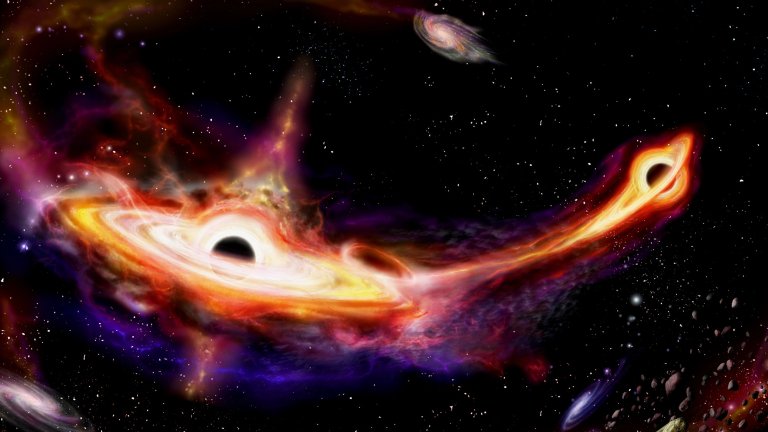
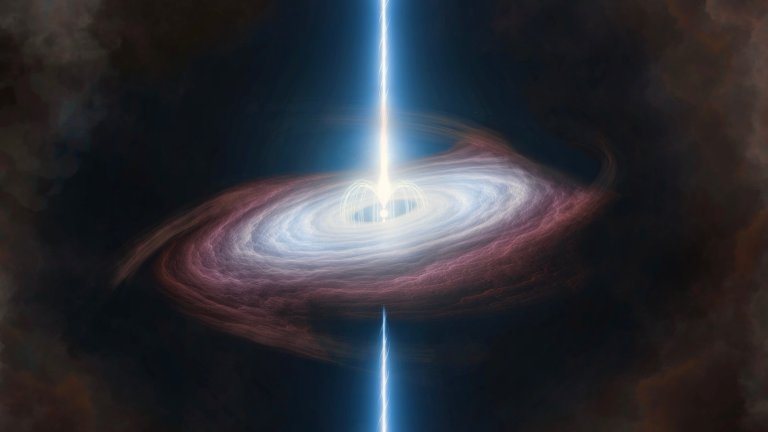
The Littlest Big Bang

Scientists are building ultra-cold systems that mimic the most extreme edges of the universe. Can these analogues help solve the big bang’s mysteries?

The device is a cylinder a bit smaller than a pinky finger, filled with helium and cooled to just above absolute zero. Inside, a young universe—or something very much like one—evolves. As the helium sloshes about, it mimics a process that may have powered our own universe a few moments after the big bang. And once the fluid settles down, the little whirlpools that remain may be akin to the defects in early spacetime that ultimately gave rise to galaxies, stars and planets.

[ Read Full Story ]
The Breakdown

The Physics of Beer Pong

Tossing a ping-pong ball into a beer cup? It takes more physics than you might think

These guys are pretty amazing. And the nonchalance with which they accomplish each trick shot adds a certain understated humor to this entertaining video. But though the guys seem to be developing a seemingly useless (if highly impressive) skill in their spare time, there's quite a bit of complex science at play. In addition to being a highlight at any party, these are excellent demonstrations of two- and three-dimensional projectile motion, and with just a little bit of quantitative analysis the entire video would make a formidable project for an introductory level college physics class.

For example let’s look at the segment where the guy tosses the ball in the cup off of a moving skateboard.

[ Read Full Story ]

The Science of Sci-Fi

Our resident film physicist tackles the final frontier and finds some key pointers for our own space travels

In the world of cinematic science fiction one of the most appealing themes involves a universe brimming over with intelligent life. In this imagined future (or past) humans interact with alien friend and foe because they've at last hammered down the ability to travel to distant stars and galaxies, and, yes, "to boldly go where no man has gone before.” Having grown up on the original Star Trek series, observed the effect of the Star Wars movies on the zeitgeist of movie-going generations and enjoyed sci-fi soap operas like Battlestar Galactica, I have to admit I wish we could make it happen; no matter the odds.

[ Read Full Story ]

The Breakdown: The Accidental Gymnast

A moving sled and a static reporter make for one perfect expression of torque


This video provides a beautiful illustration of Newton’s Second Law in both its linear and angular form. The discombobulated newscaster experiences a linear acceleration in a backward direction, and a clockwiseangular acceleration that gets him spinning, all as a result of the force of the sled’s impact.

[ Read Full Story ]

Live Upside Down, Save Energy

New research on spider species suggests that their inverted lifestyle is energy efficient

Scientists in Spain and Croatia have found that certain spider species that feed, breed and travel upside-down are more energy efficient because of it. For the spiders, it turns out, walking is more of a swing—they use gravity to their advantage. They effectively act as a pendulum, and require less muscle mass in the legs to move themselves forward.

[ Read Full Story ]

The Super Mario Multiverse

Quantum mechanics got you down? Let Mario guide you through one of physics' most tantalizing theories: parallel universes.

You're unique. Aren't you? One of the more creative hypotheses surrounding quantum mechanics posits the exact opposite. Though we can readily see only one world, quantum mechanics says that when we’re not observing the particles that make up that world, those particles exist in multiple places at once. There are many theories that attempt to grasp what this means, but one of the most tantalizing is Hugh Everett's multiverse concept.

[ Read Full Story ]

The Breakdown: Tic The Spinning Hamster

An unfortunate rodent takes a jog around his wheel and gets a physics lesson


Tic, the unfortunate hamster in this video, loses his footing while getting some exercise and gets pulled into the spin cycle, completing nearly 12 revolutions in about four seconds before ignominiously dropping out of the wheel. However, while Tic may be bewildered by what happened during his morning training session, we need not be.

Why does he get pulled into the spin? How does he remain in orbit for 12 rotations before falling off of the wheel? How does he finally escape? These are the questions we will address “for Tic’s sake.”

[ Read Full Story ]

And the Oscar Goes To: Fluid Simulation Algorithms!

While the stars bask in glitz, the unsung heroes of today's effects-laden blockbusters continue to work on one of the linchpins of CG graphics: realistic water

New York City has just been destroyed by a 40-foot-tall deluge. Pirates battle around a giant, violent whirlpool. Without years of work by the 2007 Scientific and Technical Oscar winners, none of those images would have made it to a computer—and then a multiplex—near you.

[ Read Full Story ]

Would My DeLorean Fly If I Popped Its Gull-Wing Doors and Floored it?

We ask a racecar physicist to find out

For any vehicle—airplane or car—to fly, there needs to be some force pushing it up so that it can overcome gravity. Airplane wings are specifically designed to create just such a force. As a plane moves forward, the wings push air down, and because for every action there's an equal and opposite reaction, this action creates an upward force on the wing, called lift.

[ Read Full Story ]

The Science of Superheroes

Our resident Hollywood physicist examines how even the most righteous crime fighters still manage to break the most important laws of all

Spiderman, Batman, the Fantastic Four, Ironman—seems like every time we go to the movies, there's some guy in a unitard saving the world with acts of unnatural physics. We realize that these are works of fantasy, so we don't get too upset when the science portrayed in them comes from some alternative universe.

[ Read Full Story ]
Page 1 of 2 12next ›last »

PPX: The PopSci Predictions Exchange

RSS Link

New IPO

Hot Stocks

Ready to bet on the future? Start here!

Subscribe for 2 free issues!

may2008_cover.jpg