drugs

Anti-Paralysis Shot Improves Spinal Recovery Three Times As Fast


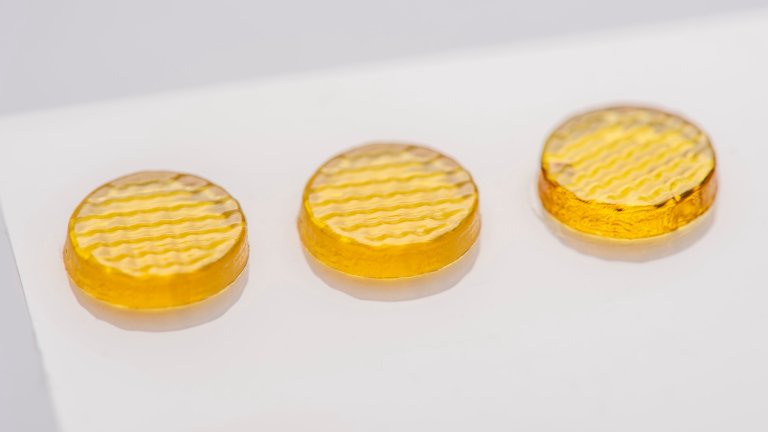
Purdue researchers tinkering with a nano-scale cancer drug delivery system may have discovered something just as good: an injection that repairs spinal cord damage far faster than any previous treatment. Synthetic “copolymer micelles” have been used for three decades as drug delivery vehicles in research, but it turns out they can directly treat spinal cord injuries when injected into the bloodstream shortly after an accident.

[ Read Full Story ]

Cocaine Vaccine Nullifies the Effect, Helps Abusers Quit


Researchers have shown for the first time today that a vaccine can help reduce drug abuse. There's currently no FDA-approved treatment to get people off of cocaine (or crack), so this could really help out the 2.5 million Americans dependent on cocaine.

Thirty-eight percent of drug abusers who were given the vaccine produced anti-cocaine antibodies. Over the course of seven weeks, these subjects were 45 percent likely to have a cocaine-free pee test, as opposed to 35 percent for those who got placebo vaccine instead.

[ Read Full Story ]

Nasal Spray for Better Memory


Snort your way to perfect health? Just last week, we heard that snorting stem cells might be the best way to get them into your noggin. And this week, scientists have declared that a nasal spray can help your memory.

[ Read Full Story ]

Chemical Additive to Antibiotics Could Make Them Newly Effective Against Resistant Bacteria


Antibiotic resistance is a huge problem, not to mention an economic drain, for doctors and pharmaceutical makers trying to fight bacterial infections. Many antibiotics in our arsenal are becoming practically useless, as bacteria breed resistance to them. But researchers at Texas Tech University and Baylor University have developed a chemical additive that could make old drugs useful again.

[ Read Full Story ]

UCSB Scientists Create Cancer-Stopping Nanoparticle-and-Laser Treatment


Nanotechnology, lasers, genetics, and cancer? If there was also something about space, this story might have been a PopSci full house. Scientists at the University of California, Santa Barbara (UCSB), have figured out a way to deliver cancer-stopping RNA directly into the nucleus of a diseased cell. To get into the nucleus, the RNA is wrapped in special gold nanoshells which are then selectively opened by a laser.

[ Read Full Story ]

Medicated Patch for Migraines Uses Electricity to Push Drug Through Skin


For medicines that do not go down well in pill form, administering drugs via transdermal patches is nothing new. Patches are currently on the market for nicotine replacement, birth control, and even pain relief. But many drugs, such as an effective migraine medication called sumatriptan, do not pass easily from a patch into the skin. Drug company NuPathe has a solution: at the press of a button, an electric current running through the patch gently prods the meds into your body.

[ Read Full Story ]

Lab-on-a-Chip Can Carry Out Over 1,000 Chemical Reactions at Once


Lab-on-a-Chip: 1,000 Reactions in the Palm of Your Hand:  UCLA
Labs-on-a-chip are generally so specialized and specific in what they do, it's futile to try and explain what makes them particularly special. But in the case of this LoC from UCLA faculty, here's what you need to know: it can carry out upwards of a 1,000 different reactions simultaneously, when most others can barely do two or three.

[ Read Full Story ]

In Korea, Cloned Drug-Sniffing Dogs Report for Duty


If you find an individual with exceptional talent, why not clone it? That's an idea that may no longer be confined to the realm of science fiction, at least for dogs. South Korea's customs service has now deployed the world's first cloned sniffer puppies for hunting smuggled drugs.

Just 30 percent of natural-born sniffer dogs can normally pass the required training, but South Korean scientists hope that they can improve that to 90 percent by cloning best-of-breed dogs.

[ Read Full Story ]

Stealthy Robot "Ferret" Sniffs Out Contraband

Meet the littlest customs agent

Calling a lithe, sniffing robot a "ferret" raises hopes that it'll be rather cuter than the mockup pictured, but the cargo-screening device in development has capabilities that outshine its aesthetic shortcomings. Though still in its beginning stages -- working prototypes will be ready in about two years -- this robot could revolutionize airport and seaport security by serving as an all-in-one drug, weapon, explosive, and illegal-stowaway detection powerhouse.

[ Read Full Story ]

Who Drives Better: Drunks or Stoners?

Scientists have built a high-tech simulator to lay this important question to rest

When I slipped behind the wheel of the traffic simulator at Israel's Ben Gurion University recently, it was less than two minutes before I was bumping into the virtual cars and swerving around pedestrians. Maneuvering through the tree-lined urban roads projected in dayglo colors on giant screens was tricky--and I wasn't even one of their hard-drinking or toking research subjects.

[ Read Full Story ]
Page 1 of 3 123next ›last »


Download Our iPhone App

Stay up to date on the latest news of the future of science and technology from your iPhone with full articles, images and offline viewing


Follow Us On Twitter

Featuring every article from the magazine and website, plus links from around the Web. Also see our PopSci DIY feed


Become a Fan On Facebook

Share links with friends, comment on stories and more


December 2009: Best of What's New

In our December issue, Popular Science names the 100 best innovations of the year: bombproof wallpaper, self-parking cars, the fastest helicopter, and 97 more. Plus inventor profiles and videos.

Check out the best of what's new here.

Popular Science Photo Pool


Share your photos in the Pop Sci pool at www.flickr.com!
tags_sprite.png
POP_embeddedForm_cover_May09.jpg