biology

Mesmerizing, Isn't It?


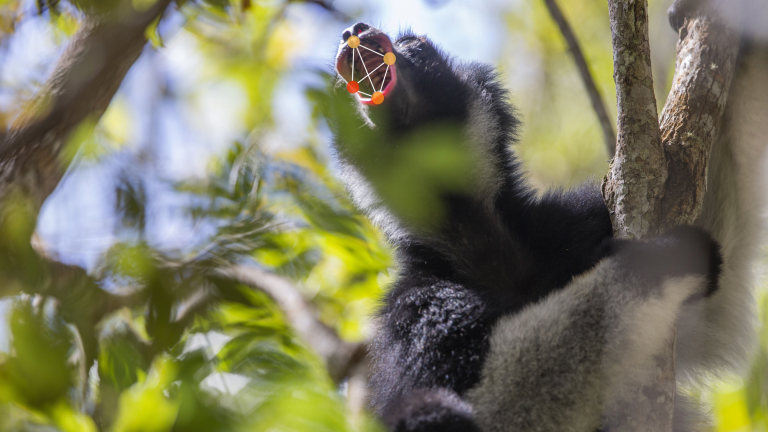
This is what goes on behind the scenes whenever you open your mouth to speak.

[ Read Full Story ]
READ MORE ABOUT > , , , ,

How Your Body Packs Two Meters of DNA Into a Six-Micron Cell Nucleus


I can't seem to manage to keep my iPod in my bag for a day without creating an awful tangle of headphones, but my body's cells can work with two meters of stringy DNA into a tiny nucleus without making a knot. The secret is a structure called a fractal globule, according to a research paper to be published tomorrow in the journal Science.

[ Read Full Story ]

Electron Microscopes Powered by Quantum Mechanics Could See Through Living Cells


Electron microscopes are great and all, but the problem is that you can't use them to get up close and personal inside a living cell without killing it. That might change, however, as scientists are working to use quantum mechanics to overcome this obstacle.

[ Read Full Story ]

Harnessing Lightning Bolts to Build Artificial Organs

Lightning-carved channels in plastic form scaffolding for tiny blood vessels

Lightning bolts may not bring Frankenstein to life, but their blood vessel-like patterns could form the foundation for artificial organs. That would rely on a known lab trick that imprints electricity patterns inside plastic blocks.

It's known that driving a nail into one end of an electrically charged block results in an electric discharge running throughout the plastic. PopSci previously examined this process of trapping lightning, so to speak.

[ Read Full Story ]

Scientists Teach E. coli Bacteria to Count

A new technique for making simple computer chips out of E. coli DNA could put expiration dates on genetically modified organisms or turn regular cells into poison detectors

Generally, DNA is only good for preserving and passing on blueprints for making organisms. However, scientists at MIT and Boston University have altered E. coli DNA to perform another function within the cell, like basic computing. Essentially, they've taught E. coli to count.

[ Read Full Story ]
The Sex Files

The Pros and Cons of Asexual Reproduction

Opposite-sex partners: can't live with 'em, can't evolve without 'em

Making babies requires a male and a female, a sperm and an egg, right? Well, the wild world of animals is often more creative than the lot of us humans when it comes to making whoopee. In fact, some animals don't have sex at all, thank you very much.

Just this month, bug biologists found the first all-female ant species, Mycocepurus smithii. The queen ant clones herself by making eggs that develop into adult females without fertilization. Some of those females will then become queens themselves. Apparently the species has been sexless for enough generations that the ants might not be able to mate even if they wanted to. Dissections showed that a key female sex part that normally interlocks with a male organ during mating had shrunken to a ghost of its former self.

[ Read Full Story ]

Totally Tubular

Researchers have finally cracked the case involving a bizarre deep-sea fish that has a transparent head and rotating tubular eyes

Ever since the fish's discovery in 1939, scientists have believed that the tube-shaped eyes of Macropinna microstoma, commonly called the "barreleye," were fixed in place, limiting its vision to whatever was directly overhead. Recent research from Monterey Bay Aquarium Research Institute (MBARI) proves this theory wrong: in reality, this crazy fish can rotate its eyes from an overhead view, which helps it locate prey swimming above, to the front of its face. This helps explain how the fish is able to actually capture the prey with its tiny mouth.

[ Read Full Story ]

Nature's Grossest Creatures

Science loves them, but don't look at this gallery on your lunch break

A good dose of nature can still soothe the psyche of the modern human, but sometimes nature, red in tooth and claw, can also just gross you out. Wasps turn helpless caterpillars into a 24x7 buffet for young ones, mama mantis snacks on the head of its former lover, and a frog gives new meaning to oral fixation when nurturing the kiddies.

[ Read Full Story ]
READ MORE ABOUT > , , , ,

Beer Brings Yeast Together

The gene that makes brewing possible also represents an important evolutionary theory

As any brewer will tell you, the yeast used to make beer tends to bunch up during fermentation. However, despite thousands of years of brewing and decades of genetic research on yeast, no one was able to explain why yeast stuck together. Now, not only has the gene behind the clumping been discovered, but that gene also offers an interesting look at how life may have become multicellular, and provides a new example of an important evolutionary theory.

[ Read Full Story ]
READ MORE ABOUT > , , , ,
The Sex Files

Small World, Smaller Creatures

In the microscope-aided photography competition, these embryos stand out

Nikon’s annual Small World Competition has been awarding prizes to the country’s best microscope-aided photography since 1977. The contest winners always present a reliably fascinating and freakish slice of life at a Lilliputian level. Last week, this year’s 115 winners were announced.

[ Read Full Story ]
Page 1 of 3 123next ›last »


Download Our iPhone App

Stay up to date on the latest news of the future of science and technology from your iPhone with full articles, images and offline viewing


Follow Us On Twitter

Featuring every article from the magazine and website, plus links from around the Web. Also see our PopSci DIY feed


Become a Fan On Facebook

Share links with friends, comment on stories and more


December 2009: Best of What's New

In our December issue, Popular Science names the 100 best innovations of the year: bombproof wallpaper, self-parking cars, the fastest helicopter, and 97 more. Plus inventor profiles and videos.

Check out the best of what's new here.

Popular Science Photo Pool


Share your photos in the Pop Sci pool at www.flickr.com!
tags_sprite.png
POP_embeddedForm_cover_May09.jpg