
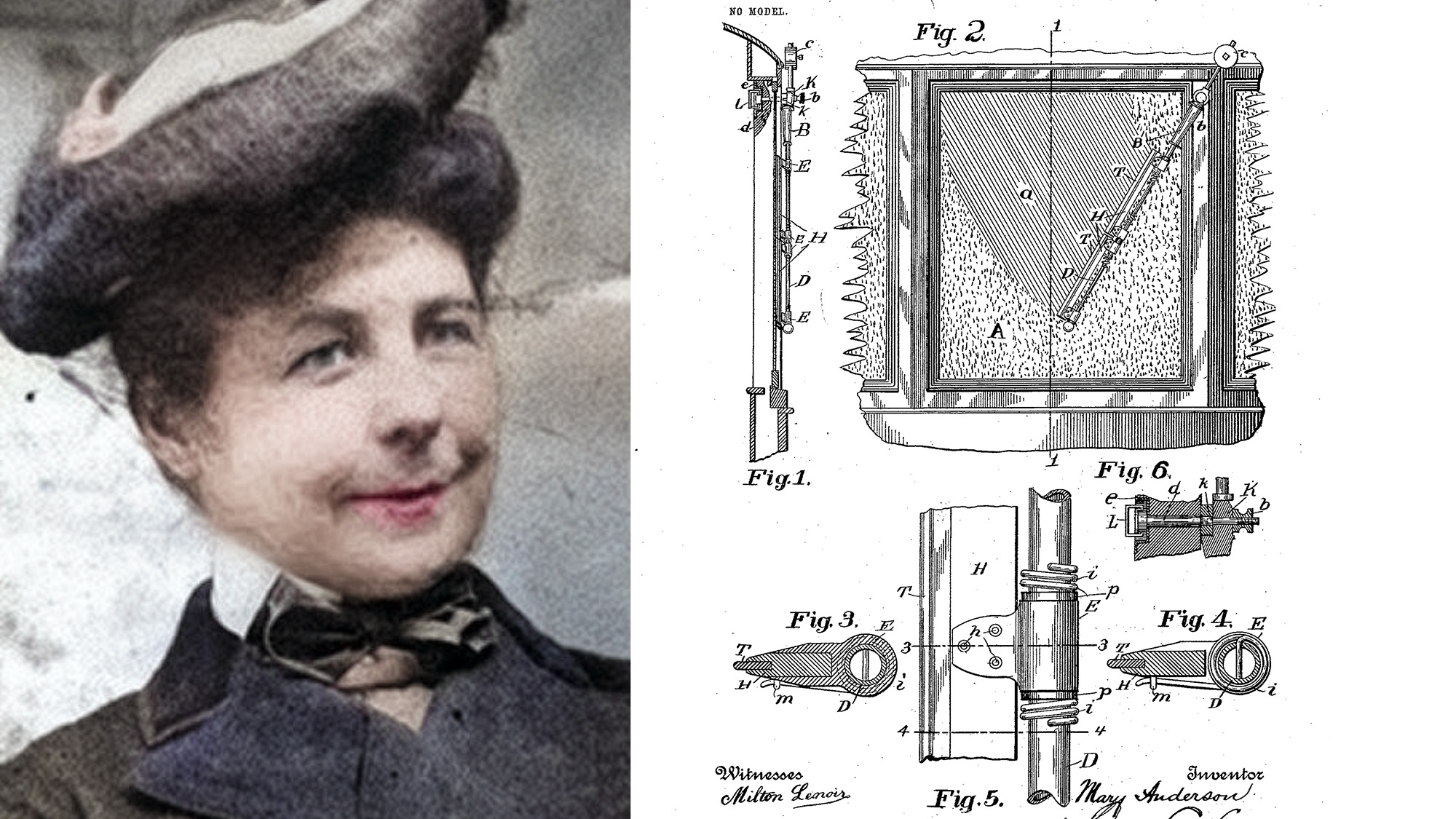
#/media/File:MaryAnderson(inventora).jpg)

We may earn revenue from the products available on this page and participate in affiliate programs. Learn more ›
Before cars and buses became ubiquitous features of the modern cityscape, many cities installed streetcars to shuttle residents from neighborhood to neighborhood. In the summer months, the journey was a sweltering one, with dozens of sticky, sweaty passengers crammed together in the heat. But winters were worse.
The biggest problem wasn’t that trolleys were unheated—that advancement came with their electrification in the 1890s—it was that sleet and snow made it impossible for streetcar drivers to see. They had no choice but to either hang their heads out an open window or to stop completely every few blocks to manually clean the glass from the outside. The frigid air rushed in either way.
Businesswoman Mary Anderson had never experienced public transportation’s seasonal struggle back home in Birmingham, Alabama. But shivering in a streetcar during a winter visit to New York City in 1902 gave her an idea. What if the operator could clear his windshield from inside the trolley without opening either a window or door?
Anderson began working on a prototype right away, envisioning a wooden arm edged with rubber. When pulled, a lever inside the car triggered a spring mechanism that dragged the wiper across the windshield’s surface, clearing it of any obstruction. On November 10, 1903, she was issued U.S. Patent No. 743,801 for her “Window-Cleaning Device”—the first windshield wipers.
Mary Anderson’s life before windshield wipers
Anderson was born on an Alabama plantation in 1866. Although her father died when she was just 4 years old, Anderson grew up with the privilege of financial stability from the estate he left behind.
Little is known about her life before 1889 when she moved with her widowed mother and sister Fannie to the rapidly industrializing city of Birmingham. There, the family entered the real estate business, financing and building the Fairmont Apartments on Highland Avenue. It was a first step for Anderson into a male-dominated business world.
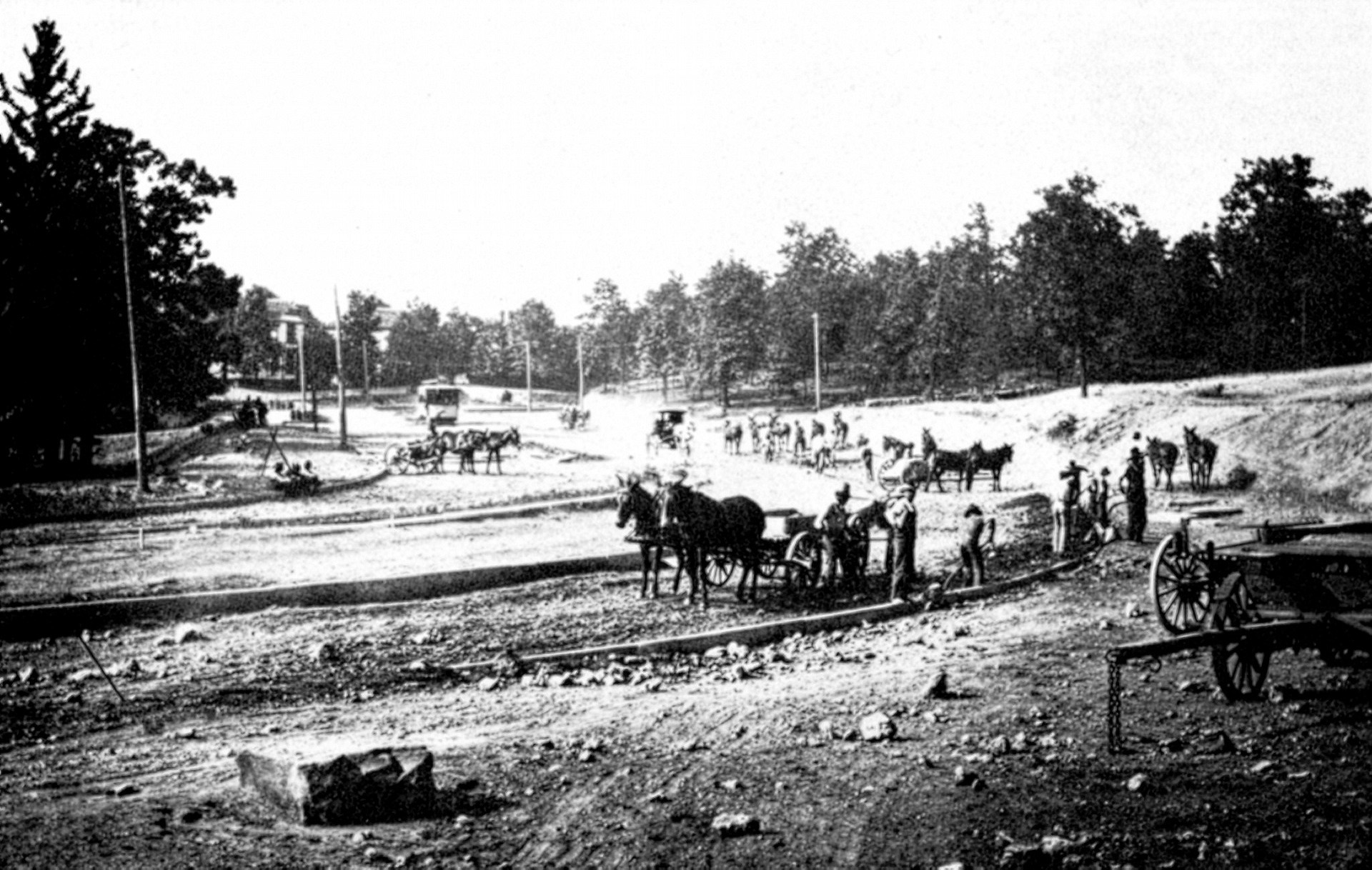
Over the following years, she became more deeply involved in local property development and management. In 1893, she moved to Fresno, California, to operate a cattle ranch and vineyard. That venture was, apparently, short-lived, however.
Soon Anderson had returned home to the Fairmont Apartments to help care for her ailing aunt. When her aunt passed, her secret stockpiles of gold and jewelry—hidden in trunks the family was forbidden to open while she lived—helped to fund Anderson’s entrepreneurship, including the invention of the first windshield wipers.
Why are there less female inventors?
Anderson never married and, like the female inventors who came before and after her, faced different constraints to entrepreneurship than men, such as prohibitions on owning property and opening bank accounts.
Today, women still only account for 12 percent of U.S. patent holders, which suggests there are more factors at play, says Zorina Khan, professor of economics at Bowdoin College.
The most significant reasons relate “to choices rather than obstacles,” Zorina explains. “First, the kinds of technology that are patentable do not align with the kinds of technology that women choose to create; second, patents enable markets in ideas, and are not as useful if the creator does not wish to sell their idea or commercialize their inventions.”
Mary Anderson couldn’t sell her windshield wiper idea
Anderson, for her part, did want to sell her window-cleaning device. For at least a year-and-a-half, she hawked her invention to manufacturers in the fledgling motor vehicle industry. Each responded with some variation of the rejection sent by Montreal firm Dinning & Eckenstein on June 20, 1905: “We regret to state that we do not consider [the window-cleaning device] to be of such commercial value as would warrant our undertaking its sale.”
Nor was it only that Anderson’s invention was considered unworthy of investment in a car industry that had yet to take off. Some argued the window-cleaning device was downright dangerous, its sweeping motion a distraction for the driver deemed somehow worse than being unable to see through the windshield at all. Anderson never found a buyer, something her descendents believe may have, in part, been due to her status as an independent, unmarried woman without a father.
That windshield wipers are now found on virtually every motor vehicle around the world suggests something else, too: Anderson was ahead of her time.
When cars got windshield wipers
Five years after Mary Anderson was issued her patent, car maker Henry Ford introduced his Ford Model T. Five years later, Ford introduced the moving assembly line, an innovation which drastically lessened the time it took to build the car and greatly reduced its cost to consumers.
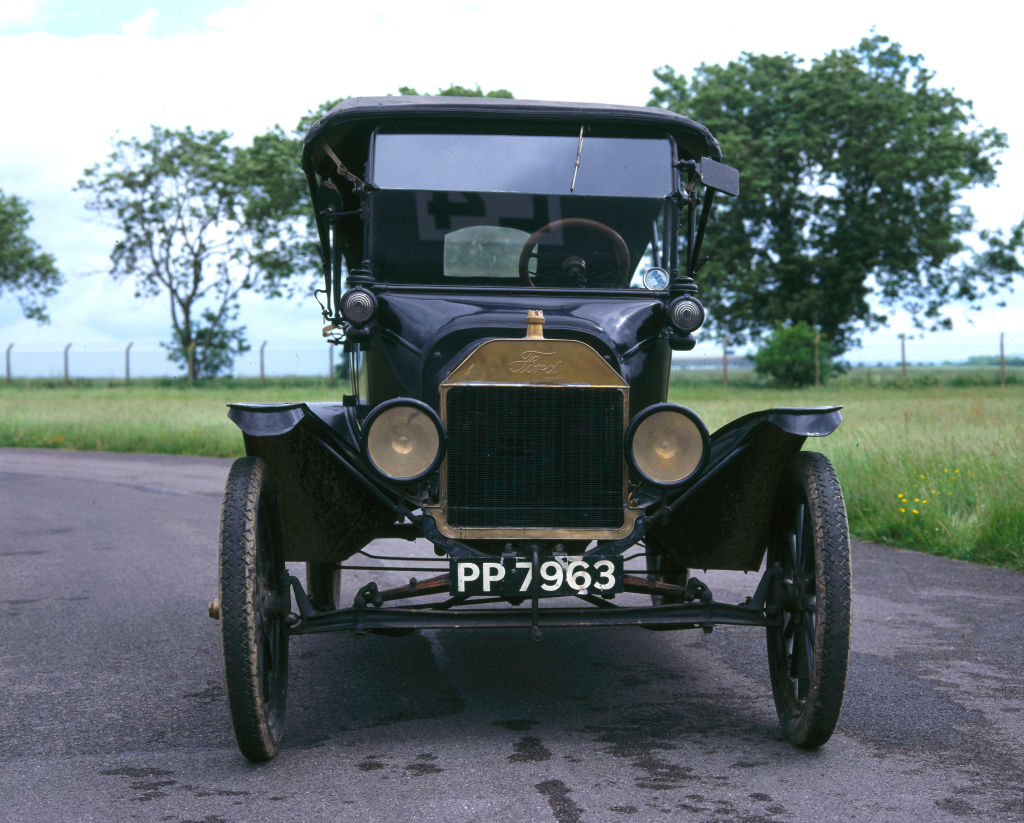
As cars became ubiquitous across the U.S., manufacturers’ eyes were opened to the value of the windshield wiper. By the early 1920s, a version of Anderson’s invention became standard on most vehicles.
Anderson likely never earned any royalties or licensing fees since her U.S. Patent No. 743,801 expired in 1920. Indeed, car manufacturers didn’t use her exact design.
Other female inventors followed Anderson, including Charlotte Bridgewood, the purported inventor of the first electrically-powered automatic windshield wiper in 1917, who improved on Anderson’s original idea.
Mary Anderson lived long enough to see windshield wipers become an essential feature of millions of cars and buses around the world—though not long enough to see herself inducted into the National Inventors Hall of Fame in 2011.
Anderson remained an indefatigable businesswoman throughout her life, managing the Fairmont Apartments until her death at the age of 87 and, odds are, owning a car outfitted with the wiper successor of her 1903 invention.
In The History of Every Thing, Popular Science uncovers the hidden stories and surprising origins behind everyday things.
Related 'The History of Every Thing' Stories
