
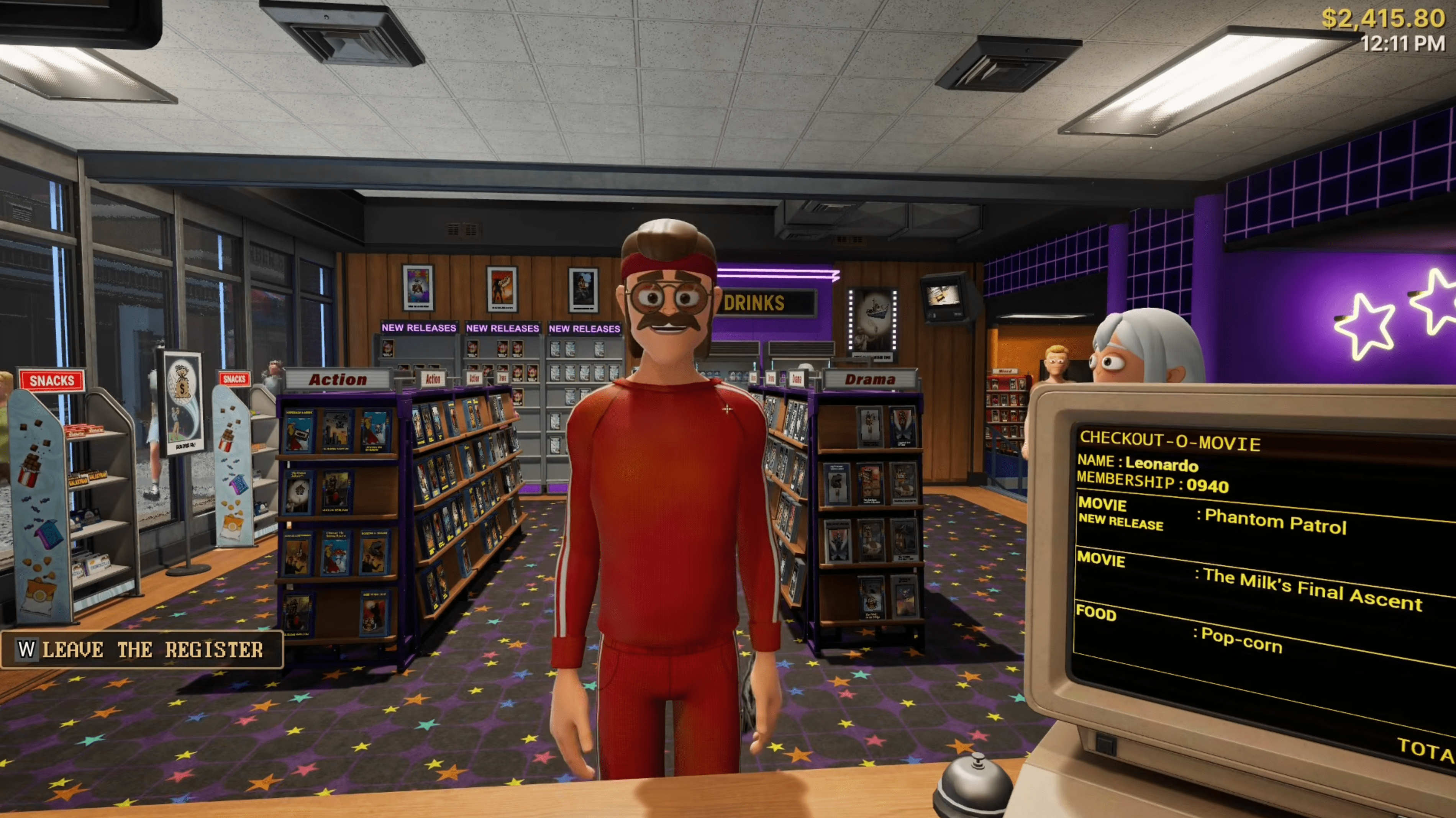
Growing up in the early 2000s, few weekly rituals stuck with me quite like New Release Tuesday. Every week, without fail, I remember wandering the slightly-moldy-smelling, blue-carpeted aisles of our local Blockbuster while my mom scrutinized the newest covers. If I was lucky, I might even walk out with a video game rental or some snacks.
Sadly, the last Blockbuster (aside from one defiant Bend, Oregon, outlier) went out to pasture in 2014, and independent video stores are an increasingly rare sight. Possibly sensing that collective longing, a two-person team from Canada called Blood Pact Studios has a solution: a video game simulator where you own an unmistakingly ’90s-themed video store.
The game, available for PC on Steam, is called Retro Rewind, and it comes loaded with an extra-large popcorn bowl’s worth of savory nostalgia. If digitally stocking shelves and collecting late fees from customers kitted out in early-’90s fashion is your idea of fun, this game is for you

What it’s like to play a video rental simulator
When it comes to gameplay, Retro Rewind is relatively straightforward. The cartoonish, Sims-looking game places you in the first-person perspective of a video store manager who makes sure shelves are promptly and properly stocked with new releases, helps customers find movies, and keeps track of inventory. The trailer shows the character scanning items out at checkout via a chunky-looking ‘90s desktop computer before heading over to a popcorn machine and loading it up for a person waiting in line.
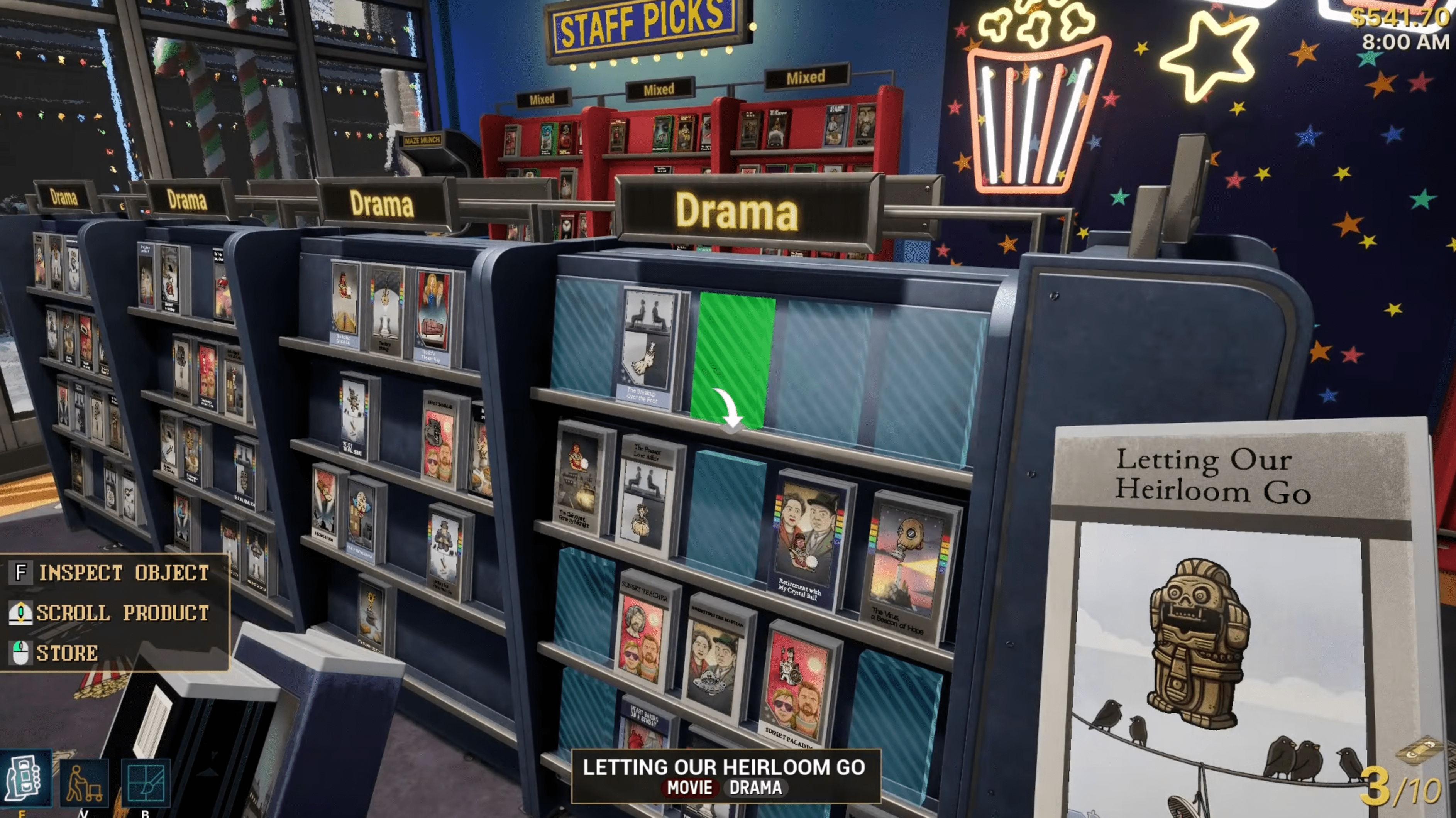
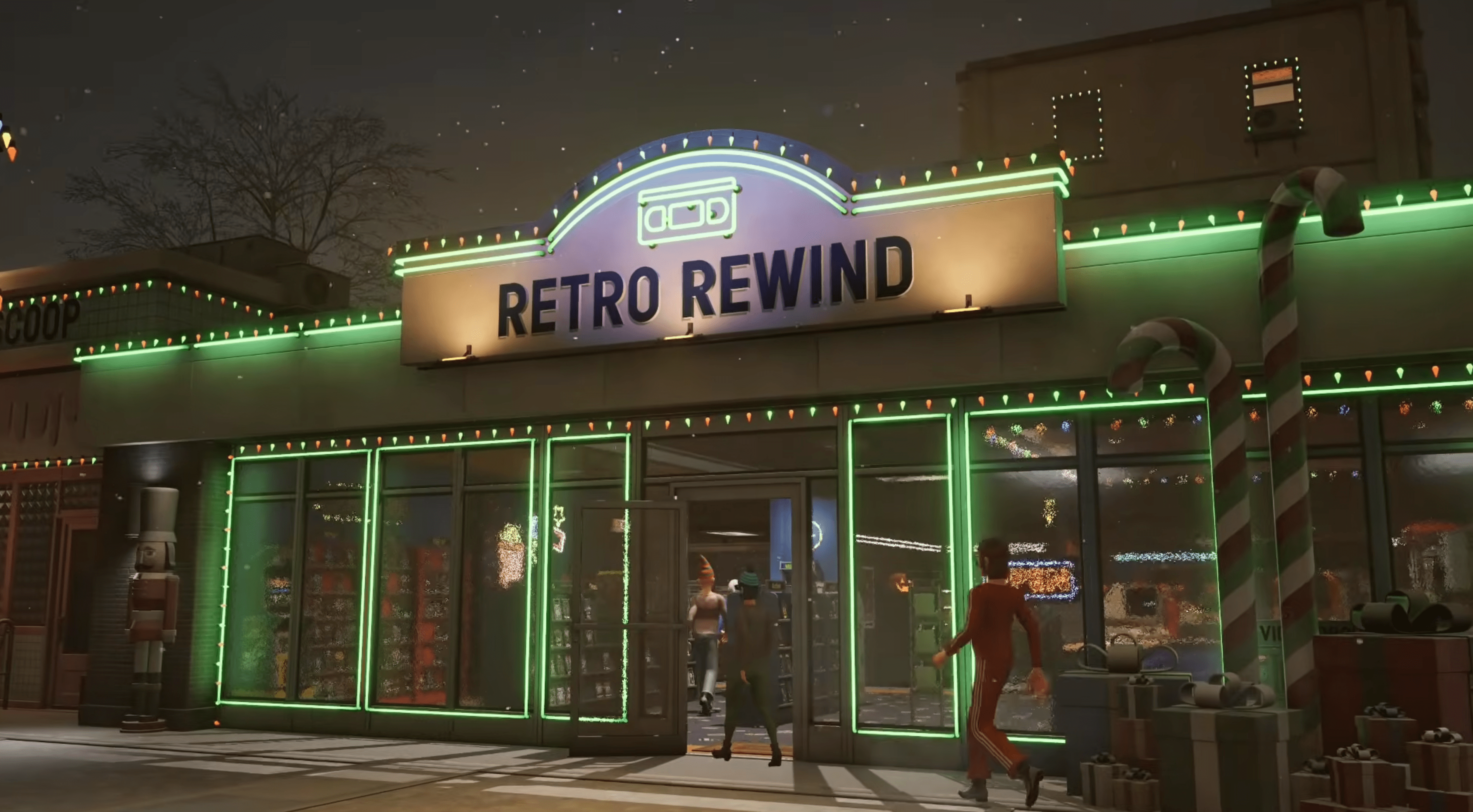
But gameplay isn’t the real focus here, per se—it’s the attention to detail. Players can customize everything from the interior decor to the shop’s physical layout and floor plan. Popcorn makers, cotton candy machines, an assortment of era-appropriate neon lights and cardboard cut-out standees can be placed anywhere in the store. The game also cycles through day and night as well as the seasons, which means a sudden heavy storm or holiday may force you to temporarily close up shop. All the while, customers wearing track suits, cargo shorts, and loud colors associated with the era arrive in abundance.
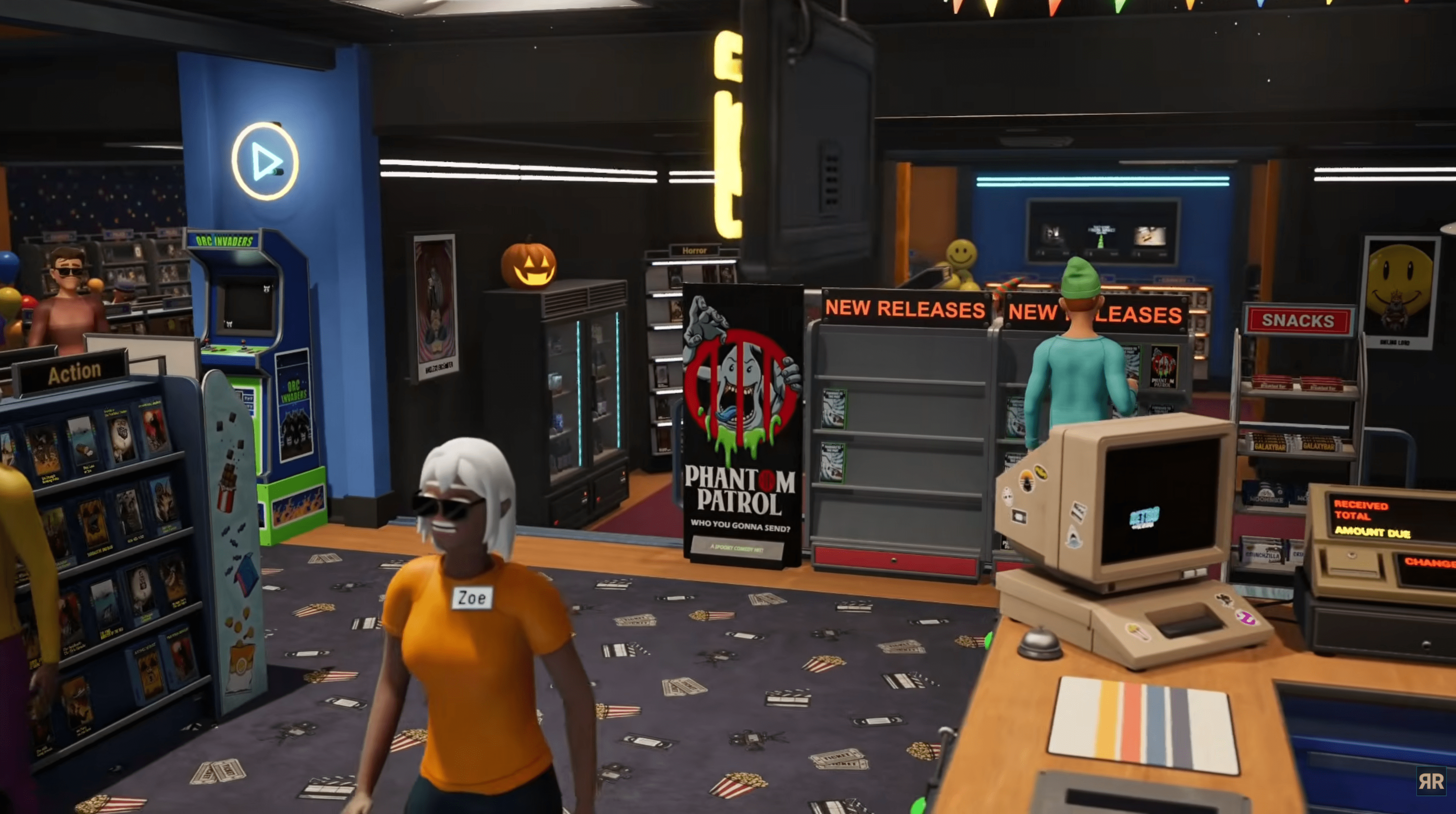
The pair of developers behind Retro Rewind told gaming industry blog 80 Level that “nostalgia is a central element” of the game. Though inspired by other shop simulator-style games, they said they wanted to lean harder into capturing the aesthetic and feeling of the late ‘80s and ‘90s. They tried to achieve that by staying as true to the era as possible, even down to small decisions the casual player might not notice. One of those touches was to make it so that the shop doesn’t accept credit card payments.
“It was important for us to reflect how things actually operated in the early ‘90s and to only use money to complete transactions,” the developers wrote in the 80 Level blog.
Related: [How to make a Blockbuster VHS sleeve for any movie]
Why people are drawn to ‘boring’ games
Retro Rewind immediately struck a nerve and raced up toward the top of Steam’s Top Sellers chart, sharing space among big-name AAA titles from massively funded corporate development teams. And while the reasons for its quick success vary, commenters online seem to long for the days of more physical media, and the quirky rituals and characters that came with visiting a video store. Some say it reminds them of their old video store job growing up.
And for non-gamers who may find it odd for someone to spend their hard-earned money paying to do a day’s work in a video game for “fun,” Retro Rewind is actually far from alone in that regard. Games where players trade in guns and fast cars for seemingly more mundane work are actually quite popular, and many gamers actually find working or “grinding” in games relaxing or calming. Even games like Grand Theft Auto Online, which is about as escapist a concept as possible, opted to add in honest, 9-5 jobs in response to player demand.
