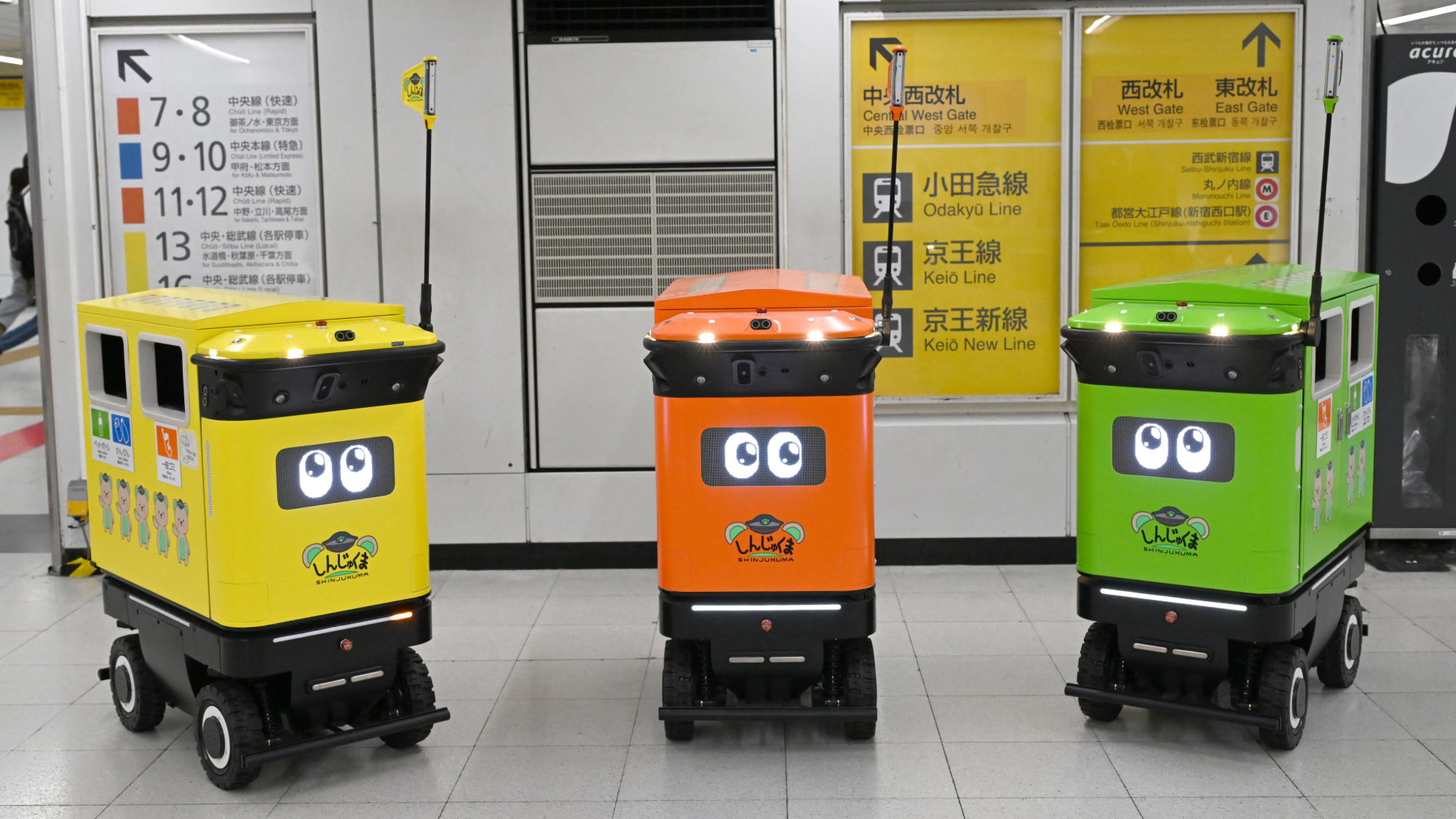
A jingle-playing, googly-eyed team of trash-collecting robots are vying to make the world’s busiest rail station a bit cleaner.
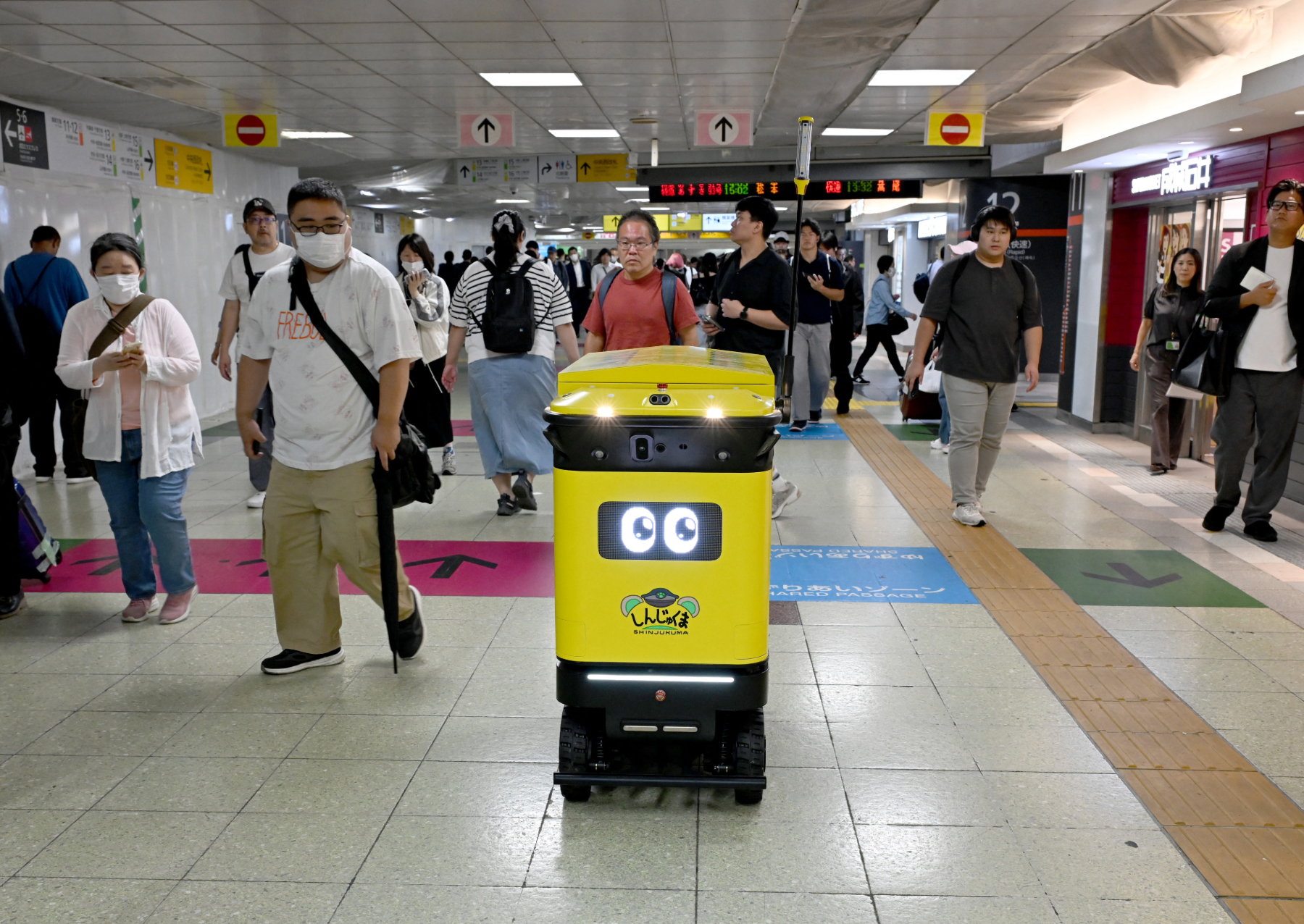
East Japan Railway Company (referred to as JR East), which runs several lines in Tokyo’s bustling Shinjuku Station, recently wrapped up a roughly 10-week trial of these eye-catching robots. The machines stand just over three feet tall, and roll autonomously along preprogrammed routes through the station’s underground concourses between 10 a.m. and 5 p.m. Once full, they trundle back to the station’s garbage collection area on their own.
Each of the three robots sports a different color (green, yellow, or red) to match their accompanying rail line. They definitely don’t look like your average sad, overflowing waste bin. Instead, they stroll up to commuters with bright lights and a front-facing screen showing cartoon eyes. Music appears to play when trash gets fed into them. An accompanying illustration of Shinjukuma, the station’s bear mascot, shows passengers which bins are for general trash and which are for plastic bottles. It’s all very Japanese.
JR East officials are hoping these bins on wheels will help relieve some of the burden on garbage collectors who struggle to keep up with trash generated by the millions of people passing through every day. The station, which sits on the western edge of central Tokyo, sees nearly three million daily passengers, an absurd amount of foot traffic that earned it a Guinness World Record. But more people means more trash. According to Tokyo Weekender, sanitation workers in the station unload garbage from fixed bags more than 10 times per day.
The robots could help, but only if they don’t get in the way and create more problems than they solve. Though JR East reportedly tested out a pair of garbage robots back in 2023, that was in a much smaller station and only for three days. Shinjuku is a much bigger challenge and serves as a kind of stress test to see if they are able to operate safely and effectively in densely packed areas.
Robot cleaners are here to stay
Tokyo isn’t the only city experimenting with trash robots. A cat-themed, mobile trash unit made a brief appearance in Paris’ Charles De Gaulle airport last year. In Singapore, an autonomous robot started collecting garbage in 2019 at Jewel Changi Airport, the shopping complex attached to the city’s main airport. And while trash collection is still relatively niche, automated cleaning robots are quickly becoming mainstays in many modern transportation hubs. Houston, Baltimore, Pittsburgh, and Oakland are among the many cities in the United States already putting robot cleaners to work scrubbing and mopping airport floors.
Making these robots seem cute isn’t just for attracting selfies. It’s also a self-defense strategy. Humans have a mixed track record when it comes to sharing space with robots. In 2024, the New York Police Department retired a 400-pound, egg-shaped surveillance robot from patrolling subway lines after facing pushback from privacy activists and concerned citizens, some of whom felt uncomfortable near the lifeless, imposing monitor. Years earlier, a friendly hitchhiking robot called HitchBot made it about two weeks into its trip across the United States when it was found vandalized and beheaded in Philadelphia.
Could cartoon eyes and a cute mascot have saved those robots? It’s difficult to say, but at least the Tokyo garbage robots seemed to make it through their trial without any dissected parts. That’s an improvement.