
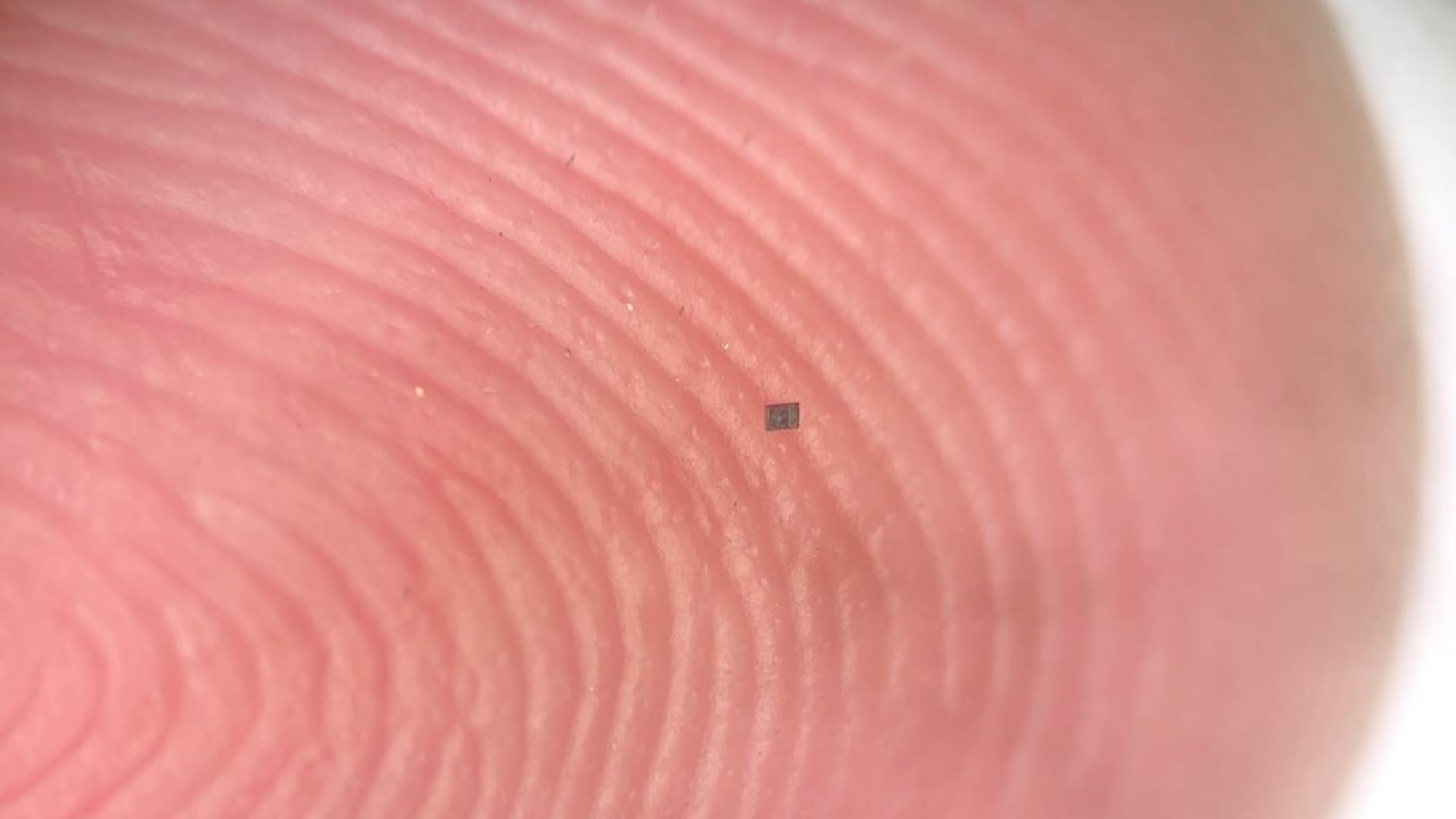
Designing a swarm of fully autonomous, submillimeter-sized robots sounds like an expensive, if not impossible task. However, a team at the University of Pennsylvania and the University of Michigan not only built a new generation of recordbreaking, solar powered machines. Each robot costs only a single penny to manufacture. The robots could help advance everything from nanotechnology manufacturing to medical research. And according to University of Pennsylvania engineer Marc Miskin, their team’s breakthrough also ends a decades’ long robotics conundrum.
“Building robots that operate independently at sizes below one millimeter is incredibly difficult,” he said in a university profile. “The field has essentially been stuck on this problem for 40 years.”
Surface area is a drag
As Miskin and colleagues recently detailed in the journals Science Robotics and Proceedings of the National Academy of Sciences (PNAS), the principal problem with making a fully autonomous robot of this size is a matter of physics. Sizable objects—humans included—move through a world largely dictated by the forces of inertia and gravity. The smaller something gets, the more it becomes influenced by surface area factors like viscosity and drag.
“If you’re small enough, pushing on water is like pushing through tar,” Miskin explained.
This means that while locomotive designs like arms and legs function well for gravity and inertia, limblike appendages become far too delicate at microscale. Solving for this issue required researchers to approach movement from any entirely different perspective, one that works on an electrical level.
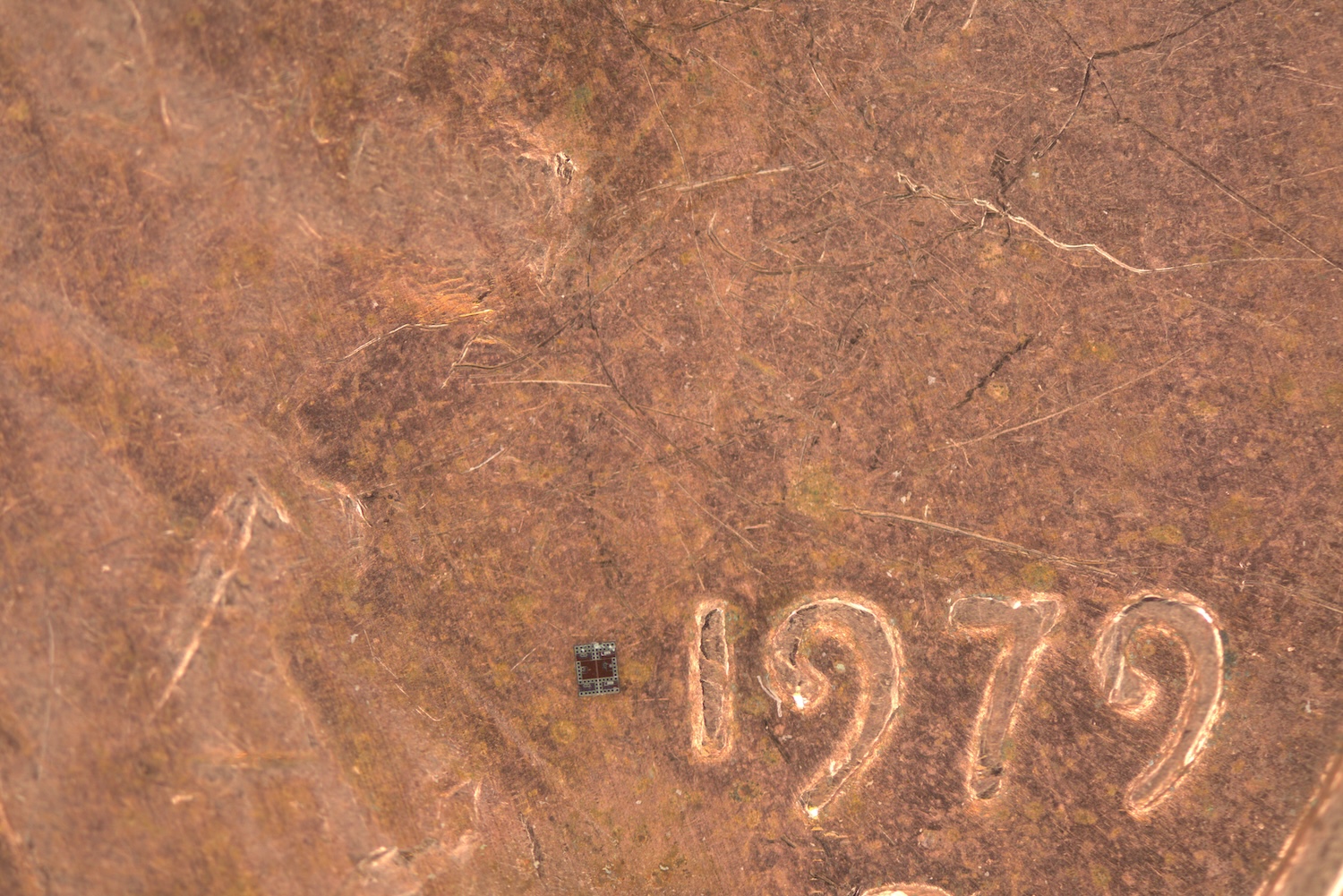
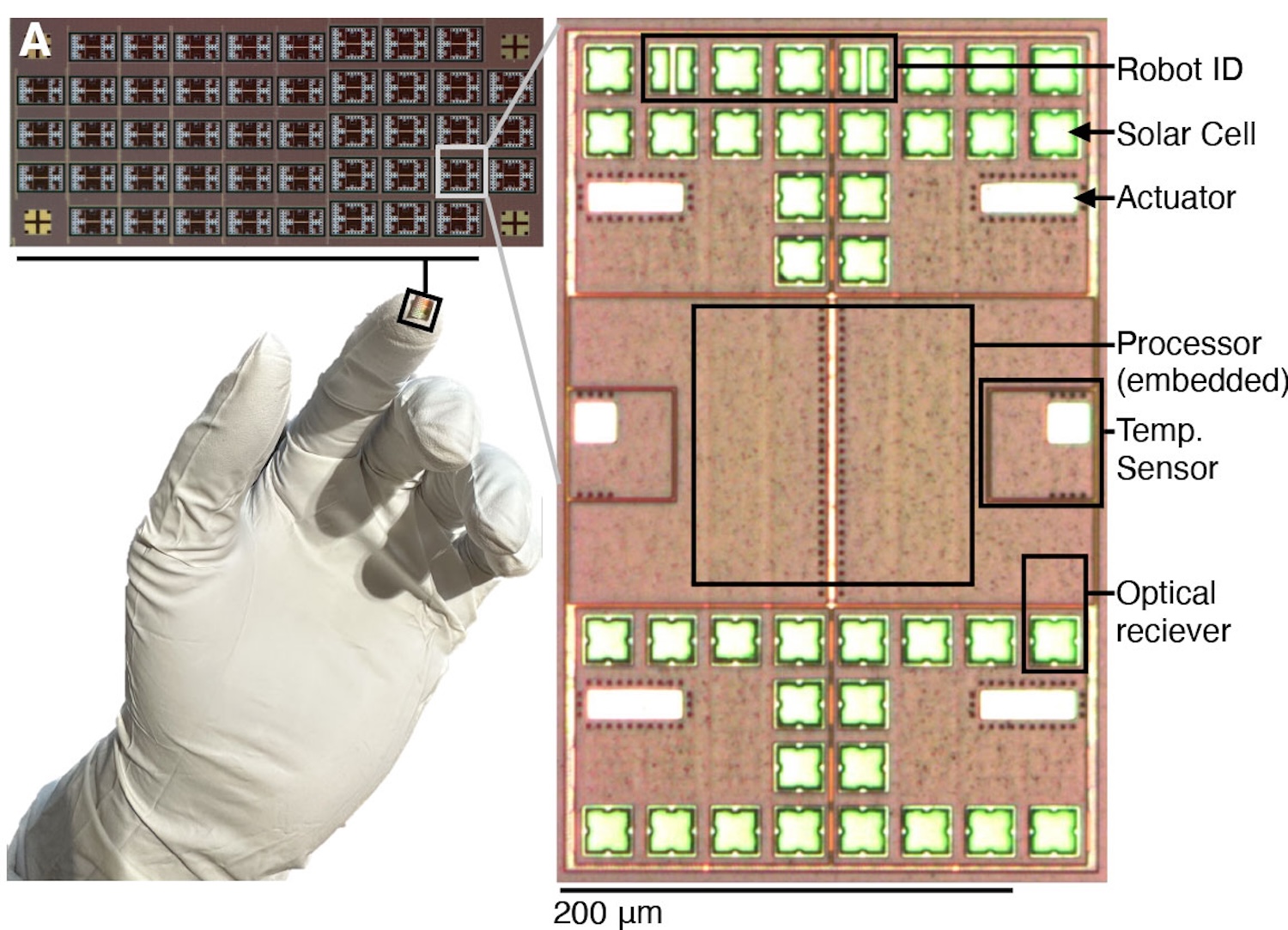
Each robot measures around 200 by 300 by 50 micrometers, or smaller than a grain of salt. Even at that size, the machines are capable of converting energy from tiny solar panels into an electrical field when placed in a solution. The electricity pushes nearby ions, which then shove surrounding water molecules to propel the robot. The machines also don’t only move forwards and backwards. By adjusting the electrical field, each robot can move alone or in complex patterns together like a school of fish.
“It’s as if the robot is in a moving river, but the robot is also causing the river to move,” Miskin said.
The machines also don’t feature any moving components, and instead rely entirely on electronic signals. This makes them far more durable than their larger, more complex robotic relatives. With recharges supplied by an LED, the robots can swim for months at a time. But even affordability and ingenuity only go so far if a machine is useless. The microscale robots need to accomplish tasks, and that requires programming. Once again, Miskin’s team had to address the issue of size.

75 nanowatts of power
Computer miniaturization is all about space. The smaller the computer, the less available area for power sources, memory, and circuitry. Unsurprisingly, this posed a problem for designers.
“The key challenge for the electronics is that the solar panels are tiny and produce only 75 nanowatts of power,” added University of Michigan engineer David Blaauw. “That is over 100,000 times less power than what a smart watch consumes.”
The workaround required entirely new circuit designs that operate at low voltages, thereby reducing the robot’s power needs by over 1,000 times its original requirement. With solar panels taking up the majority of available robot real estate, Miskin and Blaauw next needed to figure out how to fit in a processor and memory.
“We had to totally rethink the computer program instructions, condensing what conventionally would require many instructions for propulsion control into a single, special [programming] instruction,” Blaauw said.
Robot wiggle dances
The current iterations of the microscale robots possess sensors allowing them to detect temperature within an accuracy of a third of a degree Celsius. This hypothetically would allow a swarm to travel through a solution towards regions of warmer temperature—often an indicator of cellular activity—hen report on individual cell health. But remember the size problem: to inform its designers of survey results, its method of communication must be simple enough to encode on a grain of sand. Luckily, nature provided its own evolutionary inspiration.
“It’s very similar to how honey bees communicate with each other,” said Blaauw. “To report out their temperature measurements, we designed a special computer instruction that encodes a value, such as the measured temperature, in the wiggles of a little dance the robot performs. We then look at this dance through a microscope with a camera and decode from the wiggles what the robots are saying to us.”
As impressive as the mini-bots already are, Miskin and Blaauw hope it’s only the start of an entirely new field of possibilities. Continued improvements and experimentation could result in faster, more complex robots installed with additional sensors that let them maneuver through increasingly difficult environments.
“We’ve shown that you can put a brain, a sensor and a motor into something almost too small to see, and have it survive and work for months,” said Miskin. “Once you have that foundation, you can layer on all kinds of intelligence and functionality.”
