
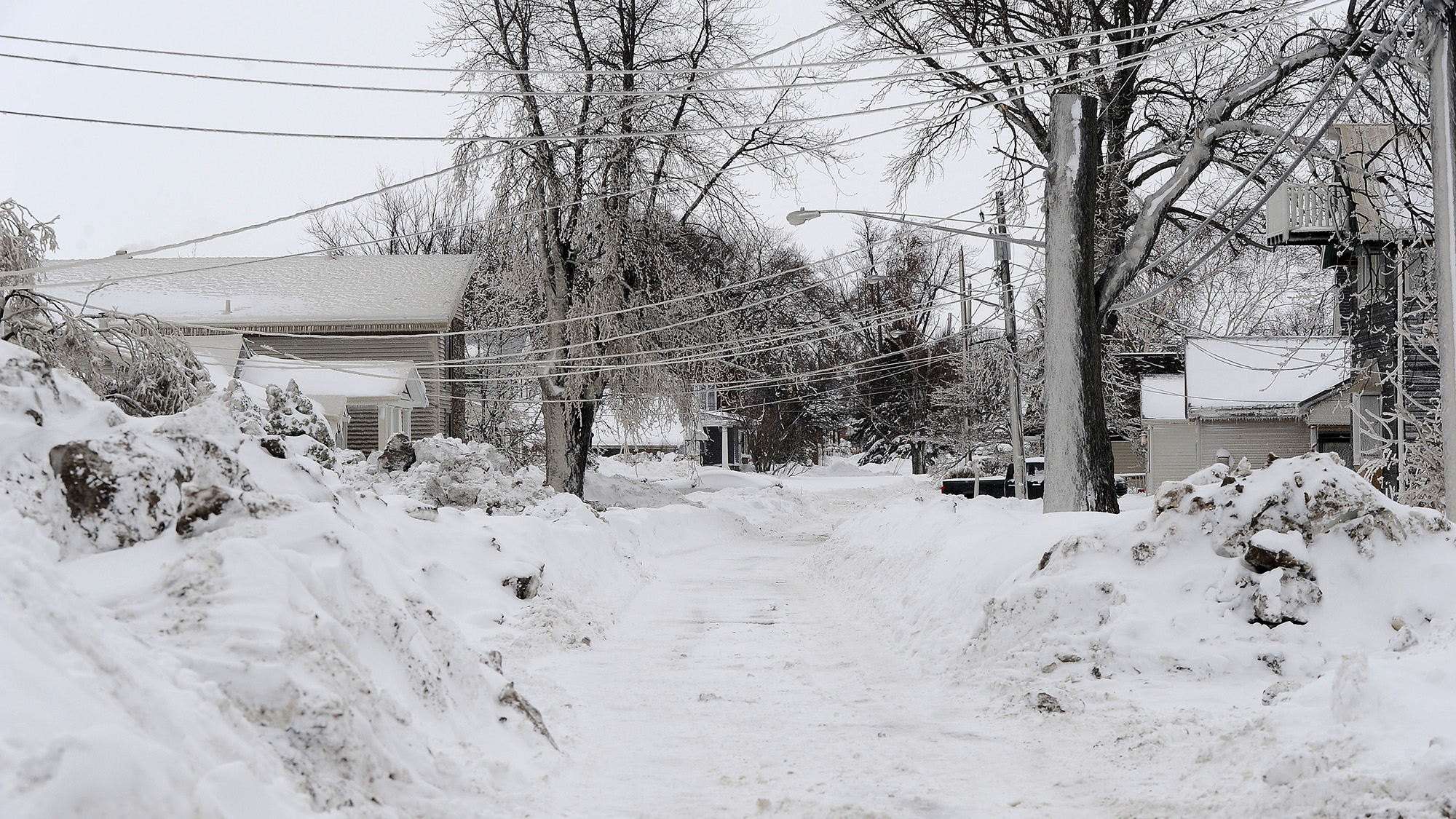
As much of the country contends with an unprecedented winter storm, understanding the difference between sleet, snow, and freezing rain has never been more important.
In a new episode of Popular Science’s Ask Us Anything podcast, we get into all the nitty gritty details of what makes each of these winter weather events different from one another. It may surprise you just which one is the most dangerous. (Clue: It’s not snow.)
Ask Us Anything answers your most outlandish, mind-burning questions—from the everyday things you’ve always wondered to the bizarre things you never thought to ask. So, yes, there’s a reason cats love boxes and no, hot workout classes usually aren’t better. If you have a question for us, send us a note. Nothing is too silly or simple.
This episode is based on the Popular Science article “What does ‘chance of precipitation’ really mean? A meteorologist explains.”
Subscribe to Ask Us Anything
Listen and follow Ask Us Anything on your favorite podcast platform:
Spotify | Apple Podcasts | YouTube | Or wherever you get your podcasts.
Full Episode Transcript
Laura Baisis: Let’s say you’re 10 years old. The weather outside is, as they say, frightful. Fluffy, white snow is falling and the roads are glistening, and you are wishing and hoping that it will be enough to cancel school.
You turn on your local weather to get a more detailed forecast, and hear the meteorologist throwing around words like “sleet” and “freezing rain,” and wonder if either of them will crush your snow day dream. You hold your breath as the school closings are finally announced.
Newscaster: Schools already announcing closures for tomorrow…
LB: Your school is closed, but not just from snow. The snow combined with freezing rain has turned the roads into a skating rink, and everyone should stay put and pour that second cup of hot cocoa.
Welcome to Ask Us Anything from the editors of Popular Science, where we answer your questions about our weird world. From “Why does your dog gets so excited to see you?” To “Is the universe really infinite?” No question is too outlandish or mundane. I’m Laura Baisis, the news editor at Popular Science.
Sarah Durn: And I’m Sarah Durn, features editor at PopSci.
LB: For all of us here, we can’t help but chase down wonder inducing questions. We’re hardwired to be curious. And this week our curiosity has led us to decoding wintry precipitation.
SD: Okay, so potentially silly question here, but what exactly is precipitation? And what causes the different types of precipitation to form?
LB: No, silly question.
SD: Thank you.
LB: So precipitation is any water falling down to Earth’s surface. A lot of times this is rain, but precipitation is also a broader category that includes snow, sleet, and freezing rain.
SD: Alright, gotcha. Obviously we all know snow, pretty flakes and all that, but what exactly are sleet and freezing rain? How are they different from snow?
LB: So sleet is tiny little ice pellets, basically like winter hail.
SD: But it’s different from actual hail.
LB: Yeah, it is. Sleet forms as the snow melts to rain in the atmosphere, but then refreezes right before hitting the ground. Hail forms during summer thunderstorms and can be a lot bigger than sleet. Some can even be the size of golf balls.
SD: So if you have ice pellets in winter, it’s sleet. And if you have them in summer, it’s hail?
LB: Yep. That’s generally what’s happening.
SD: And then how about freezing rain?
LB: That’s precipitation that freezes when it hits the ground. Freezing rain is actually the most dangerous kind of winter precipitation because it coats everything in black ice.
SD: Yikes. The amount of times I have slipped on black ice growing up in northeast Ohio. Not fun.
LB: Ouch.
SD: Now, before we dive into all things winter weather… Listeners, we want to know: what questions are keeping you curious? If there’s something you’ve always wondered, submit your questions through popsci.com/ask.
We may even feature your question in a future episode.
LB: Can’t wait to hear all your ideas! Up next, we’re going to dive into how snow, freezing rain, and sleet actually get created in the atmosphere.
SD: With a pretty sweet analogy that’s coming up after this quick break.
LB: Welcome back.
SD: Yes, welcome. Okay, so I was doing some research during the break and it turns out that in the UK sleet actually refers to a mix of rain and snow.
LB: Ooh. The plot thickens,
SD: And in some languages there are even more terms to describe different kinds of winter weather.
LB: Go on.
SD: It’s something you’ve likely heard before, but Inuit languages do in fact have a ton of terms for snow. For instance, and please excuse any mispronunciations here, in Eastern Canadian Inuktitut, they have words like apingaut, which means “first snowfall.”
LB: Ooh, interesting.
SD: Other languages with a bunch of terms for snow are Japanese, Mandarin Chinese, and Scots.
LB: Honestly wouldn’t have guessed those, but that makes sense.
SD: Yeah. Especially because far northern Japan is actually the snowiest inhabited place on Earth. So in Japanese you have words like miyuki, which means “beautiful snow” and shinshin which is the sound snow makes, or “the sound of no sound.”
LB: Ooh.
SD: And in Scots you have doon-lay, which is just fun to say, and means a heavy snowfall.
LB: Those are so many beautiful words.
SD: So, Laura, you actually wrote a whole story about precipitation, not to mention basically like all of our weather stories.
LB: Guilty. I wanted to be a meteorologist when I was eight. So weather stories are basically my way of making that little weirdo proud without needing calculus and physics.
SD: Oh my gosh, adorable. So let’s start at the beginning. How do sleet, freezing rain and snow form in the atmosphere?
LB: So, as we said earlier, these are all types of precipitation, and all precipitation actually starts out as snow.
SD: Whoa, that’s so cool.
LB: Right? Even that muggy summer afternoon downpour begins as snow.
It just melts and turns to rain as it falls through the atmosphere.
SD: That’s so wild.
LB: Now, if it’s cold enough closer to the ground, the snow that forms in the clouds will simply remain as snow as it comes down to Earth. Variations in the atmosphere’s temperatures, like a layer of warmer air, can affect whether the snow becomes sleet or freezing rain.
SD: So what makes it hit the ground as sleet?
LB: Good and important question. Sleet happens when snowflakes falling to the ground partially melt as they fall through a shallow layer of warm air in the atmosphere. Those more slushy drops than refreeze when they fall through a deeper layer of colder air just above the Earth.
They then reach the ground as those little frozen raindrops that bounce basically like ice pellets.
SD: Gotcha. And then what about freezing rain?
LB: So this one is a little more tricky, especially to forecast. Unlike sleet, freezing rain doesn’t hit the ground as little ice pellets. It begins as snow, but then melts when the water droplet falls through a warmer and more shallow pocket of air.
That water drop will then expand and freeze as it hits a colder pocket of air or if the temperature on the ground is below freezing. So instead of falling as that nice little ice pellet, the water drop freezes upon contact with the ground.
SD: And this is what makes that icy layer, which is so dangerous for drivers, pedestrians, and anyone outside.
LB: Yeah, exactly. One way to think about the difference is to imagine a box of fresh donuts.
SD: Ooh, love a food analogy.
LB: Right? Freezing rain is like that glazed donut with a nice, clear coating of icing on top.
SD: Yum.
LB: Kind of my favorite. Now, freezing rain gives the ground a similar clear coating that is very slippery.
On the other hand, sleet is like a donut with sprinkles, rainbow or chocolate. It covers the ground in these little crunchy pellets that aren’t quite as slippery.
SD: You know, I never thought that donuts would help us explain the weather.
LB: I mean, honestly, meteorology is so complex, so having analogies like these are really, really helpful.
And a big shout out to the team at KETV in Omaha, Nebraska for this delicious analogy.
SD: Oh, I love local news.
LB: Same. And please, PSA be kind to your local meteorologist. They don’t have an easy job.
SD: Is it really hard to predict winter weather?
LB: It can be, especially freezing rain.
SD: Yeah. Why is that?
LB: Even a slight change in the atmosphere can mean a completely different forecast.
So if there’s a pocket of warm air in the right place, a snowy day can become a sleet or freezing rain day. Or vice versa, and those atmospheric changes can happen really quickly changing forecasts on a dime.
SD: And freezing rain is probably the most dreaded winter weather forecast, right?
LB: Absolutely.
SD: What makes it so dangerous?
LB: It usually causes the most damage. Freezing rain can bring down tree limbs, power lines, and cause car accidents. In fact, only 100th of an inch of freezing rain is enough to make walking and driving unsafe.
SD: Yikes.
LB: It also might look safer to drive because it doesn’t look like a blinding blizzard or raging snowstorm outside, but a storm with freezing rain can make invisible black ice, which is what makes driving so risky.
SD: So in general, when are weather forecasts most accurate?
LB: Basically the closer you are to the day you’re trying to predict the better.
SD: I mean, I guess that makes sense.
LB: Yeah. So meteorologist Cyrena Arnold told me that it’s like driving down a long dirt road. Imagine you see a swirl of dust indicating that something is approaching, but you don’t know if it’s another car, a large truck, or maybe a cow.
Once the swirl of dust gets closer, you notice it’s blue. Then you see that it’s a compact car and eventually you can tell it’s the make and model. Forecasting is really similar. The closer we get, the better picture we have.
SD: That’s a great analogy.
LB: Right? And remember whether forecasting is really hard. It combines some serious high level math and physics that most of us can’t even compute, myself included, with constantly changing variables. It’s incredibly nuanced and difficult. So remember that most legitimate forecasters are just doing their best.
SD: And if you wanna dive deeper into the world of precipitation, check out Laura’s full story on Popular Science. It’s amazing. We’ll link it in the show notes.
And with that, we’ll be back shortly with a brief history of when the U.S. government actually outlawed the weather.
LB: Oh my goodness. What?
SD: Well, technically censored, but it’s still wild. That’s coming up after this short break.
LB: And welcome back. Okay, Sarah, I still can’t believe you dropped that bomb right before the break.
The U.S. government censored the weather?
SD: I know it sounds fake, but it’s real. During World War II, the U.S. government decided weather forecasts were basically military secrets.
LB: Because clouds can be spies?
SD: Pretty much. Officials worried that if enemy submarines heard things like wind directions, storms, or fog reports, they could then predict conditions along the U.S. coast.
LB: So instead of partly cloudy Americans, just got…nothing?
SD: Exactly. After Pearl Harbor, weather maps literally went blank.
LB: Whoa.
SD: Radio stations weren’t allowed to talk about the weather unless they got special permission.
LB: Even during dangerous storms?
SD: Yeah, and sometimes there were really bad consequences for that silence.
In 1942, for example, a massive tornado outbreak tore through Mississippi and Tennessee, but radio stations couldn’t warn people about it. One station in Memphis was only allowed to say doctors and nurses are urgently needed without explaining why.
LB: Cryptic and terrifying.
SD: Yeah. Can you imagine? And without weather forecasts, everyday life got weird too.
Baseball announcers couldn’t announce rain delays. Farmers were caught off guard by freezes. Even Eleanor Roosevelt got scolded for casually mentioning clouds in her newspaper column.
LB: How dare they scold America’s best First Lady.
SD: I know, but people obviously still needed to know what the weather was like, so they turned to almanacs, rumors, and DIY gadgets.
Even a Popular Science approved weather glass, basically a thermometer you hang outside your home and read from inside.
LB: Of course, we were involved.
SD: I mean, of course. Eventually after a surprise hurricane barreled into Galveston Bay, Texas, in 1943, the government admitted the downsides outweighed the benefits of keeping the weather censored.
LB: So when did the weather get uncensored?
SD: Later that year. So in October 1943, weather forecast returned after almost two years.
LB: Which feels like another great reminder that weather isn’t just small talk, it’s a public safety issue.
SD: Exactly. Forecasts really save lives.
LB: Honestly, after learning about this, I’ll never complain about a bad forecast the same way again. Not that I usually complain because I love meteorology, but now I really won’t.
SD: Yeah, same. Better to know about a bad weather day than be surprised by it.
LB: And that’s it for this episode, but don’t worry, we’ve got more fun Ask Us Anything episodes live in our feed right now. Follow or subscribe to Ask Us Anything by Popular Science, wherever you enjoy your podcasts. And if you like our show, leave us a rating and review.
SD: We care what you think. Our theme music is from Kenneth Michael Reagan, and our producer is Alan Haburchak.
This week’s episode was also co-produced by our very own Laura Baisis and is based on an article she wrote for Popular Science.
LB: Thanks, Sarah. A big thank you to the whole Ask Us Anything team, and to you, our listeners, for tuning in.
SD: And one more time. If you want to have your own wonderment explained on a future episode, go to popsci.com/ask. Until next time, keep the questions coming.
