
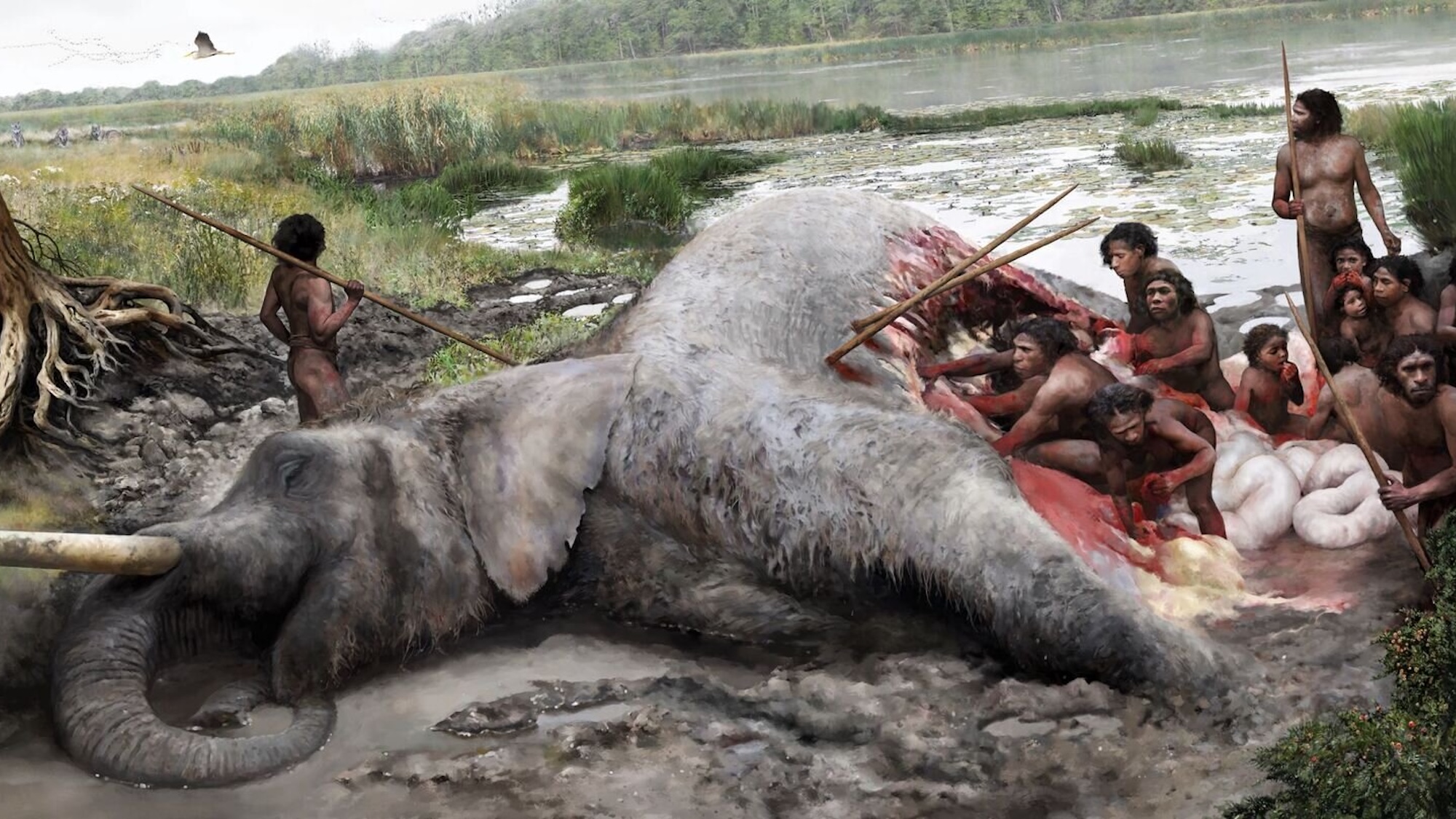
One day over 120,000 years ago, a resourceful group of Neanderthals took down a 7,700-pound, ancient elephant in present-day Germany. Now, paleoanthropologists studying the area can confirm that the remnants of this kill are the first known scene of its kind, finally solving a nearly 80-year-old mystery. According to their study recently published in the journal Scientific Reports, at least some Neanderthals knew how to successfully take down Europe’s largest megafauna, including these elephant ancestors.
In 1948, a group of amateur paleontologists led by a local school headmaster were scouring a site in Lehringen, northern Germany. They stumbled upon the remains of a 125,000-year-old straight-tusked elephant. This specimen of Europe’s largest known land mammal was encased in sediment dating back to the last interglacial period. The team also identified more than just bones at the dig. In addition to fossils, the workers located a complete wooden spear that was later determined to be made by Neanderthals. Although a striking find, it was unclear at the time if hunters actually used the tool had actually to fell the animal, or if its location was sheer coincidence.
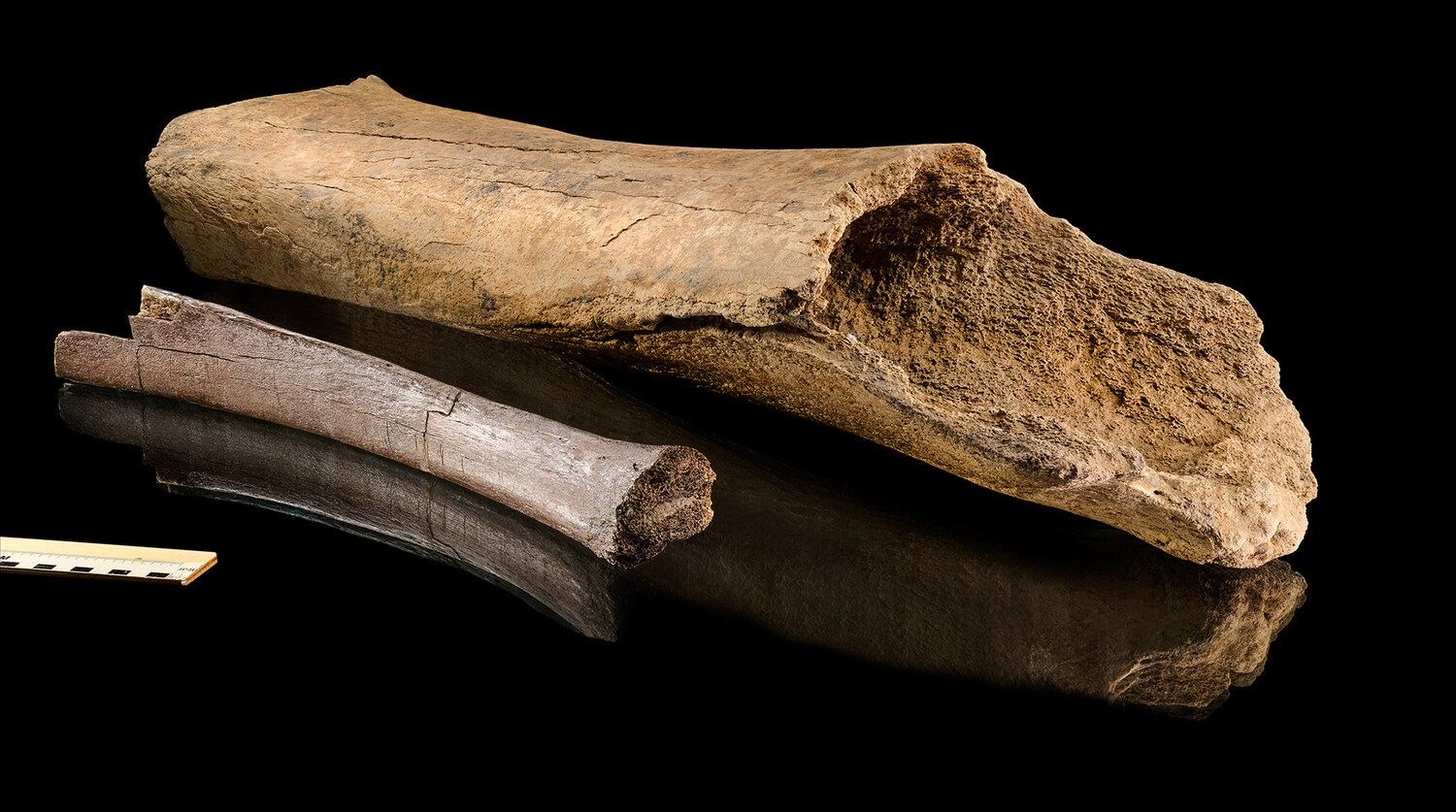
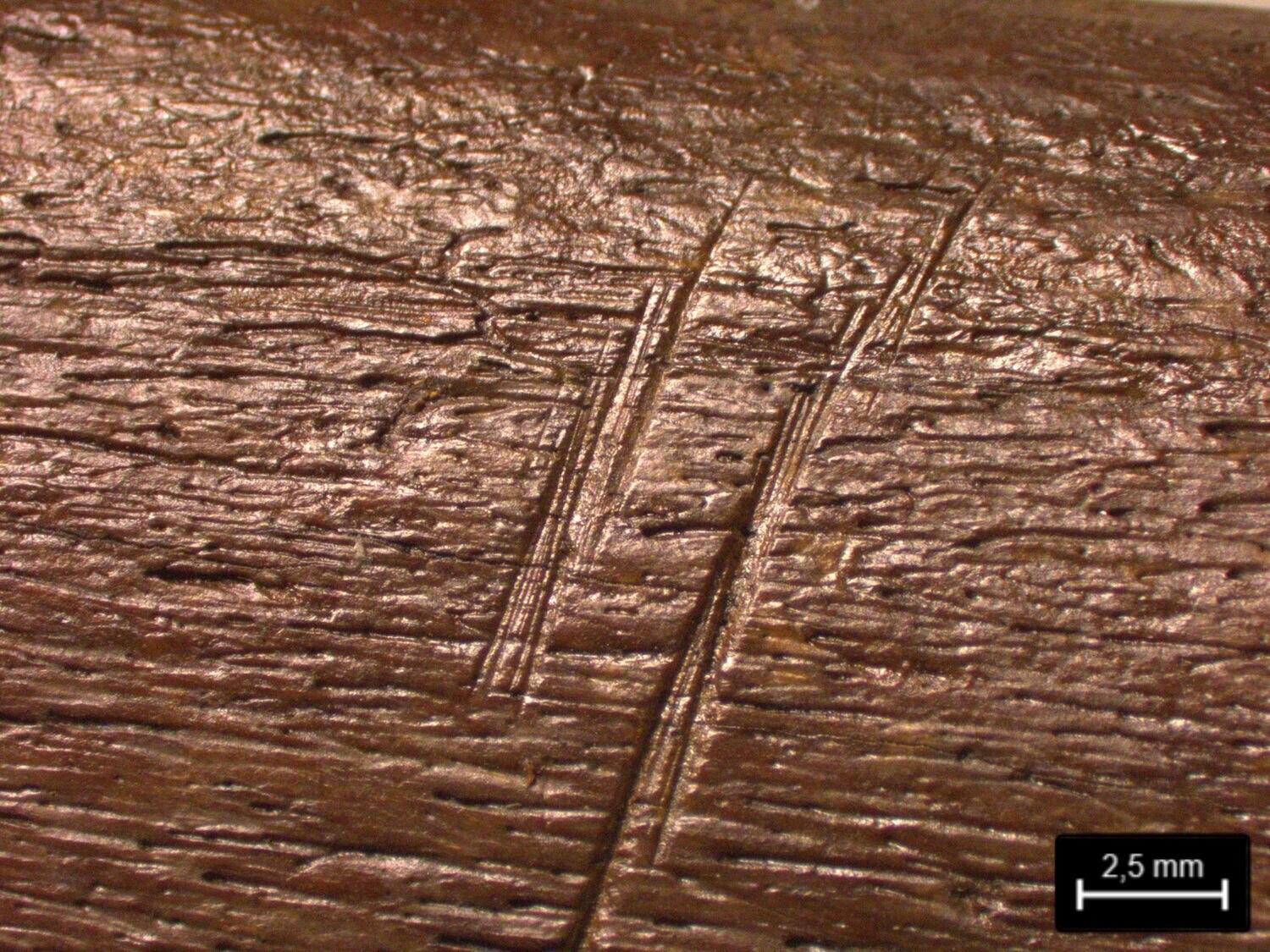
It would take another 78 years before a closer examination provided an answer. After analyzing both the site of the elephant’s discovery and the remains themselves, researchers conclusively identified multiple cut marks on the ribs and vertebrae—clear signs of butchering. Based on the incision locations, the team believes that Neanderthals sliced open their roughly 30-year-old male prey’s chest cavity, then removed the organs while collecting thousands of pounds of meat and fat. Apart from the megafauna, scientists also identified the remains of plants and about 2,000 bones from 16 animal species like turtles, birds, and fish.
The straight-tusked elephant wasn’t the only large animal hunted by Neanderthals. The site also included the butchered remnants of an extinct variant of wild cattle called an aurochs. Like the elephant, an aurochs wouldn’t have been an easy target. An adult specimen easily stood 5.9 feet tall at the shoulder and sported long, broad horns.
“It appears that Neanderthals in Lehringen repeatedly spent a long period of time at the lake and pursued diverse hunting strategies,” Ivo Verheijen, a bioarchaeologist at the Lower Saxony State Office for Heritage (NLD) and a study co-author, explained in a statement. “Large quantities of meat were important to them of course, but they needed bone marrow and fur as well.”
Taken together, the discoveries further expand on what paleoanthropologists know about Neanderthal culture, as well as their tools and hunting techniques. Study co-author Thomas Terberger, an archaeologist at the NLD and the University of Göttingen, called the finds a “crucial building block” in understanding Neanderthals.
“[They] were already hunting strategically with the same level of skill as anatomically modern humans were 125,000 years ago,” he added.
