
What’s the weirdest thing you learned this week? Well, whatever it is, we promise you’ll have an even weirder answer if you listen to PopSci’s hit podcast. The Weirdest Thing I Learned This Week hits Apple, Spotify, YouTube, and everywhere else you listen to podcasts every-other Wednesday morning. It’s your new favorite source for the strangest science-adjacent facts, figures, and Wikipedia spirals the editors of Popular Science can muster. If you like the stories in this post, we guarantee you’ll love the show.
FACT: A pissed-off 14 year old caused an international snake panic
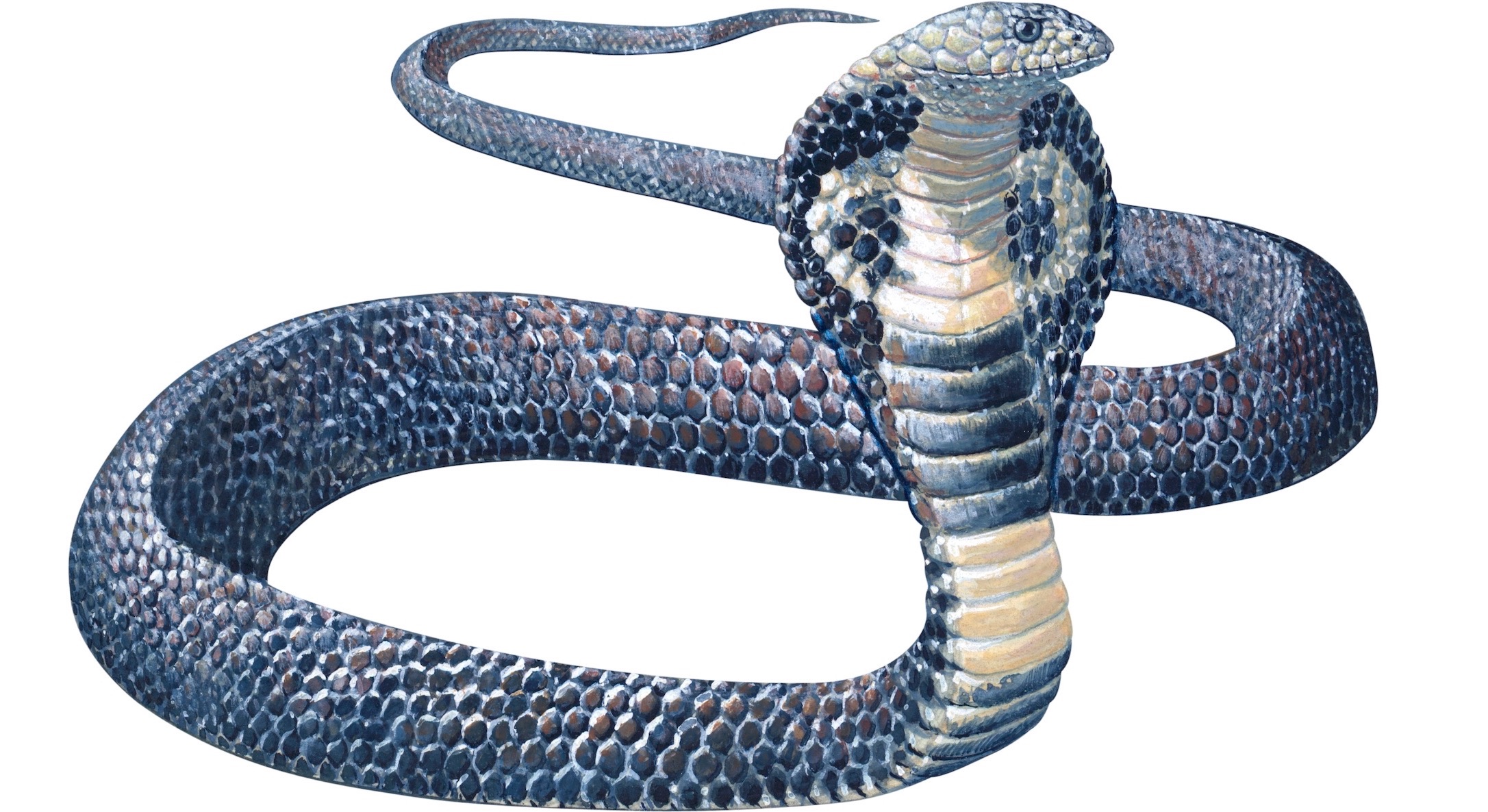
In August 1953, someone in Springfield, Missouri killed a snake in their yard with a garden hoe (which was, apparently, totally normal for Missouri). What was weird was that this snake had raised its head and spread a hood before succumbing to the gardening implement (which was definitely not normal for Missouri). A local pet shop owner claimed the carcass was just a “weird-looking hog nose snake,” but when another odd snake showed up across the street, a local science teacher realized it was a deadly Indian cobra.
That kicked off one of the most bizarre animal panics in American history.
Over the next few months, at least 11 Indian cobras were captured or killed around town, mostly with garden hoes (the weapon of choice for Missourians, apparently). Kids were kept inside, hospitals stocked anti-venom, and the acting city manager drove around blasting “Indian snake charmer music” from a van while armed volunteers prowled the streets. One snake got tear-gassed by police, then shot at five times, and still escaped—only to finally meet its match with a garden hoe (obviously).
The mystery of where these snakes came from went unsolved for 35 years, until a man named Carl Barnett came forward with the truth. When he was 14, the local pet shop owner—the same one who suspiciously misidentified the first deadly cobra—cheated him in a business deal. The boy had been trading in local snakes for exotic aquarium fish, but one of the fish he received turned out to be a dud that died immediately. He decided to get some revenge by opening a crate behind the shop and releasing what he (supposedly) thought were local snakes. Turns out they were venomous cobras, and his teenage tantrum nearly got people killed. Listen to hear how one kid’s bad day became an international news story.
FACT: Scientists accidentally invented seabird toilet TV
Two Japanese scientists just wanted to study how streaked shearwaters run on water to take flight. Simple enough, right? They strapped matchbox-sized cameras to 15 birds, pointing backward at their legs. Their footage showed 36 hours of some of the most regular bowel movements in the animal kingdom.
These Pacific seabirds poop more than five times an hour—every four to 10 minutes—like clockwork. They’re so regular they make Jamie Lee Curtis’s Activia commercials look amateur. But here’s the weird part: they almost never poop while floating on water. Instead, they’ll take off into flight, drop their load mid-air, and immediately land again within a minute, if they’ve got nowhere else to be. It’s like they’re taking bathroom flights.
Remember, birds don’t have separate plumbing. Everything comes out of one all-purpose hole called the cloaca in a chunky white paste that’s both poop and pee combined. And these birds are producing 5 percent of their body weight in waste every single hour. That’s not just gross—it’s environmentally crucial. All that airborne guano is nature’s marine fertilizer, and scientists have been vastly underestimating how much seabird poop is actually fertilizing our oceans and coastlines. Listen to learn why these flying poop machines might be ocean heroes in disguise.
FACT: Chameleons have built-in rangefinders in their eyeballs
By Sarah Gailey
This week’s episode featured return guest Sarah Gailey (remember hippo ranching?) in honor of their new book “Spread Me,” which has been described as “John Carpenter’s The Thing but horny and with new forms of lichen.”
For their weird fact, Sarah decided to give us the 411 on chameleon eyes.
Pop quiz: when you picture a chameleon’s face, what are you actually looking at? If you said “eyeballs,” you’re wrong—you’re looking at fused eyelids with tiny pinholes where the pupils peek through. Their actual eyes are permanently sealed behind scaly skin, which sounds like a nightmare but is actually a great vision hack.
Unlike humans, who need two eyes working together for depth perception, chameleons process distance information independently with each eye using built-in biological rangefinders. They have a concave lens inside each eye that works with their convex cornea to create the same focusing system you’d find on a fancy camera. When a chameleon spots a bug, tiny muscles adjust the lens until the target is perfectly in focus, and that adjustment tells them exactly how far away dinner is.
This matters because chameleons hunt by ballistically launching their tongues like slingshots, using a tapered bone in their throat as a ramp. One scientist in the 1960s proved this whole system by crafting tiny monocles for chameleons—half made them nearsighted, half farsighted—and watching them consistently miss bugs by the exact distance the lenses changed their focus. Listen to hear why chameleon eyes might actually be superior to human ones. As a bonus, you’ll also hear a deeply philosophical discussion about whether it’s better to eat a whole guy or just a bite of one.
