
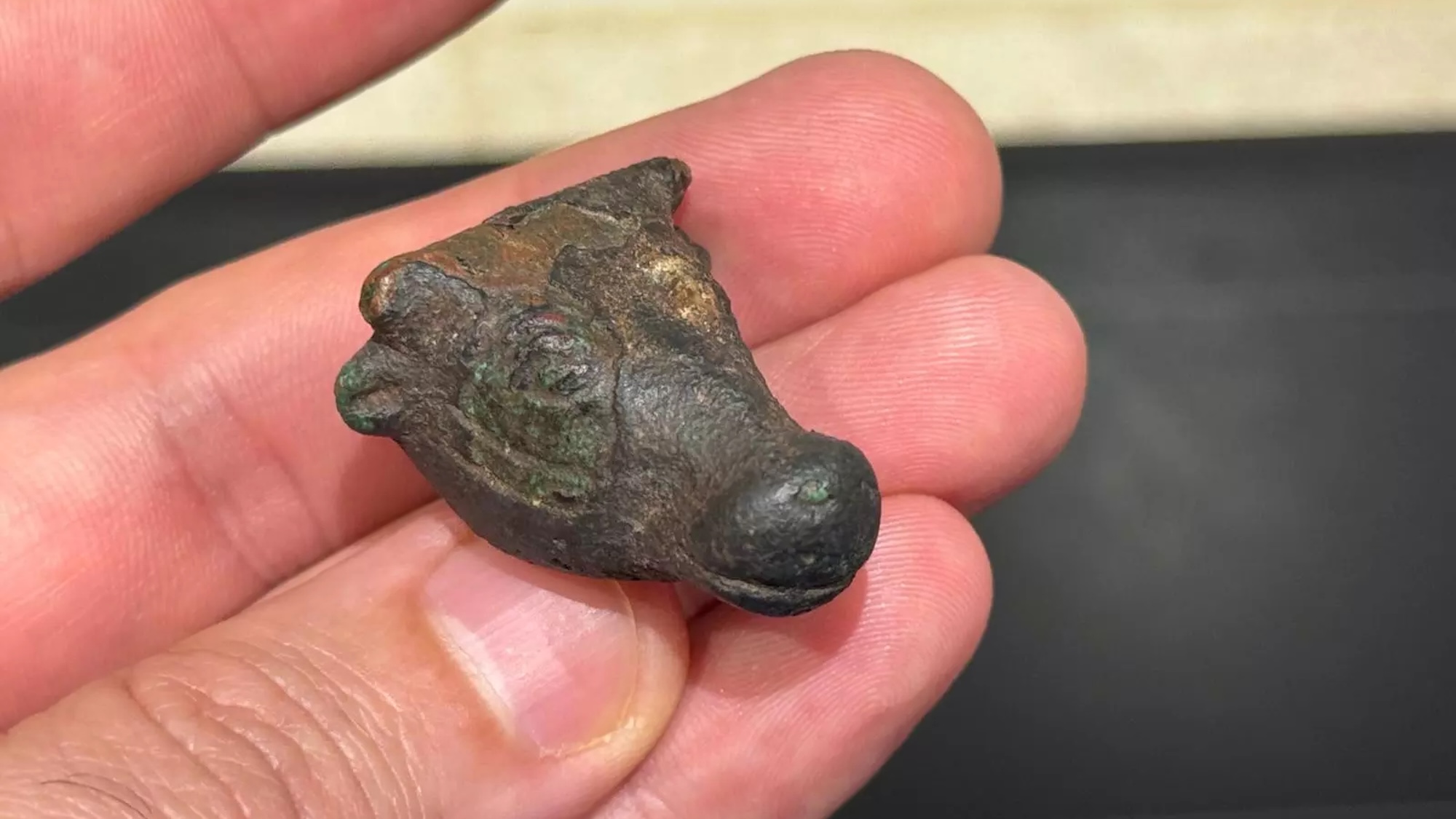
A hiker recently noticed an out-of-place object in his path while trekking through the hills of Mallorca, Spain. After reviewing the artifact, archaeologists now believe the 1.25-inch-long relic is a rare example of a metal bull sculpture that dates back over 3,000 years.
“This small bronze piece could be part of a larger object: either the head of a small statuette or a decorative motif originally affixed to the horn of a larger bull’s head,” archaeologist Jaume Deyà told Diario de Mallorca in a statement translated from Spanish.
The artisans crafted the piece—known as a tauriform—during the post-Talaiotic period (550–123 BCE).
Emerging from the earlier Talaiotic era (850–550 BCE), the Bronze Age cultures are named for their monumental stone towers called talaiots. The post-Talaiotic period is particularly known for innovations in pottery, fortified architecture, and metallurgy. Bulls featured prominently throughout prehistoric Mediterranean agrarian communities, often as symbols for seasonal cycles, strength, and especially fertility.
The most recent find is the first of its kind in 50 years, and especially important for archaeological efforts on Mallorca. Three other tauriforms have been documented on the island, but they have all since gone missing. What’s more, finding an artifact like the tauriform out in the open is extremely rare.
“It is unusual—and indeed difficult—to stumble upon a piece like this,” Deyà explained, who likened it to his previous discovery of a remarkably preserved Talaiotic sword in 2019.
The hiker’s discovery is now in possession of the Consell de Mallorca, where researchers will conduct more extensive analysis of the artifact. However, unlike the trio of long-lost tauriforms, this one is destined for public display in a yet-to-be-determined museum.
“I am deeply grateful to [the hiker] for seeking out the proper channels to ensure the protection of this piece—an object that truly belongs to the public domain, to be enjoyed by everyone,” said Deyà.
