
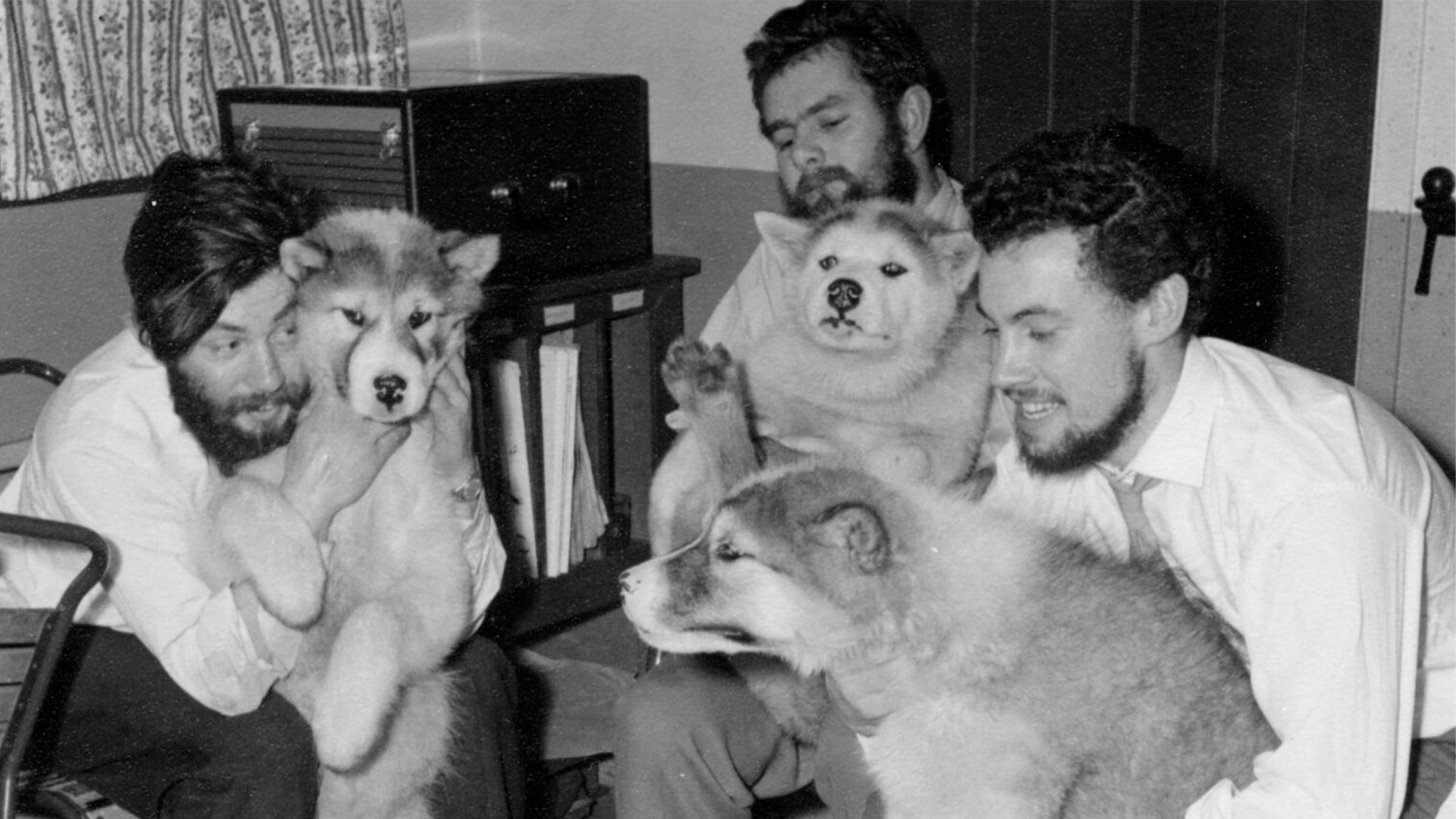
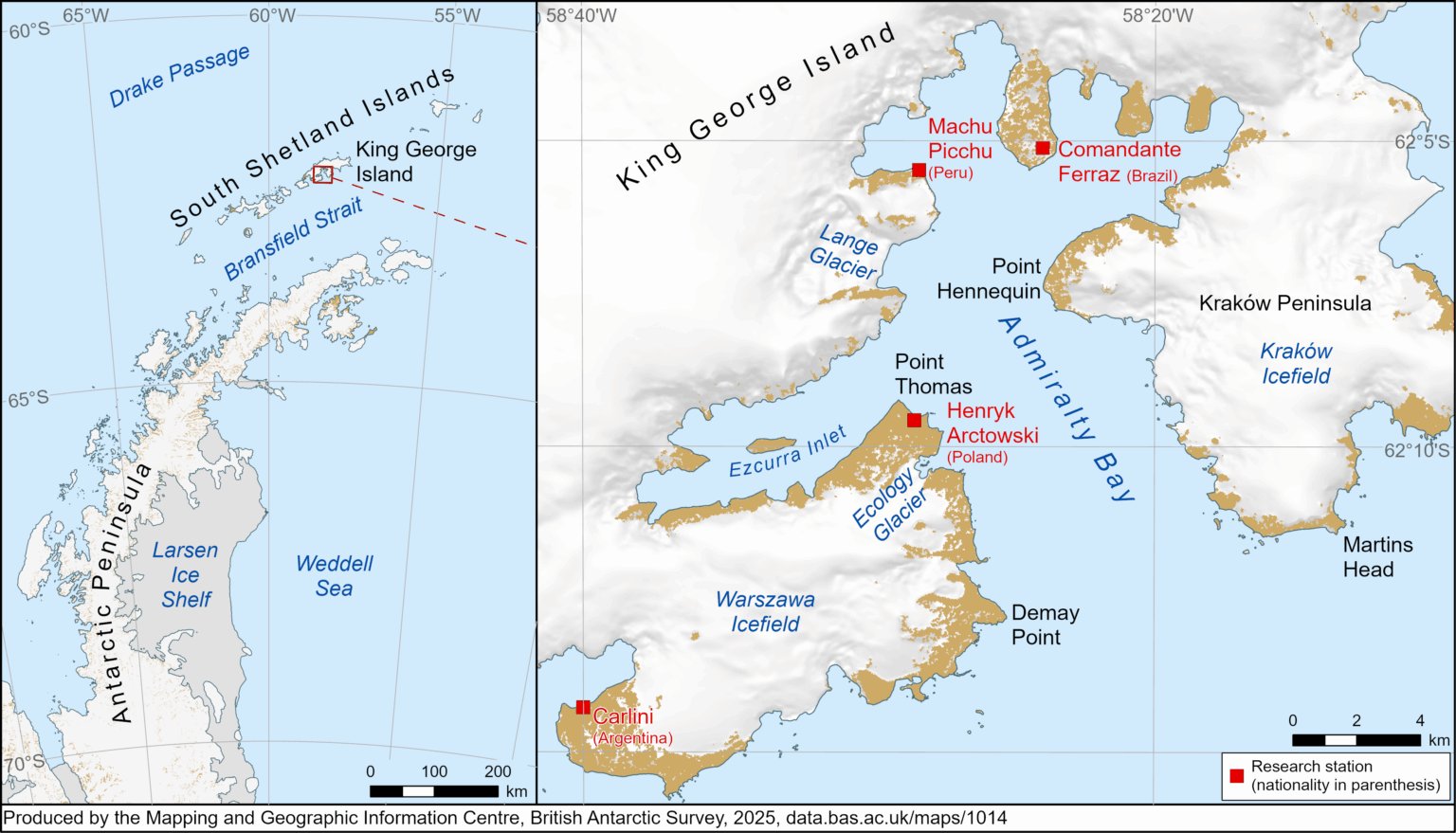
The remains of an Antarctic researcher who went missing in 1959 have finally been found. A team from the Henryk Arctowski Polish Antarctic Station uncovered the body of Dennis “Tink” Bell among rocks exposed by a receding glacier. Bell was a 25-year-old British meteorologist who died on a glacier at Admiralty Bay on King George Island on July 26, 1959.
In addition to the remains, the team recovered over 200 personal items, including bits of radio equipment, a flashlight, a wrist watch, knife, ski poles, and a pipe stem. The British Antarctic Survey (BAS) sent the remains to Kings College London for DNA testing. Forensic geneticist Denise Syndercombe Court confirmed a match with samples from his living brother David Bell and his sister Valerie Kelly. According to Syndercombe Court, they are “more than one billion times” more likely to be related than not.
“When my sister Valerie and I were notified that our brother Dennis had been found after 66 years we were shocked and amazed,” David Bell said in a statement. “The British Antarctic Survey and British Antarctic Monument Trust have been a tremendous support and together with the sensitivity of the Polish team in bringing him home have helped us come to terms with the tragic loss of our brilliant brother.”
Who was Dennis Bell?
Dennis Bell was raised in Harrow northwest London and was the oldest of three siblings. His brother David said that Dennis, “was my hero as he seemed to be able to turn his hand to anything, servicing petrol engines, photography including processing his own films.”
Dennis built a radio from scratch and studied Morse code for hours. He was also interested in theater, scouting, and food.
“Dennis loathed organised sport; he just could not see the point,” David remembers. “He would rather have a social drink with his family and friends with plenty of laughter.”

Dennis Bell joined the Royal Air Force for National Service and initially trained as a radio operator. Ever eager for more adventure, he joined the BAS’ predecessor, the Falkland Islands Dependencies Survey (FIDS) in 1958. As a meteorologist, he was stationed for a two-year assignment at Admiralty Bay. The small base housed 12 men on King George Island, which lies about 75 miles off the northern coast of the Antarctic Peninsula. The peak of King George Island rises about 2,624 feet and is permanently glaciated. Admiralty Bay is about 12 miles long and three miles wide and is surrounded by mountains and sea ice for nine months of the year.
Dennis was known on base for his big personality. Colleague and friend Russel Thomson says that Dennis was known for his humor and “tremendous, tremendous character,” on the remote base.
[ Related: Many glaciers aren’t as thick as we thought. ]
The tragedy
On July 26, 1959, four men and two dog sleds left base to climb the glacier leading to the ice plateau. Their goal was to carry out various surveys and geological work. Dennis Bell was paired with surveyor Jeff Stokes, while meteorologist Ken Gibson traveled with geologist Colin Barton. Bell and Stokes started out about 30 minutes ahead of Gibson and Barton.
While ascending the glacier, Bell and Stokes negotiated a crevassed area that they thought was clear. However, the deep soft snow made it difficult to cross and the dogs showed signs of fatigue. To encourage the pups to keep going, Bell went ahead. However, he left without his skis. He suddenly disappeared, leaving a gaping hole in the crevasse bridge.
In his book Of Ice and Men, former BAS director Sir Vivian Fuchs describes the harrowing story of Bell’s death.
“Peering into the depths, Stokes called repeatedly and was greatly relieved to be answered. Lowering a rope almost a hundred feet, he told Bell to tie himself on. As he could not haul up the weight, he hitched his end of the rope to the team. The dogs took the strain and began to pull. Now it was easy and everything was going well. But Bell had tied the rope through his belt instead of round his body, perhaps because of the angle at which he lay in the crevasse. As he reached the top his body jammed against the lip, the belt broke, and down he went again. This time there was no reply to Stoke’s calls. It was a particularly tragic fatality which one really felt should never have happened, and thus doubly grievous.”
Eventually, Gibson and Barton met Stokes coming down the glacier. When they climbed back towards the crevasse, the weather began to deteriorate. Within minutes, the trip was facing almost blizzard conditions. Stokes had set up markers and taken bearings on the surrounding peaks, but they could not see much through the flying snow. Even in these horrible conditions, they kept searching for where Dennis had fallen through the ice. Ken Gibson remembers “It was probably twelve hours before we found the site and there was no way he could have survived.”
The find
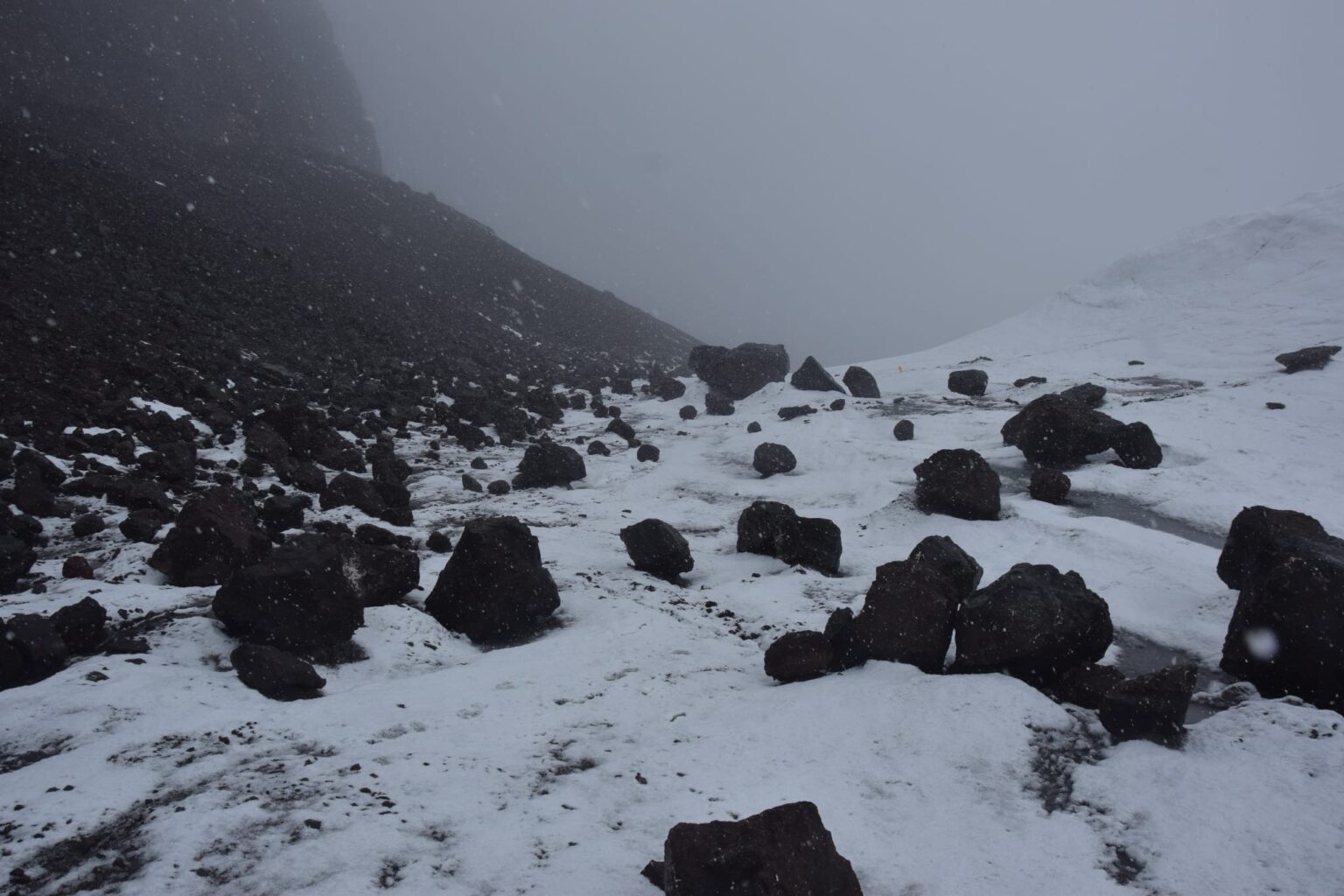
Dennis Bell’s remains were discovered by personnel from the Henryk Arctowski Polish Antarctic Station on the Ecology Glacier on January 19, 2025. The team recorded the collection, gathered what they could, and returned to the Arctowski Station. From February 9 through 13th, a team including an archaeologist, geomorphologist, anthropologist, and glaciologist, undertook a more extensive survey of the area. This in-depth survey helped them recover bone fragments and artifacts.
“The confirmation of the remains found on Ecology Glacier as those of Dennis ‘Tink’ Bell is both a poignant and profound moment for all of us at British Antarctic Survey,” BAS director Dame Jane Francis said in a statement. “Dennis was one of the many brave FIDS personnel who contributed to the early science and exploration of Antarctica under extraordinarily harsh conditions. Even though he was lost in 1959, his memory lived on among colleagues and in the legacy of polar research. This discovery brings closure to a decades-long mystery and reminds us of the human stories embedded in the history of Antarctic science.”
Dennis’ family will now decide how to mark his memory. Bell Point on King George Island (located at 62° 06′ 41” S 58° 51′ 56” W) is also named for Bell’s honor.
