
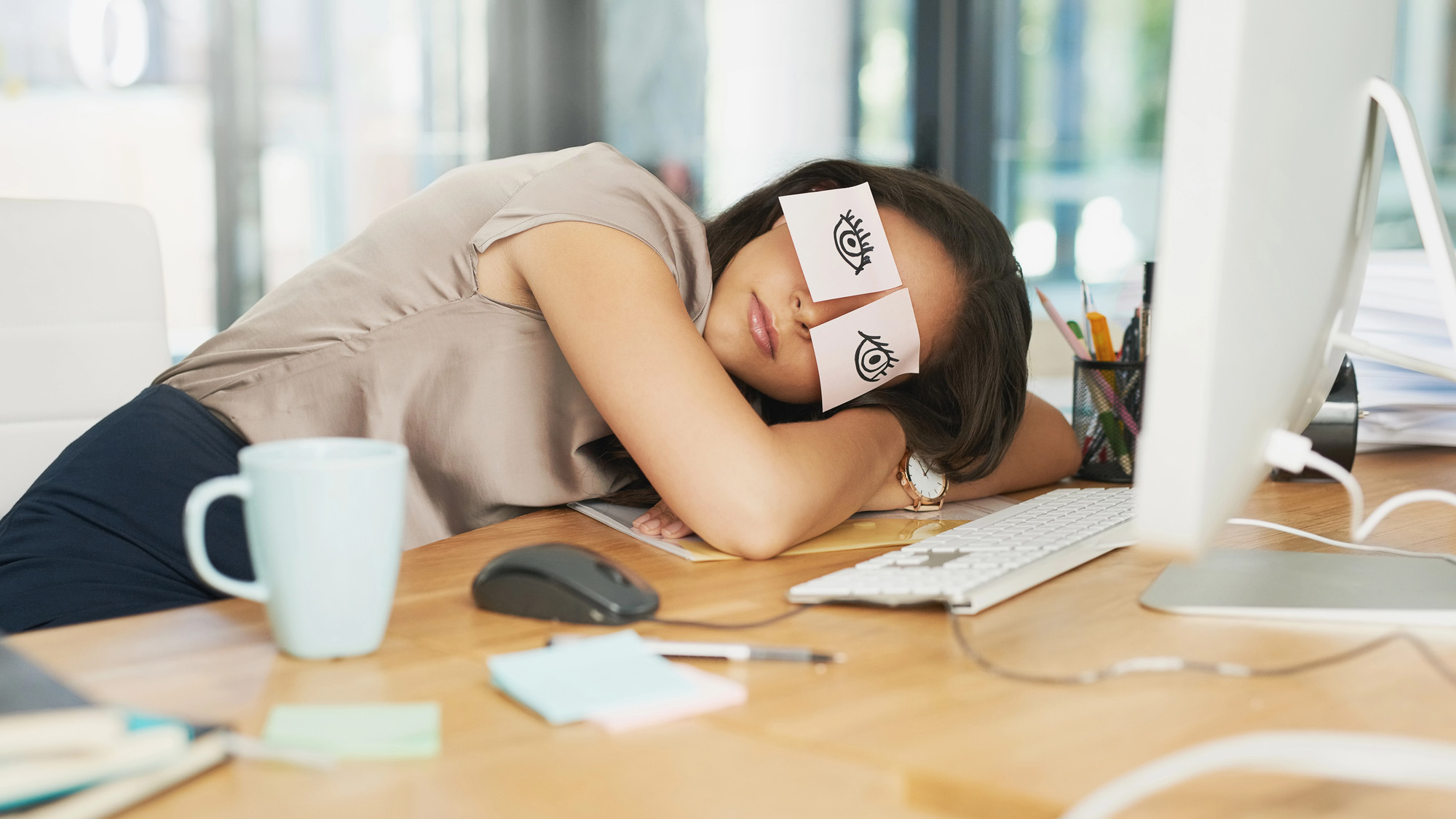
Hours before sunrise, society’s earliest larks begin their day. Tales of Apple’s Tim Cook attending to his email at 3:45 a.m., novelist Barbara Kingsolver writing furiously at 4 a.m., and Michelle Obama starting her gym workout at 4:30 a.m. headline the early bird media fanfare. Early risers are the most celebrated in America’s optimization-obsessed culture that has decided the key to success is being up far before the sun.
But there’s a lot these “aspirational” narratives leave out, like the fact that pre-dawn wake-ups only work if you’re wired for early rising—they can be downright unhealthy if you’re not.
What is your chronotype?
Sleep and wake-up schedules are based on something called chronotype. Your chronotype is your biological inclination to fall asleep and wake up at certain times. And everyone has a different one: there are larks (early to bed, early to rise), doves (in the middle, this is most people), and owls (late to bed, late to rise).
Chronotype is not only a blueprint for when you’ll get good sleep, but also for what time your brain works best, and the most appropriate times to eat meals. According to experts, schedules are far from one-size fits all. When we regularly go against our body clock, we end up with a condition called social jetlag.
What is social jetlag?
Social jetlag is the difference in sleep times between work/school days and free days. Coined in 2006 by Professor of Chronobiology Dr. Till Roenneberg at Ludwig-Maximilian University in Munich, the term points to the idea of being between two time zones: that of your body clock and that of society’s clock.
Social jetlag can arise from continually needing to wake up for work before your body is ready or from staying out too late because your friends are all late-night barflies. The consequences of social jetlag exceed just needing a cup of coffee. According to research, people with chronic social jetlag can suffer from a roster of health problems.
“[For] practically every pathology or health deficit that we look at, the more social jetlag you have, the higher your probability of developing it,” Roenneberg tells Popular Science.
Your biology determines your ideal wake/sleep schedule
Modern society is organized for early chronotypes, a subset of the population that only accounts for approximately 15 percent of people. For the rest of us (doves at 70 percent and owls at 15 percent), our alarm clocks go off in the middle of our biological night. Roenneberg describes this disparity as “biological discrimination.” He says late types have a significant disadvantage at school when they are young.
“The late types are not as good in high school and college as they are later when they can choose their own work times,” he says. And even if night owl students are able to function before their biological morning has even begun, they’re still at an academic disadvantage. They are cheated out of the essential part of their sleep in which their brains consolidate what they learned the day before.
Morning entrance exams for universities and medical schools also skew in favor of early types. And while larks excel in the morning hours, they too are negatively affected by traditional work hours, only later in the day. According to Roenneberg, research has shown that productivity and effectiveness can take a nosedive for early types in the afternoon.
“We have all these early type doctors who actually make a lot of mistakes when it gets to the afternoon,” he says, referencing a 2018 study that examined surgery mortality rates and time of day.
Related 'Ask Us Anything' Stories
Do you need more sleep in fall and winter? Probably.
Is sleeping outside good for you? Science has a clear answer.
What causes you to jolt awake right before falling asleep?
Is it better to sleep in cycles?
Why do some people need less sleep?
Can tracking make my sleep worse? The quiet torment of sleep tech.
In addition to impacting sleep and alertness, living against your body clock can also cause you to do things at the wrong times. Mealtimes are a good example of this. If you’re an owl or a dove waking up at 5 a.m. for work, then having breakfast at 6 a.m., you’re eating a meal in the middle of your biological night, which can have a deleterious effect on your metabolism.
This perpetual misalignment makes people with social jetlag more likely to become obese, as well as smoke and drink alcohol. Late chronotypes are dealt the most difficult hand in this way. “For very late types, the chances of developing type two diabetes are higher if they work in a nine-to-five job than if they do a night shift,” Roenneberg says.
Experts recommend eating when you’re hungry, and not just because it’s “mealtime.” Like for sleep, your body will tell you when it’s time. For late types often forced to run around hours before their cells are awake, it’s okay to skip the lark’s early breakfast time and stash something in your bag for later when hunger strikes.
How to reduce your social jetlag
In an ideal world, all of us would schedule our lives around our chronotype. We wouldn’t use alarm clocks. Instead, we’d wake up with our body and go to work at a time when it’s healthiest to do so. Chronobiologists say the entire social schedule should be re-examined. Until then, however, there are things you can do to slightly adjust your chronotype.
“Light is the most important factor for setting the brain clock,” Roenneberg says. Natural light, to be specific. The human world has disrupted this signal with all the time we spend indoors and our ability to turn on artificial light whenever we want; not to mention our use of screens that emit blue light at all hours. Artificial light’s suppression of melatonin, at night or in the morning, makes early types earlier and late types later.
To remedy this, Roenneberg recommends spending time outside. “Get as much light as possible during the day and use as little light—especially blue light—as possible after sunset.” For all types, adhering to the natural light and darkness cycle can help sync your body clock to the sun and reduce your social jetlag.
In Ask Us Anything, Popular Science answers your most outlandish, mind-burning questions, from the everyday things you’ve always wondered to the bizarre things you never thought to ask. Have something you’ve always wanted to know? Ask us.
