
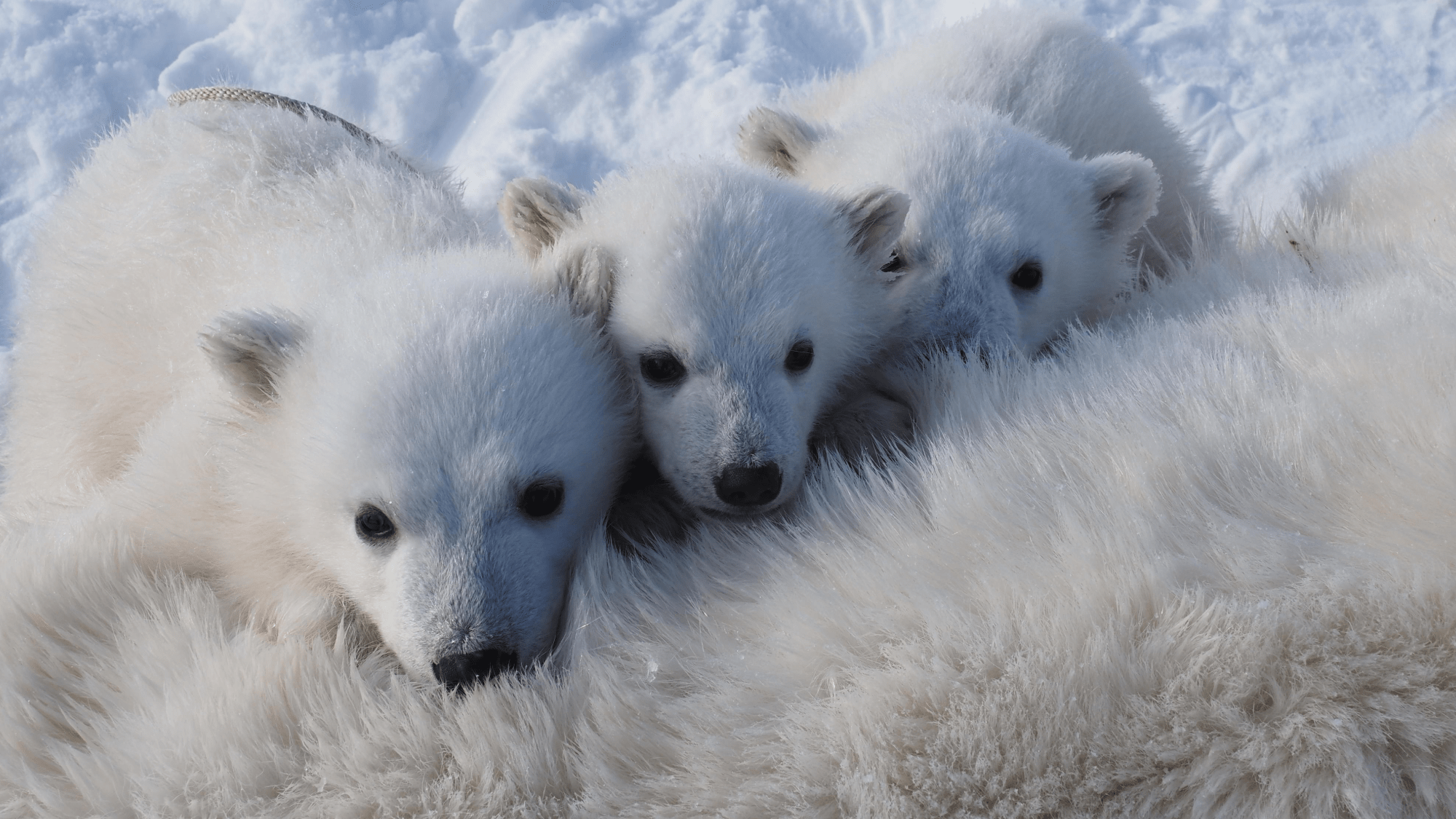
The Arctic’s polar bears (Ursus maritimus) are often the poster species for the perils of climate change. Threatened by rapidly dwindling sea ice and habitat loss as the world warms, over two-thirds of polar bears could go extinct by 2050. Despite the dire situation, polar bear populations on the Norwegian archipelago of Svalbard have improved. The reason could be hidden beneath their fur and in their surroundings. The findings are detailed in a study published today in the journal Scientific Reports.
The Svalbard archipelago is located halfway between the northern coast of Norway and the North Pole. The remote region is home to a seed vault, about 2,100 people, and some unique wildlife—including the world’s smallest reindeer. There are also an estimated 3,000 polar bears and about 300 remain on Svalbard year-round, while others migrate. Internationally, polar bears have been protected from hunting since 1973, so their primary threats are increased temperatures due to climate change, habitat and food resource loss, and encroachment by humans.
Since 1980, temperatures in the Barents Sea region surrounding Svalbard have increased up to two degrees Celsius (about 3.6 degrees Fahrenheit) per decade. However, a 2004 census of the Barents Sea polar bear population counted approximately 2,650 individuals and that number did not shrink in size until recently. The reasons behind the decrease have been unclear.

In the new study, Norwegian Polar Institute polar bear ecologist Jon Aars and colleagues investigated why the Svalbard population has remained so stable.
“Svalbard (and the Barents Sea area) has experienced a much faster loss of sea ice than other areas having polar bears,” Aars tells Popular Science. “The bears are not hunted, they have few competitors when on land, and they may have more alternative prey sources when on land than in most other areas.”
They poured over data from 1,188 body measurement records of 770 adult polar bears taken between 1992 and 2019. They specifically looked at the bears’ body composition index (BCI). BCI indicates the amount of fat reserves and body condition in the bears. The team compared BCI with the number of ice-free days in the Barents Sea region across the 27-year period.
While there were roughly 100 more ice-free days (about four days per year), the sampled polar bears’ BCI increased after the year 2000. According to Aars, this surprising result indicates that their fat reserves increased as sea ice levels decreased.
These improvements in the body conditions might be due to a population increase in the reindeer and walrus that the polar bears eat. The sea ice loss may also lead to more ringed seals gathering in smaller areas of sea ice, which could make polar bear hunting more efficient.

However, the team believes that further reductions in sea ice may negatively affect the Svalbard populations, as it could increase the distances they need to travel to access their hunting ground. This has already been observed in other polar bear populations.
Aars is also interested in studying their land-based diet more and how much energy they have to burn when the sea ice is lower in the summer. He also stresses that more research—particularly long-term research— is needed to better understand how different polar bear populations will adapt to a warming Arctic.
“You need to study the population [if] you want to know how [it] is coping,” says Aaars. “You cannot extrapolate findings from other areas where things may be very different.”
