
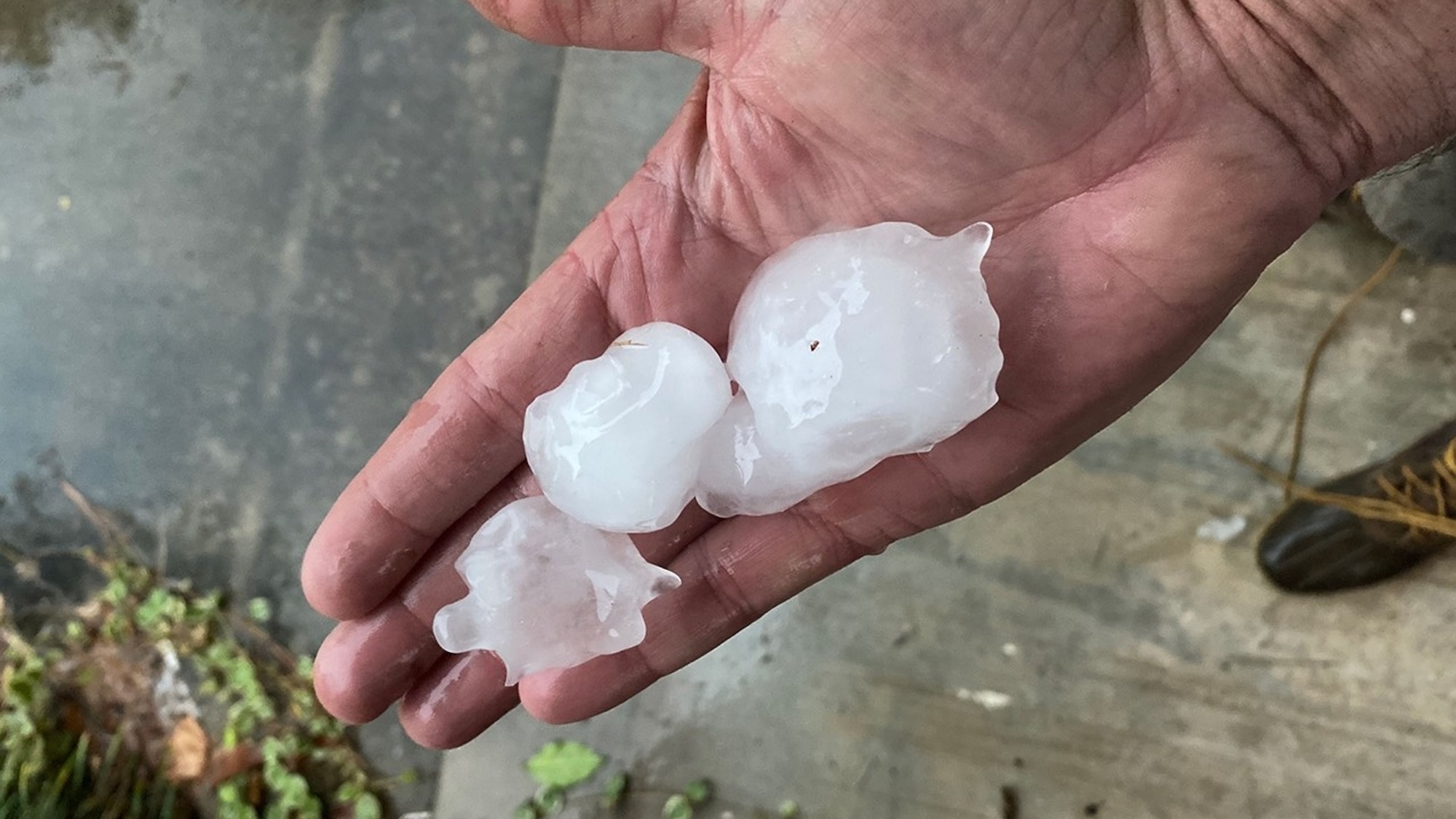
Tuesday March 10th was a particularly punishing day of bad weather for the residents of Kansas City, Missouri. That evening, hailstones as large as grapefruits bombarded homes, businesses, and vehicles in the area, causing widespread damage to the community.
While such weather events remain comparatively rare, severe storms are continuing to strengthen due to climate change. Unfortunately, meteorologists still have a lot to learn about hailstorms in particular. It remains difficult to anticipate the size of ice chunks falling from the sky, and even estimating how hail melts as it careens towards Earth is a challenge.
To improve their understanding and better prepare for future events, NASA researchers are asking the public to help contribute to their ongoing hailstone investigations. And as storm season gears up, there’s no better time to familiarize yourself with the free hail tracking app courtesy of the Community Collaborative Rain, Hail, and Snow (CoCoRaHS) network.
Designed in collaboration with the National Science Foundation and the National Oceanic and Atmospheric Association, the CoCoRaHS Southeast Region (SEaRCH) project relies on volunteer submission reports on local hail events. Users can upload storm details including time, date, location, as well as hailstone photos and measurements directly to the CoCoRaHS app.
CoCoRaHS organizers estimate it only takes five to 10 minutes to finish per event, and free training is available through multiple outlets. Particularly dedicated citizen scientists can take it a step further, too. The SEaRCH app also accepts precipitation measurements using a rain gauge that costs about $42 to purchase.
With the aid of volunteer submissions, NASA scientists are now combining hail reports with archived satellite data to develop and hone hail prediction models, as well as melt profiles of the ice. Melt profiles do more than just improve forecasting abilities. They allow meteorologists to better estimate how various hailstone sizes melt over time.
Curious citizen scientists are encouraged to download the app and start submitting their data as soon as they can—just be sure to wait until a hailstorm is completely over before venturing out to take your measurements. No one wants to be beaned with a cantaloupe-sized ball of ice.
