
Like clockwork, ruby-throated hummingbirds (Archilochus colubris) start showing up at wildlife hospitals throughout the eastern United States every spring. The jewel-toned birds are often brought in after crashing into windows or being attacked by domestic cats.
But when an animal measures just a few inches from beak to tail and weighs about as much as a penny, even basic veterinary care is a challenge. Traditional hands-on exams and imaging tools meant for larger animals often aren’t sensitive enough to detect bone fractures in these diminutive creatures.
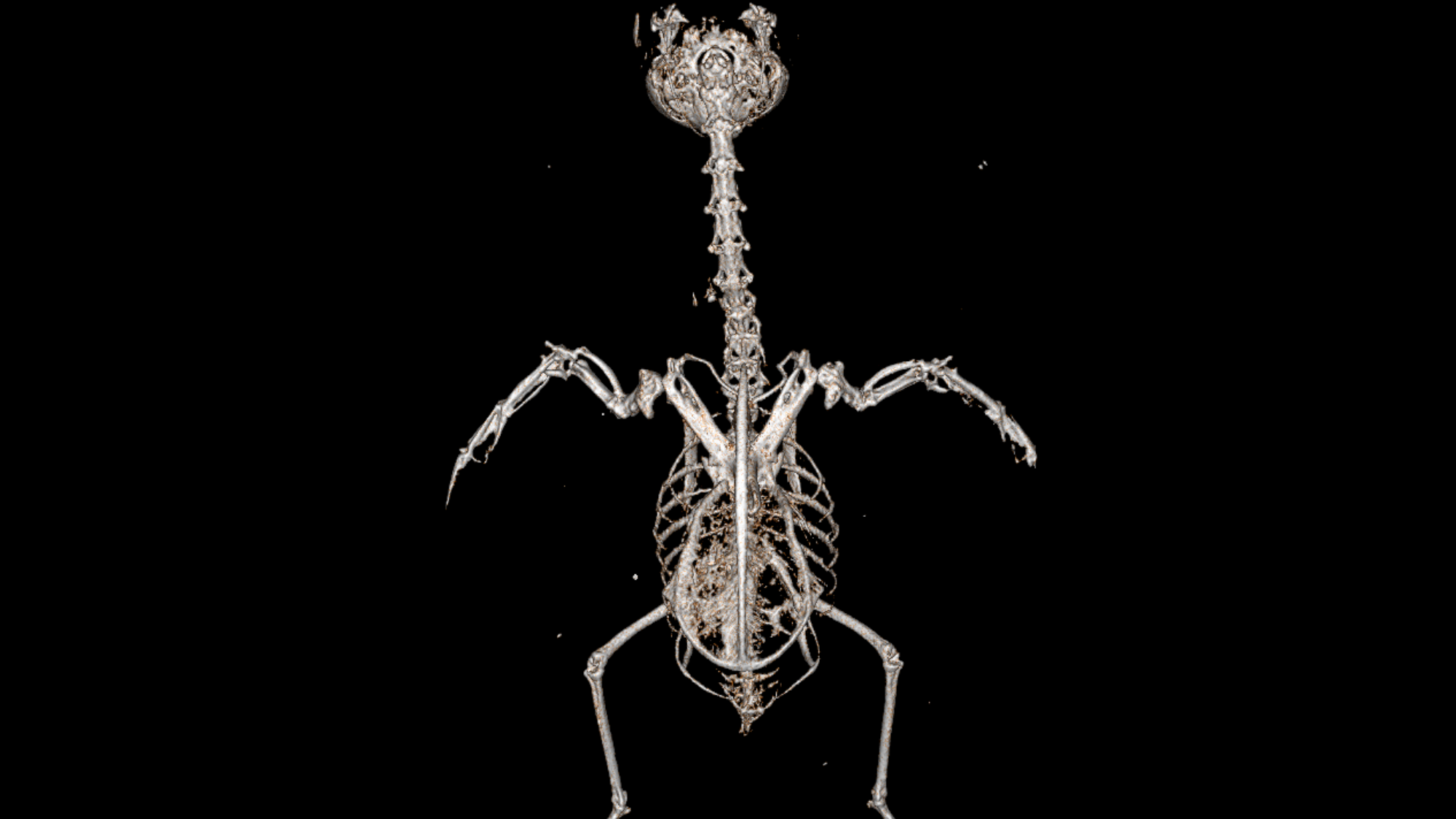
Micro-computed tomography (micro-CT) scanning offers a promising solution to this problem, according to a new study recently published in the journal Animals. A team of researchers at Louisiana State University (LSU) put several commonly used imaging techniques to the test and determined that three-dimensional images created from micro-CT scans are the most useful for detecting fractured bones in these petite patients.

What is micro-CT scanning?
Micro-CT scanning is a non-destructive, non-invasive method used to “see inside” dense objects. It’s most often used on humans or animals, but can also peer inside fossils, rocks, and archaeological artifacts. The machine uses X-rays to capture hundreds of images from different angles, which can then be combined into a highly detailed 3D model. Users can rotate and manipulate these models to examine miniscule, internal structures without harming the item.
While this method is far from perfect, micro-CT scanners may also help get injured hummingbirds on the road to recovery and, ideally, back into the wild.
“This is just an example of how we can use the tools that are available to us to better improve the way we manage wildlife,” Mark Mitchell, a study co-author and a veterinarian at LSU, tells Popular Science. “These animals play such an important role in our ecosystems—every species does—and it’s important for us to protect them… It doesn’t matter to me if I’m dealing with a mallard duck or a bald eagle or a hummingbird, I want to do all that I can do to rescue them.”
A beloved seasonal visitor
Ruby-throated hummingbirds are beloved seasonal visitors to backyard feeders and flower gardens. After wintering in Central America, they typically return to the eastern U.S. to breed in late February and early March. As with other hummingbird species, males sport flashier plumage than females. When the light hits just right, their throat feathers blaze iridescent red. Both sexes have emerald-green feathers on the back and head.
Above all else, ruby-throated hummingbirds are tiny. Their wingspans measure between three and four inches, and they weigh just a fraction of an ounce. “These animals are smaller than my thumb, so getting exams done sometimes can be a challenge,” Mitchell explains.

But when veterinarians can confidently detect fractures, it means they can stabilize the bones using tools like splints. According to Mitchell, hummingbird bone fractures can heal as fast as one to two weeks, due to the birds’ high metabolism. With this in mind, it’s important for veterinarians to ensure the bone is set properly.
“If it heals incorrectly, unfortunately, our options are limited to euthanizing the animal,” says Mitchell. “We want to minimize the likelihood that we have to make those decisions. We really want to try to get every one of these animals back to where they belong.”
Bird meets scanner
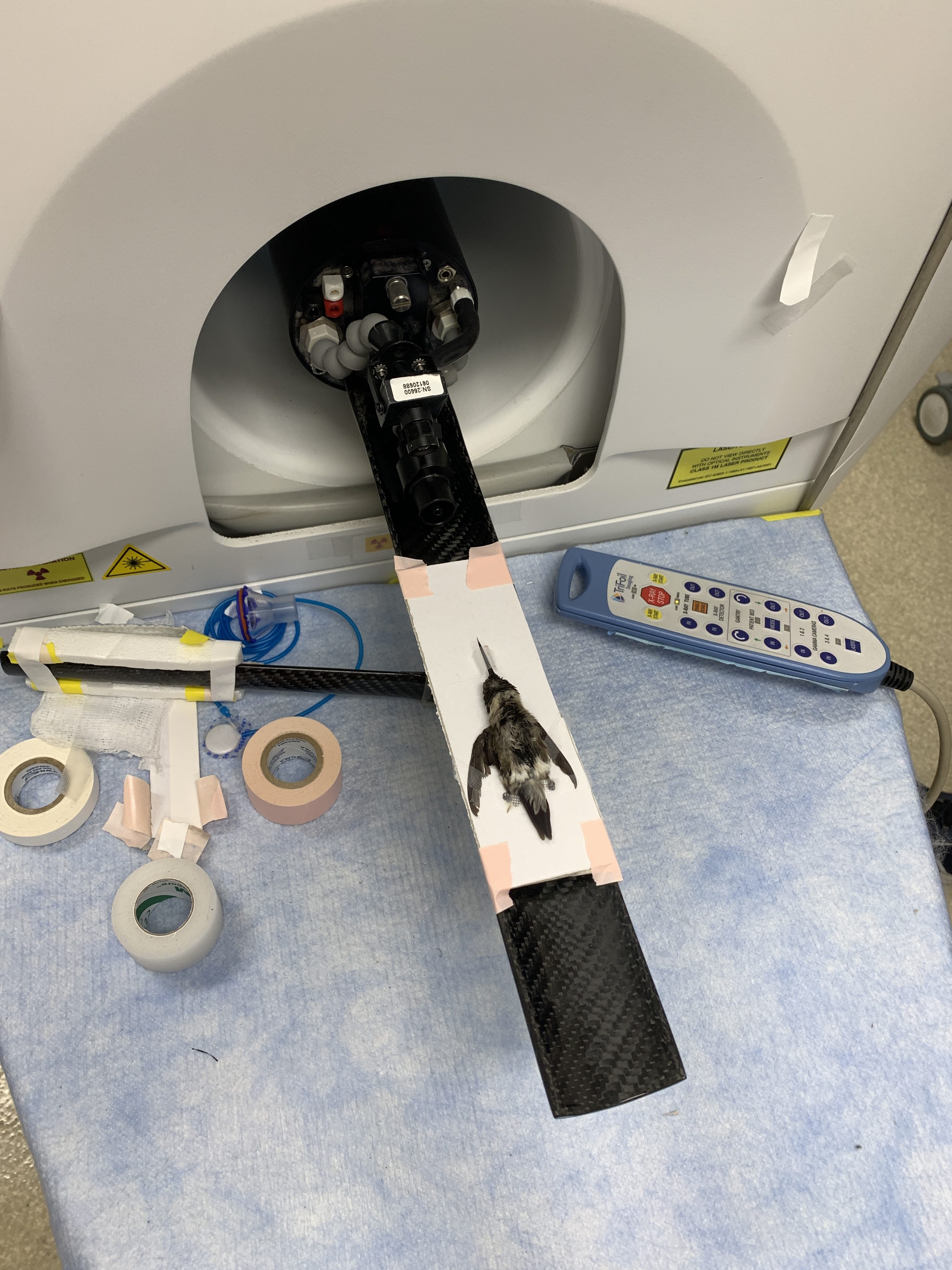
In this new study, Mitchell and his colleagues set out to investigate which imaging methods are best for detecting bone breaks in the birds’ delicate skeletons. They imaged the bodies of 16 hummingbirds that had died in the hospital using four techniques: standard X-rays, dental X-rays, micro-CT scans, and three-dimensional images created from micro-CT scans. Then, they asked six veterinarians with different specialties and varying levels of experience to review the images and report any fractures they spotted.
For comparison, the team used dermestid beetles to remove the birds’ soft tissues, and then directly examined each skeleton to make a final diagnosis. More than half of the birds had fractures somewhere in their wings or bodies, and four had fractures in multiple locations.
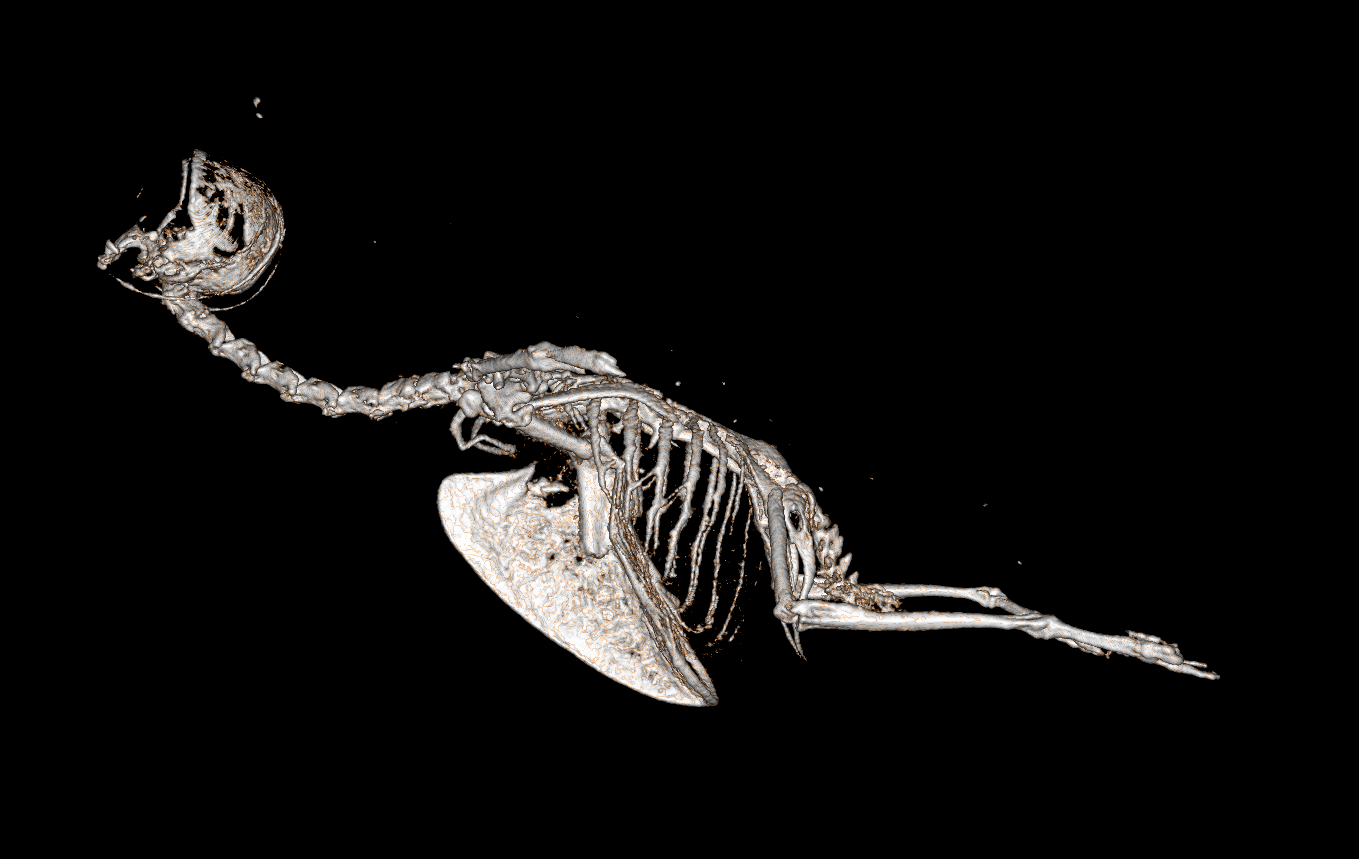
The advanced imaging methods—especially the 3D reconstructions created from micro-CT scans—produced the most accurate diagnoses and the strongest agreement among the veterinarians. However, even with these more sophisticated tools, the veterinarians still missed some very small fractures, which suggests micro-CT scans have limitations.
Even so, the findings suggest a clear path forward for veterinarians who treat hummingbirds and small pet birds: If they have access to and can afford to use one, a micro-CT scanner is the way to go.
No matter which imaging technique veterinarians choose, the findings suggest they should proceed with caution. If they don’t see any fractures initially, but they suspect their miniature, winged patient might have a broken bone or two, they should probably take a second look, ideally using more advanced imaging tools.
“This research provides the vital clinical reality and the scientific basis for why we cannot rely on a single radiograph, and why repeated examinations or alternative diagnostic approaches are needed,” Haerin Rhim, lead author and a postdoctoral fellow at LSU, said in a statement.
What to do if you find an injured hummingbird
Ruby-throated hummingbirds will soon be returning to the eastern U.S. If you find an injured hummingbird, first give the creature a few moments to regain its bearings before springing into action. “What happens in most of these cases is somebody will hear what sounds like a knock on a window and go find a hummingbird that has stunned itself,” Mitchell says. “Sometimes, those birds just need a little time to regain their bearings, because they basically develop a moderate to significant concussion.”
If the bird does not try to fly away after a few minutes, then you should contact your state wildlife agency or a local licensed rehabilitator. In the meantime, pick up the bird using a small towel, place it in a box with airholes, and keep it in a dark place at an appropriate temperature until the creature can be transported, Mitchell says.
Resist the urge to try to treat the bird yourself—leave that job to the professionals. Ruby-throated hummingbirds are protected by the Migratory Bird Treaty Act, so it’s illegal for unlicensed individuals to rehabilitate them, Mitchell notes. Additionally, you may end up doing more harm than good.
“A lot of people are acting out of the kindness of their heart, but we routinely get animals that people have tried to treat and we end up having to euthanize them because the injury healed in a way that makes them not releasable,” he says.
In Ask Us Anything, Popular Science answers your most outlandish, mind-burning questions, from the everyday things you’ve always wondered to the bizarre things you never thought to ask. Have something you’ve always wanted to know? Ask us.
