
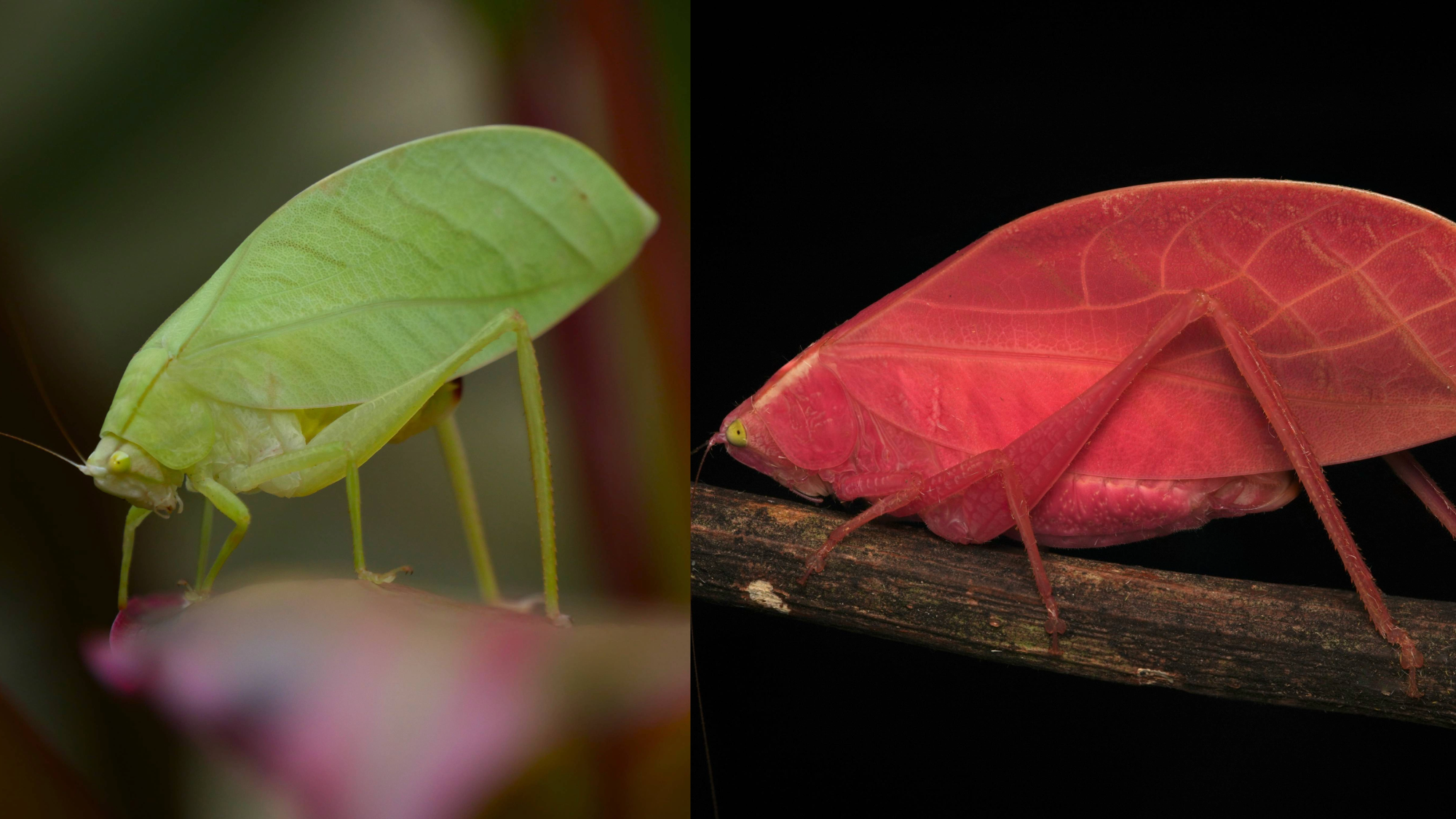
In the pitch black hours nearing midnight last March on Barro Colorado Island in Panama, a team of scientists came across a startling discovery: a hot pink leaf-masquerading katydid (Arota festae), striking a pose in the glow of a research station light.
Leaf-masquerading katydids are camouflage insects that usually resemble green leaves to ward off predators. Pink ones are a rarity among the rainforest-dwelling species, so the researchers kept the adult female bug under observation. Eleven days later, she was green.
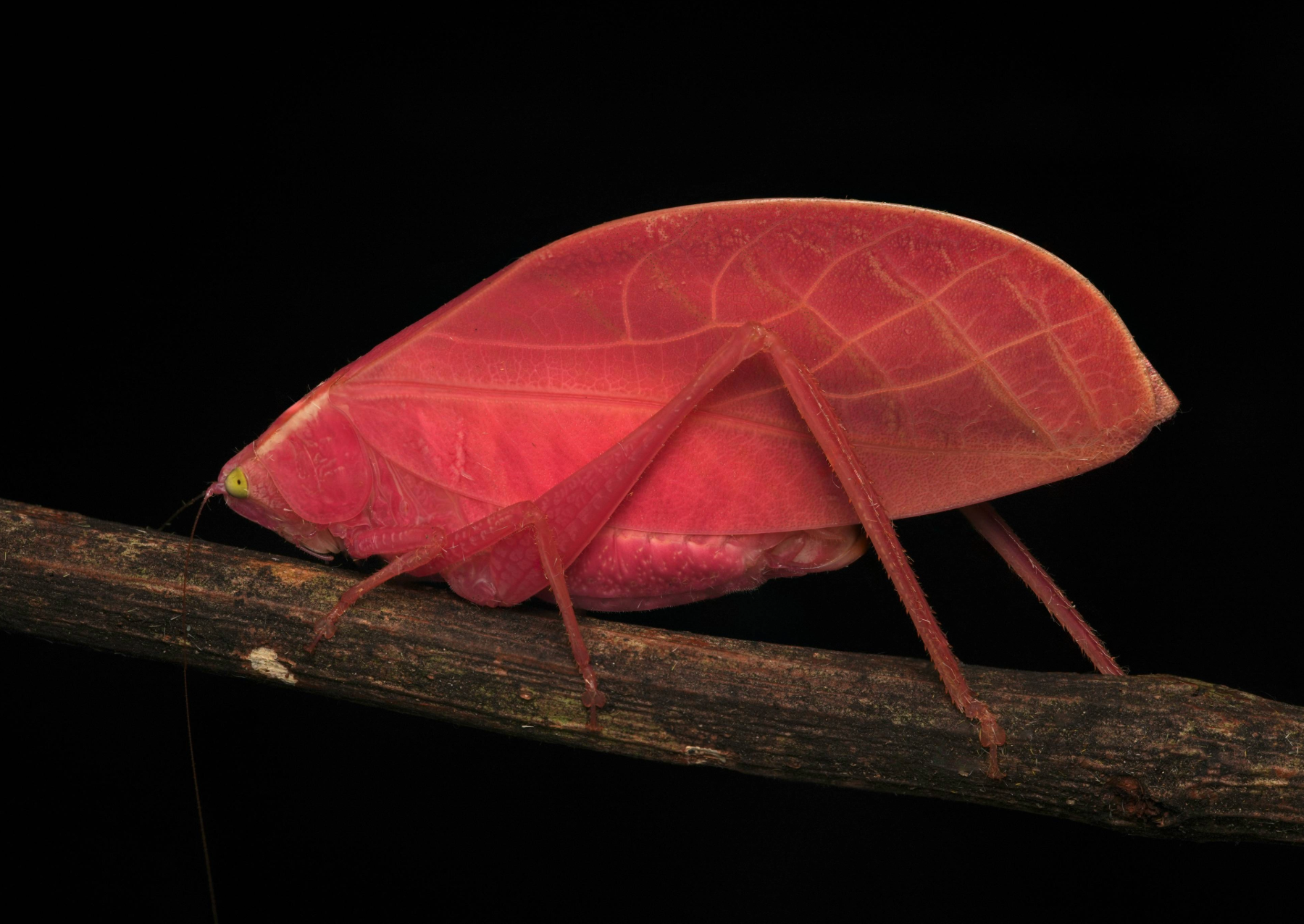
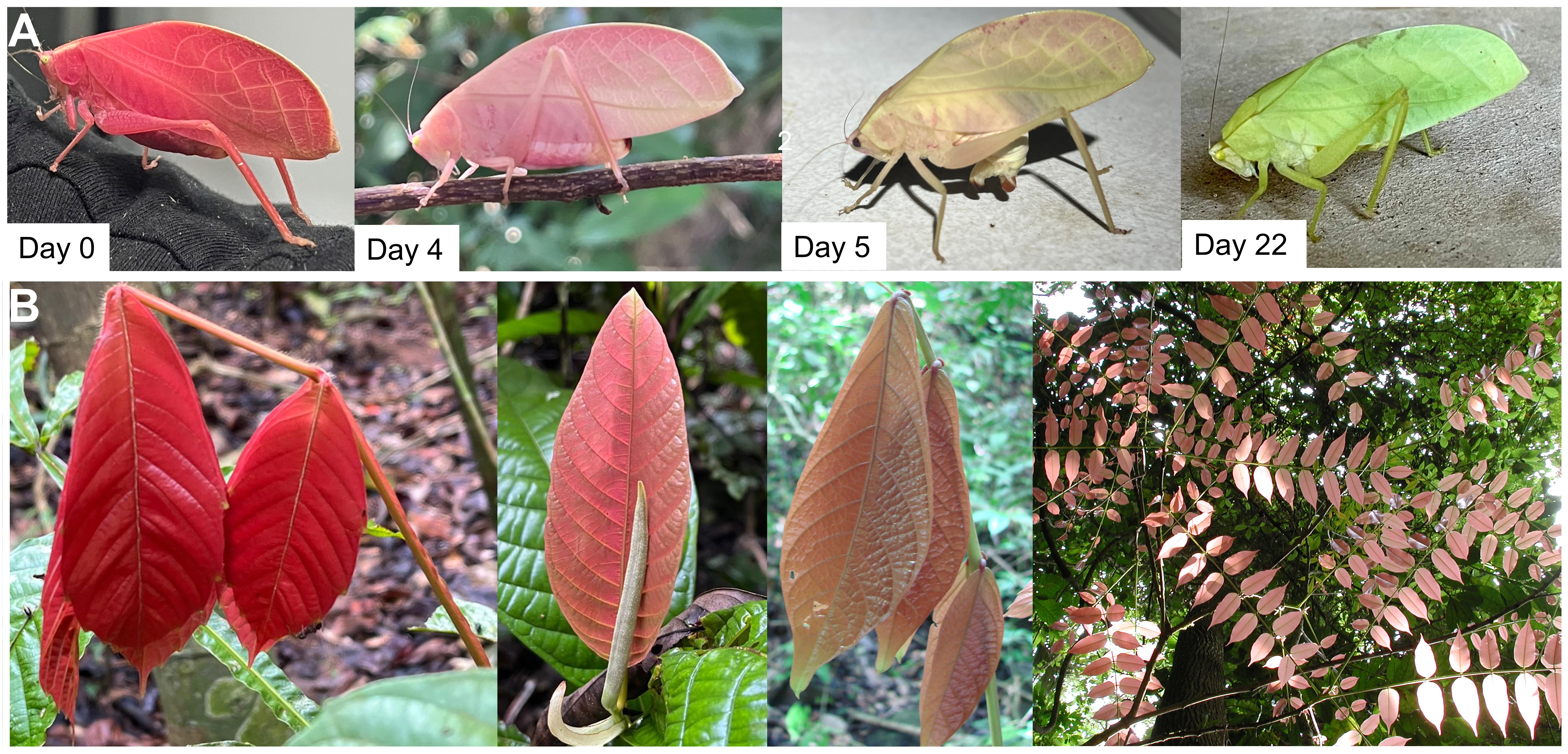
Researchers say it’s the first time a katydid has been observed completing a full color shift within a single adult life stage. Previously, scientists considered pink katydids to be rare, disadvantageous mutants. The team that found this color-changing insect believes that its hot pink-to-green transformation could have evolved to mimic “delayed greening” in rainforests, which occurs when budding tropical leaves mature from pink or red to green. The findings are described in a study recently published in the journal Ecology.
“Rather than a bizarre genetic quirk, this may actually be a finely tuned survival strategy that tracks the life cycle of the rainforest leaves this insect is trying to resemble,” Benito Wainwright, a biologist at the University of St Andrews in Scotland and lead author of the study, said in a press release.
Over 30 days, the research team observed the hot pink insect at natural ambient temperatures and humidity. By day four, the bug’s bright pink body had faded to a pastel pink. By day 11, it was indistinguishable from the standard green version.
The scientists also considered whether the vibrant coloration could act as a deterrent to predators, such as birds, bats, and frogs, reducing the likelihood of attack. Further study of these hot pink katydids, including experiments so the team could determine whether the insects are using pink coloration for camouflage or as warning signals, could help explain why they are changing colors.
“You would think that a bright pink insect in a mostly green forest would stand out to predators, like a worker in a high-vis jacket,” added Matt Greenwell, a co-author and researcher at the University of Reading. “The idea that an insect might gradually shift color to keep pace with the leaves it mimics shows how dynamic the rainforest can be, and is a remarkable example of camouflage in action.”
