

I think a lot about productivity. I rarely feel productive. I don’t think I’m alone.
Our culture is full of all kinds of ideas about how to get the most done and a lot of it isn’t true. We believe things like that multitasking will help us get more done. And sometimes our bosses believe things that aren’t true, like how wonderful open offices are for increasing communication.
Here are three common productivity myths, alongside studies that help us see what the research says.
Multitasking isn’t faster than focused work
Multitasking gets things done faster than focusing on one thing at a time. Right? Research suggests not.
Every time you switch from one task to another there is a slight time cost, according to the American Psychological Association. “Although switch costs may be relatively small, sometimes just a few tenths of a second per switch, they can add up to large amounts when people switch repeatedly back and forth between tasks,” the organization stated. “Thus, multitasking may seem efficient on the surface but may actually take more time in the end and involve more error.”
This is backed by decades of research. A widely cited 2001 study published in the Journal of Experimental Psychology by researchers at the Federal Aviation Administration and the University of Michigan tested subjects on two different kinds of tasks: visual pattern classification and math problems. They found that “reliable mean switching-time costs occurred, and their magnitudes increased with the complexity of the rules needed for performing the tasks between which participants had to switch.” Which is to say, switching from one task to another takes time, and it takes up even more time when the tasks are complex. The effect is worse if you’re switching from a familiar task to an unfamiliar one, the study states.
You might think you can get better at multitasking with practice, but research suggests the opposite. A 2009 study published in the Proceedings of the National Academy of Sciences by researchers at Stanford University found that “heavy media multitaskers performed worse on a test of task-switching ability, likely due to reduced ability to filter out interference from the irrelevant task set.”
Basically, humans can’t multi-task the way a computer can—the best we can do is switch between tasks. And there’s a cost to switching.
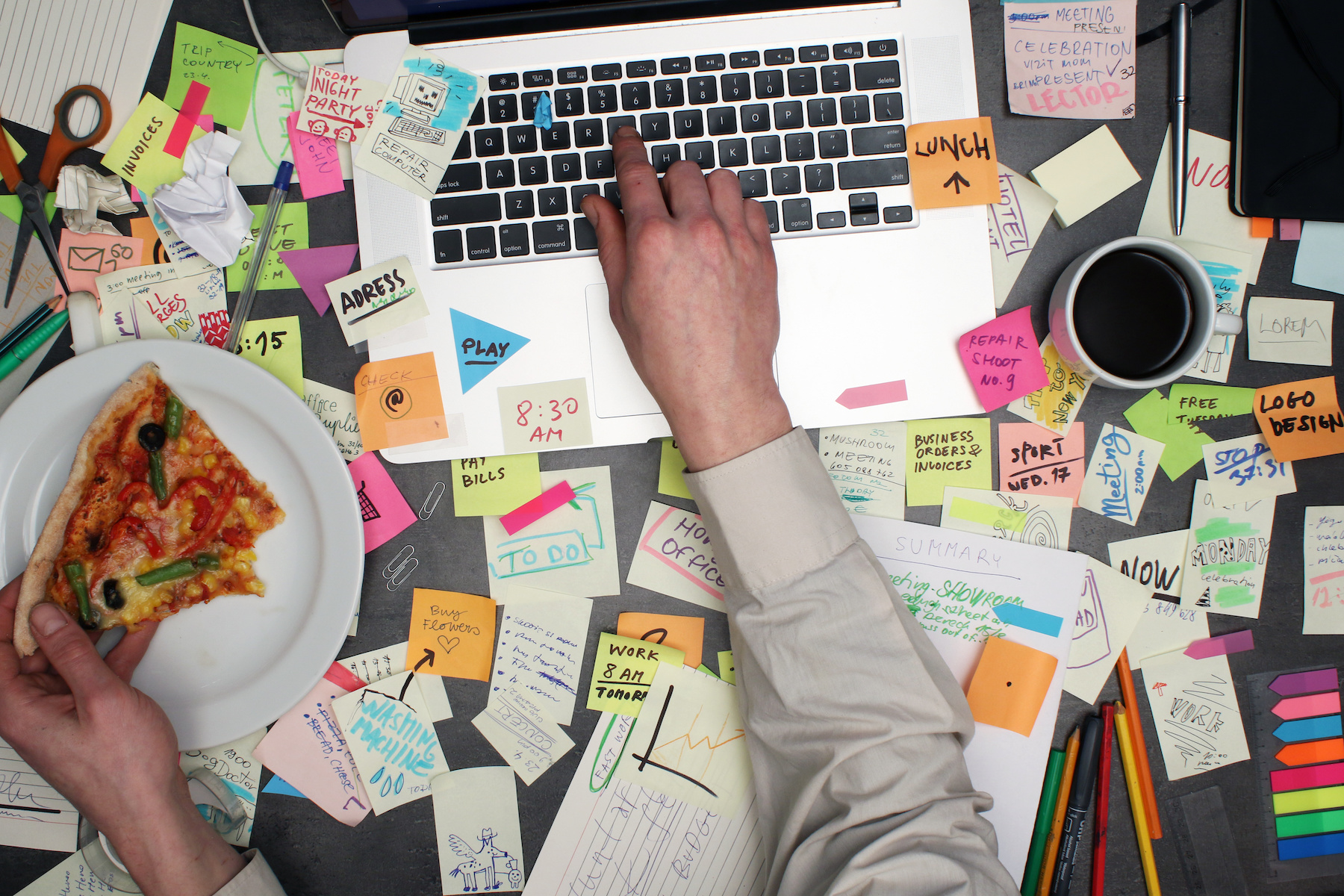
Open offices don’t boost anything (except sadness)
This, shall we say, isn’t a myth many who actually have to work in an open office believe. But it’s something leadership in companies like to say: open office layouts are great for company culture.
The idea is that tearing down walls and having everyone work side by side will increase conversation between workers and generally lead to more innovation. The problem: research suggests the opposite is true.
A 2018 study published in Philosophical Transactions of the Royal Society by researchers at Harvard directly studied the transition to an open office plan at two companies. The researchers used wearable sensor badges to collect data about face-to-face interaction, then collected data about electronic communication. They found face-to-face interaction actually declined, by around 70 percent.
“In short, rather than prompting increasingly vibrant face-to-face collaboration, open architecture appeared to trigger a natural human response to socially withdraw from officemates and interact instead over email and IM,” the study concludes.
This is far from a unique finding. A 2021 review by researchers at The University of Adelaide found that “working in open-plan workplace designs is associated with more negative outcomes on many measures relating to health, satisfaction, productivity, and social relationship,” adding that such office layouts increase stress and result in lower overall health. “Overall, the findings showed that while open-plan workplace designs may offer financial benefits for management, these appear to be offset by the intangible costs associated with the negative effects on workers.”
Brainstorming works better alone, actually
How many brainstorming meetings have you sat through at work? Probably more than you like, but your manager probably insists this is a proven way to come up with ideas.
Except…it isn’t. And what’s interesting is how long there’s been research showing that brainstorming as a group isn’t effective. A 1958 paper published in the Administrative Science Quarterly showed that students were better at solving problems alone than they were in groups of four.
“To the extent that the results of the present experiment can be generalized, it must be concluded that group participation when using brainstorming inhibits creative thinking,” the abstract reads.
A 1987 study published in the Journal of Personality and Social Psychology by researchers at the University of Tübingen in Germany found the same thing—that brainstorming as a group is less effective than brainstorming as an individual. Both of these papers are highly cited and not particularly controversial among researchers.
Has modern technology helped make group brainstorming more effective? Certainly not video calls. A 2022 paper published in Nature by researchers at Columbia and Stanford shows that brainstorming over video conferencing is less effective than in person. “Our results suggest that virtual interaction comes with a cognitive cost for creative idea generation,” the study concludes.
Basically, brainstorming in a group—online or off—is worse than brainstorming alone. Good luck convincing your manager, though.
