
Century in Motion

From electric cars to moving sidewalks, Popular Science has always covered cutting-edge transportation technology. In ‘A Century in Motion,’ we tell the intriguing, human stories behind these innovations—and how this technology is resurfacing today in surprising ways. 
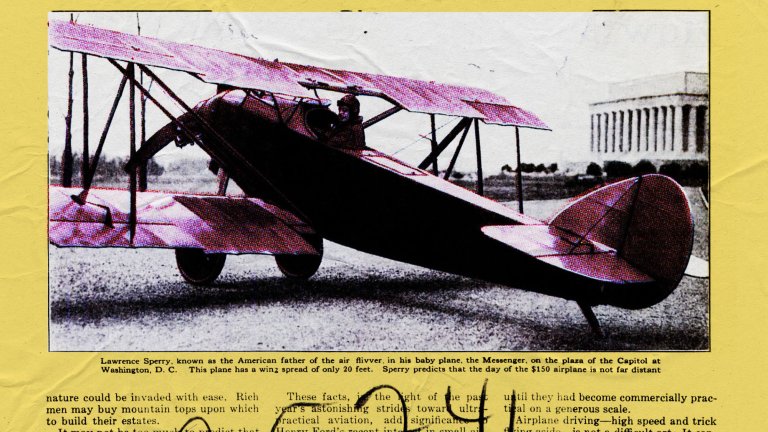
A colorized newspaper clipping showing aviator Lawrence Sperry seated in the cockpit of his small biplane, the "Messenger," on the grassy plaza of the U.S. Capitol in Washington, D.C.. The aircraft, which has a wingspan of only 20 feet, is shown in profile with the Lincoln Memorial visible in the distant background. Below the image, printed text identifies Sperry as the "American father of the air flivver" and quotes his prediction that a cheap, $150 airplane would soon be common.
Drones

During WWI, a daredevil pilot helped invent the first ‘drones’

Lawrence Sperry’s autopilot proved planes could fly themselves.
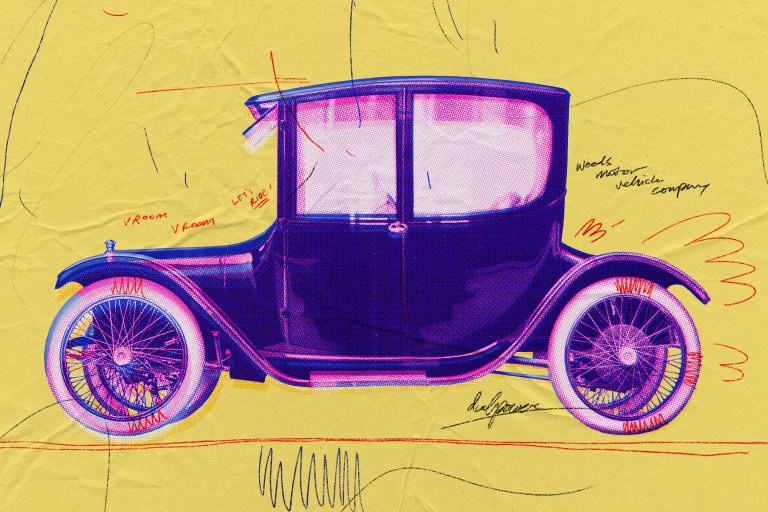
An artistic, mixed-media digital collage of an early twentieth-century electric vehicle, specifically a Woods Motor Vehicle Company car. The car is rendered in shades of purple and pink against a textured yellow background that looks like crumpled paper. The image features playful, hand-drawn scribbles in red and black, including the words "VROOM VROOM" and "LET'S RIDE!" near the front wheel. The car itself has a tall, carriage-like cabin with large windows and thin, spoked wheels highlighted with glowing pink circles. Decorative red loops and lines are sketched around the rear of the vehicle to suggest motion.
Hybrid Cars

In 1916, hybrid cars could’ve changed history. But Ford wouldn’t allow it.

Henry Ford’s monopoly on the automobile industry meant that hybrids wouldn’t see the light of day for decades.