
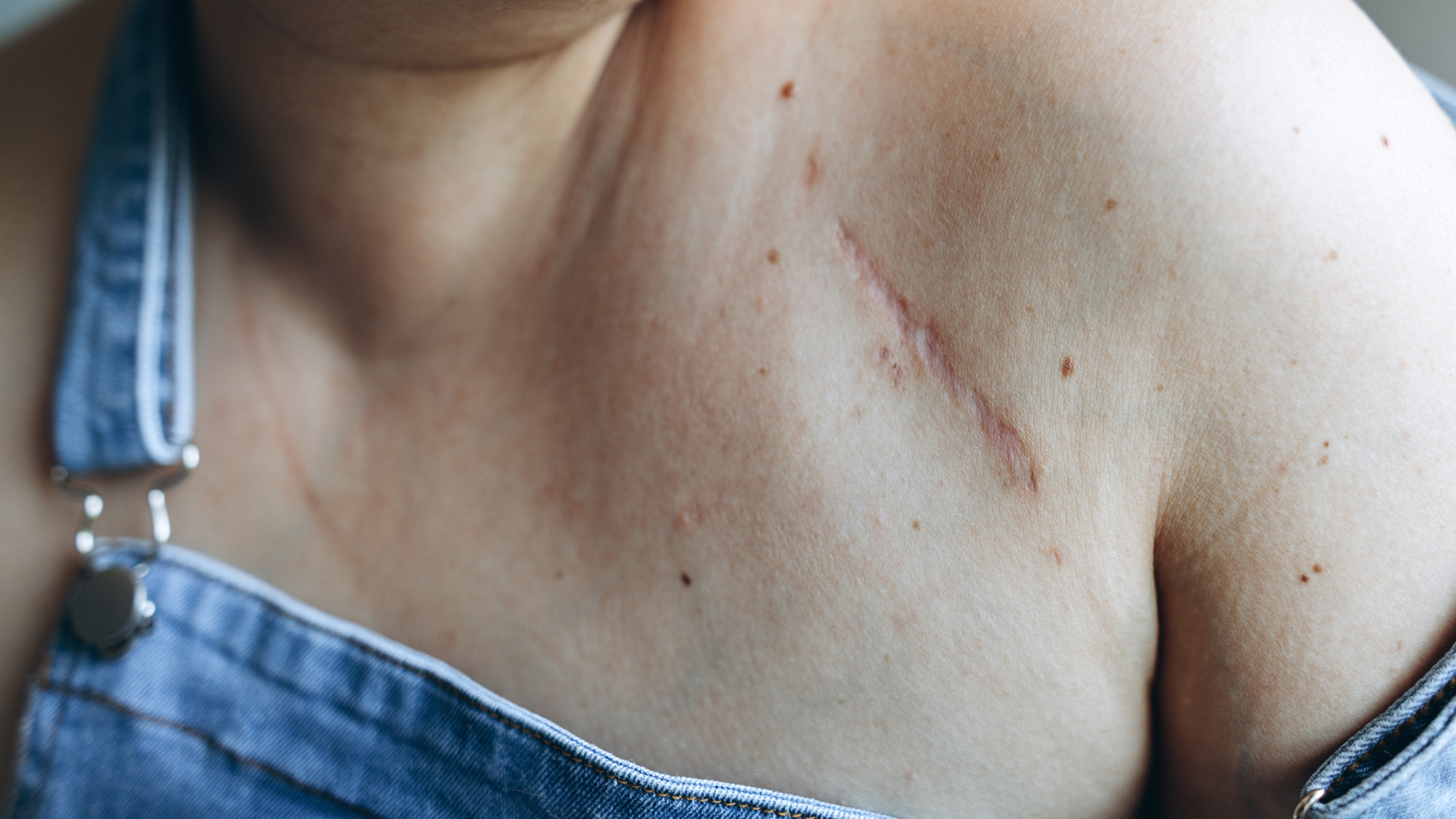
I am a clumsy guy. If there are sharp corners nearby, I’ll bash into them. If there’s a surface underfoot with even a light sheen of polish, I’ll take a tumble. You don’t need to take my word for it. A quick look at my knees, which have become knitted with a patchwork of small scars, tells the story.
I can trace some of these marks back years, and have accepted that they will be on my body for life. But what gives? Why don’t our bodies remove old scars? The answer goes to the heart of how our bodies have adapted to protect us.
Why do some injuries not cause scarring?
“The skin is our protection against the external environment,” says Dr. Corey Maas, an associate clinical professor at the University of California, San Francisco and founder of the Maas Clinic. “It’s a remarkable organ. It’s very important that its integrity be maintained.”
The skin consists of three layers. From outermost to innermost, these are the epidermis, dermis, and fat layer or hypodermis.
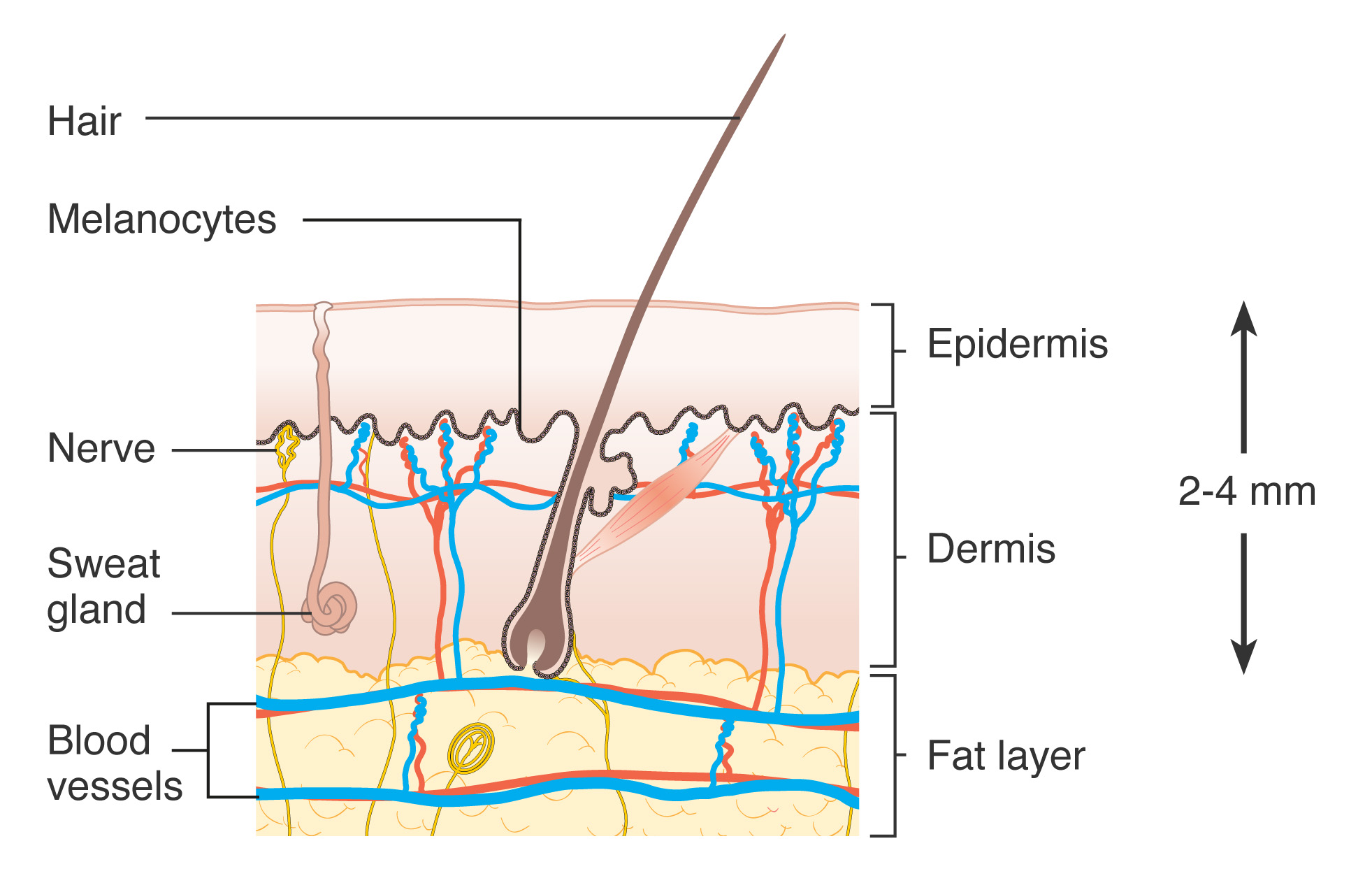
After our skin is damaged, a cascade of biological processes fires up. If an injury only damages the epidermis, the wound will typically heal without scarring.
But if the injury goes deeper, a scar will form. All scars, big or small, are “designed to repair the skin and restore to you all the continuity and the protective mechanisms that the skin exhibits for the entire body,” says Maas. In other words, our body’s priority is to get the skin strong enough to repel invading microbes—not make it look pristine.
How do scars form?
There are several stages involved in scar formation. The body first forms a blood clot to prevent bleeding, which then dries into a scab.
The immune system then sends specialized cells into the clot to beat back any microbes that may have snuck their way in through the wound. To do so, these cells release specific chemicals (called cytokines), which help prevent infection and send out a loudspeaker message to the body that it’s time for a cleanup in the skin aisle.
In response, more specialized cells in the skin called fibroblasts kick into action. These cells start releasing a type of biological scaffolding, known as the extracellular matrix, made up of molecules like long, fibrous proteins such as collagen. These tough proteins increase the scar tissue’s strength.
While a wound might close quickly, the full process of restoring the skin’s layers can take months or even years.
Related 'Ask Us Anything' Stories
Can you have too much scarring?
A fully formed scar is made of tough, dense bundles of collagen and other connective tissue, with no sweat glands or hair follicles. This messy mix of hardened tissue isn’t like other skin. There are fewer cells to be renewed and replaced.
“Those collagen molecules are there forever,” says Maas, creating a tough, fibrous tissue that keeps scars on our bodies for years, decades, or even a lifetime. Sometimes our bodies overdo it on collagen production, resulting in large or raised scars.
In its urgency to seal the rip in its protective outer coating, the body piles on extra collagen. This can produce red, raised scars that stay where the original injury, called hypertrophic scars. In some cases, the resulting scar even extends far beyond the original injury. These are called keloid scars.
Keloid scars can become itchy or painful as they grow. If they form too close to a joint, they can even impede movement. Surgical removal of keloids can cause them to grow back even larger.
How to look after your scars
Scars can fade and become less prominent over time as initial deposits of disorganized collagen are replaced with flatter, more ordered layers. But even this overhauled tissue looks different from normal skin, which is why scars rarely disappear completely.
Maas says that doctors can alter factors, such as a scar’s discoloration and depth through cosmetic procedures, and that steroids can reduce redness. But the most important consideration is good wound management, says Maas.
Keep the wound clean. If it’s an open wound, keep it covered with fresh dressings. If the wound is closed up, Maas recommends keeping it covered with a thin layer of ointment. He says that some doctors prefer scars to dry up, but in his view, it’s important to protect against microbes while a wound heals.
But scars aren’t all bad. They’re a physical record of the experiences you’ve gone through. A scarred knee might fondly recall a tumble in the playground. A burn scar conjures memories of a busy dinner party. These marks wouldn’t have such power if they simply disappeared after a short time.
In Ask Us Anything, Popular Science answers your most outlandish, mind-burning questions, from the everyday things you’ve always wondered to the bizarre things you never thought to ask. Have something you’ve always wanted to know? Ask us.
