
With days to go until the official first day of spring, it was a tale of two winters in the continental United States. Colorado’s mountains had record low snow levels, while Salt Lake City and Phoenix were among the cities who had their highest winter temperatures on record. Meanwhile, those in the east were frozen under weeks of sub freezing temperatures, one major blizzard, and several other winter storms.
As warmer days arrive, sidewalk salt will soon be replaced by bug spray. Bugs like ticks and mosquitoes that have spent the season hunkering down underneath leaf litter and snowpack or underground in the soil will begin to emerge. But how will bitter cold and snowy days impact the insects and arachnids that are more commonly associated with the lazy, hazy days of summer?
Tick tock
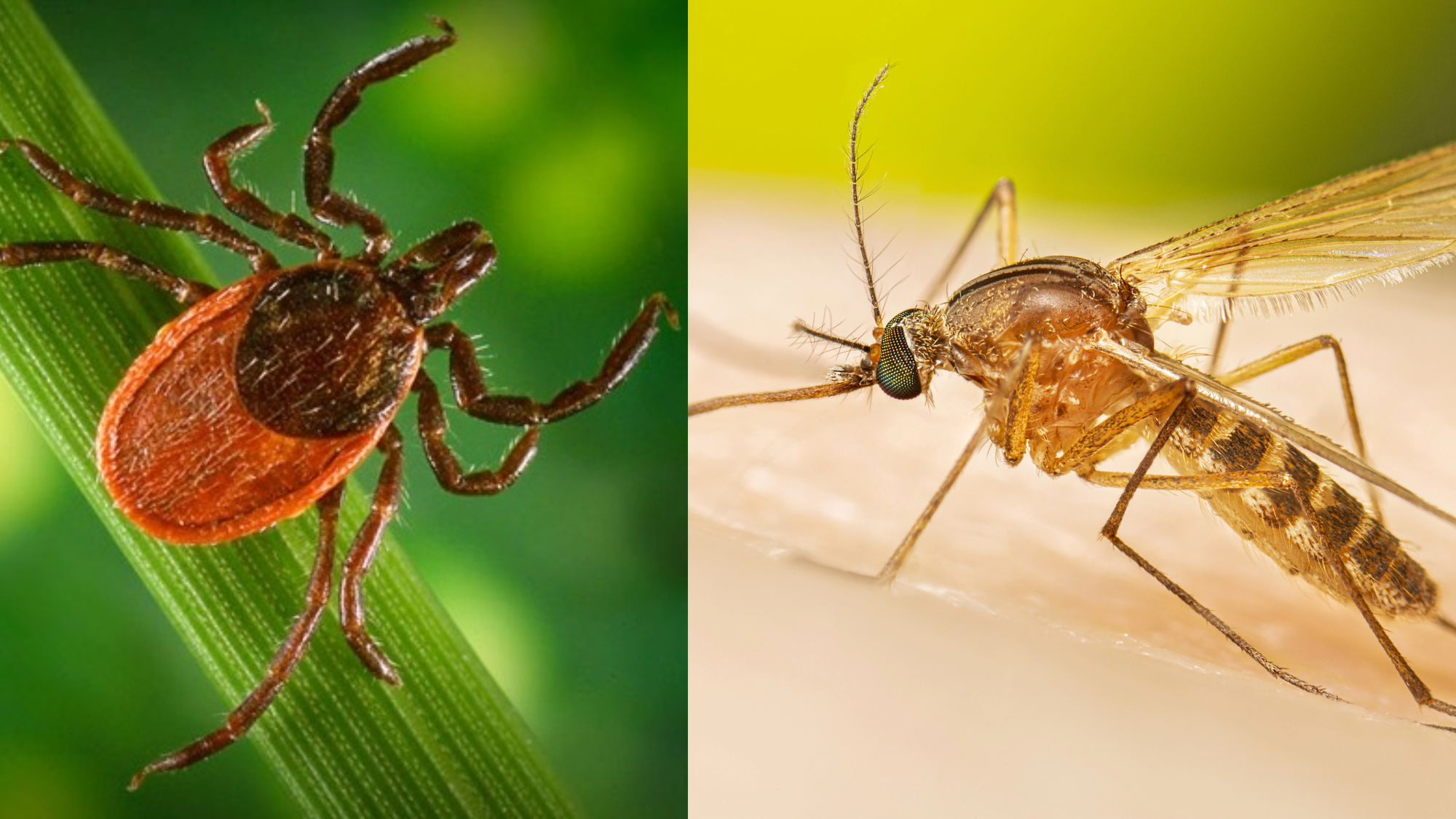
Ticks are understandably some of the most feared arachnids on the planet. They feast on our blood and can transmit several diseases. They are also extremely hardy and difficult to kill. While there are 899 known tick species, blacklegged ticks—or deer ticks—are the most prevalent in northeastern North America. Like a lot of bugs, ticks thrive in moisture and warmer temperatures.
“They’re somewhat cold-hardy and they can certainly survive through the winter,” Laura Ferguson, a biologist at Acadia University in Canada tells Popular Science. “But if the winter is really long, sometimes that can be stressful for them, particularly if it’s severe without any layers of insulation for them, from snow cover, leaf litter, those kinds of things.”
During the winter, ticks won’t actually dig too far down into the dirt. They go into the surface of the soil and can hang out there for long periods of time. During this time, their metabolic rate slows down and they don’t need much to sustain them since they are not really moving around. When snow falls, it can provide them with an added layer of insulation that protects the dormant ticks from colder air.
So what does this winter mean for tick season? Some ticks have likely been buffered from the icy temperatures underneath the snowpack and will be just fine once the temperatures consistently stay above freezing. Others may not be so lucky.
“It’s also certainly possible that some of them will be experiencing some injury associated with being cold,” says Ferguson. “I’m sure that some of them will die this winter just because it has been cold for so long, and they’re probably running low on their energy reserves, or might be in more exposed areas.”
However, these arachnids are quite tough and their bodies can go a very long time without food.
“I’m not expecting a big knock back of the population by any means,” Ferguson explains. “As things start to warm up in the spring, I think we’ll see a similar size population to what we’ve seen before.”
Related Stories
Mosquito woes
Equally hardy are the world’s over 3,700 known mosquito species. Like ticks, they thrive in warm and damp environments and winter can be a real challenge. These buzzy insects also spend the winter hunkered down in a more dormant state.
“The most natural thing that you could use to kill a mosquito is dryness,” Brian Lovett, an entomologist from Cornell University tells Popular Science. “If it dries out and they don’t have water, a lot of mosquito species are going to have a really hard time surviving. There are important exceptions, but for the most part, mosquitoes need water.”
The mosquitoes that typically survive the harsh winter are either adults that can survive off of any blood that they may have sucked before the temperatures plummeted or larvae. The ultimate winter survivors are females that have already mated before the deep freeze.
“That is a really valuable state. As soon as conditions become favorable, she can emerge and lay eggs and start the next generation when she senses that the conditions are right,” explains Lovett. “So instead of needing both sexes to survive all winter, you have a mated female hanging on to the eggs that she can lay for a long period of time.”
For mosquitoes trying to survive the winter, the biggest concern does not come from the freezing temperatures, but the fluctuations in it. This can alter their sense of time and may cause some of them to emerge from underground too early.
Still, it’s difficult to say if this year’s more consistently cold temperatures in much of the eastern half of the country will change the mosquito population this spring.
“It can absolutely lead to more insects just getting frozen or not being able to sort of break out, but I think that on the whole the stages that insects choose to leave during the winter are extremely cold tolerant and they’re, they’re gonna bounce back from that,” says Lovett. “They also hedge that. Some insects are going to be deep underground, where that doesn’t matter at all, and others will be closer on the surface.”
With the added snow and moisture that this winter brought to so many, it’s possible that the opposite could occur and more mosquitoes could emerge. Lovett says that it is still too early to tell what the populations will be like this spring, but that it will be interesting for scientists to watch and learn from to better understand how these hardy insects adapt.
Quelling the fear
Ticks and mosquitoes have an understandably bad reputation due to the diseases they can spread in humans. However, the vast majority of species do no harm and play an important role in the ecosystem.
“Most mosquitoes are not interested in people,” says Lovett. “They are interested in pollinating plants and organisms and do not transmit diseases.”
To stay safe from the ones that do transmit diseases, scientists advise wearing long-sleeved and light colored clothing, a hat, and an EPA-approved insect repellant outdoors. Additionally, remove standing water that can accumulate in garden tools, toys, and poor drainage areas or try building a mosquito kill bucket.
For ticks, many of the same rules apply, including the important full body tick check after spending time outdoors.
“There’s a lot of fear around ticks and being outside, which I completely understand and I don’t begrudge that at all. But the more we learn about ticks, the more we understand how they behave, and what our risks are around them, the more we’ll learn how we can protect ourselves with barriers and tick checks and all those kinds of things,” says Ferguson. “The more we learn to share that space with them, we can reclaim our ability to enjoy our time with nature.”
In Ask Us Anything, Popular Science answers your most outlandish, mind-burning questions, from the everyday things you’ve always wondered to the bizarre things you never thought to ask. Have something you’ve always wanted to know? Ask us.
