
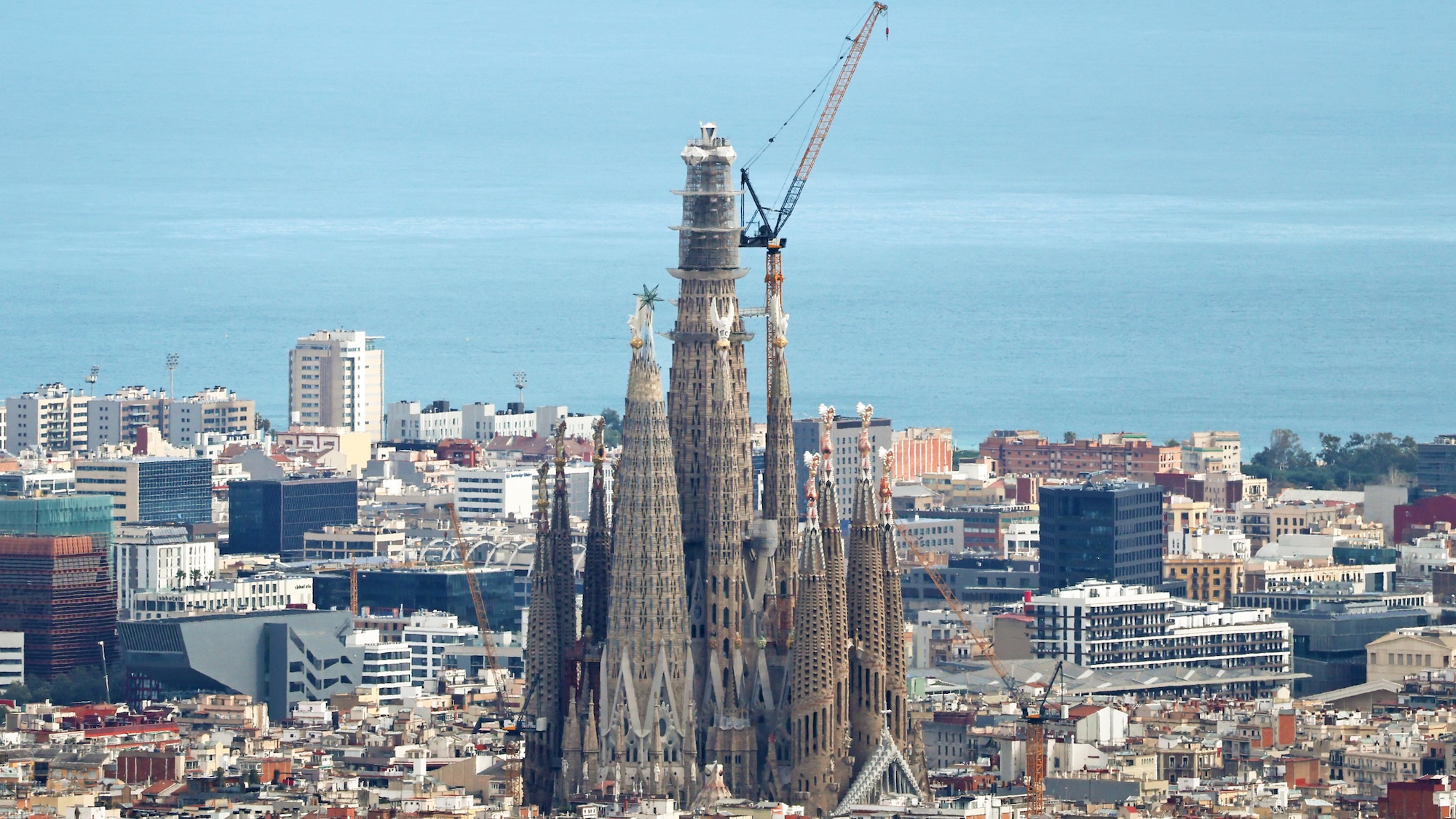
After over 140 years, construction on the world’s tallest (and arguably strangest) church is finally finished…sort of. On February 20th, workers secured the nearly 15-foot upper arm of a cross atop the Tower of Jesus Christ on top of the Basílica i Temple Expiatori de la Sagrada Família in Barcelona, Spain. The monumental apex now puts the basilica and UNESCO World Heritage Site at 566 feet tall—surpassing Germany’s Ulm Minster by roughly the length of a school bus. However, the work is far from over.
No church—or any other building, for that matter—resembles the Sagrada Família. Construction officially began in 1882, drawing on a mixture of both modern and Gothic themes by renowned 19th century architect Antoni Gaudí. The pioneer of Catalan art nouveau design continued contributing to the project for the next four decades, and devoted the last 15 years of his life exclusively to the endeavor. This month’s completion of the cross also coincides with the hundredth anniversary of Gaudí’s death. By the time Gaudí died in 1926, less than 25 percent of the church had been erected.

2007 -2026. Abans i ara | Antes y después | Before & after
The cross uses a combination of glass, ceramic tile, and stone materials from the Spanish region of Catalonia, but was built in sections by artisans in Germany. From there, each piece was transported by ferry and truck to Barcelona, where crane crews carefully erected the final components of the basilica’s exterior works. The structure is large enough to accommodate an interior spiral staircase, and is intended to honor Gaudí’s original goal of letting the cross shine day and night.
Although work on the Sagrada Família has progressed almost continually since 1940 thanks to private funding, there was a time when its completion looked uncertain. Portions of the basilica along with some of Gaudí’s initial plans and models were destroyed following the onset of the Spanish Civil War in 1936. Since then, careful analysis of the architect’s salvaged designs, original interpretations, and even computer modeling efforts have helped push the project towards its most recent milestone.
It’s difficult to provide a concise rundown of Sagrada Família’s unique features. Intricate exterior artwork and biblical illustrations cover the basilica’s 18 separate spires that represent all 12 apostles, the four evangelists, the Virgin Mary, and Jesus. Gaudí also conducted acoustic surveys to ensure the ringing from wind-driven tubular bells inside each tower will funnel down into the church itself.
The Sagrada Família is not without its detractors. Famed 1984 and Animal Farm author George Orwell once called it “one of the most hideous buildings in the world.”
“I think the Anarchists showed bad taste in not blowing it up,” he wrote in Homage to Catalonia, his memoir of the Spanish Civil War.
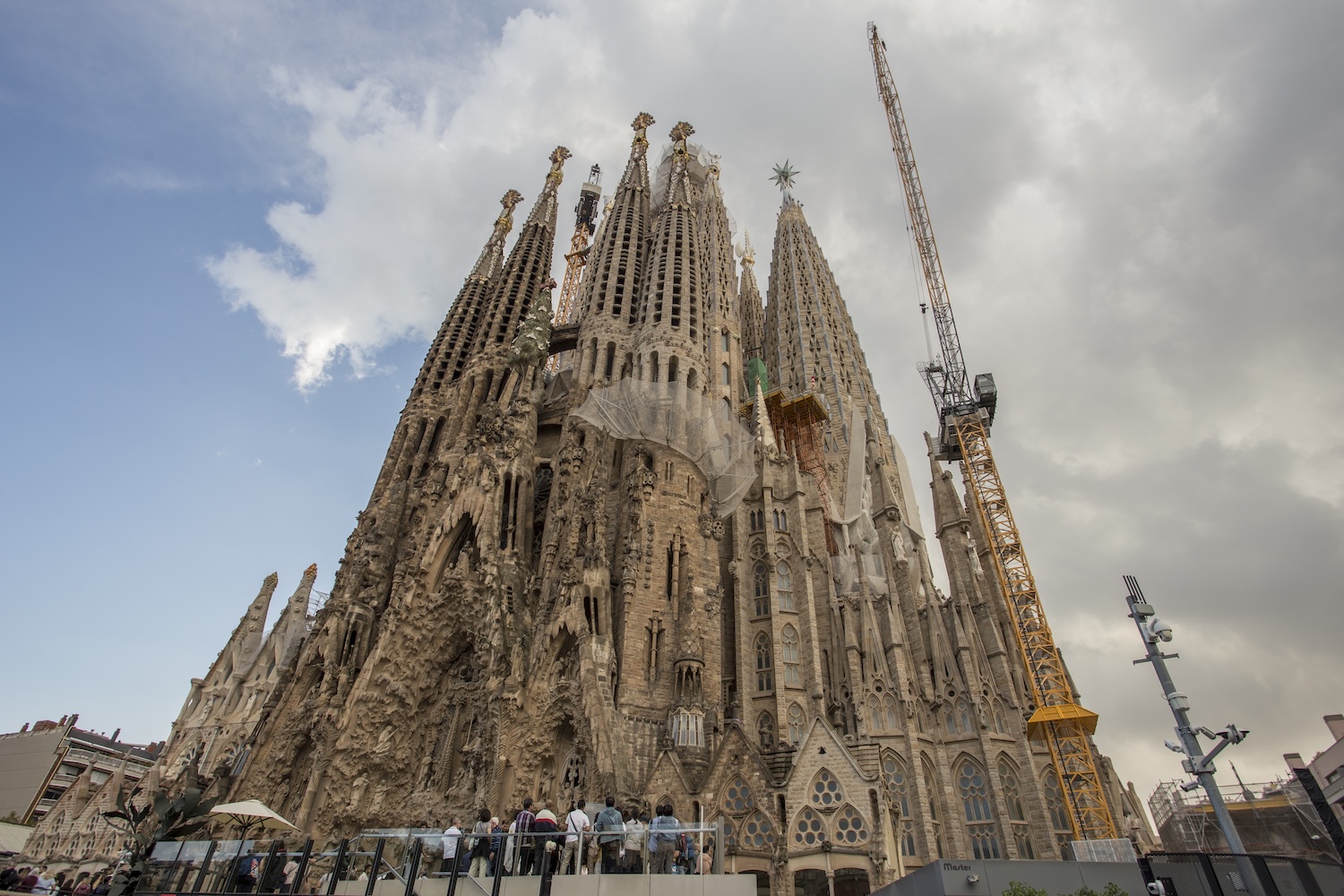
But while the basilica’s exterior is now finally finished, there is still a lot of work left. Construction will now focus on the church’sinterior, including its many decorative features. Among them will be an Agnus Dei (Lamb of God) sculpture designed by Andrea Mastrovito, the Italian artist who won a competition for the honor last year. Mastrovito’s work will be composed of glass fragments and suspended from the cross’ upper arm inside a funnel-like geometric structure known as a hyperboloid.
If all goes according to plan, the Sagrada Família will finally reach completion by 2034—a full 152 years after breaking ground. Gaudí himself was always fully aware of the project’s audacity, however. When asked if he were concerned about how long it would take to finish his crowning achievement, Gaudí reportedly joked that “My client is not in a hurry.”
