A quarter of America’s major metropolitan roads have stretches in substandard condition, and drivers pay the consequences—potholes alone cost car owners an average of $335 a year in tires, repair and maintenance. The standard method for fixing potholes is to send three workers and a hotbed truck to toss in an asphalt mix and give it a few thumps with a shovel or boot. The process can take as little as two minutes, but the fix is only temporary. One study found that about half of repaired potholes had returned four years later.
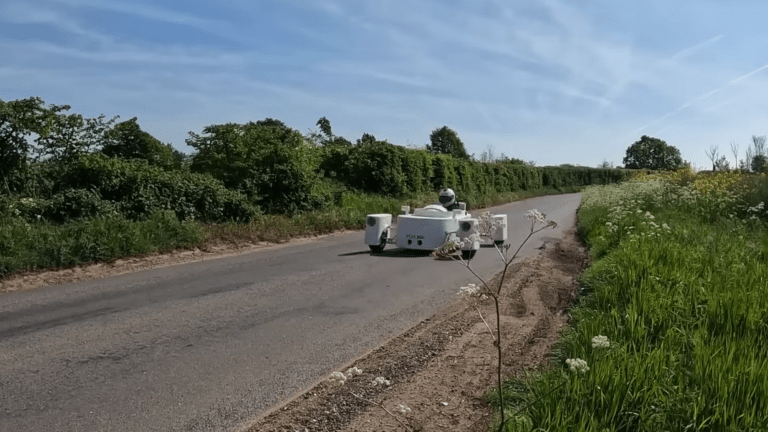
The new Python 5000 pothole-filling machine, from Python Manufacturing, mends holes in just 30 to 60 seconds. A single operator drives the machine to the repair site, parks, and then uses a joystick to deploy the machine’s four-foot tool-equipped arm. First, an air jet blasts debris and water out of the hole. Next, it’s sprayed with tack oil, which helps the finished patch stick to the surrounding road. Finally, the operator uses the truck’s tool arm to fill the hole with an asphalt mix, rake it, and pack it down with a roller. The roller applies the same amount of force as a standard road-paving machine, so the patches the Python makes often last until it’s time to repave the entire road. The company estimates that over five years, owners of the $290,000 Python could save $125.61 per ton of pothole repair—or about 40 percent over the standard method. So far, road crews in California, Colorado and Virginia are using the machines.
Five amazing, clean technologies that will set us free, in this month's energy-focused issue. Also: how to build a better bomb detector, the robotic toys that are raising your children, a human catapult, the world's smallest arcade, and much more.


Online Content Director: Suzanne LaBarre | Email
Senior Editor: Paul Adams | Email
Associate Editor: Dan Nosowitz | Email
Assistant Editor: Colin Lecher | Email
Assistant Editor: Rose Pastore | Email
Contributing Writers:
Kelsey D. Atherton | Email
Francie Diep | Email
Shaunacy Ferro | Email
In boston they use a heater over the hole to raise the temp of the hole and the surrounding asphalt. When the patch is complete it is SEAMLESS to the road around it. As a result - no bump from a patch. No bump means less chance a snow plow will pick up an edge and remove the patch. This looks great for southern roads but not so for the northern roads. Maybe they can add on the heater on a second arm or something. Any feedback from anyone that knows more about this?.
This is nice and all... but most cities in America need to do a better job of planning ahead (a very basic, simple technology) so that they can spend less on roads in the first place, and less on them in repairs in the long-term.
Take my street for example. It is a full 36 feet wide from gutter to gutter. 36 feet! It is a quiet suburban street with little traffic, and hardly ever a single car parked along it, as everyone has third-acre lots and large driveways. In reality, rather than allowing parking on both sides of the road, if the city said you could only park on one side, gave you an 8-foot parking width and 2 10-foot travel lanes, you'd reduce the needed road to 28 feet, a 22% decrease in road surface.
This likely would result in 20% initial construction savings, 20% ongoing maintenance savings, 5-10% savings in the construction and upkeep of stormwater drainage (less road surface for rain to fall on in a storm), less summer heating (lower % of asphalt to lawns), more property taxes (every 12 blocks you save enough room for yet another row of homes), etc.
So before we go spend large sums of money on a fancy new machine that promises relatively small long-term savings, let's encourage our cities to use the simple technology of their brains to save ourselves a whole lot more money.
Sounds familiar. Oh ya, you wrote about this in March....
http://www.popsci.com/technology/article/2012-03/python-truck-fixes-potholes-two-minutes-flat
We need a completely new approach to highways. A better material that is like a cloth that stretches over objects and stays secure--almost like carbon fiber laid down to make a road. Why can't roadbed simply be unspooled from giant rollers much like we spool grass delivered for a yard? Instant road!
Better yet--why can't they make 3D printers that they are using to make buildings and do the same thing for roadbeds and simply drive along a prepared roadbed and 'print the highway' as they drive along?
Kudos to anything that removes holes and patches them in a timely matter!
They also had only one man do it before, the other two were on a continual smoke break....
One hard worker, one sign holder, and supervisor with his thumb up his ass.
So, how much solar energy have you used today?